


Guests step out of the shower with wet feet; your floors and reviews depend on how fast your bath mat dries. In 2026, quick-dry performance is the difference between a crisp turnover and a musty bathroom.
What will you learn here? How to pick a washable, durable mat that dries fast, how to launder for speed, and how to prevent damp odors between stays.
Ready to build an Airbnb bath mat strategy that stays dry, stays safe, and stays fresh—booking after booking?
Fast evaporation: fewer damp hours
In rentals, the winner is the mat that sheds water quickly, then releases it to the air. Prioritize fibers and structures that speed evaporation, not just absorption. The goal is a surface that feels dry underfoot and returns to a steady state before the next shower.
- Looped cotton terry wicks water well and, when low pile, releases it fast.
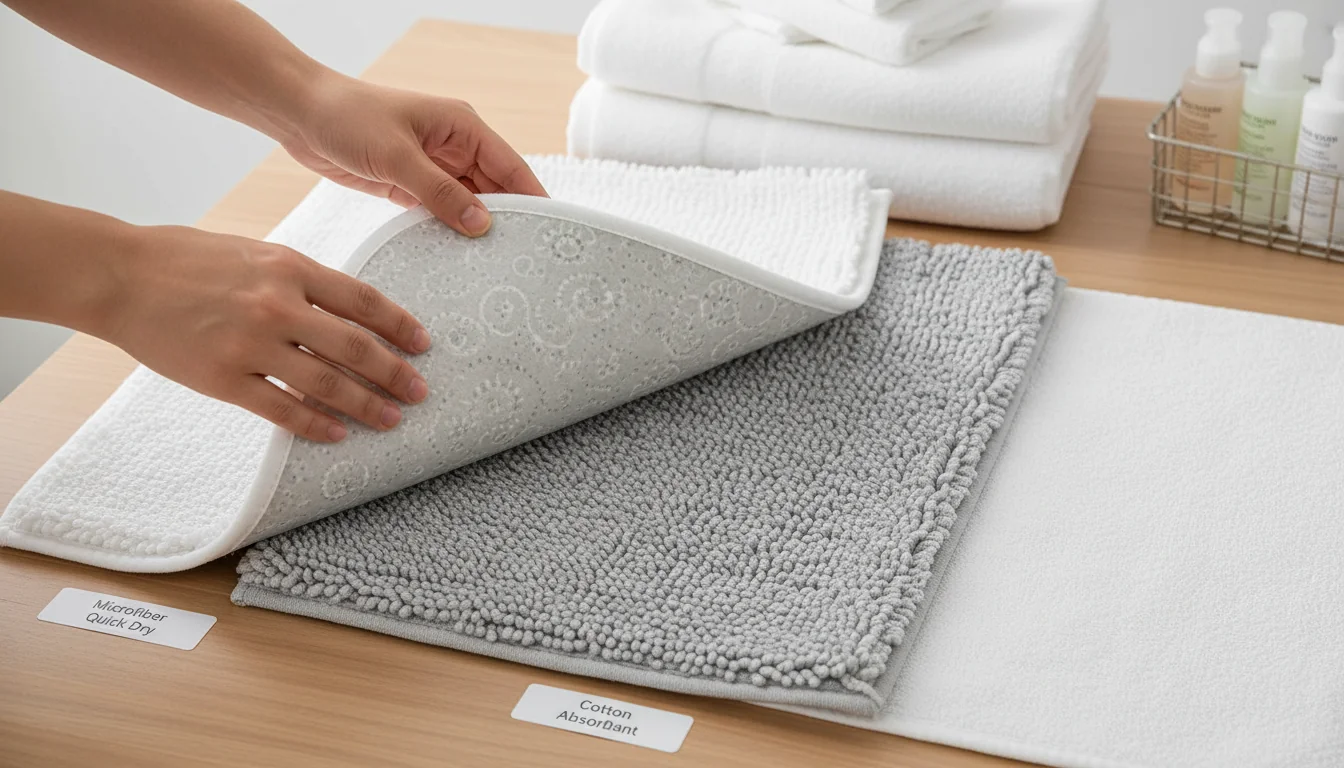
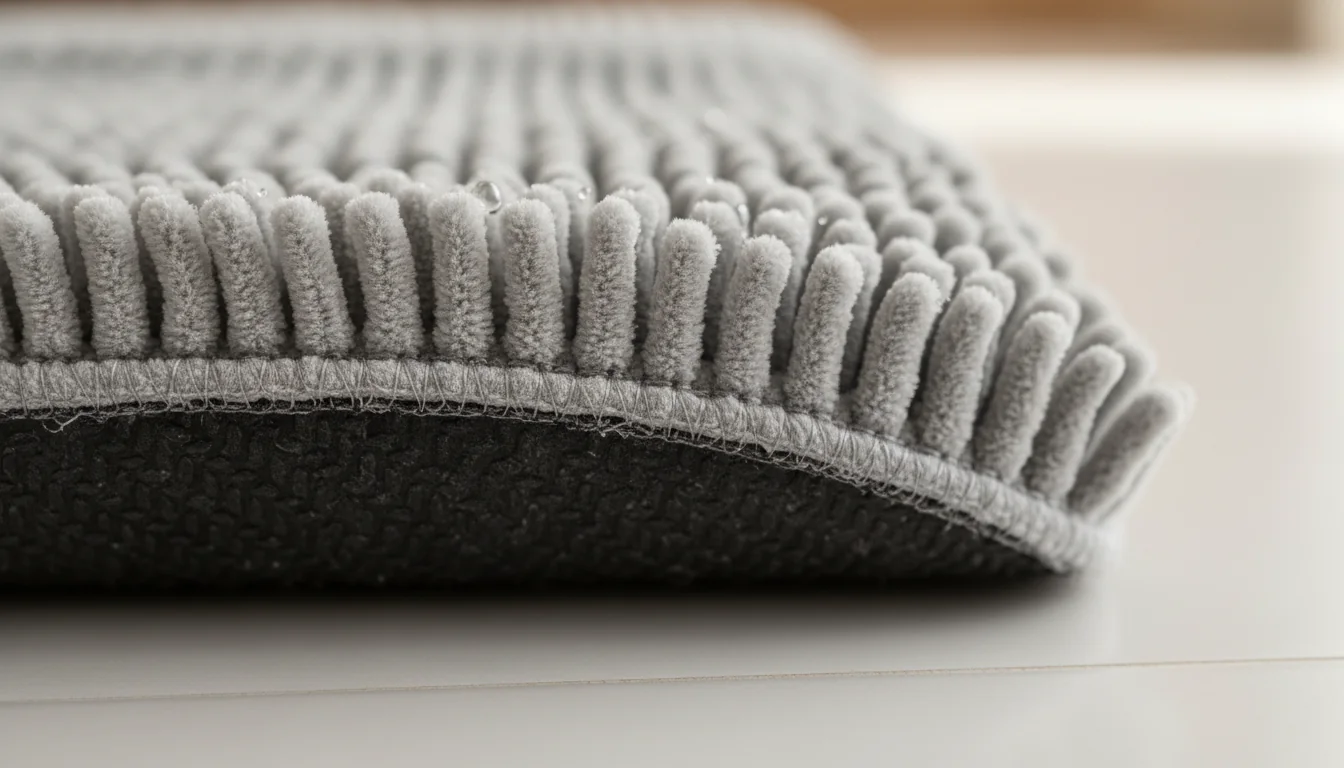
- Chenille microfiber absorbs heavily; choose thinner profiles for quicker recovery.
- Diatomaceous stone slabs pull moisture instantly, then air-dry within minutes.
- Open-weave bamboo slats keep airflow high, limiting lingering dampness.
Perceived dryness improves when surface temperature is near room temp; stone often “feels” drier sooner due to quick moisture transfer.
When choosing fast-to-dry mats, compare not only materials but also thickness. High-GSM plush piles soak up water but can stay clammy longer; lower pile or rigid surfaces regain a crisp feel quickly.
| Material / Build | Typical “touch-dry” time* |
|---|---|
| Diatomaceous stone mat | 5–15 minutes after use |
| Low-pile cotton terry | 45–90 minutes with ventilation |
| Chenille microfiber (thin) | 60–120 minutes depending on pile |
| Thick plush pile | 2–6 hours (slower release) |
Target relative humidity ≤ 60% in the bathroom. Use an exhaust fan or dehumidifier to cut dry time by up to 50%.
In 2026, hosts who win reviews control moisture. Favor structures that stay airy, and you’ll reset the bathroom faster with a consistently dry feel.

Hygiene resets: moisture under control
A mat that dries quickly is easier to sanitize between guests. Rapid moisture release means fewer odors, less bacterial growth, and simpler cleaning routines—especially when wash cycles are tight.
- Machine washable fabrics (terry/microfiber) streamline same-day resets.
- Low-pile loops let detergent flush out soap residue that traps dampness.
- Breathable backings avoid sealing in moisture against the bathroom floor.
- Rigid stone surfaces wipe down fast and don’t hold humidity.
Avoid thick foam cores without ventilation channels; they can feel dry on top but stay wet inside, inviting odors.
For alternatives and pairings that balance quick laundering and speedy evaporation, browse our bathroom mat lineup. It helps align fabrics with your cleaning cadence.
Frequent washing is fine if your cycles are tuned to dryness. Use a short spin with adequate RPM, then a low-heat tumble or good airflow to finish the job quickly and safely.
Layout choices that stay fresh
Placement and size affect how quickly mats return to a comfortable, moisture-free state. Larger surfaces gather more water and need more air circulation to feel crisp again.
- Use one mat outside the shower; avoid overlapping rugs that trap humidity.
- Choose thin profiles under doors to prevent compression and slow drying.
- Elevate edges slightly after use to encourage airflow underneath.
- Rotate mats during long stays so one recovers while the other is in use.
An extra inch of clearance under the door can cut contact time and improve evaporation along the mat’s top surface.
If you need broader coverage yet want to keep quick recovery, explore the large-format options and pair a bigger footprint with lower pile or rigid surfaces.
Remember: the safest setup is one mat that dries rapidly rather than multiple plush pieces that remain faintly damp for hours.
Materials that resist lingering damp
Not all fibers behave the same. Some soak and release water cleanly; others cling to moisture. Favor materials and constructions that keep the surface crisp and the underside ventilated.
- Diatomite stone: instant moisture uptake and fast re-use readiness.
- Towel-style cotton: highly washable, great for frequent turnovers.
- Microfiber chenille (moderate pile): soft feel, manageable recovery time.
- Bamboo slat mats: airflow below the feet, minimal residual dampness.
Backings matter. Prefer non-slip layers with micro-venting to avoid sealing moisture between mat and tile.
For a nature-forward alternative that breathes, consider the bamboo-inspired range. It’s a smart match for humid bathrooms where airflow is the quickest route to a bone-dry feel.
Where hygiene is critical, certifications like OEKO‑TEX STANDARD 100 can indicate safer chemistry—useful for frequent washing without lingering odors.
How to cut dry time, step by step
Use this short routine to keep mats clean, crisp, and dry between bookings.
- Pre-hang for 20–30 minutes to shed surface water.
- Wash warm with a mild detergent; avoid fabric softener.
- Add a high‑spin cycle; it removes more moisture than heat.
- Dry low for 10–15 minutes; finish air-drying on a rack.
- Stage upright on a bar; airflow is faster than flat drying.
Skip fabric softeners. They coat fibers and slow evaporation, leaving mats less absorbent and slower to dry.
Need a near-instant surface at the shower exit? Consider this stone option for instant dry feel: a checkered diatomite slab that resets within minutes.
Keep two sets per bathroom. One dries while the other is in use—no damp overlap.
Color-coded rotations also speed work. Assign each bathroom a hue with a vivid quick-dry option so cleaners swap fast without mix-ups.
Why prioritize a fast-dry mat?
It keeps floors safer, prevents damp odors, and shortens laundry cycles. In short turnovers, a dry surface protects your bathroom and guest comfort.
How do quick-dry options compare to plush rugs?
Lean piles, towel-style terry, or stone reset faster. Plush piles feel soft but hold moisture longer, especially in humid bathrooms.
What materials dry the fastest?
Diatomite stone and bamboo slats expel moisture rapidly. Low‑pile microfiber and cotton terry follow when spun well and air-dried efficiently.
Is there a fabric‑free option for the shower exit?
Yes. Try a hard surface that returns to dry within minutes, like a sleek diatomite slab that wicks water into the core, then evaporates quickly.
What about family bathrooms and playful themes?
Pick a low‑pile, quick‑evaporation mat with anti‑slip backing; a themed format like a fun dino design can still dry fast if pile height stays lean.
How do I keep mats dry between showers?
Hang immediately, open the door for airflow, and use a stone at the exit to stop soak-through. Rotate sets so one is always fully dry.
A washable, durable, quick-dry mat turns humidity into a non-event, protecting your floors, your schedule, and your ratings in 2026.
- Prioritize evaporation: lean piles, towel-style loops, or stone at the shower exit.
- Laundry for speed: high spin, low heat, finish air-drying upright.
- Size smart and rotate sets; consider a large stone slab like this spacious diatomite format to stay dry between guests.
Build your “airbnb bath mat washable durable quick dry” setup once, then let it work—dry, safe, and fresh—booking after booking.
0 comments