


Beige Bath Mat


When your bathroom gets busy, the floor around the tub or shower is where slips, puddles, and chilly tiles converge. A Beige Bath Mat solves that specific problem: its neutral tone tames visual clutter while the piece itself delivers stable traction and measurable water control. Choose the mat format—not a generic rug—because it is engineered for wet zones with purpose-built backings, absorbent cores, and sizes that fit entry points without bunching.
In this collection, beige is more than a color; it’s a palette of light taupe, sandy tan, and warm stone that calms reflections and softens grout lines. Below, you’ll see how a mat in the right shade, material, and size shortens drying times, cushions steps, and complements white, gray, or wood finishes. Scan the comparisons, pick your specification, and bring neutral warmth plus safer footing to everyday routines.
Unlike decorative rugs, a bath mat is built for splash zones. Its job is precise: halt water at the threshold and anchor your stance as you step out. Beige keeps the look quiet; the mat format makes outcomes measurable—better grip, quicker surface recovery, and less mopping after showers.
Because a mat addresses water first, you’ll notice fewer damp footprints beyond the bath zone and a faster return to dry floors between uses. Beige tones visually merge with stone, cream, or light oak, extending the sense of space without glare.
| Criterion | What matters on a mat |
|---|---|
| Backing | Full-coverage grip (latex, TPR, silicone) for wet tiles; washable fabric mats keep adhesion after repeated cycles. |
| Surface type | Terry/chenille for plush absorbency; diatomite stone for quick-dry rigidity; woven plant blends for odor control. |
| Pile weight (fabric) | Approx. 850–2000 gsm boosts soak and cushion; higher weights feel denser underfoot but dry slower. |
| Drying time | Fabric: hours between uses depending on ventilation; stone: minutes to reset between family showers. |
“Choose a mat when outcomes matter: safe steps, less tracking, and a calmer floor line—all in one understated beige tone.”
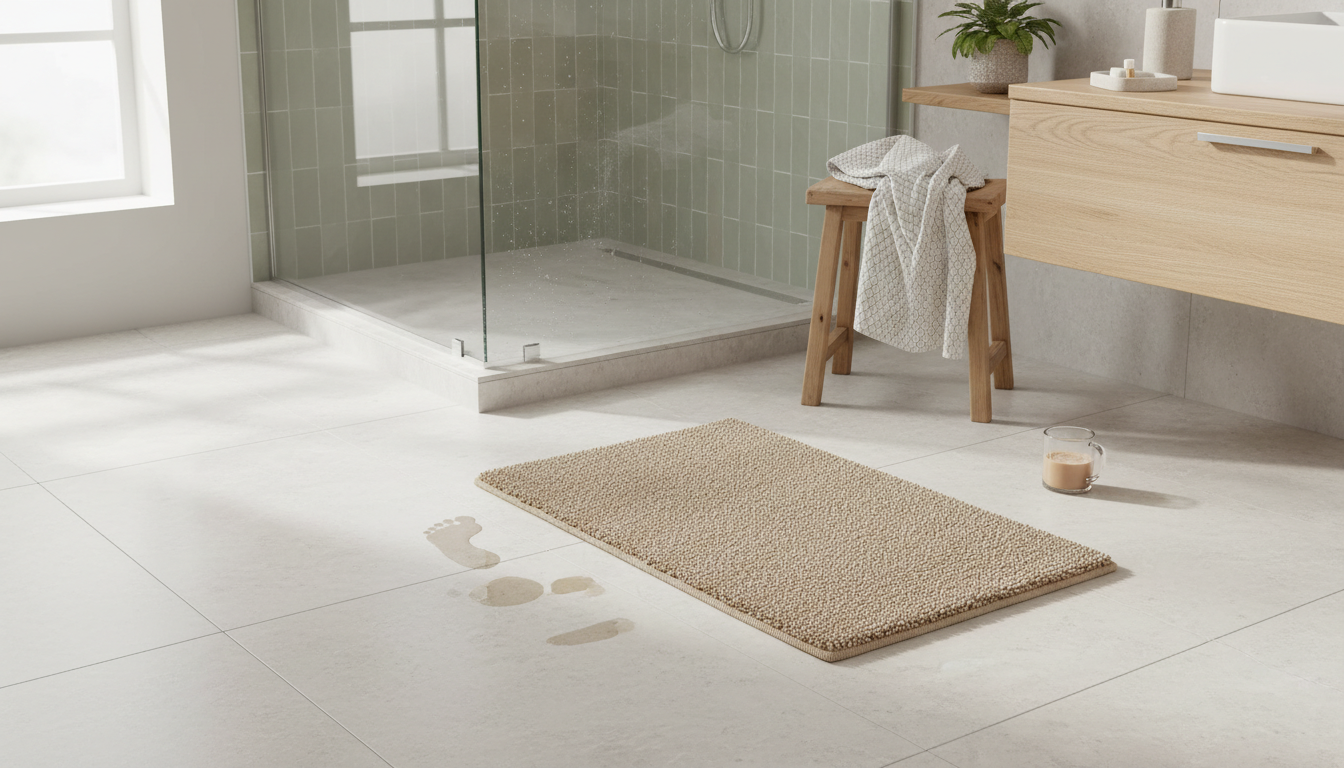
Beige isn’t one note. The right bath mat tone can neutralize glare from glossy ceramics, soften grout contrast, or warm cool grays without introducing visual noise. Use hue to correct what your bathroom surfaces amplify.
If your space needs extra splash control as well as tonal balance, explore absorbent beige-focused alternatives in our range of soak-forward designs. This keeps the visual language consistent while increasing surface capacity in busy households.
| Beige shade | Visual effect in a bathroom |
|---|---|
| Light beige | Extends brightness with less glare; pairs with white towels and chrome fixtures. |
| Sandy beige | Adds warm neutrality; complements oak, cane, and warm tiles. |
| Taupe beige | Balances cool grays; softens harsh tile patterns without darkening the floor. |
Match the mat to the lightest vein or grout tone you see from standing height. This keeps the floor continuous and the bath zone visually quiet.
Material dictates how a mat behaves the moment water hits. Beige fabric piles read cozy; beige stone reads crisp. Choose the substrate to match routines and ventilation.
If traction is your top priority, consider beige models emphasizing grip in non-slip focused selections. These prioritize underfoot stability while preserving the understated color story.
| Material | Performance notes |
|---|---|
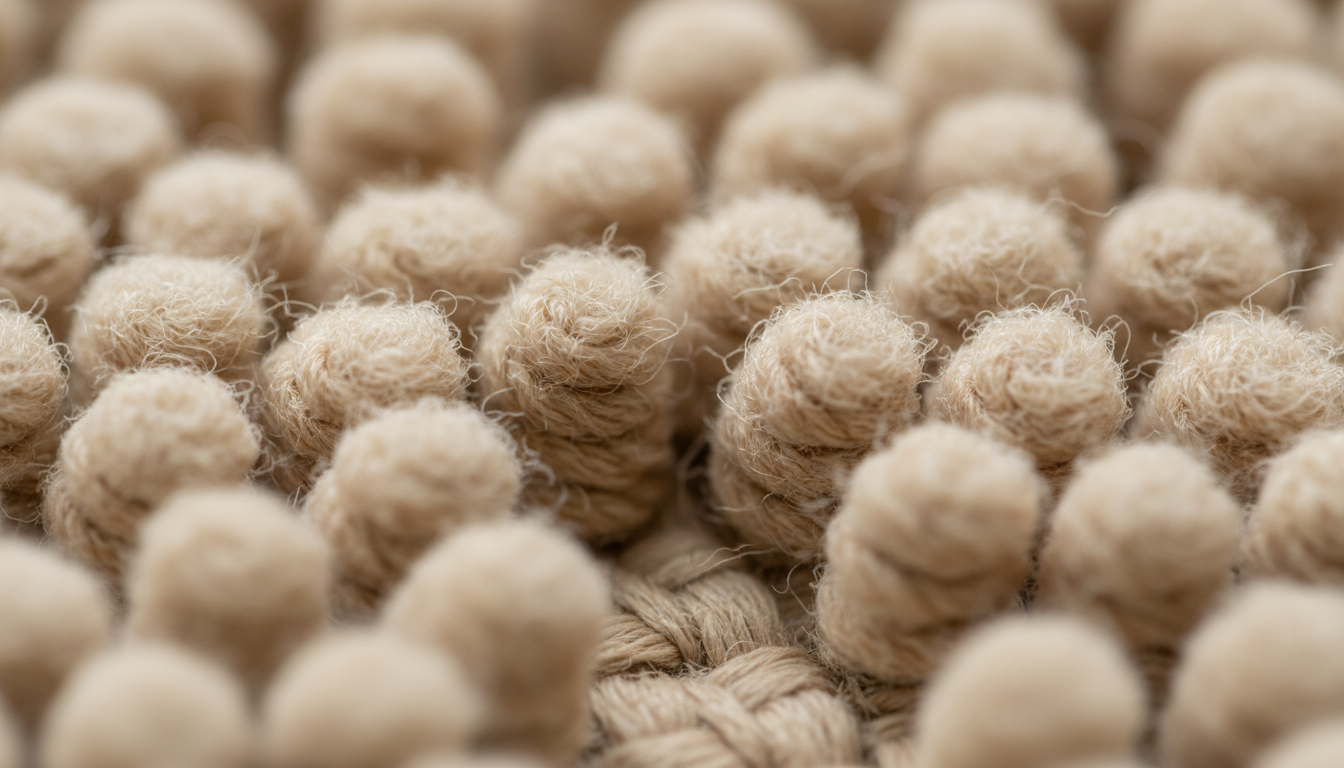
| Microfiber chenille (beige) | High absorbency and plush underfoot; dries moderate-fast depending on pile density. |
| Cotton terry (beige) | Natural feel; easy wash; 850–2000 gsm options; heavier weights = slower drying but more cushion. |
| Plant-blend weave (beige) | Breathable, deodorizing; structured hand; ideal for humid climates with light traffic. |
| Diatomite stone (beige) | Rapid evaporation; ultra-low pile; best for quick resets and minimal lint. |
Check care symbols. Fabric mats usually machine wash warm and tumble dry low; stone panels require spot-wipe only. Ignoring care will shorten lifespan and dull beige tones.
Sizing a mat is about coverage without conflict: cover the drop zone, avoid door snags, and align to fixtures. Beige helps the footprint visually disappear, but the measurements still matter.
Considering a warmer contrast at the vanity while keeping the shower zone beige? See complementary tones among deeper brown alternatives to keep the palette cohesive without duplicating shades.
| Location | Recommended mat size |
|---|---|
| Shower exit (single door) | 20×32 in for fuller coverage without catching the door sweep. |
| Tub edge (alcove) | 2×3 rectangle, centered on spout line to intercept drips. |
| Double vanity | Two 20×32 in mats spaced evenly; avoids runner curl at cabinet toes. |
Typical market data shows compact terry mats around 2×3 priced near 23 €, with larger plush options rising by material weight and backing complexity.
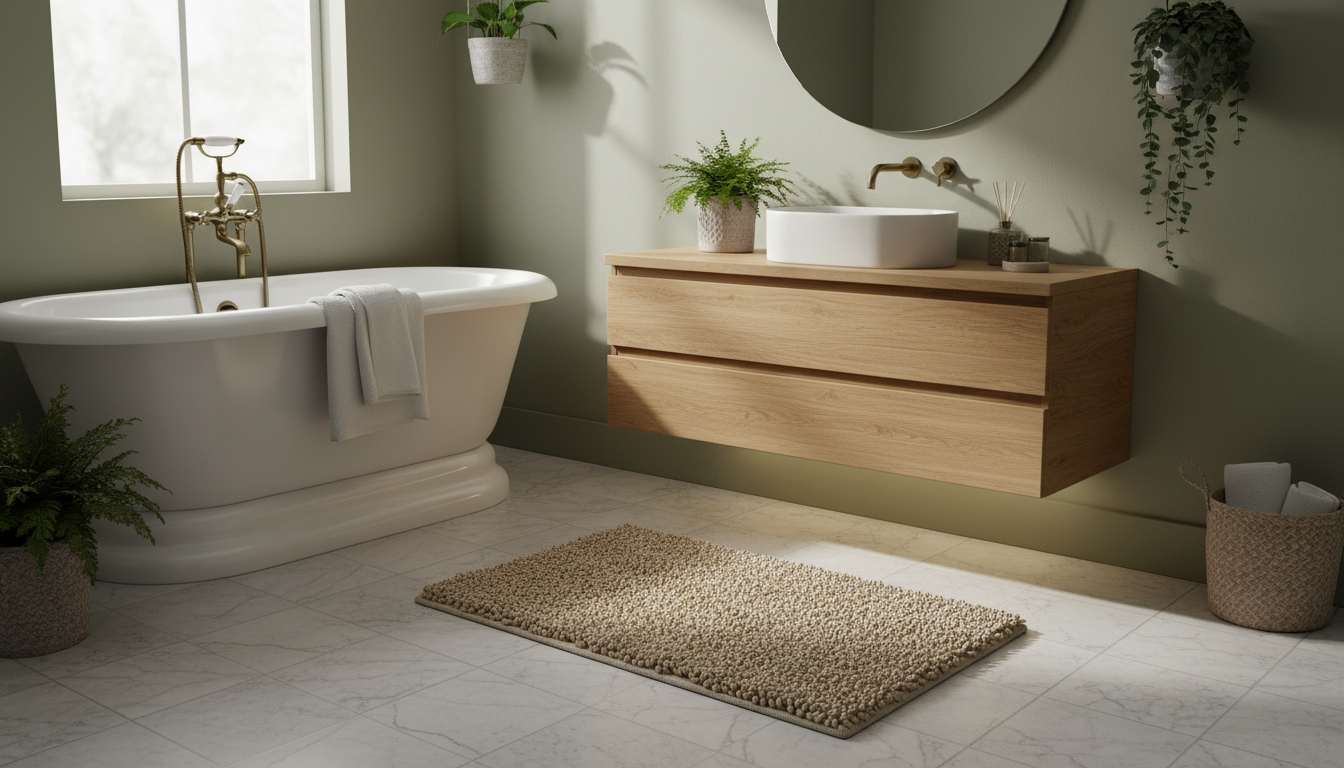
Start with function: a mat must stabilize steps and manage water. Then refine by shade and handfeel to match your fixtures and light. Keep the following criteria close when you compare options.
| Household profile | Recommended mat approach |
|---|---|
| Busy mornings, low ventilation | Beige stone panel for fast resets; add a second fabric mat at the vanity. |
| Spa-like plush comfort | High-gsm chenille/terry in sandy beige; rotate two pieces for dry time. |
| Small apartment bath | Compact 16×24 in light beige with full grip; low edge to clear doors. |
For plush underfoot in a neutral palette, a chenille beige option adds volume and warmth—see this example of tufted microfibers in warm beige to understand pile density and edge finishing in context.
If your space leans bright and minimal, a lighter tone maintains clarity—compare a pale beige piece to gauge how it blends with white fixtures without appearing stark.
A mat is engineered for wet floors: non-slip backing, absorbent or quick-dry surfaces, and sizes tailored to bath exits. Beige adds calm continuity to tiles and grout, whereas many rugs lack grip and wick water poorly around active shower thresholds.
Runners cover length but can curl at cabinet toes; in-tub grips help during the shower but don’t manage post-shower drips. A beige bath mat targets the landing zone, combining traction plus moisture control in one dedicated footprint.
• Safer steps on glossy tiles • Defined splash capture near the shower • Easy care: machine wash or wipe-clean • Shade control: beige moderates glare and visual contrast
Yes—taupe-beige tempers cool stone, and light beige keeps white suites airy. For bright setups, compare a beige-and-white option that blends softly with porcelain while framing the bath edge with quiet contrast.
Wash warm (up to 40°C) with mild detergent, avoid bleach, and tumble dry low. Rotate two mats to allow full drying. For faster resets in busy homes, consider an absorbent-focused beige design to reduce standing moisture between uses.
Choose fabric for plush cushion and warmth underfoot; choose diatomite stone for ultra-fast evaporation and low maintenance. Ventilation, traffic, and your preferred feel will tip the balance for the beige bath mat that fits your routine best.
A Beige Bath Mat unites three essentials: secure footing, targeted water management, and a calm, tonal finish that complements ceramics, stone, and wood. Compare shade, substrate, and size, then anchor your shower exit with a design that works as hard as it looks. For extra cushion with steady grip, explore this plush anti-slip choice and step into comfort every day.


