


Large Bath Mat


If water keeps escaping your small rug and pooling across the bathroom, a large bath mat solves the real drip path—from tub edge to vanity and along wider doorways—in one move. By expanding the footprint, the extra-wide coverage improves stability, reduces cold, wet tiles underfoot, and keeps traffic areas drier between showers.
Choose a mat with the right surface technology: plush cotton for warmth, microfiber for fast absorption, or stone-inspired composites for quick-drying surface performance. Backing and grip matter too; on floors you’ll want textured rubberized grip, while inside a tub or shower, a mat with strong suction cups and drain holes is engineered for safety.
Scroll to map your space, compare materials, and select the Large Bath Mat that aligns with your layout, care routine, and style. Each section below focuses on what a mat uniquely delivers—coverage, traction, drying hygiene, and low-profile design—so you can upgrade function where it counts.
Unlike smaller bathroom rugs, a large mat is dimensioned to intercept all drip zones—the arc where you step out, the side‑splash near a double vanity, and the track toward a towel rail. Think in zones first, then choose a footprint that eliminates gaps so you don’t need multiple pieces.
| Size class | Typical dimensions | Drip areas covered |
|---|---|---|
| Standard mat | 20 x 31 in (50 x 80 cm) | Single exit point; partial splash control |
| Large bath mat | 27 x 45 in (70 x 120 cm); 24 x 60 in | Full tub edge + vanity front; wider stance when stepping out |
| Oversized tub mat (inside tub) | 40 x 16 in; 53 x 38 cm; 100 x 40 cm options | Covers the bath base end‑to‑end for slip control in water |
Upgrading from 20 x 31 in to 27 x 45 in increases coverage by roughly 95%, often eliminating the need for a second mat near the sink.
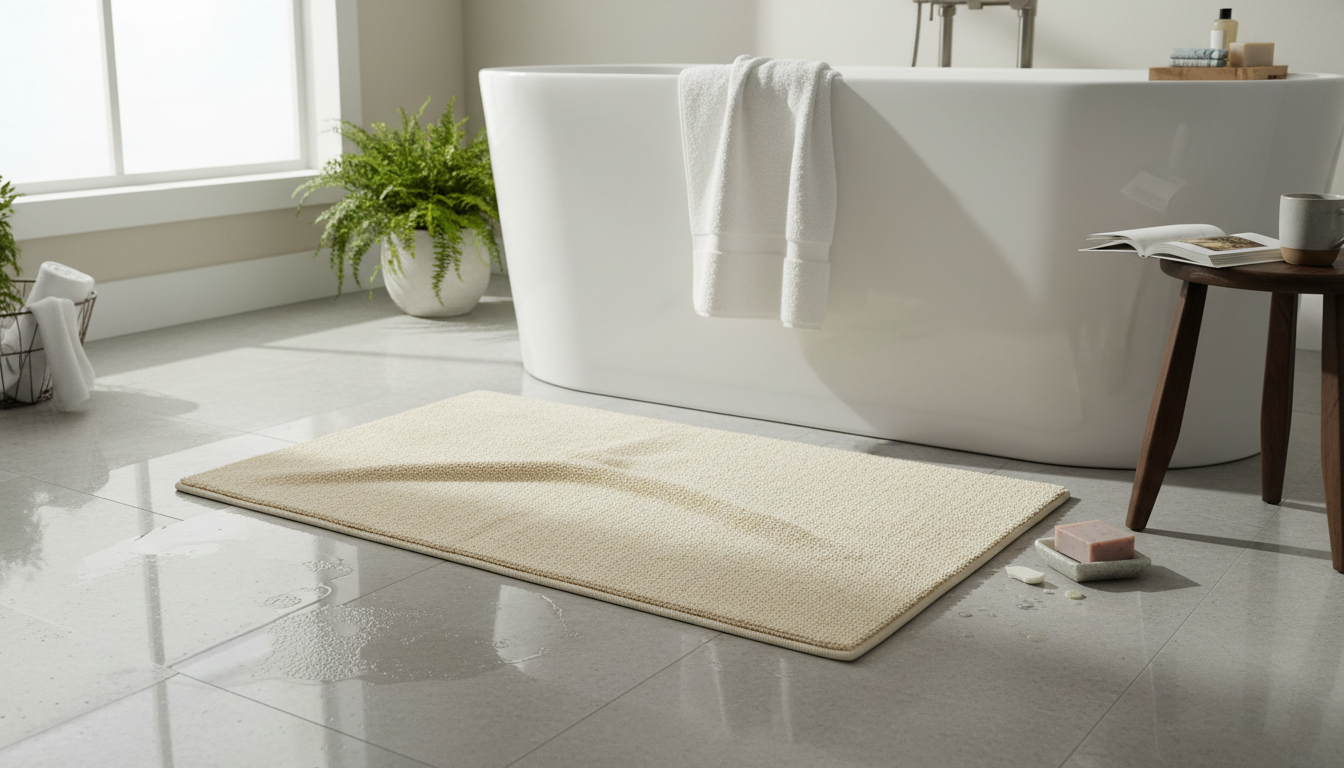
Traction is the defining safety benefit of a mat. On floors, mats rely on textured rubberized backing, high-friction TPR, or latex blends. Inside a tub or shower, a bathtub mat uses suction cups and drain holes to anchor securely and move water away from underfoot.
| Grip technology | Best location | Key benefit |
|---|---|---|
| Rubberized backing (floor mat) | Outside tub/shower; vanity front | Stable footing on smooth tiles; easy repositioning |
| Suction cups (bathtub mat) | Inside bathtub or shower stall | Anchors in place; drain holes prevent pooling beneath |
| Textured top surface | Any wet zone | Extra friction underfoot; comfortable feel |
Suction cups do not bond well to textured or anti-slip tub coatings. If your bath base is textured, use a floor mat with high-grip backing outside the tub instead.
Want to compare traction with other textile options in one place? Explore a broader view of other bathroom rug types to see how mats differ from runners and multi-piece sets while you finalize grip and size.
Drying speed defines how fresh your mat stays. Textile versions (cotton, microfiber, chenille) absorb a lot, then release moisture over hours; stone-style surfaces (including diatomaceous formulations) pull water through micro‑pores and release it rapidly, helping resist odors and mildew.
| Surface type | Drying behavior | Care routine |
|---|---|---|
| Cotton loop/tuft | High absorption; slower to release moisture in humid rooms | Machine wash; tumble low; shake out lint between cycles |
| Microfiber/chenille | Quick dry due to fine fibers; lighter weight after wash | Machine wash; air or low tumble; avoid fabric softener |
| Stone/diatomaceous surface | Instant absorption; evaporates rapidly; low odor retention | Wipe/rinse; occasional light sanding to refresh pores |
Rotate two mats so one fully dries. For textiles, wash weekly in humid homes; for stone surfaces, a quick wipe after showering maintains hygienic drying.
If absorption is your primary goal, compare materials and constructions in this focused set of absorbent options to see how pile height, fiber type, and backing affect both drying and maintenance.
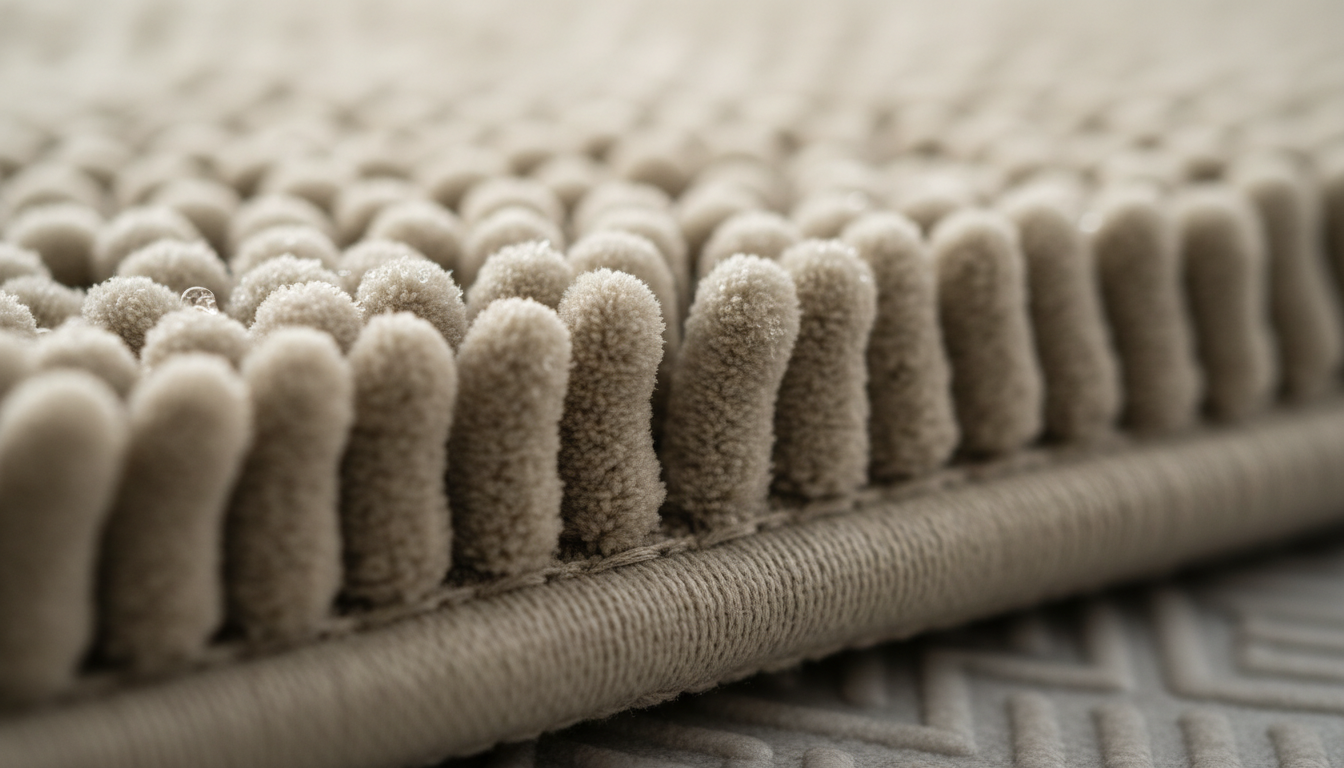
A mat’s look is inseparable from its profile. Low-pile or stone formats slide under doors and keep sightlines clean; plush textiles add visual softness and a cozy step. The larger the mat, the more it defines the bathroom’s geometry—so color, texture, and edge finish are important choices.
| Profile | Thickness (approx.) | Best visual effect |
|---|---|---|
| Stone/diatom surface | 0.2–0.4 in (5–10 mm) | Sleek lines; spa‑like minimalism |
| Low-pile microfiber | 0.4–0.6 in (10–15 mm) | Clean silhouette with softer texture |
| Plush cotton/chenille | 0.6–1.0 in (15–25 mm) | Comfort underfoot; adds warmth to large floors |
For pattern and color inspiration tailored to mats, browse a curated set of design‑led patterns that balance visual interest with slip-resistant construction and practical care.

Start with your layout, then match the mat to how you use the room—quick showers, long baths, or family traffic. Prioritize traction and drying, then confirm care and thickness.
If floors are polished or sealed, clean with a degreasing cleaner before placing any mat; residues reduce grip and shorten backing life.
If high absorption is the priority, consider a large absorbent choice that pairs dense fibers with a stable, low‑slip backing for daily routines.
For households seeking extra traction in wet environments, look at an extra‑secure option designed with oversized contact area and enhanced grip for busy bathrooms.
One continuous mat removes wet tile seams and creates consistent footing. You gain broader coverage, fewer trip edges, and simpler cleaning. In wide bathrooms, a single rectangle often replaces two or three small rugs while improving traction where splashes actually happen.
A runner is longer and narrower; it shapes a corridor but may miss the tub exit. A standard rug is compact for tight spaces. A large mat balances width and length to catch drips by the bath edge and the vanity. See a crisp, light-toned example via this white variant to visualize scale.
Mats emphasize non-slip stability, defined edges, and easy placement. Compared with loosely draped textiles, the mat format is engineered to stay put, align with fixtures, and deliver predictable drying and care across larger surfaces without overlapping pieces.
Stone surfaces feel firm, clean, and dry fast. If you like a sleek, spa look and minimal maintenance, they shine—just wipe or rinse. For a larger footprint in this category, explore our larger stone option to combine instant absorption with a door‑friendly profile.
Yes—choose a thinner profile and size to the landing zone, not the entire room. Even a 27 x 45 in rectangle can fit if it clears the door. For easy placement guidance, review an oversized bathroom mat pick and compare listed dimensions to your taped outline.
Textile mats: shake and hang after use, then machine wash on warm; tumble low. Avoid softeners to preserve absorbency. Stone-style: rinse or wipe; periodically refresh the surface with a light abrasive pad to reopen pores. Always dry the backing surface to maintain grip performance.
A large bath mat transforms wet, scattered drip zones into a single, stable pathway. Whether you choose plush cotton, quick‑dry microfiber, or a stone surface, prioritize the right footprint, non-slip backing or suction, and a care routine you’ll follow. If pattern is on your mind, browse design‑led choices and complete your plan with sizes that match your tape‑out.


