


Half Circle Bath Mat


Water collects at curved edges: the base of a tub, the lip of a shower, the arc of a pedestal sink. A rectangle leaves gaps, while a round rug wastes space. A Half Circle Bath Mat solves the problem with a curved footprint that hugs the splash zone and a non-slip backing engineered for wet tile.
Because a mat is designed for traction, quick release of moisture, and low threshold clearance, it behaves differently from a decorative rug. Expect faster drying, precise placement, and fewer trip points around corners. Explore the sections below to choose the right mat with measurable confidence—then add one to your bathroom with ease.
The value of a mat—versus a generic rug—starts with targeted traction. A semicircle aligns the straight edge against the tub or shower door, while the arc captures drips. The backing is purpose-built to resist lateral slide on glazed surfaces, a common weakness of plush rugs.
| Criterion | Half Circle Bath Mat | Round/Rectangular Rug |
|---|---|---|
| Fit at tub/shower | Straight edge hugs threshold; arc catches drips | Either leaves gaps (rect) or overlaps fixtures (round) |
| Wet-floor grip | non-slip backing engineered for moisture | Often textile back with limited wet traction |
| Trip points | Curved edge reduces corner lift and snag risk | Square corners can curl or catch at door swing |
“Switching from a thick rug to a half-round mat stopped the slide at our shower door and cut drying time in half.”
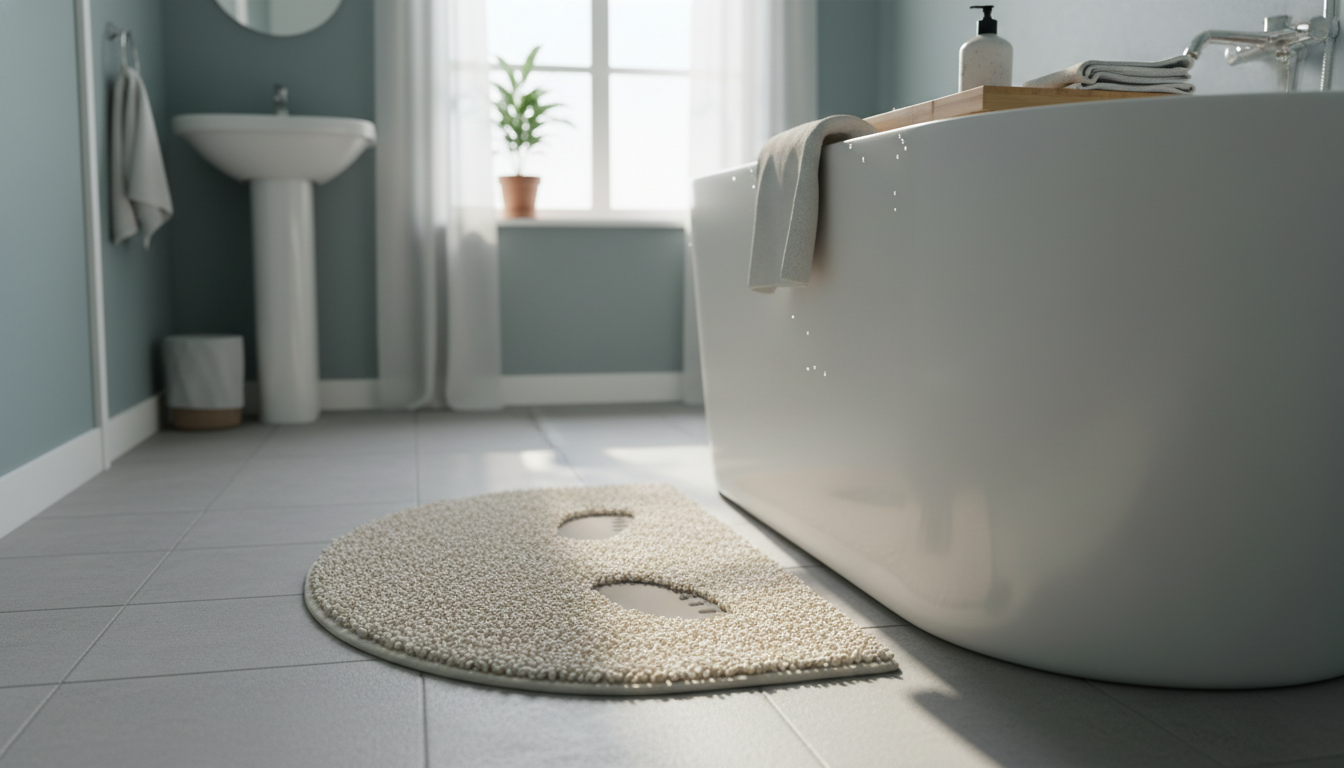
Unlike plush rugs that snag under a low door, a bathroom mat is defined by its low-profile edge. Thickness typically ranges from 6–12 mm for chenille or microfiber and even slimmer for woven cotton or teak slats, reducing friction against sweeps and thresholds.
| Material build | Typical thickness | Door-sweep compatibility |
|---|---|---|
| Microfiber chenille (semi-circle) | 8–12 mm, plush pile, soft hand | Works with most sweeps; check 10 mm minimum gap |
| Woven cotton (half-round) | 6–8 mm, flatweave, braided or hand-woven options | Excellent; minimal snag risk |
| Teak slatted (semi-circle mat) | 10–15 mm, vented for drainage | Rigid yet low; confirm threshold height |
Check the gap under your door. If it’s under 10 mm, pick a flatter mat with a beveled perimeter or slatted profile to preserve silent operation.
If you prefer to compare thicknesses and profiles across related bathroom pieces, browse the broader family of materials in our category of bath floor textiles for context before committing to a specific semicircle.
A mat is designed to shed moisture efficiently. Pile engineering, venting, and backing choice all influence time-to-dry. Microfiber piles wick quickly; cotton loops balance softness with absorbency; slatted wood evacuates water by design. Rugs, by contrast, often trap humidity in dense underlays.
| Half-circle material | Absorbency / Dry-time (indicative) | Care |
|---|---|---|
| Microfiber chenille semi-circle | High / 60–90 min in ventilated rooms | Machine wash, low tumble; avoid high heat |
| Cotton loop half-round (hand-woven or braided) | Medium-high / 90–120 min depending on pile | Machine wash; reshape edges after spin |
| Teak slatted semi-circle mat | Non-absorbent / air-dries rapidly via venting | Rinse; dry upright; oil occasionally if desired |
Avoid laundry softeners on microfiber; they coat fibers and reduce wicking. To preserve grip retention, let the backing cool fully before reuse after a dryer cycle.
Need more water control? Review absorbent semicircles in our high-absorption selection to match your shower routine and ventilation level.
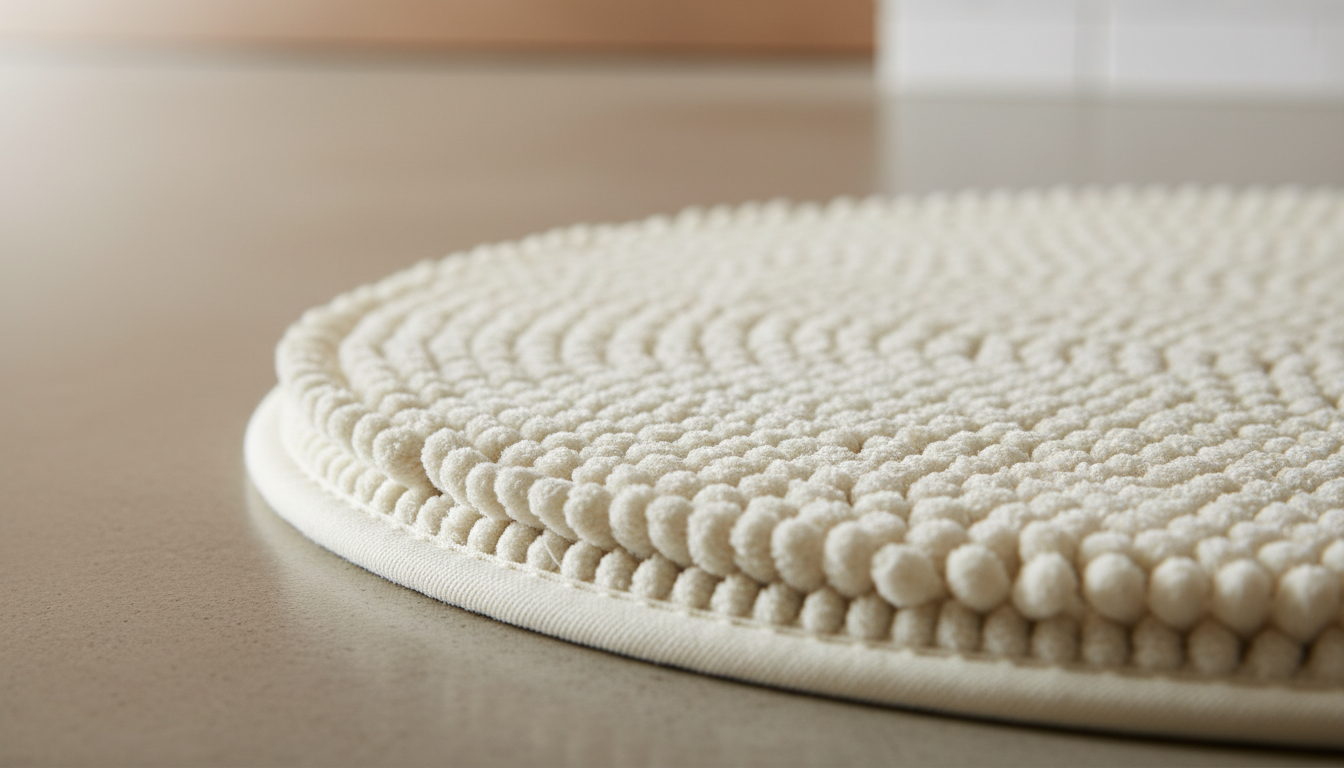
A semicircle introduces a soft arc without the footprint of a full round. Because it is a mat, edging and construction are optimized for wet use: bound perimeters resist fray, tassels (if present) are short and secured, and crochet borders stay dense to maintain shape after washing.
| Look | Construction focus for mats | Where the arc shines |
|---|---|---|
| Crochet/handmade arc | Dense border to keep semicircle crisp after wash | Powder rooms with pedestal sinks |
| Hand-tufted slice motif | Short pile to prevent drag; bound edge | Kids’ bathrooms; accent by shower curb |
| Slatted semi-circle wood | Vented slats; rubber feet for wet stability | Spa-style walk-ins needing fast runoff |
A mat’s arc reduces visual clutter by removing two corners. In tight rooms, that perceived space gain often makes floors look wider.
If your bathroom scheme leans toward distinctive shapes and textures, see complementary pieces in our creative-shapes curation to coordinate arcs with other soft furnishings.
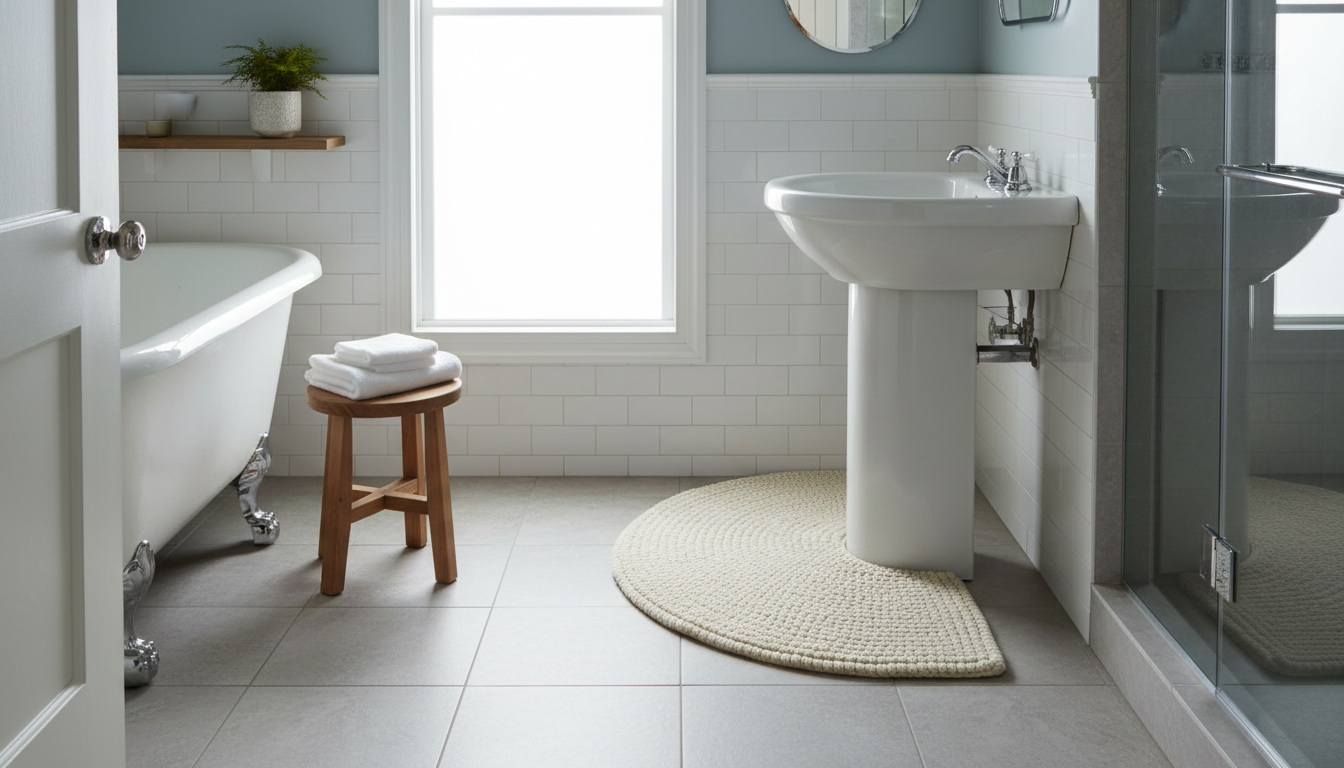
Selecting a semicircle isn’t about generic softness; it’s about mat-specific function: hygienic drying, threshold fit, and stable traction around curves. Use the checklist below to finalize your choice.
| Use case | Recommended half-circle mat type |
|---|---|
| Shower door with tight clearance | Low-profile woven cotton with beveled edge |
| High splash tub zone | Microfiber chenille semicircle, high absorbency |
| Spa-like walk-in | Teak slatted half-round with rubber feet |
Matching a curved radius to your fixture is easier when you start from a dedicated arc. See this curved cotton option if you want a balanced hand and machine-wash simplicity.
For wet zones right at the shower curb, a backed semicircle built for splash is the safer pick. Consider this semi-circle shower piece when threshold space is limited and traction is the priority.
A mat is engineered for wet rooms: targeted traction, moisture management, and slim construction. In a half-round, that purpose shows—curved coverage meets the drip line while the straight edge anchors at the curb, keeping edges from drifting and corners from lifting.
Rectangles waste space around arcs and can catch at door corners. A semicircle mat uses its curve to follow the tub base and reduce snag points. It’s also easier to center at a pedestal sink, delivering coverage without blocking toe-kicks or vent grilles.
In compact rooms, the arc removes two corners, making floors feel broader. A mat’s low-profile edge clears doors quietly, while quick-drying piles limit lingering humidity. If you prefer a neutral accent, this grey half-moon pick keeps visuals calm while doing the wet-work.
Bathroom mats prioritize wet-tile grip and quick-dry properties; entrance or farmhouse door mats are built for abrasion, dirt scraping, and UV exposure. For inside thresholds, a half-round bathroom mat works, but for outdoor entries, choose an entrance-focused build instead.
Use a mesh bag on gentle cycles, reshape the arc after spin, and line dry when possible. Bound edges protect crochet borders; braided cotton benefits from periodic vacuuming to remove dust trapped between plaits and to preserve hygienic drying between washes.
Place the flat side tight to the shower curb or tub apron. That alignment prevents bunching and keeps the arc underfoot. If you want a ready-to-place format, see the demi-cercle format designed to sit flush to the threshold.
Where curves meet water, a mat—specifically the half-circle—delivers what rugs struggle to provide: targeted traction, crisp alignment, and rapid evaporation. Select by radius, backing, and care routine; then let the arc do its quiet work at the splash line. For fast wick and easy care, explore this microfiber half-moon designed for frequent use.
To coordinate beyond the arc, consider related pieces in absorbent bath textiles or discover statement arcs in inventive bathroom shapes. When coverage must follow a curve, the mat is the right tool—efficient, stable, and purpose-built.


