


Allergy flare-ups in the bathroom often start at floor level. Ready to turn daily routines into a reliable barrier against mites and mold?
This 2026 guide translates science into simple, mobile-friendly steps. You’ll learn how floor hygiene breaks the mite moisture cycle, which mats actually help, and how to clean without harming indoor air quality. Expect specific actions, not fluff—because bathroom hygiene succeeds in the details.
Why floors matter most
On bathroom floors, dust, lint, hair and shed skin settle fast. Add steam and splashes, and you get an ideal microclimate for mites and mold. Floor hygiene here directly lowers daily exposure.
- Textile mats collect skin scales and hold humidity longer than hard surfaces.
- Grout lines trap biofilm; each shower can re-wet residues if not cleaned.
- Bare feet transfer allergens to soft rugs; those rugs then re-release on drying.
- Ventilation gaps raise indoor moisture, weakening cleanliness efforts.
Prioritize floor hygiene right after bathing: a 30‑second towel wipe or squeegee prevents hours of dampness.
If you use fabric rugs, choose low‑pile, quick‑dry textiles that you can launder often; see a curated selection of washable bathroom mats for options that support a sanitary routine.
Start here and the rest of your hygiene plan becomes easier: drier floors, fewer allergens, cleaner air.

Materials that resist mites
Different floors and mats behave very differently with moisture. Choose surfaces that dry fast, clean easily, and do not trap organic debris. This is where material science meets hygiene.
- Glazed tile or sealed vinyl: low porosity, quick to sanitize with a neutral pH cleaner.
- Stone composites that wick water away help break mite habitats by accelerating evaporation.
- Microfiber rugs: faster dry time than cotton; look for non‑slip backing that breathes.
- Deep cotton loops feel plush but retain moisture, raising allergen persistence between washes.
Reducing dry time under 24 hours sharply limits mite survival; prolonged dampness is their ally.
| Surface/mat | Hygiene impact |
|---|---|
| Glazed tile, sealed vinyl | Low porosity; easy wipe; supports daily sanitation with minimal residue. |
| Stone composite “rapid‑dry” mat | Wicks water; discourages mites by shortening damp periods. |
| Microfiber low‑pile rug | Quicker drying than cotton; machine‑wash friendly for routine hygiene. |
If you care about looks as much as cleanliness, design choices can still serve sanitation; browse design‑led quick‑dry options that align with a neat, low‑maintenance routine.
Pick the right surface first; then your cleaning plan becomes lighter and more reliable.
Routines that cut exposure
Consistency beats intensity. A simple sequence—dry, remove debris, then sanitize—keeps mites in check and the bathroom breathable. Aim for steady, scannable tasks.
- After each shower: run the fan 15–20 minutes; squeegee or towel‑dry wet zones.
- Daily: pick up lint and hair; quick HEPA vacuum pass if you use rugs.
- Every 2–3 uses: launder rugs; alternate sets to keep one fully dry.
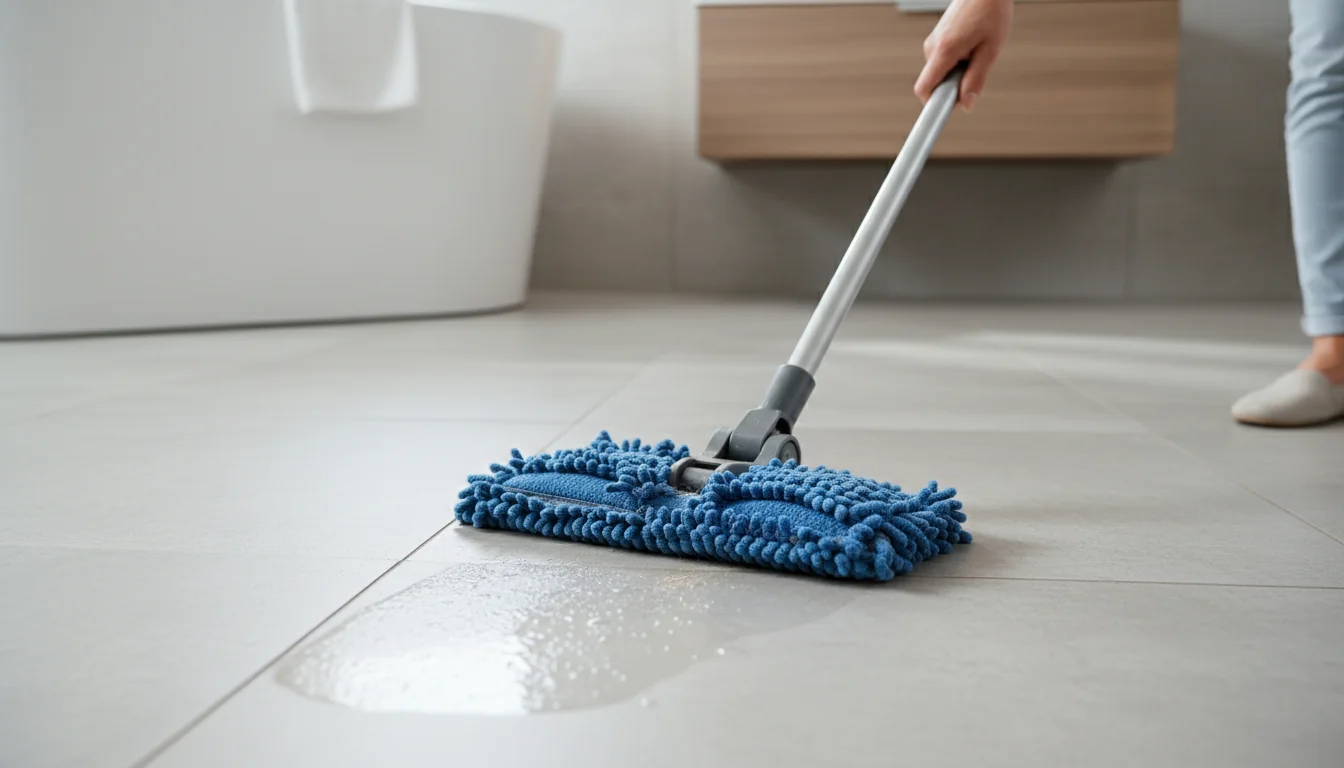
- Weekly: mop with a neutral cleaner; scrub grout where water stagnates.
Musty smell or a slimy feel signals biofilm. Pause rug use until fully washed and thoroughly dried.
Large spaces need broader coverage and more textile rotation; see oversized options for larger bathrooms that stay stable and easier to launder on schedule.
These habits create a hygiene “loop”: dry fast, clean light, repeat.
Moisture control that lasts
Lowering relative humidity is the backbone of a hygienic bathroom. Mites decline sharply below 50% RH, and floors re‑soil less when air moves well.
- Ventilation: run the exhaust fan during and 15–20 minutes after showers.
- Target humidity: 40–50%; a small hygrometer guides daily choices.
- Open the door or window to speed evaporation; wipe pooled water quickly.
- Seal grout every 6–12 months to reduce absorption and staining.
If RH rises after each shower, extend fan runtime by 5 minutes until it returns under 50% consistently.
Good air also protects indoor air quality beyond the bath, since damp aerosols travel to hallways and bedrooms.
Proof your routine works
Hygiene improves when you measure. A few simple checks validate that your floor maintenance truly reduces everyday exposure.
- White‑cloth test: wipe a 20×20 cm patch; visible film means you need a better rinse or drier finish.
- Hygrometer: track RH before/after bathing to tune ventilation time.
- Laundering log: note dates; aim for 3 times per week if symptoms persist.
- Odor check: any mustiness = wash and fully air‑dry rugs before reuse.
Washing at 60°C is widely effective. At 40°C, use an enzyme detergent and longer cycle to support sanitation.
These small audits keep your 2026 routine honest and efficient, balancing cleanliness with time.

Step-by-step: spotless bathroom floor routine
- Clear the floor: lift rug, empty corners, open airflow.
- Dry removal: vacuum edges, grout lines, and under fixtures.
- Wash: damp mop with neutral cleaner; scrub grout where needed.
- Rinse lightly: remove leftover surfactants to protect air quality.
- Dry fully: squeegee and ventilate until surfaces are crisp-dry.
Use two-color cloths—one for wash, one for rinse—to avoid residue redeposition and keep floor hygiene tight.
Prefer hard, fast-drying landings after showers? Consider a quick-dry stone option to reduce persistent dampness.
If you want a gentle, nature-inspired shape that still launders easily, try a leaf-shaped mat choice and rotate two pieces to preserve sanitary conditions.
Skipping the dry step. Wet floors and rugs re-seed allergens and undermine all cleaning work.
Why target the floor for allergen relief?
Because moisture and debris pool at ground level. Tight floor hygiene removes food and shelter for mites, curbs mold, and prevents particle resuspension into the room air.
Do mats help or hurt cleanliness?
Both—depending on fabric and drying. Quick-dry, washable designs support floor hygiene. Keep two in rotation and launder weekly to avoid a damp, allergen-rich surface.
What about colorful rugs—any sanitary downsides?
Color is fine. The key is washability and drying speed. For a bold accent that still launders well, see this vivid, washable choice and pair it with consistent ventilation.
Kids’ bathroom—how to keep it truly clean?
Prioritize non-slip, quick-dry mats and strict drying after baths. Rotate two pieces, and wash at high temperature weekly. A playful option like this frog-themed mat can still serve hygiene demands.
We have a cat—does that change anything?
Pet dander adds allergen load. Vacuum floors and edges more often, and pick fully washable rugs. A fun, easy-care pick is this cat-motif mat, cleaned weekly at 60°C.
Are “mite traps” useful in bathrooms?
Not really. Mites concentrate in textiles and dust, not open floors. Focus on wash cycles, ventilation, and surface drying—these raise sanitary control much more effectively.
How does ventilation affect sanitary outcomes?
Proper airflow lowers humidity and speeds drying, a core pillar of hygiene. Combine exhaust fans with door or window opening to clear moisture fast.
Sensitive users in mind
For infants, seniors, and people with asthma, meticulous floor hygiene reduces flare‑ups. Keep it simple, scent‑light, and slip‑safe.
- Choose fragrance‑free cleaners; rinse well to leave no residue on tiles.
- Use non‑slip, low‑pile rugs and stable edge transitions to prevent falls.
- Clean when rooms are empty; ventilate, then re‑enter once surfaces are dry.
- Avoid powdered products that aerosolize; liquids or pre‑diluted work best.
Never mix chemicals. A mild, neutral cleaner supports hygiene without irritating airways.
Thoughtful choices keep exposure down in the bathroom and adjacent rooms in your home.
Allergy relief in the bathroom starts underfoot: control moisture, choose washable mats, clean in the right order, and always finish dry.
- Ventilate and squeegee after every shower for consistent cleanliness.
- Wash rugs weekly at 60°C and rotate spares to protect floor hygiene.
- Use neutral chemistry, rinse, and dry fully to safeguard indoor air.
For more inspiration on sanitary textures and layouts, browse large formats, versatile picks, and design-led choices across the site.
0 comments