


Bath time looks peaceful, yet most incidents happen in seconds. Wondering whether a baby bath mat or a bath seat offers better everyday protection? This 2026 guide focuses on practical safety only.
You’ll learn how each option manages slipping, drowning risk, age fit, setup checks, and hygiene. Quick wins, clear limits, and a 30‑second audit help you lock in Everyday Safety, updated January 2026.
Risk-first: how accidents happen
Start with hazards, not gear. In a wet tub, infants face three main threats: slips leading to head injury, water covering the mouth and nose, and hot water scalds. Any choice must reduce these without creating a false sense of security.
- Slip and impact: slick enamel or acrylic is unforgiving to a baby’s head.
- Submersion: even shallow water can obstruct breathing when balance is lost.
- Thermal risk: water above body temperature can scald delicate skin quickly.
- Human factors: distraction is the top driver of unsafe moments.
Hands-on, eyes-on is the core rule. Keep one hand on the baby and stay within arm’s reach for the entire bath—no exceptions.
Everything in this article serves that principle. Gear supports Everyday Safety; it never replaces supervision.
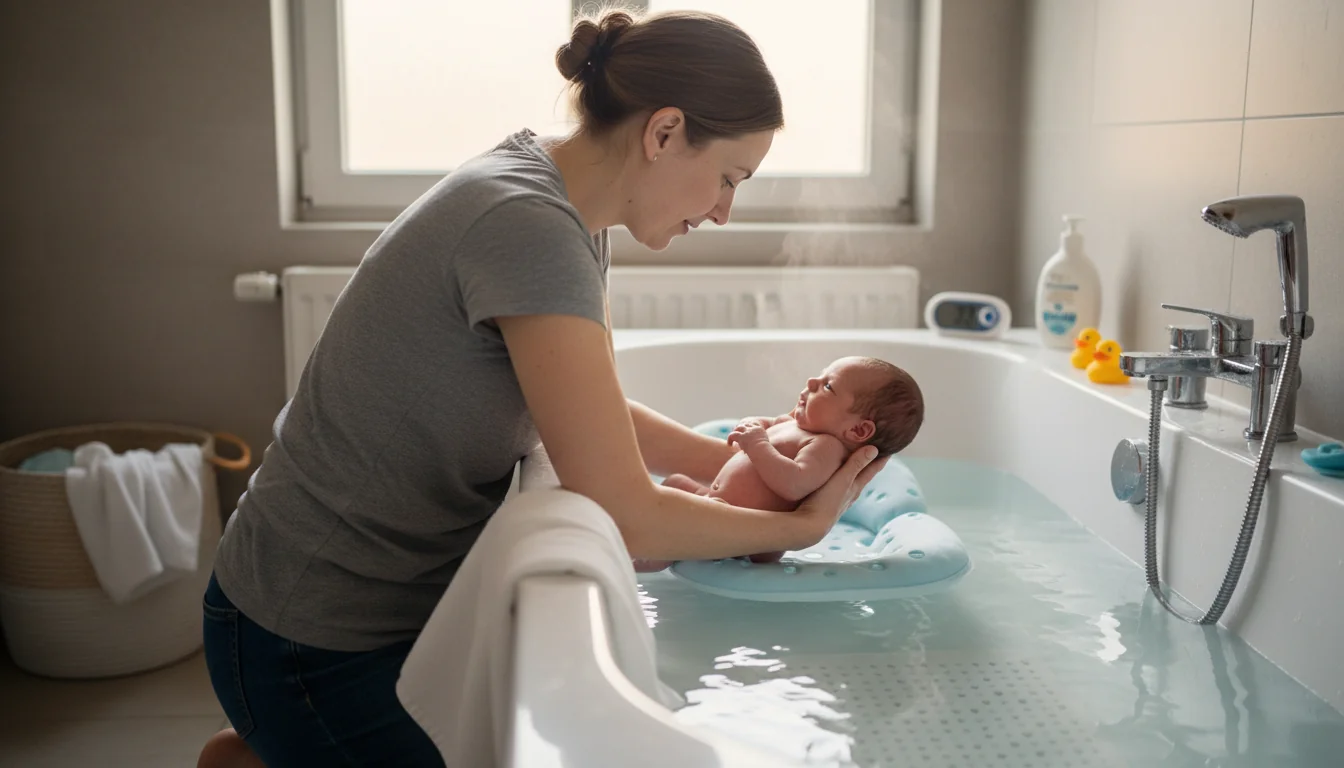
Anti-slip grip: what mats solve
A bath mat adds friction under tiny feet or knees. It reduces lateral slip and cushions small impacts, especially when a sitter leans or reaches for toys. It’s a passive control: no moving parts, minimal setup, predictable behavior.
- Stability boost: texture and suction cups resist shear and lift.
- Coverage matters: a full-length mat limits “edge” slip points.
- Drainage holes: prevent float and let water circulate.
- Comfort: soft TPE or rubber reduces pressure on knees and skin.
Before every bath, press down across the mat to confirm suction at multiple points. Any lift equals reduced protection.
| Safety criterion | Bath mat | Bath seat |
|---|---|---|
| Slip control | Improves floor friction | Localized; base can slide if suction fails |
| Drowning hazard | Does not raise submersion risk itself | May create a false sense of safety |
| Hands-free temptation | Low; still requires supervision | High; caregiver may step away |
| Failure mode | Suction loss → lift/float | Tip/entrapment if child surges |
If anti-slip support is your priority, explore options with reinforced grip designed to keep traction consistent across the tub.
Seated aids: stability myths and rules
Bath seats can make handling easier for caregivers of sitting-age infants, but they are not safety devices. They reduce wobble only in one posture and can tip or detach if a baby arches, pushes, or stands unexpectedly.
- Appropriate only for strong sitters; never for newborns.
- Keep water well below the navel to limit submersion risk.
- Use on a smooth, even tub base; test suction with both hands.
- Treat as a third hand, not a lifeguard—constant supervision remains essential.
Most incidents with seats occur in seconds when adults reach for towels, phones, or siblings. Keep everything within reach before you start.
Don’t forget the step-out zone. A wet floor is a slip trap for adults and children alike; complement tub controls with absorbent floor mats to stabilize transitions without sacrificing Everyday Safety.
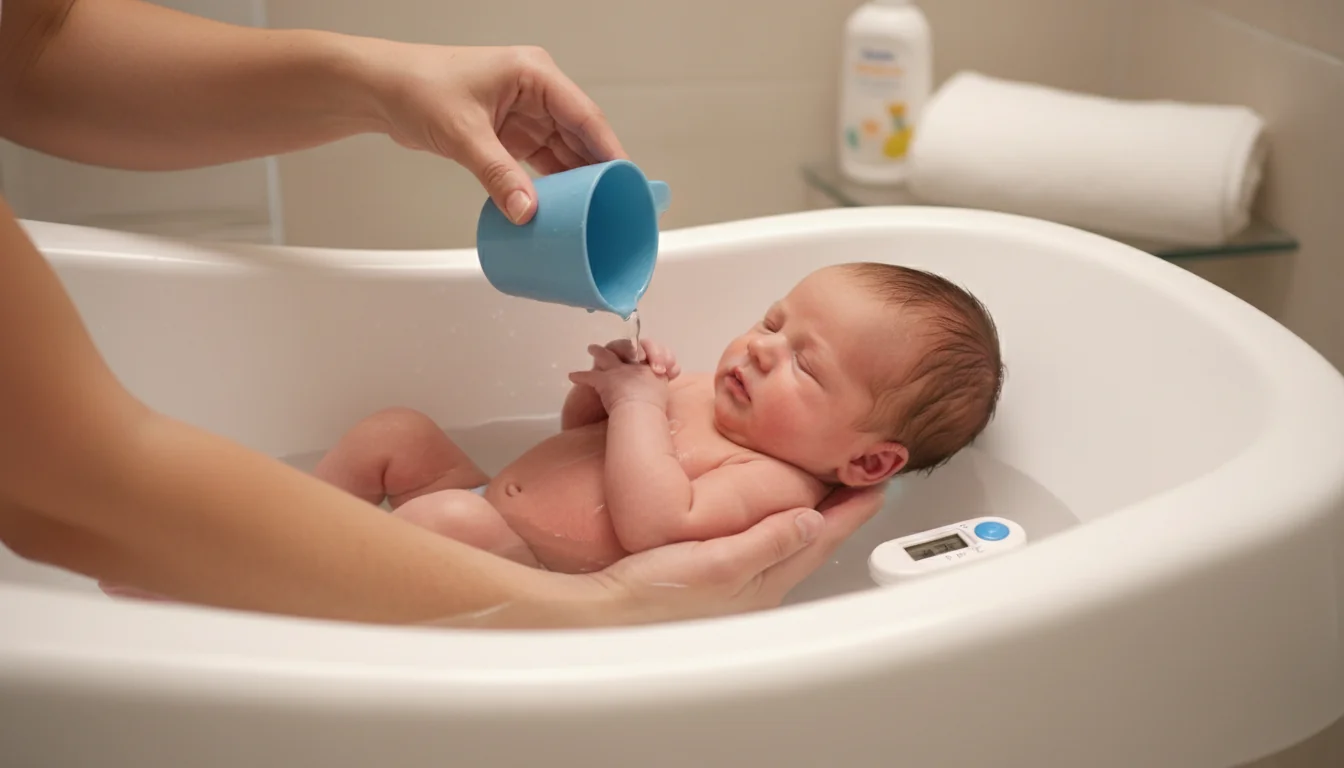
Age fit and bathroom layout choices
Match the solution to your child’s posture and your space. A risk-based pick beats a one-size-fits-all purchase every time.
- Newborns: support in a baby tub or sling; a mat inside the adult tub adds grip for caregivers’ knees and forearms.
- Sitters: a non-slip mat plus your guiding hand often outperforms a seat for control and quick repositioning.
- Small showers: consider a basin placed at waist height to protect your back and keep eyes-on contact.
- Post-bath: dry zones matter; water tracked on floors undermines overall safety.
For the step-out area, low-pile textiles dry faster and grip better. If you prefer plant-based fibers, review bamboo rug options to curb puddles after rinsing.
Temperature check: aim for 37–38°C water, and keep fill to just 5–7 cm for infants. Less depth narrows submersion risk while you maintain control.
Materials, hygiene, and proof
Material choice affects traction, skin comfort, and cleanliness. Prioritize items labeled phthalate-free, with low odor and rounded textures that won’t scratch delicate skin. Look for dense suction cups that resist deformation.
- TPE or rubber: good grip, soft feel, easy to press-test.
- PVC: firm suction; choose models with generous drain ports to avoid float.
- Surface detail: micro-ridges for traction; avoid harsh spikes that irritate.
- Hygiene: weekly clean; monthly deep clean to deter biofilm.
Do not bleach routinely; residues reduce grip. Favor mild soap, a soft brush, and thorough air-drying over 24 hours.
Replace mats when cups lose elasticity or the surface feels slick even after cleaning. Reliability over time is part of Everyday Safety, especially in busy family bathrooms.
Hands, eyes, and routine flow
Safety improves when your routine flows without breaks. Set up like a flight checklist so you never step away. Think nursery care basics adapted to water: supplies staged, stable posture, and clear lines of sight.
- Pre-stage towels, washcloth, soap, clean diaper, and pajamas within reach.
- Keep a dedicated caddy—your “bath kit”—like a compact diaper bag (sac à langer) for quick Accueil-to-bath transitions.
- Place toys last, and use only a few to reduce reaching and twisting.
- For Promenade or travel, a foldable basin ensures a controlled setup anywhere.
Most parents who report smooth baths follow a fixed order: fill, test, stage, seat or mat check, then baby in. Sequence reduces slips in attention.
This human-factors approach is where Everyday Safety becomes habit, not extra work.
Quick guide: setup for safe baths (2026)
- Dry the tub base and place the mat flat; press each quadrant firmly.
- Fill with warm water to 5–8 cm; confirm ~37°C.
- Set towel, washcloth, and toiletries within reach; silence phone.
- Undress baby outside the tub; maintain two‑hand transfer.
- Keep one hand supporting the torso at all times; end at first fatigue.
Lay out pajamas and a clean diaper before you start. A calm exit lowers drops and slips.
If you need a compact, infant‑focused mat, consider a baby‑friendly tub mat designed for small bodies and close supervision.
Why prioritize safety over convenience?
Incidents happen quietly and fast. Tools reduce risk, but your attention is decisive. Short, organized baths with shallow water and hands‑on holding deliver Everyday Safety more reliably than any accessory.
Bath seat vs. mat: which is safer in practice?
A mat tackles the slick floor directly; a seat restrains movement but can tip. Many parents start with this tub‑ready infant mat example and continue hands‑on contact at all times.
What water temperature is safest?
Aim for ~37°C (98–100°F). Test with a thermometer or your inner wrist. Hotter water raises scald risk and restlessness, which can trigger slips. Stable warmth supports calmer behavior and better control.
Does color or design affect safety?
High‑contrast surfaces make soap scum easier to spot and clean. A neutral, light option like a clean‑looking white mat helps you monitor grime that can reduce traction.
How do I secure a mat on a textured tub?
Textured bases challenge suction. Try a liner sized for the tub floor, such as a small‑footprint base liner. Always do a hard push test and keep one hand supporting your baby.
When is a seat appropriate?
Only for babies who sit unassisted and for short, fully supervised baths. Retire it once pulling to stand begins. A mat remains useful throughout by maintaining floor traction and reducing slip zones.
For Everyday Safety, a grippy mat plus hands‑on care outperforms any hands‑free idea. Seats have narrow use windows; vigilance has none.
- Shallow water, steady contact beat gadgets every time.
- Clean and inspect gear to preserve traction and control.
- Match tools to your bathroom, not just age milestones.
Prefer a mat that blends safety with character? Explore a safety‑forward design choice while keeping your routine calm, short, and supervised.
0 comments