


Sharing a bathroom means sharing moisture, microbes, and mess. That’s why clear house rules for bath mats protect comfort and health.
Do your roommates know who launders, how often, and where the mat dries? If not, you need simple rules you can all follow without friction.
In this 2026 field guide, you’ll learn a practical rule-set: ownership, washing cadence, fast-drying protocol, material-specific care, and a zero-argument rotation plan.
Health first: why ground rules matter
Moist bath mats trap water, skin cells, and soap residue. That damp blend encourages bacteria and fungi, turning “soft underfoot” into a hygiene risk—especially in a high-traffic shared apartment.
- Set a single, visible ruleset everyone agrees to and can follow daily.
- Limit contact time: step out, dry feet, step off—no lingering on the mat.
- Enforce a wash window: never beyond 72 hours between launderings.
- Assign post-shower tasks: shake, hang, and ventilate—every time.
Post the house rules on the door. A 3-line checklist beats memory—every roommate sees the same standard.
These rules protect both health and harmony. Clear expectations make daily care quick, visible, and fair for everyone.
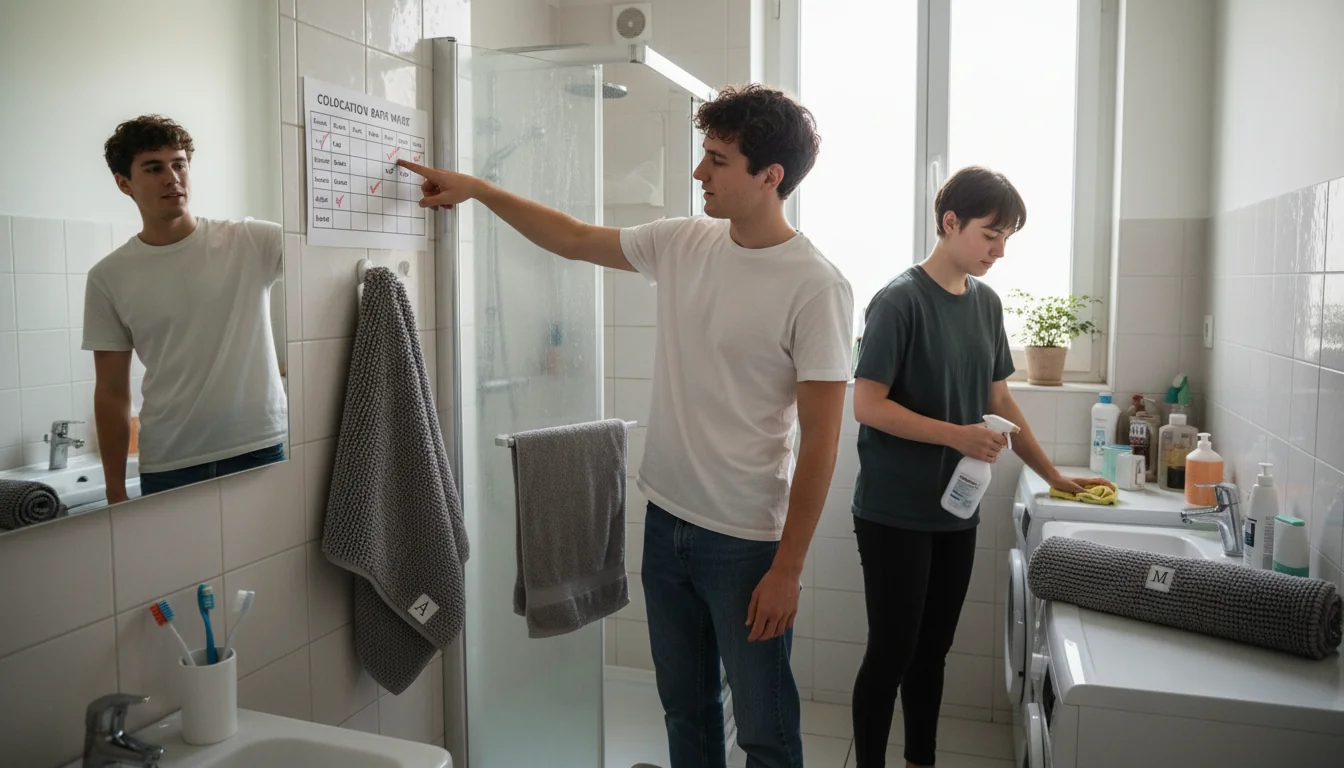
Ownership & rotation: no confusion
Arguments start when no one knows whose turn it is. Solve it with labeled ownership and a rotation rule everyone can check without asking.
- One mat in use, one spare drying—never two on the floor at once.
- Color-code or tag corners with initials to signal who’s on duty.
- Rotate by weekday (Mon–Thu) or headcount (1–4), then repeat.
- Missed turn? Next day, double duty: launder + dry + reset.
| Household size | Rotation rule that works |
|---|---|
| 2 roommates | Alternate days; laundry together every 2 days |
| 3–4 roommates | Weekday slots; weekend deep-wash and sun-dry |
Guests? Trigger the “extra-cycle rule”: wash right after visiting showers to reset hygiene.
Prefer separate ownership instead of rotation? Explore an alternative with our distinctive picks for individual mats to avoid mixing duties.
Drying & storage: beat moisture fast
Cleanliness collapses if the mat stays damp. Your drying rules should be as strict as washing—because dryness is what slows microbial growth.
- After each shower: shake, then hang on a bar or hook with full airflow.
- Door left ajar or fan on for 20–30 minutes to vent steam.
- Never store a folded or bunched mat; flat or draped only.
- Swap to a spare if the surface still feels cool or tacky.
A mat that dries in under 60 minutes typically develops fewer odors than one that takes 3–4 hours.
If your bathroom lacks ventilation, choose quicker-dry options from this curated bathroom mat selection to support the drying rule.

How to apply: the roommate playbook
Turn intent into action with a short, shared routine. Keep it visible and measurable so the rule-set survives midweek chaos.
- Draft the baseline: ownership, laundering days, and drying spots.
- Label mats and add a spare per person to prevent conflicts.
- Post-shower ritual: shake, hang, and ventilate for 20–30 minutes.
- Weekly check: sniff test, stain scan, and machine cycle if textile.
- Monthly reset: deep clean grout and inspect anti-slip performance.
If a mat stays wet overnight, treat it as “out of service” and switch to a dry backup. This protects your hygiene standards.
For showers that splash beyond the tub, consider this anti-mold tub insert to reduce pooling underfoot and keep your shared rules easy to follow.
Audit the rule-set every four weeks. A 5‑minute check-in prevents silent resentment.
FAQ: quick answers
Why choose a formal rule-set?
Clear rules remove ambiguity. They define who washes, when to rotate, and how to dry quickly. This prevents smells, mold growth, and slip risks in a small, shared bathroom.
How do these guidelines compare to “no rules”?
Without structure, mats stay damp and get smelly fast. With a simple schedule and faster-drying options like a graphic stone mat, you minimize moisture times and arguments.
What are the main advantages?
Less odor, fewer slips, and a fair workload. Standardized care keeps materials performing longer, saving time and cutting midweek laundry stress for roommates.
Do these standards fit tiny bathrooms?
Yes. Use wall hooks, door racks, or a slim stand to dry mats upright. Fast-drying boards like a diatomite bathroom board are ideal where airflow is limited.
How do I clean different materials?
Textiles: warm wash, gentle spin, hang open. Rubber-backed: avoid high heat. Stone boards: wipe and occasionally sand. For cozy textile comfort, test a feather-soft textile mat and follow the label.
How often should we replace mats?
Swap textile mats when fibers flatten, backing curls, or odors persist after washing. Stone boards last longer; refresh the surface and replace if absorption drops a lot.
Shared life runs smoother when the bathroom follows one clear, agreed code. If drying speed is your pain point, consider this compact diatomite slab within your routine.
- Define ownership, cadence, and a drying ritual.
- Match care steps to material and space limits.
- Review the rule-set monthly and adjust together.
Set the rules once; enjoy a fresher, safer bathroom every day in 2026.
Washing protocol: simple and repeatable
Build washing rules around frequency, temperature, and sanitizer. Keep them short enough to remember, strict enough to work, and clear enough that any roommate can run the cycle.
- Laundry interval: Max 72 hours between washes in shared use.
- Temperature: warm (30–40°C) for cotton/microfiber; check labels.
- Sanitize: oxygen-based bleach for whites; avoid chlorine on rubber backs.
- Dry: tumble low for textiles; air-dry foam/rubber to prevent warping.
| Material | Rule of thumb |
|---|---|
| Cotton | Warm wash, tumble low; brush loops after drying |
| Microfiber | Cold–warm wash, no fabric softener; air or low tumble |
| Foam/Rubber-backed | Gentle cycle; avoid high heat; air-dry flat |
| Diatomite (stone) | No machine wash; wipe + sand lightly to refresh |
Write the wash rule on masking tape and stick it inside the cabinet—temperature, detergent, sanitizer, drying.
If you prefer quick-drying textiles to ease these rules, browse a selection emphasizing fast-dry weaves to reduce odor buildup.
Material choices: set smart defaults
The right material makes the rules easier to keep. Choose surfaces that dry fast, shed lint, and resist odors—especially vital when several people shower daily.
- Diatomite: rigid, stone-like; absorbs fast; wipe clean; no machine wash.
- Microfiber: quick-dry pile; machine-friendly; avoid fabric softener.
- Cotton loop: plush feel; needs diligent drying to prevent musty odors.
- Rubber-backed: stable underfoot; keep heat low to avoid curling.
No fabric softeners on microfiber. They coat fibers and reduce absorption, undermining your drying rule.
Default to a quick-dry option for weekdays and a plush textile for weekends. Match the rules to habits: heavy morning traffic needs faster recovery.

Etiquette & accountability: keep the peace
Hygiene rules fail if no one feels responsible. Make the system social: visible, kind, and easy to enforce without nagging.
- Use a mini whiteboard: “On duty: J.” with today’s date.
- When someone forgets, restate the rule, not the blame: “Drying rule: hang now.”
- Agree on a reset: weekend deep-wash + 10-minute grout check.
- New roommates? Share the one-page rules within 24 hours of move-in.
Short, specific phrases—“Hang flat now”—improve follow-through more than vague reminders like “Keep it clean.”
Keep the tone neutral and the standard visible. With that, your bath mat rules become routine, not arguments.
0 comments