


Black specks under the mat? Pink rings at the edges? This guide focuses on one thing only: bath mat mold stain removal, done right and fast in 2026.
Tired of scrubbing without results? You will learn precise removal chemistry, how to clean suction cups thoroughly, and how to treat stone and fabric bases without damage.
By the end, you will know which method clears stains in minutes, when to switch tactics, and how to lock in the result so stains do not return.
Faster results: diagnose the stain
Targeted bath mat stain removal starts with correct ID. Mold, mildew, soap scum, and pink biofilm look similar but don’t respond to the same chemistry or dwell times.
- Black or dark dots under suction cups = typical mold colonies. Use oxidizers or chlorine-based options.
- Fine gray film = mildew stain. Mild acids or chlorine solutions clear it efficiently.
- Reddish “pink mold” = bacterial biofilm. Oxidizers or diluted bleach outperform vinegar alone.
- Brown patches = body oil + soap scum. Degrease first, then treat remaining growth.
- White haze on stone = mineral or dried cleaner. Use pH‑neutral stone-safe methods.
Correct ID trims removal time by minutes and prevents damage (e.g., avoid acids on natural stone or harsh alkali on delicate fabrics).
Once you know what you’re fighting, you can choose the right remover, contact time, and scrubbing tool for a clean, sanitary finish.
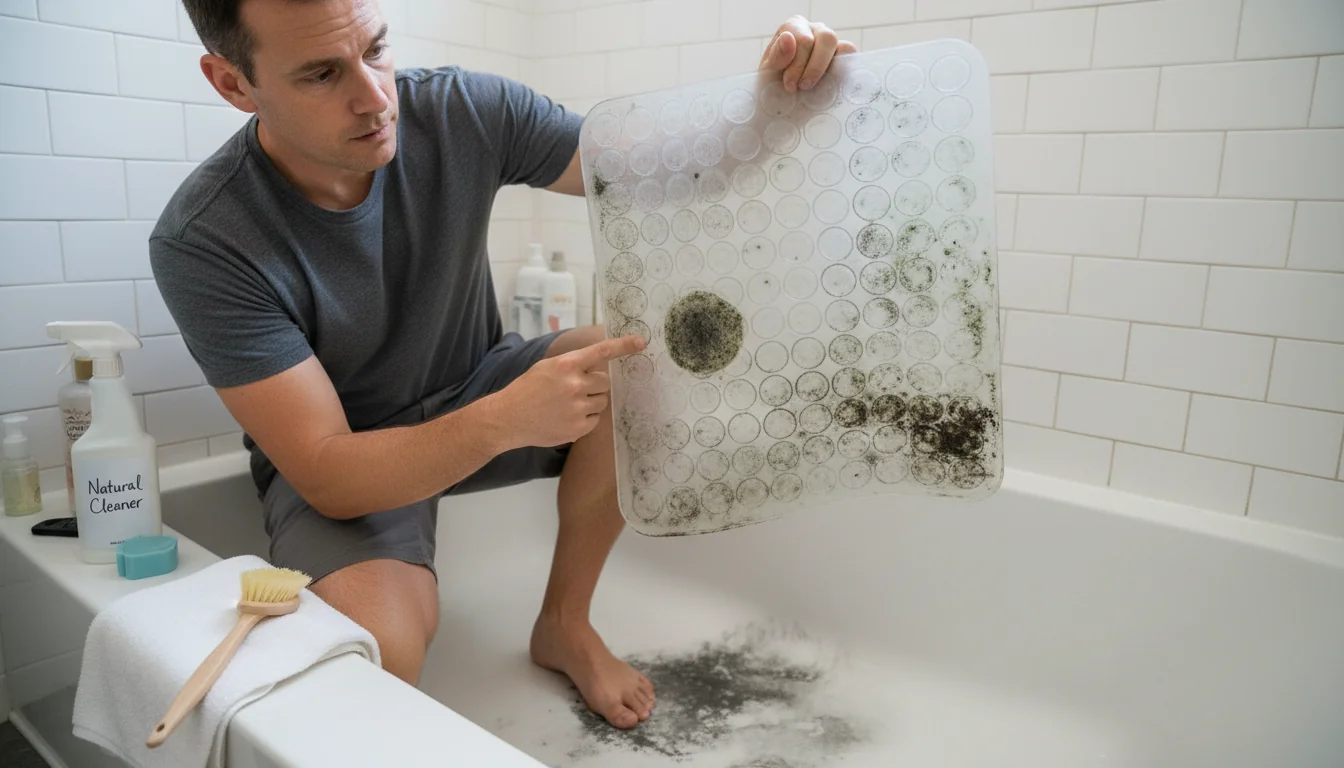
Deep clean: rubber and suction cups
Rubber bath mats trap moisture beneath suction cups, where mold thrives. Effective removal lifts biofilm and kills spores in those tight recesses.
- Release the mat, flip it, and pre-rinse warm to soften residue before treatment.
- For heavy growth, use a chlorine-based bathroom cleaner at 1:10 dilution; dwell 3–5 minutes.
- Prefer milder chemistry? Spray 3% hydrogen peroxide and let sit 10–15 minutes.
- Scrub suction cups with a soft brush; avoid metal that can nick rubber and harbor microbes.
- Rinse thoroughly; air-dry vertically so water drains off the cups and edges.
Baking soda paste (2:1 soda to water) lifts lingering stains; mist vinegar after pasting to fizz debris out of the cups.
If you compare options beyond rubber, our selection of shower mats shows formats that drain faster, which reduces regrowth after removal.
Low-risk care: textile bath rugs
Fabric mats and memory-foam styles respond well to washer-safe stain removal—if you pre-treat and respect backing limits.
- Spot-treat mildew stains with oxygen-based stain remover; wait 10–15 minutes.
- Use cold or warm water; add 1/2 cup white vinegar to neutralize odor and lighten mold from fibers.
- Avoid high heat in dryers; air-dry flat to protect latex or anti-slip backing.
- If the backing is detachable, clean it by hand with diluted peroxide and a soft brush.
- For persistent spots, a short second soak in peroxide helps before the final rinse.
Check care labels: some foams delaminate with hot water or aggressive spin. Removal succeeds only if the mat survives the cycle.
Prefer fast-drying fibers? Explore bamboo-based options that shed moisture quickly, easing ongoing removal and maintenance.

Targeted care: stone bath mats
Stone and diatomaceous mats wick water fast, but stains can lodge in micro-pores. Removal here is about gentle chemistry and light abrasion.
- Avoid acids and strong alkali that etch; use a stone-safe, pH-neutral cleaner.
- Treat spots with 3% hydrogen peroxide; allow 10 minutes before wiping.
- For set-in marks, dry-sand lightly with 400–600 grit, then vacuum dust.
- Do not soak; standing water can saturate and slow future drying.
- Sun-dry occasionally to freshen and disperse residual moisture.
Stone is unforgiving if etched. A stone-safe remover and micro-sanding keep the clean look without dull patches.
If you’re balancing styles in one room, browse our curated bathroom mat range to mix quick-drying surfaces with soft textiles post-removal.
What works: chemistry for stains
Choose the least harsh chemistry that still achieves complete removal. Match the agent to the surface, then respect dwell time and rinse fully.
| Cleaner | Best use and notes |
|---|---|
| White vinegar (1:1 with water) | Light mildew on rubber or fabric; deodorizes. Avoid on natural stone. Dwell 10–15 minutes. |
| Hydrogen peroxide 3% | Oxidizes mold and pink biofilm on most mats; stone-safe. Dwell 10–20 minutes; repeat if needed. |
| Chlorine solution (1:10 with water) | Rapid removal on rubber and hard surfaces. Dwell 3–5 minutes; ventilate; never mix with acids or ammonia. |
| Baking soda paste | Abrasive lift for stubborn spots; safe on rubber and textiles. Rinse well to avoid residue. |
| Mold removal gel | Clings under suction cups and edges; dwell per label (often hours) before wiping away. |
- Start with peroxide or oxygen-based products when possible; escalate only if stains persist.
- Use gel formats to target vertical ribs, suction cups, or underside ridges without runoff.
- Rinse until water runs clear; residue can feed new growth and defeat removal.
- Protect skin and eyes; ventilate well, especially with chlorine-based cleaners.
Degrease first with dish soap on oily mats; then apply your chosen remover. Cleaners work faster on residue‑free surfaces.
For facility teams managing Restroom Care and Facility Maintenance, stick to labeled dilutions and record contact times for consistent outcomes across bathrooms.

Keep it gone: moisture control
True stain removal ends with prevention. Reduce humidity and shorten dry times so mold cannot re-colonize your bath mat or tub floor.
- Run exhaust fans during showers and for 30 minutes after; crack a door for crossflow.
- Hang mats vertically after use; avoid leaving suctioned to the tub or shower floor.
- Wipe standing water from the tub and tile; squeegee walls where splash is heavy.
- Wash fabric mats weekly; rubber mats every 1–2 weeks depending on traffic.
- Sun-dry occasionally to deodorize and boost the interval between cleanings.
If growth covers more than 10 sq ft or returns repeatedly, check leaks and ventilation. Follow current public health guidance for mold cleanup.
Home users and pros alike—from Housekeeping/Cleaning Products teams to Auto Marine Fleet Detailing crews—benefit from a simple airflow rule: dry fast, and you extend the life of every removal.
Step-by-step: rubber mat stain removal
- Lift, flip, and rinse the mat to remove loose soil from cups and base.
- Apply gel or diluted bleach to the cups; observe dwell time: 10–15 minutes.
- Brush cups and seams with a nylon brush; add baking soda on stubborn spots.
- Rinse with cool water until no foam remains; squeeze off excess.
- Hang to dry fully; resume normal use only when cup interiors are dry.
Machine-washable rubber? Add two old towels. They act as scrubbers for cups and edges.
If your mat has many cups or covers a larger footprint, consider a large anti-slip format that you can still lift easily to dry after each wash cycle.
Never combine vinegar and bleach. Alternate methods with a rinse between them.
Why prioritize stain removal over routine washing?
Routine washes miss what hides under suction cups. Targeted removal clears embedded growth, restores grip, and cuts odor fast.
How does this compare to simply replacing the mat?
A focused clean is cheaper and teaches you how to prevent regrowth. Odd layouts, like a quarter-round layout, also benefit from custom cleaning where replacements are less standard.
What if the mat surface is heavily textured?
Use gel for cling, extend dwell, then brush across peaks and valleys. A format with nodes, like a textured massaging surface, often needs extra brushing at the edges.
Can I use vinegar and peroxide together?
Use one method at a time. Rinse between approaches. Never mix peroxide or vinegar with bleach during the same pass.
How do I dry fabric-backed mats after removal?
Spin out moisture, then hang with airflow or sun. Soft textiles like a soft, quick-dry textile recover best with shade plus cross-breeze.
Will this help with pink stains near the drain?
Yes. Use bleach for color removal, then switch to neutral cleaning. Improve ventilation to slow biofilm return.
What gear do I need for safe 2026 cleaning?
Gloves, eye protection, and an N95 respirator for heavy staining. Keep a nylon brush, spray bottle, and towels at hand.
The fastest path to a clean, grippy surface is targeted bath mat mold stain removal, followed by smart drying and airflow.
- Match chemistry to material and give it time to work.
- Treat suction cups directly; lift and dry after each use.
- Ventilate and rinse to keep results stable week after week.
If you need a corner fit after cleaning, consider this compact corner-friendly option to simplify drying and future upkeep.
0 comments