


Do you see dull lanes, grey patches, or tiny scratches near your tub? That’s not “age”—it’s repeated friction damage quietly eating away at your bathroom wood floors.
In this 2026 field-tested guide, you’ll learn what causes abrasion in wet zones, how to read the early signs, and how to stop cumulative wear before it becomes structural floor damage. Short, mobile-friendly tips, real fixes, and safety targets you can apply today.
Why friction wrecks finishes
Bathroom traffic concentrates in tight paths: tub exits, sink fronts, and the toilet approach. Each step grinds micro-grit against the coating. Add moisture and soaps, and the finish softens just enough that abrasion leaves micro-scratches and haze.
- Third-body wear: sand, lint, cut hair, and dried soap act as abrasive grains.
- Mat edges: tiny ridges create rub lines just outside the protected area.
- Door rub: the bottom edge or stop nibbling the finish each open/close.
- Drag loads: laundry baskets or stools sliding across wet boards.
- “Repeated sudden force”: heel strikes at the same spot amplify wear.
Grit is the enemy. Capture it at the source: daily microfiber sweep near splash zones prevents most abrasion before it starts.
Moisture also swells fibers at the surface. When friction hits swollen fibers, the finish loses clarity faster, and scratches deepen. That’s how small scuffs become darkened paths around the bath in months.

Spot the wear before it spreads
Early detection saves a full refinish. Look just outside wet mats and at door swings; that’s where abrasion concentrates, and where moisture lingers long enough to stain opened grain.
| Sign you see | Likely cause and fast action |
|---|---|
| Grey “traffic lane” outside the mat | Grit + wet feet. Vacuum, microfiber damp mop, then screen-and-recoat that lane. |
| Duller outline where a mat sits | Backer reaction or trapped moisture. Rotate the mat weekly; switch to stable backings. |
| Fine scratches near door threshold | Door-bottom scuffing. Add a bumper, trim door, install a threshold protector. |
| Dark specks in rubbed areas | Finish breach; dirt in open grain. Clean, dry 24 h, spot seal, then recoat. |
If abrasion reaches bare wood, water darkening accelerates. Act before you see raw fibers.
Ready to control contact points without adding slip hazards? Compare forms, textures, and sizes in a curated bathroom rug collection to match traction with low abrasion risk.
Friction vs. safety: find the balance
Reducing abrasion must not raise slip risk. Hard floors in wet areas benefit from surfaces achieving about wet DCOF ≥ 0.42 as a widely used benchmark for walking safety, while still avoiding harsh textures that sand your finish.
- Choose mats with grippy, non-reactive backers that don’t migrate or abrade.
- Use thin, breathable designs so evaporative drying continues underfoot.
- Fit felt glides under stools or hampers; avoid dragging on damp boards.
- Install soft door stops and strike bumpers to end door-edge scuffing.
Codes and guidelines require floors be maintained in a safe condition. Aim for slip resistance while cutting abrasive contact time.
If engineered wood is installed, tighter joints reduce water in seams, but surface wear patterns still form. Your plan should target both traction and abrasion control.
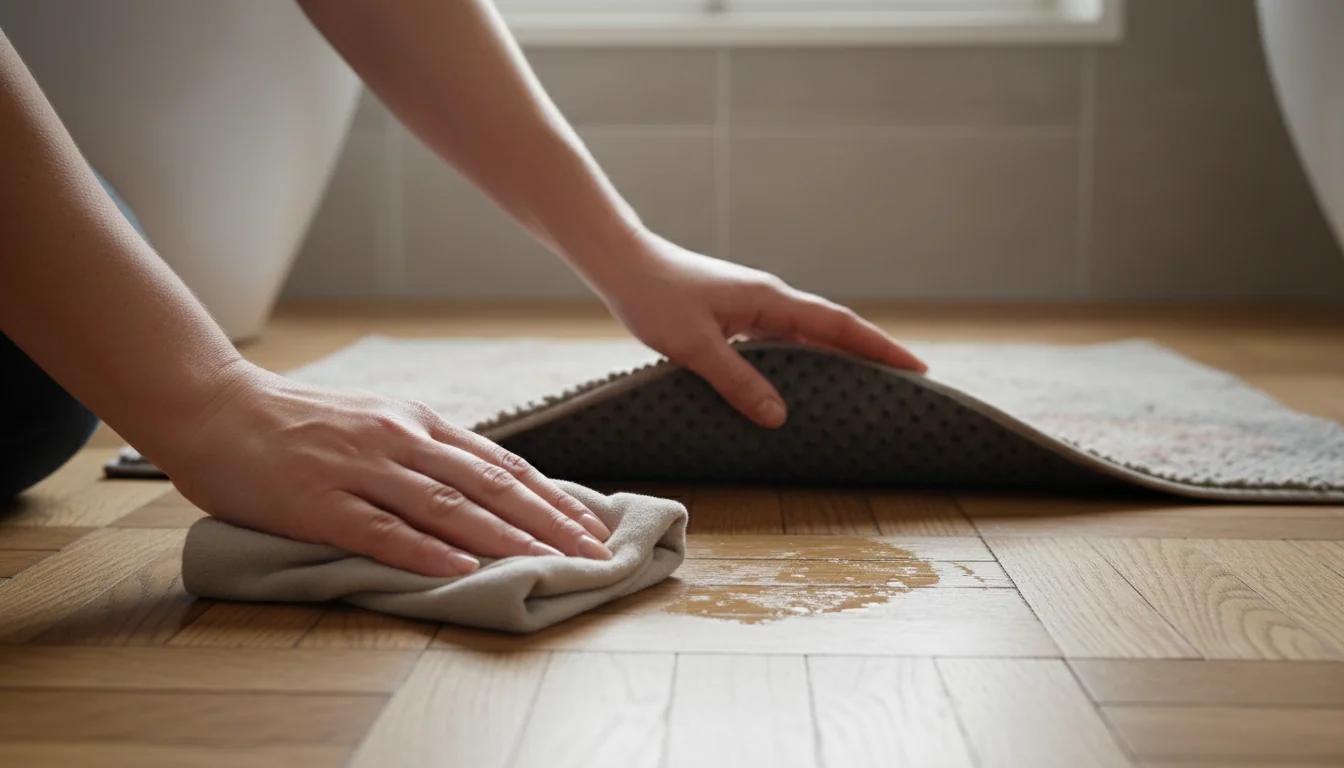
Cleaning that avoids finish erosion
Many “deep cleaning” routines cause more scuffing than they remove. Gentle, frequent maintenance beats occasional aggressive scrubs that create permanent haze and accelerate finish breakdown.
- Daily: dry microfiber at splash paths; lift mats and collect grit.
- Weekly: damp mop with pH-neutral cleaner; wring well to avoid swelling.
- Never: abrasive powders, stiff brushes, or steam on wood finishes.
- Rotate mats and air-dry edges to prevent outline marks.
Waxing may increase slip risk in wet rooms. If used, choose non-slip formulas and test a small area first.
When grit is minimized and moisture controlled, you slow the chain reaction: abrasion → open grain → discoloration → costly repair.
Smart repairs for worn paths
Fixing friction wear early prevents full sanding. Screening and recoating preserves thickness and restores sheen continuity across small high-traffic lanes.
- Screen and recoat: abrade finish lightly, vacuum, tack, apply fresh topcoat.
- Spot seal: for pinpoint dark specks, dry thoroughly, then apply sealer.
- Threshold guards: add low-profile protectors where doors meet wood.
- Toilet base: seal edges to block splashwater tracking under boards.
Screen-and-recoat beats full sand for localized abrasion. It’s faster, cleaner, and retains more protective film.
If boards have cupped or edges crushed from chronic wet friction, consult a pro to replace isolated planks rather than tearing out the entire run.
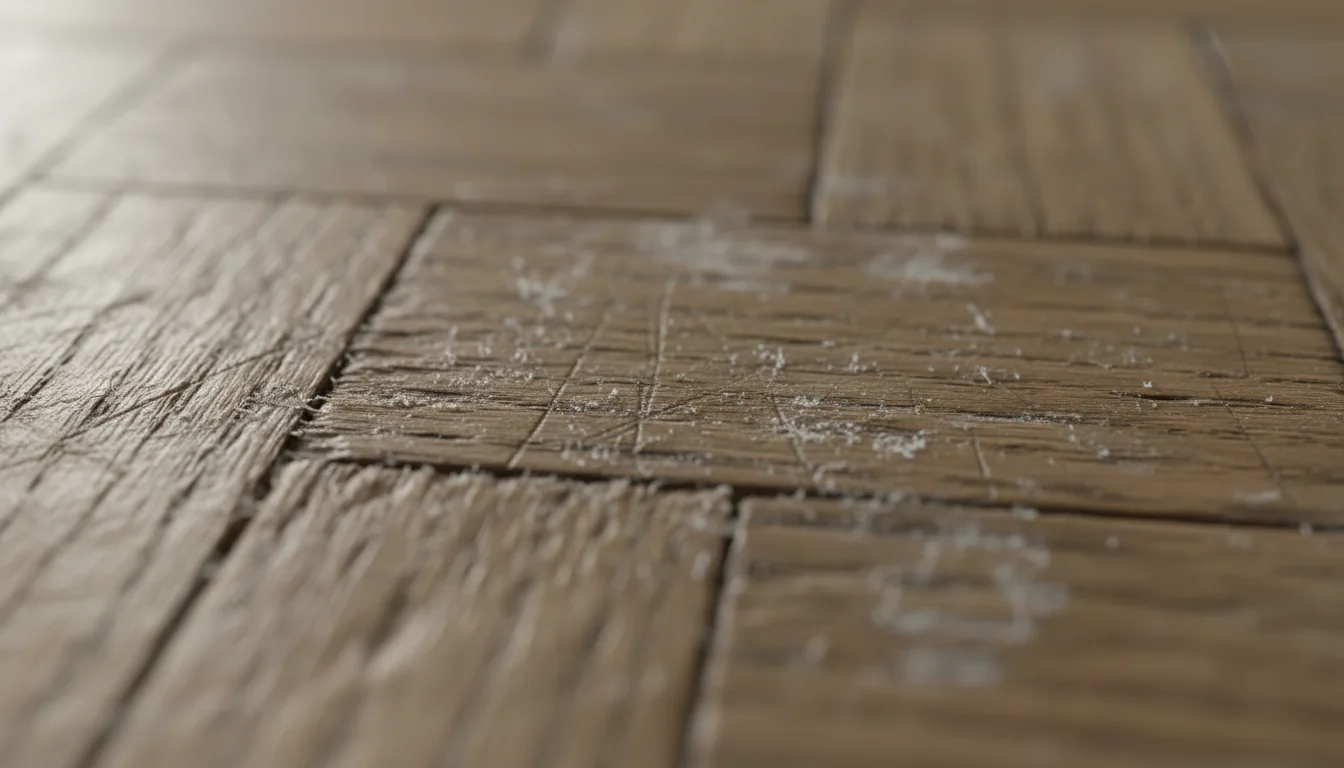
Layout and habit tweaks that last
Small changes cut friction cycles by hundreds per week. Think about where feet land, how doors move, and where loads slide. Design to reduce contact and to dry quickly.
- Place a mat exactly where you step out; avoid long bare “runway” lanes.
- Add felt to vanity stools; lift, don’t drag, laundry totes.
- Trim door bottoms; install soft-close stops to end repeated scuffs.
- Widen drying airflow: leave a small gap at wall edges for evaporation.
Impact surfaces subject to repeated sudden force (like door frames) are called out in housing guidance. Manage both impacts and abrasion for durable floors.
If wood still worries you in soaking zones, consider using textured tile or resilient surfaces only at splash points, keeping wood elsewhere to reduce cumulative wear.
How to halt abrasion this week
For an absorbent, quick-dry landing that limits wet-foot friction, consider a highly absorbent bath mat option placed exactly where feet land.
- Collect grit daily: quick microfiber sweep near tub and sink.
- Control water: keep mats at exits; hang and dry them after use.
- Decouple movement: felt pads under movable items; lift, don’t slide.
- Protect thresholds: add door bumpers; trim scraping edges.
- Recoat paths: screen and reapply finish before bare wood appears.
Target the first 60 cm in front of the tub. That square takes most water and most steps—protect it first.
Do not scrub abrasion lanes with abrasive powders. You’ll permanently matte the finish and invite staining.
What causes repeated friction wear in bathrooms?
Concentrated foot traffic, wet grit, mat edges, and door rub create thousands of micro-contacts. Each pass mutes sheen, then opens grain. Once the finish thins, moisture darkens the wood and the lane spreads.
Do bath mats leave outlines or dull patches?
Sometimes. Backing chemistry and trapped moisture can mark coatings. Rotate and air-dry weekly, and consider a neutral, stable option like this understated grey format placed only where you step out.
Are patterned mats better for scuff-prone zones?
Patterns can visually mask minor scuffs while protecting the finish. A stone-inspired look such as a subtle marble motif helps hide light abrasion between cleanings.
How do I protect floors from kids and pets?
Catch water at the tub, vacuum grit daily, and pad anything that slides. A playful landing spot like a fun character mat can keep little feet from tracking moisture across wood.
What slip-resistance should I aim for without sanding my finish?
For wet interiors, many specifiers use wet DCOF ≥ 0.42 as a target. Achieve traction with textured mats or profiles rather than aggressive scrubbing that thins the coating.
Is engineered wood less prone to this kind of wear?
Engineered planks resist movement and seam gapping, but surface abrasion is similar. Your defense is the same: capture grit, manage moisture, and refresh the topcoat before bare wood shows.
Can I fix friction lanes without sanding the whole room?
Yes. Screening and recoating the worn path often restores sheen and seal. If edges are crushed or stained deep, replace only those planks and blend the finish.
Bathroom wood floors rarely fail overnight; they fade under countless small rubs. Stop that cycle by managing grit, water, and movement, and refresh the film before it thins.
- Catch wet-foot friction at the tub with a precise landing like a cheerful quick-dry mat.
- Hit a safe traction target while avoiding abrasive textures that sand your finish.
- Screen-and-recoat lanes early to prevent deep staining and plank replacement.
With these 2026 practices, you’ll keep friction wear in check and your bathroom wood looking its best.
0 comments