


Do your toes turn icy right after stepping out of a hot shower during winter? You’re not alone. The cold season amplifies heat loss, skin dryness, and circulation shifts—so your feet cool fast.
In this 2026 guide, you’ll learn the real causes of cold feet after shower in winter, the risks of sudden rewarming, and a simple routine to stay warm, dry, and itch‑free—without gimmicks.
Ready to turn frosty exits into comfortable ones?
Thermal shock: why feet chill
Fresh from a steamy rinse, your feet meet cold bathroom air and flooring. In the cold season, several mechanisms stack up and pull heat away in seconds.
- Evaporative cooling: water left on skin evaporates and wicks heat rapidly.
- Vasoconstriction: in chilly air, vessels in toes narrow, diverting blood to the core.
- Conduction: tile or stone pulls warmth from soles faster than air does.
- Dry winter air: low humidity plus indoor heating strips skin lipids, weakening the barrier.
- Stress response: adrenaline tightens peripheral vessels, worsening toe chill.
In damp maritime climates (think the UK), cool, humid winters magnify both heat loss and skin irritation, so feet feel colder for longer.
Some people also experience blue‑purple toes (acrocyanosis) or color changes and numbness with cold exposure (Raynaud’s). Others notice itchy “winter itch” or asteatotic eczema—dry, cracked skin that stings when water hits it.
| Cold‑season trigger | What you feel |
|---|---|
| Evaporation after shower | Sudden “whoosh” of chill across feet |
| Cold floor contact | Instant heat drain through soles |
| Vasoconstriction in toes | Numbness, pale or bluish skin |
Keep the last minute of your rinse warm, then turn off water and towel at once. Don’t linger dripping—heat escapes fastest in the first 60 seconds.
Bottom line: in wintry conditions, evaporation, conduction, and vessel spasm combine. You’ll fix cold toes faster by tackling all three.
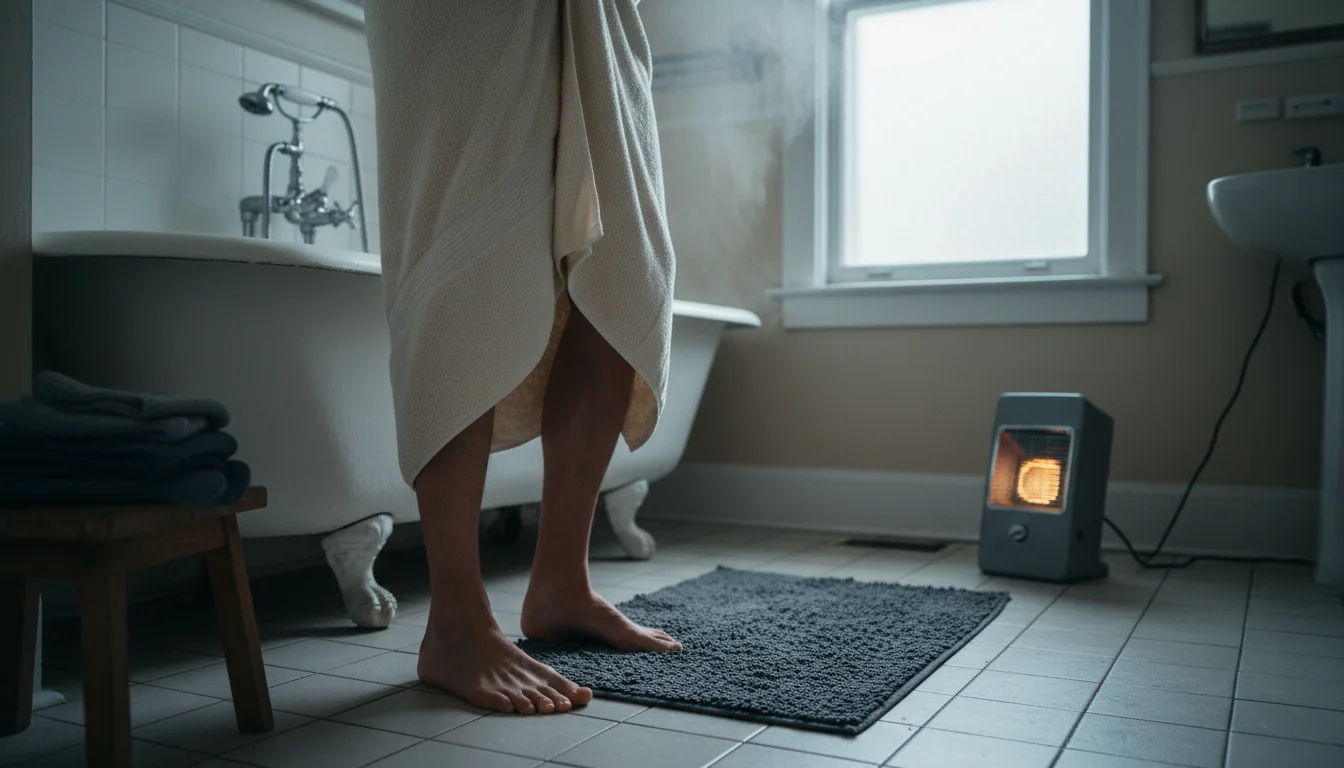
Rapid rewarming: risks in cold season
Jumping from freezing sidewalks to a scalding shower feels great—but it can backfire on winter‑stressed feet. Sudden temperature swings irritate skin and small vessels.
- Chilblains: itchy, red‑purple patches after cold then quick heat exposure.
- Cold urticaria: hives triggered minutes after cold skin contact.
- Raynaud’s episodes: color changes, numbness, and pain on rewarming.
- Irritated heels: hot water strips oils, worsening cracks.
Avoid going from cold to hot too quickly. Warm the room and your body first, then shower warm—not scorching.
| Approach | Winter outcome |
|---|---|
| Scalding shower right after cold | Higher risk of chilblains flare and winter itch |
| Gradual rewarming (room, robe, then shower) | Less vessel stress, fewer hives, calmer skin |
"Warm your whole body first—then your feet. It’s smarter than blasting toes with direct heat."
If your feet stay wet and cold for long periods (e.g., damp socks), you risk immersion foot problems. Indoors, that translates into keeping feet warm and dry between showers, not just during them.

Warm bathroom: smarter cold‑season design
Small upgrades can flip your winter exit from shivery to snug. Focus on air temperature, floor contact, and fast moisture control.
- Pre‑heat the room 10–15 minutes with safe heating and shut drafts.
- Stage a robe and towel within arm’s reach to cut evaporation time.
- Use a thick mat where you step out; add a second by the sink if needed.
- Keep spare socks nearby for immediate insulation post‑drying.
Dry between the toes to prevent athlete’s foot. Residual moisture chills skin and invites fungus in closed winter footwear.
Fast‑drying platforms can help if your bath area stays humid. Consider a rigid, fast‑drying mat option to limit water sitting under your feet in cold air.
Lower the fan speed or delay extraction for a minute after toweling to avoid over‑cooling the room instantly.
Aim for calm warmth: fewer drafts, fewer puddles, softer contact underfoot. That’s how you win on frosty mornings.
Toe warmth: circulation tactics in frosty months
You can nudge blood back to your toes right after a shower—gently and safely—without provoking a cold‑to‑hot shock.
- Do 30–60 seconds of ankle circles and calf raises while toweling.
- Slip on warm, breathable socks immediately after moisturizer.
- If still cold, soak feet in warm water for 10–15 minutes, not hot.
- Keep legs uncrossed and walk briefly to boost flow.
Avoid direct heaters on cold skin. Warm the room and your core instead; then feet rewarm more evenly.
If you have diabetes or neuropathy, test water with your hand or a thermometer. Nerve changes can mask temperature, so err on the lukewarm side.
| Symptom in cold season | Action to take |
|---|---|
| Purple or blue toes persistently | Assess circulation; seek medical advice |
| Itchy, swollen patches after rewarming | Suspect chilblains; avoid sudden heat |
| Hives after cold exposure | Consider cold‑induced hives; monitor triggers |
A warm drink and a light snack post‑shower help raise core warmth and reduce shivering that prolongs toe chill.

Itch and cracks: cold‑air skincare
Winter itch (pruritus hiemalis) and asteatotic eczema peak when humidity drops. Hot showers strip oils, leaving heels rigid and prone to splits.
- Lukewarm, not hot: shorter showers reduce barrier damage.
- Pat dry; apply a thick, fragrance‑free cream within 3 minutes.
- Use urea or lactic acid on thick, rough areas—avoid open cracks.
- Skip cream between toes to limit fungus growth; keep that area dry.
Cracked heels can worsen with indoor heating and cold wind. Exfoliate gently, then seal with occlusive cream before bed.
For a gentle landing zone after your rinse, a soft underfoot layer helps reduce the “sting” of cool air. Try a soft cotton pad underfoot to cushion soles as you towel quickly.
If dryness evolves into a painful fissure, pause acids, protect the crack, and consider medical care to prevent infection.
How to stop icy toes after a shower
A quick winter routine keeps warmth in and moisture out—without harsh heat.
- Pre‑warm the bathroom and stage towel, robe, and socks.
- Shower warm, not hot; keep it short to protect skin lipids.
- Towel fast, especially between toes; moisturize within minutes.
- Do 30 seconds of ankle moves; pull on warm, breathable socks.
- If still chilled, use a warm (not hot) 10‑minute foot soak.
Place a plush mat where you step out to cut conduction chill—something like a dark, high‑pile chenille mat adds instant warmth.
Don’t blast frozen toes with scalding water. Warm your core first; then adjust water gradually.
Why do feet feel colder after a winter shower?
Evaporation strips heat, floors conduct cold, and vessels constrict in chilly air. The combo is strongest in the cold season, so toes cool rapidly unless you dry and insulate immediately.
Is a hot shower helpful in the cold months?
Very hot water can worsen dryness and trigger chilblains after outdoor chill. Choose warm, shorter showers, then moisturize and rewarm gradually to protect skin and vessels.
What medical issues can winter highlight?
Raynaud’s, acrocyanosis, chilblains, and cold‑induced hives often flare. Diabetes and anemia also affect warmth and healing; consult a clinician if symptoms persist or worsen.
How do I keep feet warm on cold indoor floors?
Use thick socks and a cushioned mat at exit points. A cozy textile underfoot—like a thick, brown chenille option—reduces conduction chill while you towel and moisturize.
What’s the safest way to rewarm toes in the cold season?
Gradual rewarming: warm room, robe, gentle movement, then warm soak. Avoid direct heaters on cold skin and skip scalding water immediately after being outdoors.
How do I prevent winter itch and cracked heels?
Shorter warm showers, pat dry, and thick cream within minutes. Use urea or lactic acid on rough skin, protect heel cracks, and keep the bathroom humidity moderate.
When should I seek help for cold feet in winter?
See a professional if toes turn purple persistently, sores don’t heal, pain disrupts sleep, or you have numbness with diabetes. Ongoing symptoms deserve a circulation check.
Cold feet after shower in winter come from fast heat loss, cool floors, and vessel spasm—but a few targeted tweaks flip the script.
- Dry fast and insulate: towel well, then socks.
- Warm gradually: room first, then feet.
- Protect the barrier: lukewarm shower, rich cream.
For an inviting exit point this cold season, a design‑led mat—like a nature‑inspired silhouette—adds warmth and reduces contact chill. Keep this 2026 routine handy; your toes will thank you.
0 comments