


Do damp patches at the base of the bathtub keep coming back? You dry the floor, only for moisture to return at the very same back edge. This 2026 guide shows you how to trace where water sneaks back in, fix the real cause, and prevent mold for good.
You’ll learn practical tests, back-of-wall red flags, sealing methods that last, and fast-drying habits that stop stains returning. Short, mobile-friendly steps help you act today—without guesswork.
Find the source: water tracks back
Recurring damp at the tub base almost always means water is finding a path back to the floor. It may look dry up front, but moisture can travel behind tile, along the flange, or down the back wall cavity before surfacing at the bottom edge.
- Leaking shower supply lines or valves behind the wall can wet the back side of tiles while grout looks “mostly dry.”
- Failed silicone where the tub meets walls lets spray creep back via capillary wicking.
- Loose spout or diverter sends water behind trim, then back down the wall into the corner.
- A flexing base or cracked fiberglass corner opens a tiny gap that keeps letting water come back.
- Splash-out from curtains or doors pools, then seeps back under the caulk bead.
| Symptom | Likely back-source |
|---|---|
| Dark grout line at back edge only | Failed tub-to-wall silicone; moisture wicking behind grout |
| Damp returns hours after a shower | Spray intrusion; slow back seep to base before showing |
| Patches even on “no-shower” days | Supply lines and valves behind wall, or overflow/ drain seep |
| Spongy floor near back corner | Subfloor wetting from chronic back-of-wall leak |
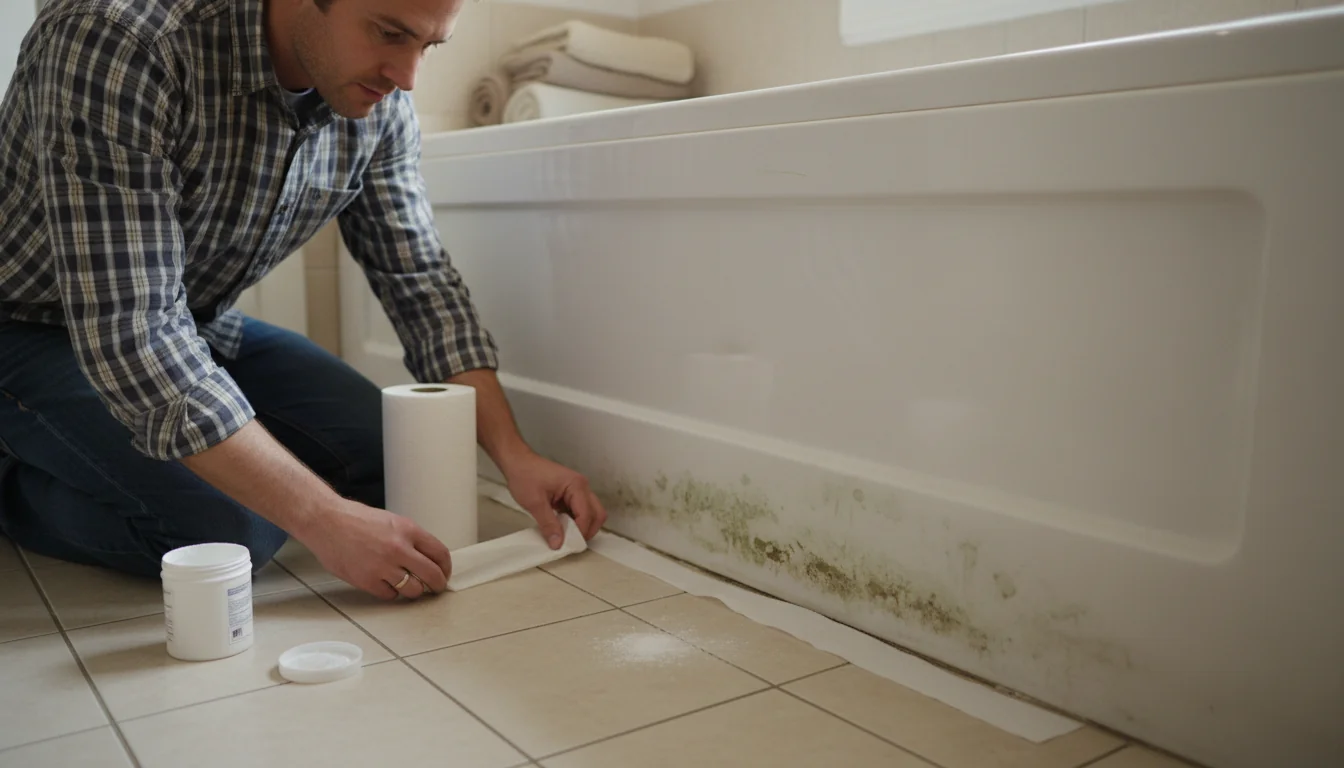
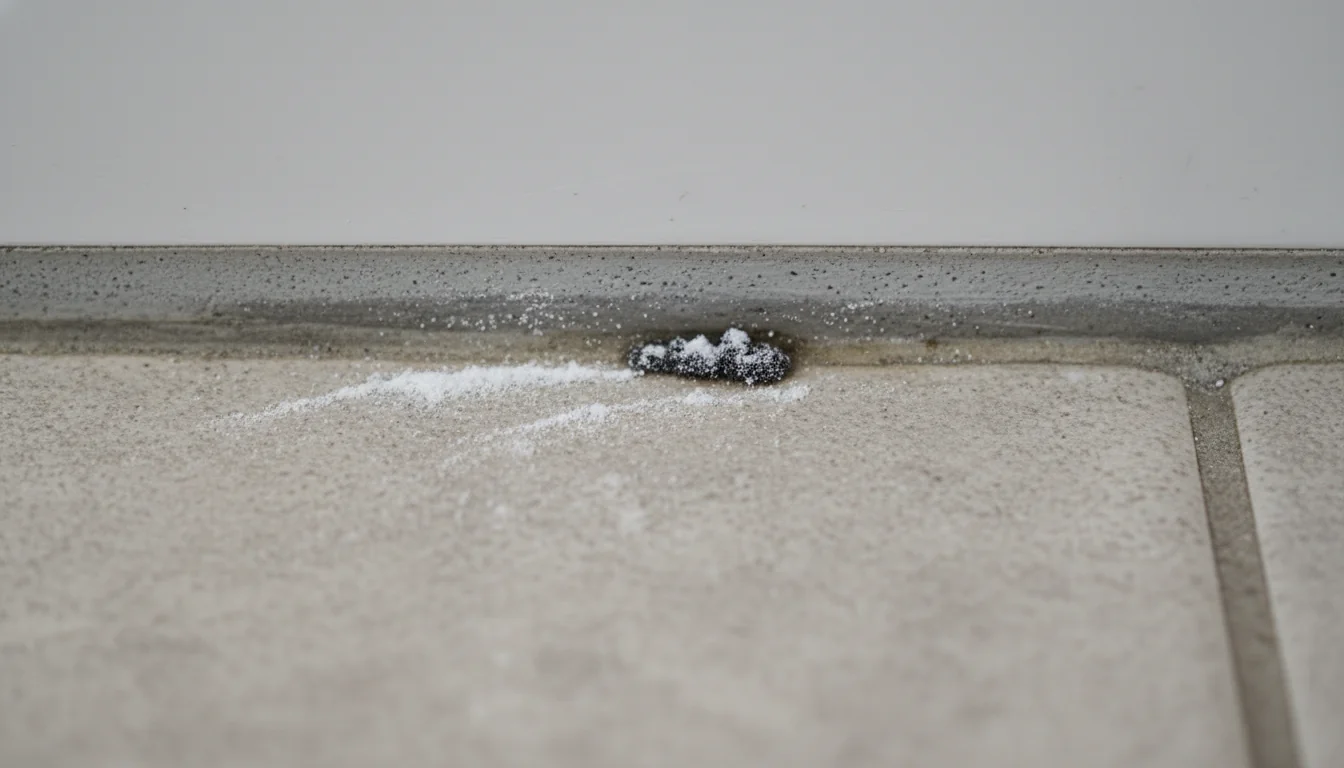
Dry the area fully, then dust the back edge with talc. Take a shower. Follow the powder trail to see where water heads back to the base.
Think path of least resistance. The wet patch you see at the bottom is the endpoint; the real start point is often higher and farther back.
Test it: confirm damp comes back
Simple isolation tests prove what’s driving moisture back. They separate splash, seepage, and hidden leaks so fixes are targeted, not guesswork.
- Curtain test: shower with the curtain fully in; no spray on the back edge. If damp comes back, splash isn’t the driver.
- Trim test: wrap tissue around shower arm and spout base. Wet tissue means water is sneaking back behind trim.
- Overflow test: plug the overflow and fill tub below it. Any patch returning points back to drain or waste connections.
- Color test: add a few drops of food dye in the tub. If tinted damp reappears at the base, the path loops back from the tub side.
- Paper towel check: press a white towel along the base later. Black residue suggests mold staining, not only fresh water.
During testing, it helps to shield tight corners to keep splash from bouncing back toward the base. Consider semi-circular rugs that hug curves for cleaner data, like our arc-friendly selection.
Never mix bleach and ammonia. For cleaning stains during tests, use hydrogen peroxide 3% or white vinegar. Rinse and dry within 24–48 hours.
If the damp spot fails to come back when you shower with a handheld directed away from the back edge, the culprit is likely that back joint or nearby trim.

Seal edges: block the back gap
Where the tub deck meets tile is a classic pathway back to the floor. Grout alone is not waterproof; silicone seals the movement joint and stops water running back under the rim.
- Remove old caulk fully; clean with isopropyl alcohol so fresh silicone bonds at the back edge.
- Use a mold-resistant silicone; tool a smooth bead where tub, tile, and back corner meet.
- Seal vertical inside corners; water often rides those seams back to the base.
- After curing, mist joints for pinholes. Any void invites water to track back in.
- Add discreet splash guards if curtains don’t contain spray at the back end of the tub.
Drying habits matter. A high-absorbency mat wicks surface water before it creeps back under the bead. Explore plush, quick-dry choices such as high-pile options for daily use.
Penetrating sealers on grout reduce absorption but don’t replace the silicone movement joint. Both are needed to keep damp from coming back.
If damp returns only at one back corner, look for a tiny slope directing water back toward that seam. A fresh, continuous bead often fixes it.
Ventilate: drive moisture back out
Even perfect sealing won’t stop condensation from drifting back to the base if the room traps steam. Move moist air out fast to keep tiles and the back wall dry.
- Size the fan properly: about 1 CFM per square foot as a starting point for bathrooms.
- Run the fan 20–30 minutes after showering to push humidity back outside.
- Squeegee walls and the back panel; towel-dry the tub rim where water collects.
- Contain splash with a curtain liner inside the tub, or a collapsible water dam along the entry edge.
- Keep “Home Care Supplies” handy: squeegee, microfiber towels, gentle cleaners.
If you care about visuals as much as drying power, choose mats that coordinate with your space while pulling moisture away from the back edge, like this curated style-forward selection.
A 67 inch collapsible shower threshold water dam in silicone helps keep water in the tub zone so it doesn’t drift back toward the base.
Aim for quick exit of steam and quick removal of surface water. That way, damp can’t settle back into porous grout or trim.
Repair smart: fixes behind back wall
Sometimes the comeback damp means a hidden leak. Focus on the back-of-wall zones and the tub support so moisture can’t return through the structure.
- Inspect the shower valve and riser. A slow seep can keep the back cavity wet even when the surface is dry.
- Check the spout and shower arm threads; wrap with PTFE tape and set with proper sealant to stop water creeping back.
- Stabilize a flexing tub base with proper underlayment or mortar support; a flex point at the back corner reopens sealant.
- Re-seat the overflow gasket if color tests trace back there. Tighten to spec; replace brittle parts.
- If the toilet sits nearby, a failed wax ring can wet the floor and seem to come back at the tub edge. Test around the flange.
For mold cleanup, prefer hydrogen peroxide over bleach on porous grout. Bleach can leave residue and won’t reach roots. Rinse and dry thoroughly.
Fixes behind the back panel stop the cycle. Once structure is dry, reseal the visible joints so water cannot find its way back again.
Guide 2026: stop damp coming back
- Dry fully; dust the back edge with talc to map tracks.
- Run isolation tests to confirm what keeps coming back.
- Reseat or reseal the guilty joint; fix the back-of-wall cause.
- Ventilate and squeegee so moisture doesn’t settle back.
- Monitor for a week; recheck with tissue or dye.
Use a quick-dry mat to intercept splash before it sneaks back. A subtle patterned option like this blue motif piece works well.
Do not grout the tub-to-tile seam. That joint needs flexible silicone so water can’t track back through micro-cracks.
Why do damp patches keep coming back?
Water is finding a repeat pathway—typically the back edge where tub, tile, and corner meet. Hidden leaks behind the wall also feed moisture back. Intercept splash with a compact mat like this small-format pick while you test.
How does sealing compare to other options?
A continuous silicone bead beats temporary wipes because it stops water tracking back under the rim. Pair sealant with a low-profile mat—an understated grey choice like this neutral rug helps keep the base dry.
What’s the fastest way to rule out leaks?
Run isolation tests: keep spray off the back, wrap tissues around trims, use food dye in the tub. If damp still comes back, suspect a valve or supply seep in the back wall cavity.
Will these steps work in a rental?
Yes—focus on reversible fixes: squeegee, vent, and seal only if allowed. Capture splash so it doesn’t run back to the base with a simple rectangular bath rug and a curtain liner.
How do I clean stubborn stains at the base?
Use hydrogen peroxide 3% on mold, or white vinegar for mineral haze. For textured tubs, a soft brush plus oxygen cleaner lifts grime without scratching. Always dry so residue doesn’t draw damp back.
Do I need a water dam or splash guards?
If curtains or doors leak at the back, a silicone splash guard or a collapsible threshold helps keep water in. That prevents it from looping back under the rim and staining grout lines again.
Recurring damp at the tub base means water is always finding its way back. Trace the path, fix the back-of-wall cause, and seal the edge; then ventilate and intercept splash.
- Diagnose first: isolate spray, trims, overflow, and supply lines.
- Seal correctly: silicone the movement joint and inside corners.
- Dry quickly: vent, squeegee, and use a tub mat.
For grip and splash control right inside the tub, a textured insert like this in-tub mat helps reduce water drifting back toward the base.
0 comments