


Want a germ-free bath mat without frayed loops, faded colors, or a curled rubber backing? You’re in the right place.
This 2026 guide focuses on safe methods only: precise dilutions, contact times, and step-by-step approaches that prioritize your mat’s structure. We’ll compare techniques by material, show when to choose the machine versus the sink, and reveal expert routines to sanitize effectively—without damage. Which methods fit your mat best? Let’s find out.
Know the material first
Every disinfection method depends on what your bath mat is made of. Pick the approach that matches the fibers and the backing, and you’ll remove microbes while protecting texture and shape.
- Cotton or microfiber pile: colorfast, looped yarns; watch for rubber or latex backing.
- Memory foam: heat-sensitive foam with fabric cover; avoid wringing and high temps.
- Rubber or PVC mats: textured grips; no hot water or strong oxidizers on the backing.
- Bamboo or wood slats: moisture-sensitive; disinfect with wipe-on solutions, not soaks.
- Diatomite stone: porous mineral slab; sanitize with quick wipes and surface refresh.
Patch-test any solution on a hidden corner for 10 minutes, then rinse and dry. No color bleed or stiffness? The method is likely safe for the whole mat.
Use this quick map to select the right approach before you start disinfecting a bath mat without damaging it.
| Material | Safe disinfection pathway |
|---|---|
| Cotton/microfiber (with backing) | Oxygen bleach in wash; chlorine only on whites if label allows; warm water; gentle spin. |
| Memory foam | Hand-wash cover; hydrogen peroxide spot-disinfect; air-dry flat; no wringing. |
| Rubber/PVC | Quats (labelled bathroom disinfectants) or diluted peroxide; cool water; no prolonged soaks. |
| Bamboo/wood slats | Wipe-on quats or alcohol; immediate dry; periodic oiling to seal fibers. |
| Diatomite stone | 70% isopropyl alcohol wipe; surface sanding to refresh; stand upright to dry. |
Effective methods rely on contact time as much as chemistry. Even gentle formulas sanitize well if they stay wet long enough.
Up next: how to set dilutions that clean microbes yet spare colors and backings.
Dilutions that protect fibers
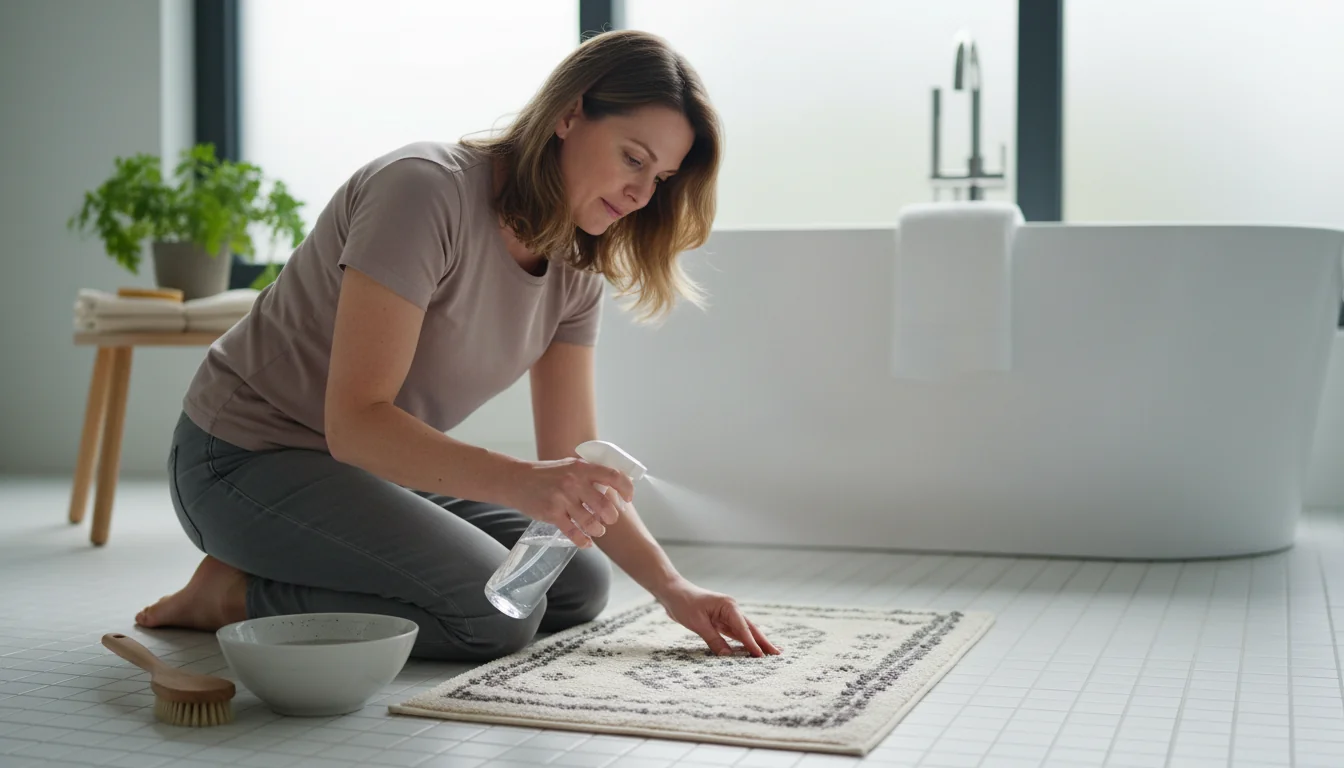
The right ratio is the heart of safe disinfection. These approaches favor hygiene while staying gentle on loops, dyes, and adhesives.
- Oxygen bleach (percarbonate): follow the package; typically 1–2 scoops per load. Safer for colors and rubber-coated backs.
- Chlorine bleach (on whites only if label allows): target ~0.1% available chlorine in soak; 5–10 minutes; rinse thoroughly.
- Hydrogen peroxide 3%: dab mildew or pink biofilm; allow 5 minutes; rinse. Good for targeted areas.
- Quaternary ammonium cleaners (quats): apply as directed; keep visibly wet for 5–10 minutes; rinse if required by label.
- Vinegar and baking soda: great for odors, not disinfectants; pair with one of the above when hygiene is the goal.
Never mix chlorine bleach with ammonia, vinegar, or acidic cleaners. Always dilute in cool water first; add to the machine’s dispenser, not directly on fabric.
If you like playful textures or bold shapes, see ideas in our original designs collection and adapt the gentlest approach above to preserve their look.
Pre-wash with detergent first, then disinfect. Soil lifts off, so your sanitizing agent works on microbes, not grime.
Machine vs hand routines
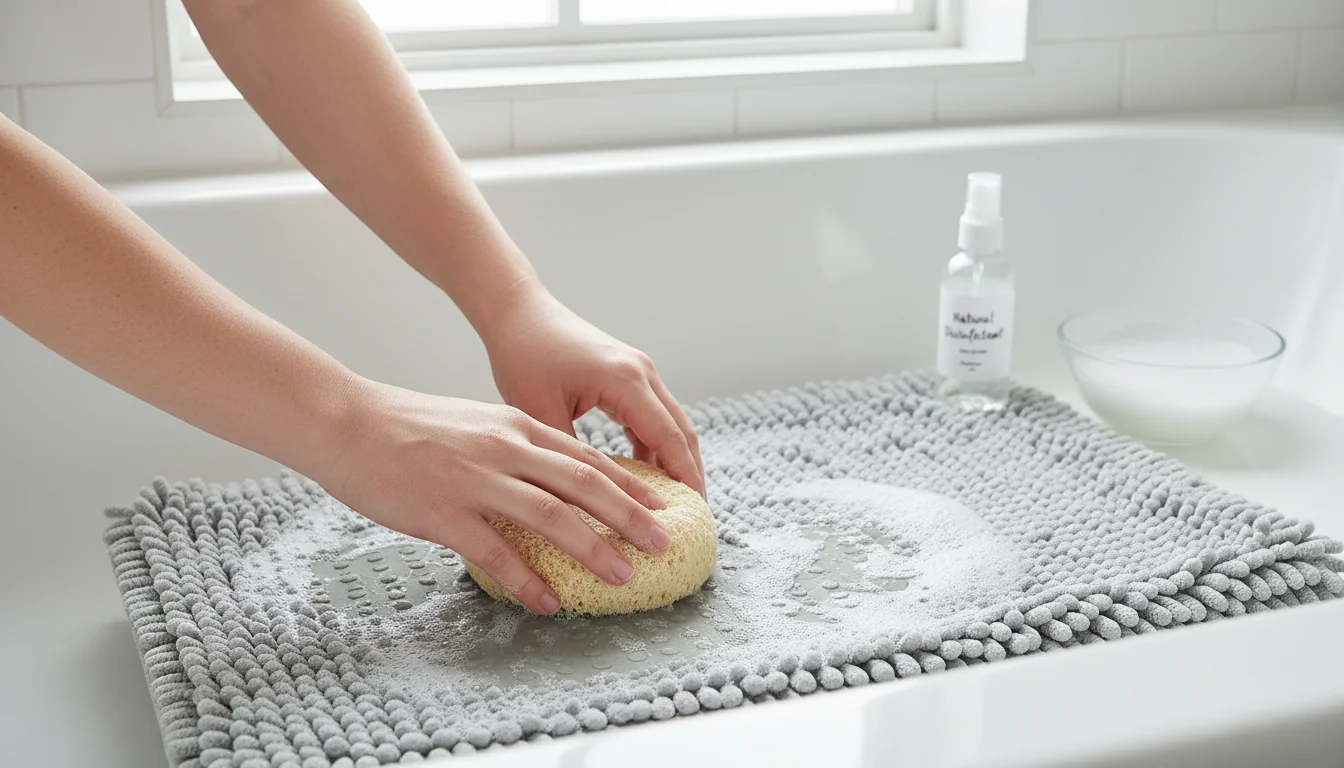
Choose the route that suits your mat. Machine cycles offer even action; hand routines give control for delicate pieces.
- Machine approach: shake or vacuum first; warm water; gentle cycle; mild detergent; oxygen bleach for load disinfection; slow spin to protect backing.
- Hand approach: bucket with warm water + detergent; agitate with soft brush; apply disinfectant; maintain wet contact; rinse until water runs clear.
- Memory foam routine: wash removable cover only; sponge-clean foam; press, don’t wring; air-dry flat.
- Rubber/PVC mat method: scrub suction cups; apply quats; keep surface wet for 10 minutes; rinse thoroughly.
High heat can delaminate latex and warp foam. Stay with warm water, low spin, and low heat or air-dry.
Looking to align care with your whole bathroom set? Browse the full bathroom mat selection and match the routine above to each texture.
On many washers, “sanitize” cycles are hotter than needed for mats. A warm gentle program plus oxygen bleach is kinder yet effective.
Drying that avoids warping
Drying is half the method. Done right, it resets fibers, keeps the backing flat, and prevents musty regrowth.
- Air-dry flat on a rack; reshape edges; flip mid-dry to even out moisture.
- Tumble on low heat with two clean towels to cushion loops; remove while slightly damp; finish flat.
- Hang rubber mats over the tub edge; tilt to drain; ensure full dryness under suction cups.
- Diatomite: stand upright; brief sun helps; light sanding refreshes absorption.
If the backing feels tacky, give it more time. Replacing a mat fully dry reduces slip risk and mildew by a lot.
Working with oversized formats? Consider extra-large options that still dry well thanks to breathable weaves.
Sunlight helps deodorize, but prolonged UV fades dyes. Aim for short bursts rather than hours in direct sun.
Pre-treat, then sanitize
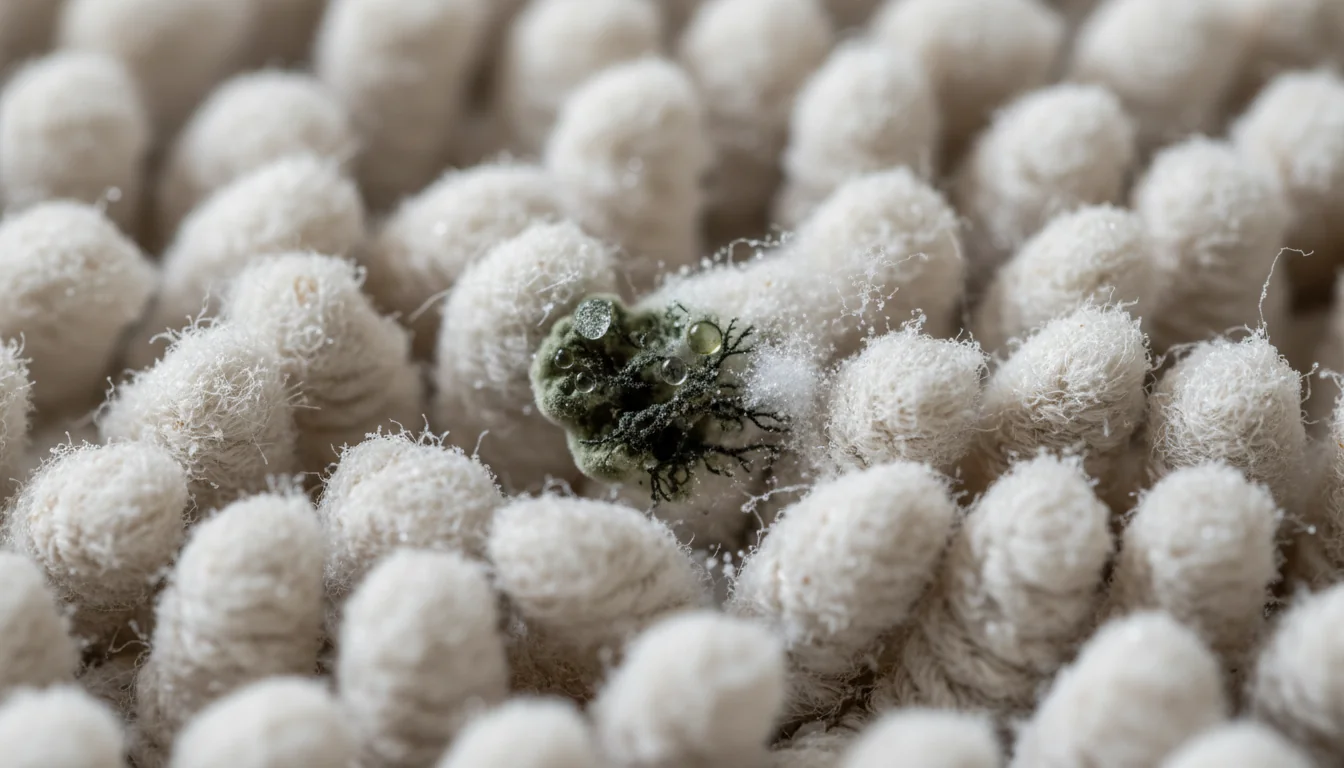
Successful methods remove soils first. Once grime lifts, disinfectants reach microbes evenly and with less risk to fibers.
- Body oils and soap film: enzyme prewash; 10 minutes; rinse; proceed to disinfect.
- Mildew shadows: 3% peroxide; dab until fizzing subsides; rinse; repeat if needed.
- Pink biofilm: quats or peroxide; keep area wet 10 minutes; scrub creases and suction cups.
- Makeup or dye: oxygen bleach paste on whites and colorfast items; rinse well.
| Soil or stain | Targeted prep step |
|---|---|
| Oily residue | Enzyme prewash; warm water agitation; rinse before sanitizing. |
| Mildew specks | Peroxide 3% soak on spots; 5–10 minutes; rinse thoroughly. |
| Pink film in creases | Quat spray; keep wet; brush seams and suction cups. |
Finish with a full rinse. Residual oxidizers stiffen loops and can fade colors over time.
Short on ventilation? Keep chemical steps brief, use gloves, and shield nearby wall art or animal posters from splashes.
Step-by-step: safe bath-mat disinfection
- Identify material and backing; read the care label closely.
- Shake out debris; pre-treat soils with enzymes or peroxide.
- Choose your approach: machine with oxygen bleach, or hand routine.
- Apply sanitizer; keep surfaces wet for the full contact time.
- Rinse fully; air-dry flat or tumble low; verify the backing is dry.
Build a monthly routine: a quick enzyme wash + oxygen bleach, then a targeted spot-disinfect where needed.
For cotton pile and anti-slip backing, choose gentle cycles and low heat when caring for a cotton anti‑slip model to keep loops plush.
Prefer bold prints? Use oxygen bleach in the washer and keep colors bright when maintaining a whimsical patterned piece.
Do not pour undiluted bleach onto fabric. It weakens fibers and creates permanent pale spots.
Why choose material-specific methods?
Because each fiber and backing reacts differently. Tailored techniques keep dyes stable, loops soft, and anti-slip layers intact while achieving true hygiene.
How do these approaches compare to generic “carpet cleaning”?
Bath mats face humidity and skin residues daily. These routines emphasize sanitizing contact time and safer dilutions, beyond standard rug wash tips and tricks.
Can decorative shapes handle these processes?
Yes—pick the gentle route. For playful shapes, such as an avocado‑inspired mat, use oxygen bleach and low spin to protect contours.
Is a flower-shaped mat okay in the washer?
Usually, on a gentle cycle and in a mesh bag. For example, a petal-shaped design benefits from warm water and slow spin, then air-dry flat.
How often should I apply these techniques in 2026?
Weekly wash for high-traffic homes, biweekly for low use. Spot-disinfect after illness or visible mildew to break growth cycles.
Do vinegar or essential oils count as disinfectants?
No. They can help with odor but lack reliable microbe kill. Pair deodorizing steps with oxygen bleach, quats, or peroxide for sanitation.
What about stone-style mats?
Use alcohol wipes and brief sun. Avoid soaking. If odor lingers, light sanding restores absorption, then dry upright in fresh air.
The safest path to a hygienic bath mat is a targeted approach: clean soil first, apply the right disinfectant with full contact time, and finish with careful drying.
- Match the technique to material and backing.
- Get dilutions right and avoid harsh mixing.
- Dry completely to prevent regrowth and warping.
If you prefer mineral surfaces, a stone option like a baroque-style diatomite slab sanitizes fast with wipes and dries upright—an elegant alternative within the same principles.
0 comments