


Pet fur loves a bath mat. The pile traps dog hair, cat hair, and even lint from towels, turning your rug into a magnet after every shower.
Struggling to easily remove pet hair from a bath mat? This 2026 guide shows you fast, low-effort methods that work across textures, backings, and sizes—so your rug feels clean under bare feet again.
Know the surface first
Hair removal starts with the surface of the bath rug. Loop, cut pile, microfiber chenille, memory foam tops, or stone-style boards each hold fur differently. Understanding the texture and backing lets you choose tools that pull hair out instead of pushing it deeper into the mat.
- Looped cotton: snags longer dog hair; respond well to rubber bristles and a dry squeegee pass.
- Microfiber chenille: clumps of pet fur form; a glove wipe or lint roller gathers strands fast.
- Memory foam tops: smooth face; use a light rubber brush instead of aggressive scraping.
- Rubber-backed bathroom rugs: remove hair dry first to protect the backing in the wash.
- Stone-style drying boards: hair doesn’t embed; a quick wipe removes loose fibers.
Map your mat: rub your hand in one direction, then the other. The direction that balls up fur is your best pass angle.
Once you match tool to texture, the bath mat releases hair with minimal effort, reducing lint transfer to towels and clothes.
| Mat surface | Best dry tool for pet hair |
|---|---|
| Looped cotton bath rug | Rubber broom with rubber bristles and squeegee edge |
| Microfiber/chenille mat | Reusable lint roller or glove wipe (slightly damp) |
| Memory foam top | Soft rubber brush; light pressure only |

Dry methods beat wet ones
Removing hair from a bath mat is quickest when you start dry. Water binds fur to fibers and tightens tangles. Do a complete dry pass before any washing: shake, sweep, scrape, then lint-roll. Your washing machine will thank you, and the mat’s nonslip base will last longer.
- Shake outdoors to eject loose hair and dust first.
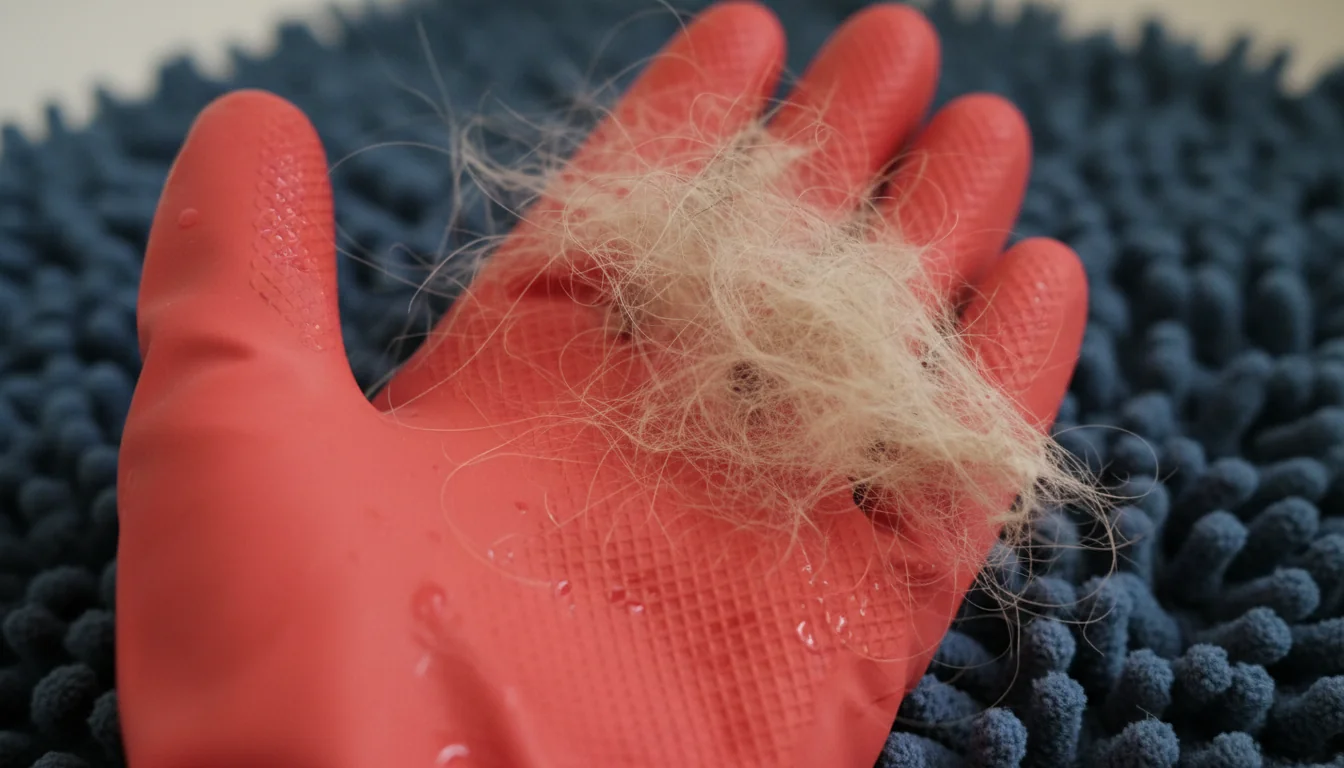
- Pull clumps with a rubber glove; sweep edges with a squeegee.
- Use a handheld carpet scraper for embedded strands on dense pile.
- Finish with a reusable roller to catch fine lint.
Do not soak a heavily furred rug. Wet fur forms tight clumps that are difficult to remove and can clog the washer’s lint filter.
If you need fresh inspiration or alternatives for the bathroom floor, explore our bathroom rug range to compare surfaces that naturally release hair more easily.

Tools that actually grip fur
Choose friction over suction for a bath mat. Rubber edges and textured mitts create static and drag that capture pet hair quickly. This is faster than hauling a vacuum and kinder to the rug’s backing and seams.
- Rubber broom: great on looped rugs; the squeegee edge corrals clumps.
- Gloves: swipe in one direction to ball up dog hair in minutes.
- Reusable lint roller: grabs fine cat hair and lint without waste.
- Handheld scraper/carpet rake: for “difficult-to-remove” embedded strands.
- Soft brush: safe choice for memory foam or low pile tops.
Rubber bristles build a mild static charge that helps lift loose hair out of the bath rug’s pile without harsh scrubbing.
Big family bathrooms see more shedding and traffic. If you’re evaluating surface coverage and cleaning effort, you can also review oversized options that balance footprint with ease of upkeep.
Laundry that won’t wreck backing
Once hair is off the mat, washing is simple. The goal is to clean fibers while protecting a nonslip base. Cold water, low spin, and air drying are your backer’s best friends. Keep detergents modest and avoid softeners that can trap lint.
- Pre-clean: shake and de-fur thoroughly to protect the washer.
- Cycle: cold, gentle; mild detergent only; no bleach on rubber-backed mats.
- Dry: hang or flat-dry; avoid heat on rubber or latex backings.
- Maintenance: clear the washer’s lint filter and gasket post-wash.
High heat can harden or crack a rubber-backed rug. Air drying preserves the grip and extends the mat’s life.
| Material/top | Laundry guidance |
|---|---|
| Cotton loop with latex grip | Cold, gentle; air dry; brush pile while damp to release lint |
| Microfiber chenille | Cold wash; short spin; shake between dry intervals |
| Stone-style drying board | No machine wash; wipe and allow to self-dry |
Prefer designs that visually hide lint? Consider patterns and textures you’ll find in creative bath selections; they disguise stray fibers between cleanings.
Prevention at the mat
A cleaner bath mat begins before you step out of the shower. Quick daily habits cut down pet hair, dust, and lint that land on the rug and track across the bathroom floor.
- Brush your pet outside before bath time to reduce shedding indoors.
- Place a small runner at the doorway to catch debris from feet.
- Do a 30-second glove or roller pass on the mat every two days.
- Rotate two rugs: one in use, one drying; this limits moisture that traps fur.
Keep a reusable roller in the vanity. Two quick passes after showers prevent build‑up and keep the rug nonslip.
These routines protect pile height, maintain grip, and make deep cleaning simple even in busy 2026 households.
Step-by-step: remove hair fast
- Shake the bath rug outdoors to eject loose debris and hair.
- Glove swipe: wipe in one direction to form clumps; lift by hand.
- Rubber broom: drag the squeegee edge across the pile and edges.
- Reusable lint roller: finish with light, overlapping strokes.
- If needed, cold wash; air dry flat to protect a nonslip backing.
Work from the rug’s center toward the edges. Corners trap embedded hair; clear them last with short strokes.
If you prefer motifs that naturally conceal light shedding between cleanups, see an animal-themed example like this playful pattern which visually breaks up fur.
High-contrast patterns also help; for instance, a two-tone option such as this crisp design hides stray fibers better than flat solids.
Why prioritize dry removal on a bath rug?
Water binds pet hair to fibers. Dry methods—gloves, rubber broom, and a reusable roller—lift fur without driving it deeper into the mat. You’ll protect the nonslip base and reduce lint that would otherwise clog the washer.
How does this compare to vacuuming on a mat?
Vacuuming can tug at loops and still leave fine cat hair. Friction tools create grip and static, catching dog hair along edges and seams. Use a vacuum only after a dry pass if the bath mat pile is very dense.
For larger floor coverage, a practical example of size and thickness is this large-format piece, which balances comfort and easy upkeep.
What are the advantages of rubber tools on a bath mat?
Rubber bristles and squeegee edges grip loose hair with minimal pressure. They’re gentle on backing, effective on corners, and ideal for daily 30‑second refreshes on a bathroom rug.
Will pattern and color help hide fur on the mat?
Yes. Mid‑tone and mottled patterns disguise lint between cleanings. Busy motifs are forgiving, especially where shedding is heavy or frequent.
A whimsical example that visually breaks up strands is this fun motif, which masks light debris between deep cleans.
Is a nonslip bath rug safe to machine wash?
Usually, yes—after a thorough dry de‑fur. Use cold water, gentle spin, and air dry. Clean the washer’s lint filter after the cycle. Heat can degrade the grip layer, so skip the dryer for rubber or latex backs.
Does grooming the pet really change the mat cleanup?
Absolutely. Brushing removes loose coat that would land on the bath rug. A quick brush before showers reduces clumps, especially in shedding seasons, and keeps the bathroom floor cleaner.
To easily remove pet hair from a bath mat in 2026, think dry first, gentle laundry second, and tiny daily habits that keep fibers clear. If earth tones suit your space and help hide lint, an option like this subtle hue is practical between deep cleans.
- Match tools to texture: rubber edges, gloves, and a reusable roller.
- De‑fur before washing; cold cycle and air dry preserve the backing.
- Adopt 30‑second refreshes to prevent embedded hair on the rug.
A few smart passes and your bath rug stays soft, grippy, and clean under bare feet.
0 comments