


Seeking a calmer bathroom without repainting or renovating? A grey and beige bath mat can shift the mood of your wash space in minutes.
Want a spa feel that still works with everyday splashes, shower steam, and tile floors? In this 2026 guide, you’ll learn how to use a two-tone mat to balance light, texture, safety, and cleaning in a truly Zen Neutral Bathroom Decor scheme.
Calm palette: bathroom color harmony
Grey and beige are neutral siblings that calm visual noise in a bathroom. They pair well with stone, light wood, white ceramics, and greenery, creating a soft spa mood without feeling cold.
- Balance undertones: cool grey with cool beige; warm grey with taupe or sand.
- Add earth tones: tan, ivory, and light brown to warm grey floors.
- Try pale blue‑grey accents to freshen a compact shower room.
- Contrast sparingly: a slim black line or dark hardware sharpens the scheme.
- Repeat colors three times: mat, towels, and a small accessory.
Undertone alignment prevents clashes. If your tiles lean blue, choose pebble grey; if they lean pink or cream, a sandy beige reads calmer.
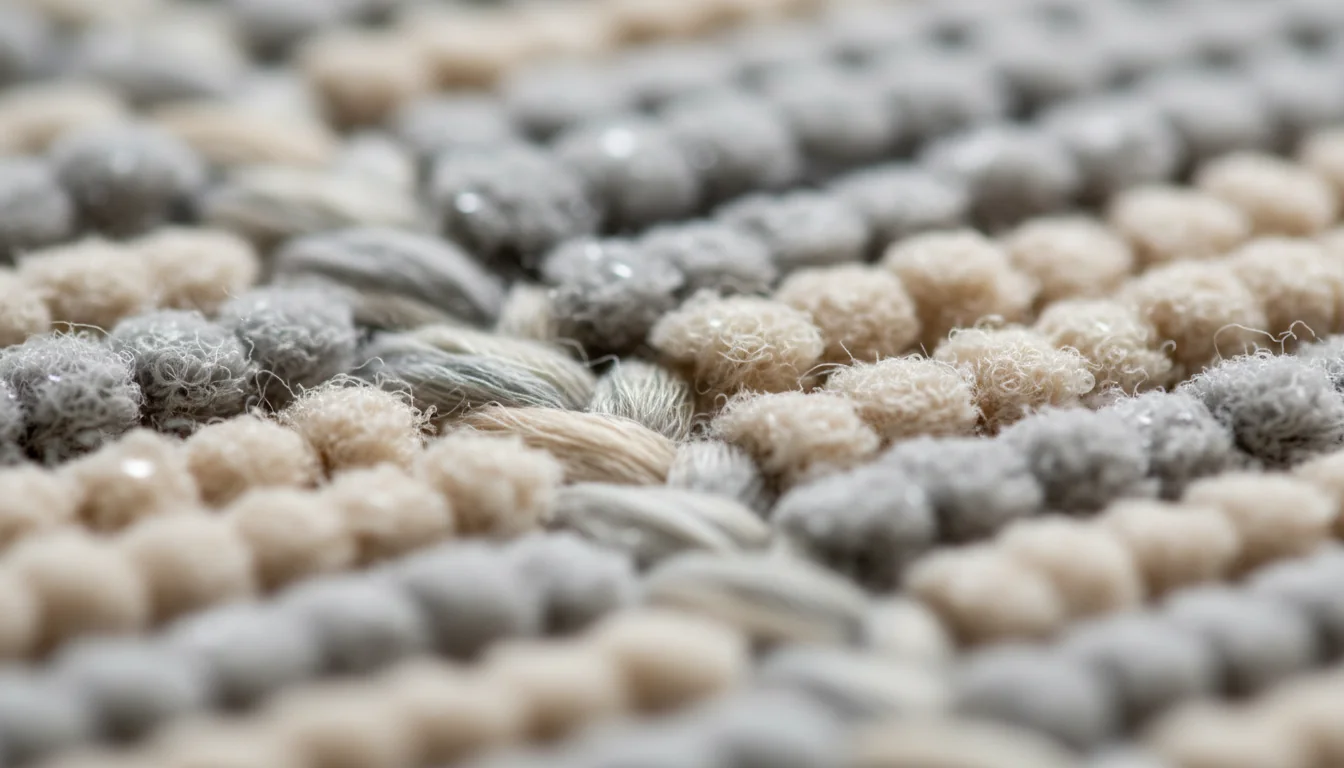
For a Zen bathroom, keep patterns subtle: think woven ribs, micro-herringbone, or a cobblestone tuft that reads tonal rather than bold.
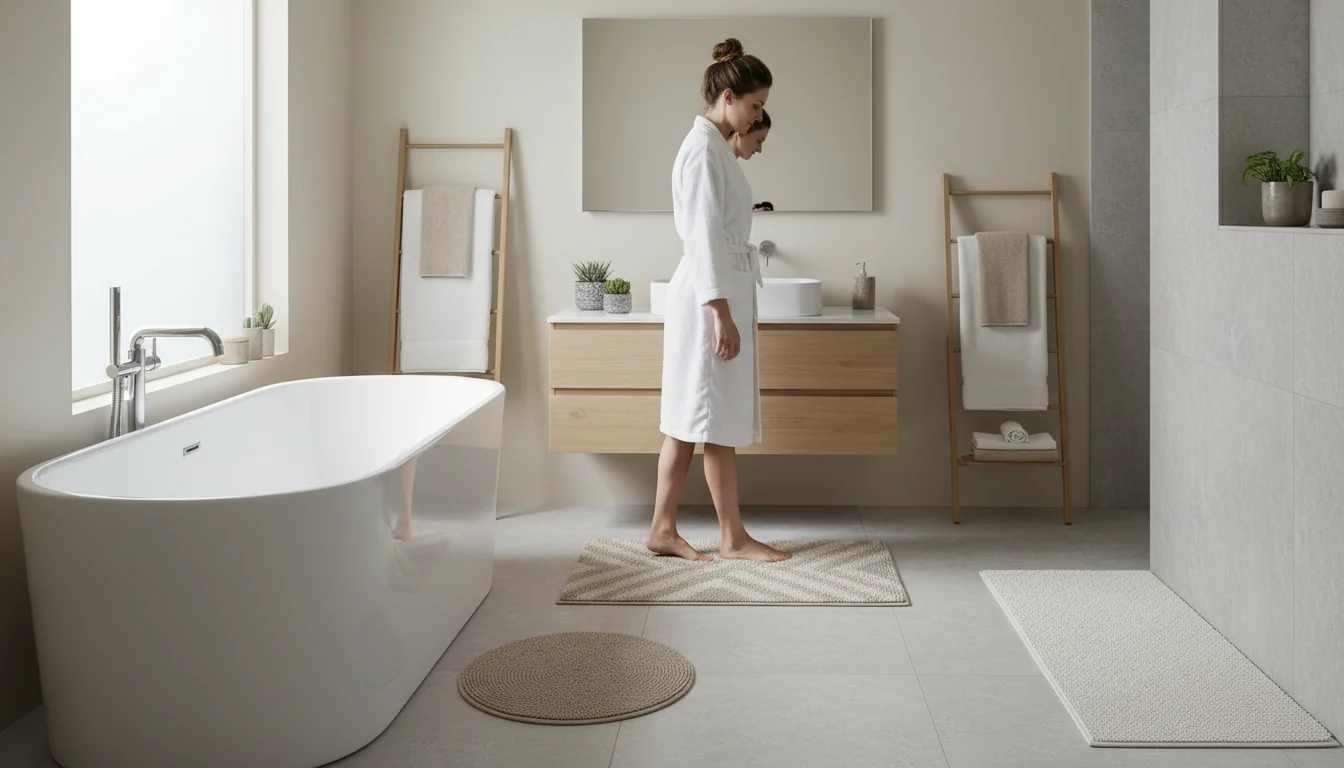
Safety first: bathroom anti-slip science
A mat should feel soft yet stay put on wet tile. Look for non-slip backing (TPR or rubber), a stable weight, and edges that lie flat to avoid trip points near the shower entry.
- Backings that grip: TPR/rubber beat light latex dots on glossy floors.
- Choose size by footprint: 20×32 in. at a tub; runner rug for double vanities.
- Absorption matters: water absorbing fibers reduce puddles.
- Edges: low-profile borders prevent curling in high-traffic zones.
Always place a mat on a fully dry floor. Moisture under a backing can cause slip even with quality materials.
If you value both aesthetics and safety, explore selections with reinforced grip that align safety specs with spa-grade textures.
Spa comfort: bathroom texture layers
In a serene bathroom, tactile layers matter. Plush chenille, soft microfiber, or ribbed cotton add warmth, while a subtle grey‑beige gradient blends with stone and wood accessories.
- Plush pile: cloud‑soft under bare feet after a shower.
- Ribbed weave: directional texture that dries faster.
- Cobblestone tuft: spa look without loud color.
- Layering: a runner plus a U‑shaped mat can zone toilet and vanity discreetly.
Rotate two similar mats weekly. One rests and dries completely while the other serves daily duty.
For larger washrooms or double vanities, consider oversized formats to cover splash zones and minimize cold tiles underfoot.

Small space: bathroom layout wins
A grey and beige bath mat can make a compact shower room feel calm and bigger. Keep floor reveals neat, avoid door interference, and echo the palette in towels and a discreet curtain pattern.
- Right size: 17×24 or 20×30 in. avoids crowding a narrow entry.
- Runner option: 20×60 in. elongates sightlines along a vanity.
- Light tones: beige with ivory trims brightens a dark apartment bath.
- Shower curtain lines: vertical stripes guide the eye upward.
Pale blue‑grey accents cool warm beige and reflect light, helping the room look bigger without harsh white.
Prefer natural textures in tight footprints? Slatted options in this bamboo-focused selection keep air flowing beneath while staying minimalist.
Guide 2026: style it right
Use these quick steps to lock in a tranquil, neutral bathroom around a grey‑and‑beige mat.
- Pick dominance: more beige warms grey tile; more grey cools warm stone.
- Echo tones: choose towels in taupe, ivory, or soft charcoal for cohesion.
- Balance texture: one plush rug, one fast‑dry zone near the shower.
- Mind scale: align a runner to the vanity span; center smaller mats at exits.
- Check safety: test grip on a dry floor; trim curled edges if needed.
Don’t layer a rug over a wet shower liner or warped mat. Trapped moisture breeds odors and reduces grip.
Want added warmth near the tub? Try this dense beige pile to soften acoustics and boost spa comfort in a tiled bath.
Styling a cool‑leaning vanity zone? Consider a soft gray‑and‑white option that bridges chrome fixtures and light grout lines.
Need speed between showers? A microfiber pick for quick drying keeps the bathroom safe when steam and splashes are frequent.
Why choose grey and beige in a bath space?
It calms mixed surfaces. Beige warms cool tile; grey cools warm stone. The combo anchors fixtures and mirrors, creating a balanced, spa‑like bathroom without visual clutter.
How does it compare to all‑white or dark mats?
All‑white shows lint and stains; very dark can shrink a small washroom. Grey‑beige reads forgiving and expands the floor visually, especially by the shower exit.
What are the main bathroom benefits?
Safer footing, warmer underfoot feel, and cohesive decor. Look for non‑slip backing, absorbent pile, and easy washing to support daily showers in 2026.
Will it work in a tiny apartment bath?
Yes—choose a compact format. A light‑toned option like this airy grey pick brightens tight floors and keeps a neutral mood near the toilet and sink.
How do I pair with metal finishes?
Grey supports chrome and nickel; beige flatters brass and bronze. A balanced mat, such as a subtle silver‑gray variant, connects mixed fixtures in the same bathroom.
Cleaning advice for busy shower rooms?
Shake daily, wash weekly at 30°C with mild detergent, and air‑dry flat. Rotate two mats so one fully dries between showers to preserve grip and freshness.
What color towels match a Zen palette?
Taupe, ivory, light grey, or soft charcoal. Add a tiny accent—sage or blue‑grey—only once, like a single hand towel, to keep the bathroom serene.
A grey and beige bath mat is a small upgrade that reshapes your bathroom’s mood, function, and safety—perfect for a tranquil, neutral scheme in 2026.
- Balance cool grey with warm beige for visual calm.
- Prioritize grip, absorbency, and quick drying.
- Size to zones: shower exit, tub front, and vanity.
Apply one change today—recenter your mat—and watch your washroom feel instantly more Zen.
Moisture control: bathroom drying speed
A Zen scheme depends on dryness. Textiles should be fast drying and absorb well, or you’ll see streaks and damp patches that break the calm.
| Material | Best bathroom use |
|---|---|
| Microfiber (dense) | Water absorbing at shower exit; soft, quick recovery. |
| Ribbed cotton | Balanced feel; better airflow between ribs; classic hotel vibe. |
| Diatomite “stone” | Ultra fast evaporation; firm underfoot; great as a second mat. |
- Hang after use; leave a 1–2 cm gap from baseboards for airflow.
- Open the door or run a fan for 15 minutes post-shower.
- Alternate two mats to meet busy routines without mildew.
- Pair a plush mat with a stone slab where drips are heaviest.
Aim for a mat that dries within 12–24 hours when hung; longer suggests either too-thick pile or weak ventilation.
If curbless entries are part of your bathroom, keep plush textiles 5–8 cm away from the water source to reduce splash saturation.
Style mix: bathroom Japandi nuances
Japandi merges Scandinavian restraint with Japanese warmth. In a bathroom, that means simple forms, matte textures, and a limited neutral range where grey and beige feel intentional.
- Matte finishes: brushed metal, unglazed accents, linen-look shower curtain.
- Natural notes: bamboo stool, light oak shelf, pebble-inspired tufting.
- Greenery: one plant, not many; let the mat be the soft anchor.
- Art: abstract neutral prints; avoid text-heavy wall art in small washrooms.
Too many accessories can clutter a serene bath. Keep counters sparse; let your mat, towels, and one tray set the rhythm.
A neutral mat also softens the acoustics in tiled bathrooms, reducing echo and supporting a quiet ritual feel.
0 comments