


Do puddles, fogged glass, and damp towels linger in your bathroom long after everyone’s shower? In a shared family bathroom, slow drying between showers fuels odors, mold, and daily frustration.
This 2026 field-tested guide shows you how to cut drying time fast: airflow that works, towel strategies that actually dry, surface-by-surface tactics, safe cure times after maintenance, and practical scheduling for a busy home.
Airflow first: moisture out
Drying is physics. Push humid air out and pull dry air in, and your shared wash space clears in minutes, not hours. The goal is steady extraction plus cross‑ventilation that reaches the shower corner and the ceiling.
- Size the exhaust fan to room volume: target 8–10 air changes per hour.
- Run the fan during showering and for 15–20 minutes after.
- Open the bathroom door 2–3 inches post‑shower to promote air exchange.
- Crack a window when safe; cross‑breeze accelerates evaporation.
- Add a compact dehumidifier for windowless rooms or high humidity zones.
Mount the fan over or just outside the shower area. Use a humidity sensor or a 30–60 minute timer to avoid switching off too soon.
Quick sizing rule for a family shower room: 1 CFM per square foot, minimum 50 CFM. For higher ceilings or enclosed glass, aim higher for reliable clear‑out.
| Room (L×W×H) | Target fan (CFM) |
|---|---|
| 7' × 11' × 8' (small family bath) | 80–110 CFM (glass enclosure = higher end) |
| 5' × 9' × 8' (compact) | 70–90 CFM |
| 9' × 12' × 9' (primary) | 110–150 CFM |
Use a hygrometer. Keep post‑shower ventilation running until humidity returns within 5% of baseline (often 40–50% RH).
If the space still feels swampy after a full fan cycle, check duct length, turns, and exterior backdraft damper; poor venting traps moisture in the bathroom.

Surfaces: speed by design
Some surfaces shed water; others hold it. In a family shower, the fastest wins are squeegeeing, tilting shelves, and choosing finishes that release droplets instead of spreading them.
- Squeegee glass, walls, and floor in 60 seconds to remove 75–90% of water.
- Ensure pan slope to drain; benches and niches should shed water, not puddle.
- Seal grout on schedule; sealed joints resist soak‑in and dry faster.
- Use minimal shelf lip; deep ledges collect standing water.
- Choose semi‑gloss paints on walls and trim; they repel moisture better.
| Surface/material | Typical dry behavior |
|---|---|
| Porcelain tile + sealed grout | Fast; minimal absorption after a quick squeegee |
| Natural stone (e.g., marble) | Slower; micro‑porous, benefits from diligent sealing |
| Glass panels/door | Fast if squeegeed; beads linger on untreated glass |
| Painted drywall (semi‑gloss) | Quick; resists moisture, wipes clean |
Do not block point or linear drains with bath mats. A partially covered drain doubles drying time and leaves the shower floor wet.
A framed glass door that stops below the ceiling improves air exchange in the shower area. If you use a curtain, keep it fully open after use so it can air dry.
Textiles: dry towels, dry room
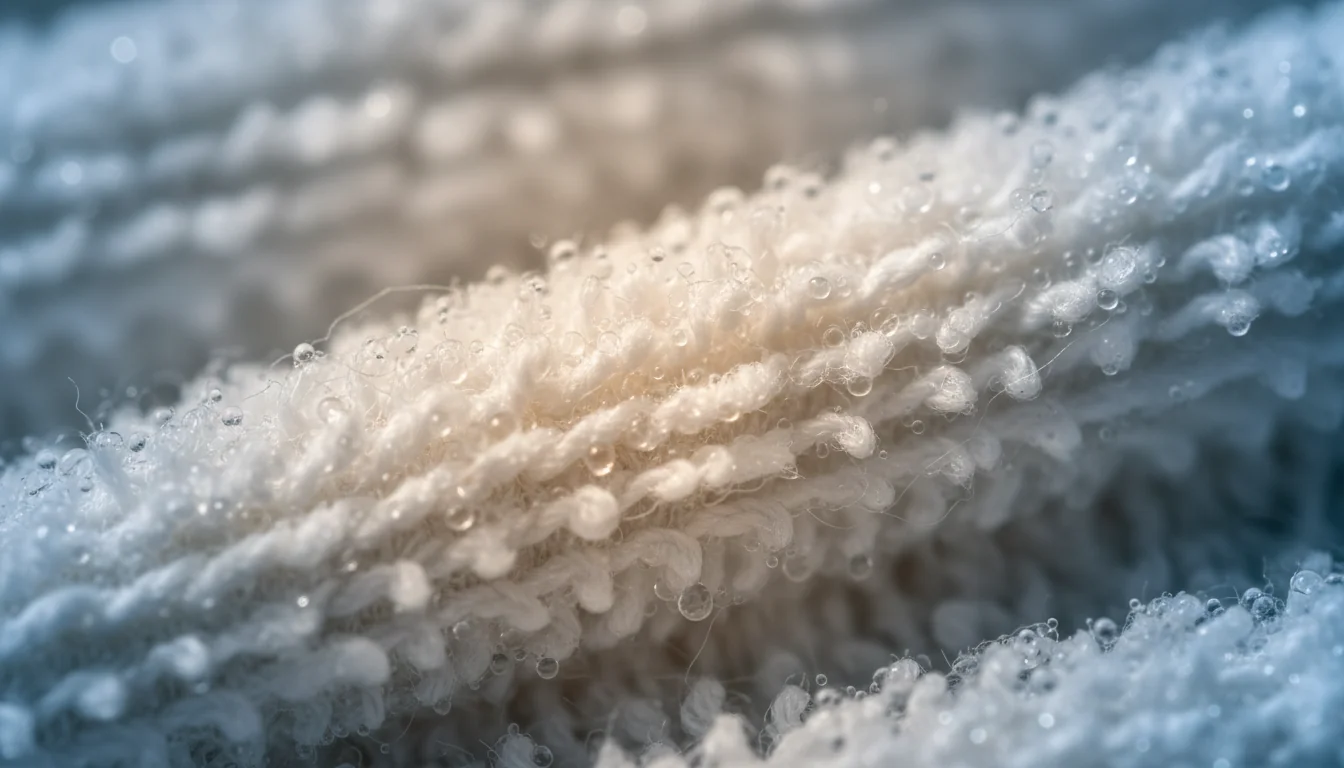
Towels are sponges. If they stay wet, your whole bath stays damp. Give each person space and airflow, and the room—and your bath linens—will clear much faster between showers.
- One full‑width towel bar per person; avoid layering two wet towels.
- Hooks are compact but slower; choose bars for primary bath towels.
- Use lighter weaves (waffle, low‑pile terry) for faster air dry.
- Rotate washcloths and bath mats; hang them flat, not bunched.
- Add a heated rail or warming cycle if humidity is chronically high.
Hang towels unfolded, edges aligned, with at least two inches between items. This small gap speeds airflow and shortens drying time.
For families, consider a second bar behind the door for hand towels only. Post‑shower, leave the bathroom door ajar so towel humidity escapes to drier zones.

Fixtures: doors, drains, details
Small fixture choices have big drying effects. From drain style to door swing, each decision influences how quickly the shower zone returns to dry between uses.
- Doorless entries and half‑panels vent faster than fully sealed stalls.
- A point drain at the low point or a well‑pitched linear drain prevents pooling.
- Wall‑mounted shelves with front slots drain better than deep trays.
- Use a magnetic door sweep that can rest ajar post‑shower.
- Keep shampoo bottles off the floor to allow free runoff.
| Choice | Impact on drying |
|---|---|
| Glass panel (gap at top) | Improves convection; faster dry‑out |
| Full-height enclosure | Traps steam; needs stronger extraction |
| Linear drain with correct pitch | Even runoff; fewer puddles on large tiles |
| Curtain kept closed | Slower; fabric blocks airflow and stays damp |
Even a small 5–10 mm gap at the top of a shower panel improves warm‑air escape and reduces fog on mirrors outside the shower area.
If fog persists in the bathroom, verify water temperature and flow; very hot, long showers overwhelm any fan in a compact space.
Timing: buffers that work
In a household with kids and adults, the simplest drying win is a short buffer between showers. With the right routine, moisture drops before the next person steps in.
- Aim for a 10–20 minute gap with fan and door ajar.
- Use a two‑stage cycle: squeegee, then ventilate until RH stabilizes.
- Schedule long showers last; quick rinses first in peak hours.
- Place a small dehumidifier on a timer for the morning rush.
- Move hair‑drying and dressing to a hallway station to free the bath.
If the bathroom lacks a window and sits on an interior wall, drying time may double. Boost fan size or add make‑up air under the door.
In hot, humid climates, extend the buffer to 20–30 minutes. In cool, dry seasons, you can often cut the gap in half with the same routine.
Maintenance: cure and protect
After repairs or upgrades, the fastest way to ruin your work is to shower too soon. Respect cure times for grout, caulk, and paint so the bathroom can perform and dry properly.
- Grout: allow 24–72 hours before showering, per label.
- 100% silicone at corners: typically 24 hours to cure.
- Acrylic caulk: may require up to 48 hours to set.
- Wall and ceiling paint (semi‑gloss): wait until fully dry to the touch and ventilate well.
- Tile coatings: follow the manufacturer’s longest stated dry time.
Use gentle airflow (fan or room heater at a distance) to aid curing. Avoid blasting heat directly at fresh joints; it can skin the surface and trap moisture.
Re‑seal grout on schedule and replace failing caulk promptly. Tight, water‑resistant joints reduce water infiltration, so the shower area dries faster and stays cleaner.
How to cut drying time today
- Before stepping out, squeegee glass, walls, and floor.
- Run the exhaust fan and open the door slightly.
- Hang towels flat on bars with gaps between items.
- Crack a window for five minutes if conditions allow.
- Keep bottles off the floor and clear the drain area.
Closing the bathroom door and fan off right after a shower traps steam. It can double the time the shower stays wet.
Climate: adapt your routine
Drying time between showers varies with season and location. Tune your bathroom routine to the air outside and the way your home breathes.
- Humid zones: add a portable dehumidifier; extend the buffer.
- Dry, cool air: brief window purge speeds moisture removal.
- Older homes: improve make‑up air under the door or via a grille.
- New airtight builds: upsize fan or add a dedicated supply vent.
- High‑use mornings: create a second drying station outside the bath.
A family of four can release over a liter of water into the air during a shower hour. Ventilation and towel strategy are as important as water temperature.
In 2026, many households use humidity‑sensing fan switches. They pay for themselves by preventing over‑run on dry days and extending run time when the bathroom needs it most.
What is a good drying time between family showers?
With a proper fan, squeegee, and door ajar, aim for 10–20 minutes. In a small bathroom with no window, 20–30 minutes is safer to reset humidity before the next shower.
Bars or hooks: which dries towels faster?
Bars. A flat‑hung towel exposes more surface to air. Use hooks for hand towels or overflow, but rely on bars in a busy shower room to keep bath towels truly dry.
How do glass doors affect bathroom drying?
Glass dries fast if squeegeed and vented. Leave the door slightly open after use. A panel that stops below the ceiling helps warm air escape the shower zone quickly.
Can I speed up caulk and grout drying safely?
Yes—use room ventilation, not direct heat. Follow the product’s stated cure time. Typical guidance: grout 24–72 hours, silicone about 24 hours before showering.
Why is my small family bathroom always damp?
Common causes: undersized fan, blocked vent, curtain left closed, layered towels, and puddling at the drain. Fix airflow first, then add squeegee and towel bars.
Which tiles dry faster between showers?
Dense porcelain with sealed grout dries quickly, especially if squeegeed. Natural stone can hold moisture longer; diligent sealing and good pitch are key.
Is a dehumidifier worth it for a shared bath?
In windowless or very humid homes, yes. A small unit on a morning timer reduces steam hang‑time and helps towels and mats dry before the next shower.
A fast‑drying family bath is no mystery: combine strong airflow, smart surfaces, and disciplined routines, and long drying time between showers disappears.
- Ventilate right: size the fan and run it long enough.
- Remove water: squeegee, clear drains, open the door.
- Space textiles: bars over hooks; hang towels flat.
Start with airflow today, add a squeegee routine, and enjoy a dry, healthy shower room in 2026 and beyond.
0 comments