


When you read “luxury bath mat premium durable finish,” what exactly is that finish—and why does it matter? In 2026, the surface treatment is the quiet designer of comfort, grip, and longevity.
Do you want velvety softness, spa‑grade wood sheen, or a matte stone look? This guide explains how the finish affects feel, water behavior, color, and care—so your bathroom rugs look refined and last longer.
Grip and drying: performance finish
A bath mat’s safety and comfort hinge on its surface and backing. The right treatment controls water at the top and traction underneath, so the mat feels plush yet steady after a shower.
- Loop vs. sheared pile: loops boost capillary wicking; sheared piles feel velvety but may hold more water initially.
- Anti-slip backing: latex, TPE, or micro-dot patterns regulate grip; formulation and pattern density define slip-resistance.
- Hydrophilic treatments: cotton finishes enhance absorbency, pulling water from skin fast for quick-drying comfort.
- Edge binding: piped or taped edges stabilize shape, limiting curl after washing and maintaining a neat silhouette.
- Foam laminations: memory foam cores rely on a top fabric finish to resist staining and a base finish for skid control.
Test the finish with wet hands: press, twist slightly, and lift. Good traction and minimal lint transfer signal a balanced treatment.
Think of finish as a traffic system for water and friction. The top welcomes moisture, the base anchors the mat, and the edges keep everything aligned.

Wood warmth: oiled surfaces
Wooden bath platforms bring spa-like comfort. An oiled finish on teak or similar hardwood saturates fibers, repelling moisture while showcasing grain depth and a satin glow.
- Oiled teak resists water and mildew; periodic oiling preserves tone and warmth underfoot.
- Lacquered bamboo uses a waterproof finish for quick runoff but can feel slick if the sheen is too high.
- Rubberized feet act as a micro-finish for stability on tile or stone floors.
- Slatted construction is a functional finish: channels direct water away for faster drying.
| Finish type | Where it excels |
|---|---|
| Oiled hardwood | Indoor/outdoor zones; humid rooms needing warmth and durability |
| Lacquered bamboo | Fast-drying surfaces; light spa use where sheen is acceptable |
High-gloss sealers can reduce traction. Prefer satin or matte treatments on walking surfaces for safer footing.
Exploring alternatives? See our high-spec mat range to compare wooden platforms with premium textiles by finish behavior.

Textile feel: pile treatments
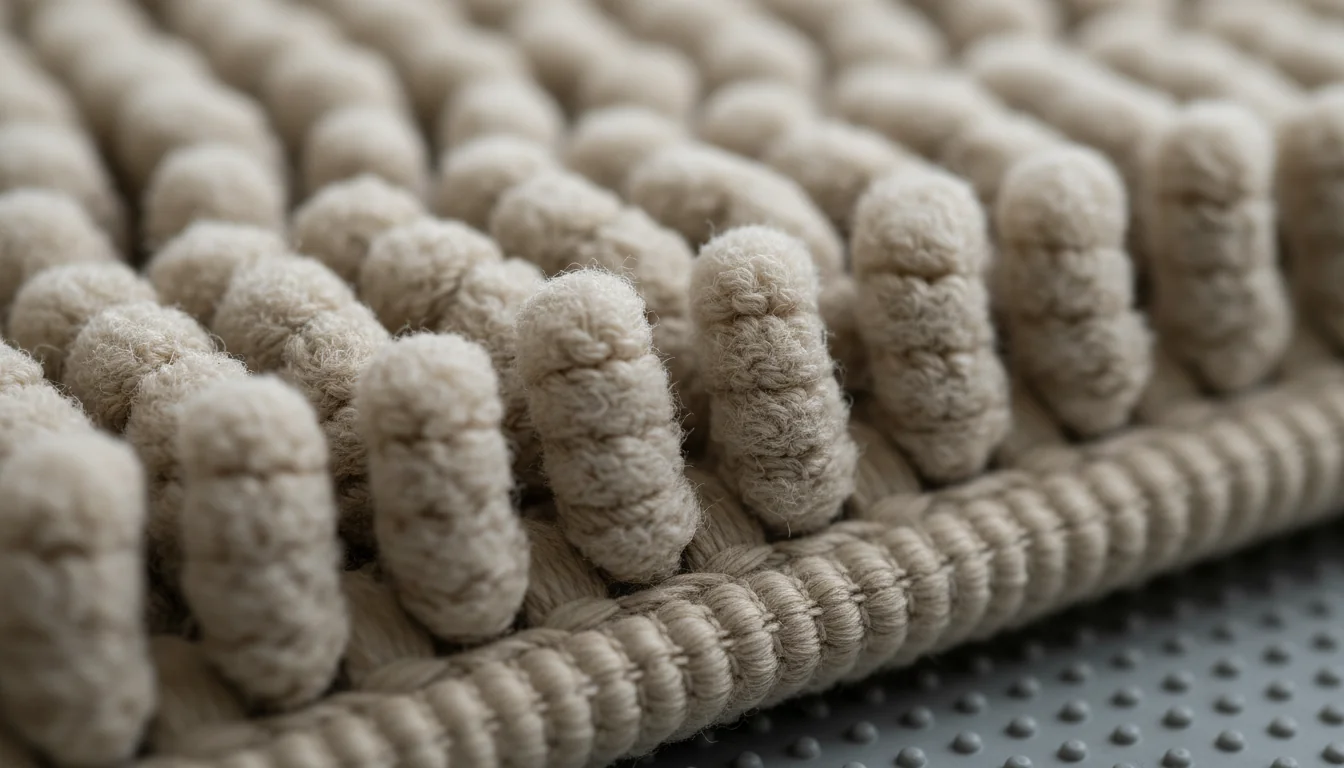
In cotton and microfiber mats, the pile’s construction and finishing define touch, absorbency, and lint control. Long-staple cotton with a balanced sheared pile feels plush while keeping loops compact and durable.
- Combed or ring-spun yarns deliver soft absorbency with fewer stray fibers after washing.
- Colorfast dye finishes protect ivory, grey, or teal shades from humidity fade.
- Edge piping and double stitching are structural finishes preventing warp and fray.
- Memory-foam laminates rely on a stain-resistant top finish to stay clean.
Quick-drying loops shorten wet time, limiting musty odors and extending backing life in humid bathrooms.
For larger sinks or double-vanity zones, browse the oversized formats collection to assess how edge and pile finishes hold shape at scale.
"In textiles & soft furnishings, the finishing stage turns good materials into reliable bathroom rugs—with the color, hand-feel, and stability you notice daily."
Hygiene first: protective coatings
Durable protection comes from targeted finishes: antimicrobial washes, stain guards, and improved bond between fabric and base. Together, these reduce odor, staining, and backing breakdown.
- Antimicrobial rinses slow bacterial growth in damp pile, aiding freshness.
- Stain-resistant treatments help soap residue and cosmetics release in a cold wash.
- Advanced adhesives bond backing evenly, improving durability over many cycles.
- Matte stone-like surfaces shed water instantly and don’t harbor lint.
Wash textiles at temperature: 30°C with mild detergent. High heat can embrittle backings and dull protective coatings.
Planning a coordinated look across household textiles? Review the bathroom rugs selection and align finishes with towels and other carpets & rugs for visual unity.
Design mood: sheen, color, texture
Beyond function, the finish sets the mood. Matte textiles support a minimalist, Nordic style; subtle satin looks richer under warm light; stone-like matte adds modern calm near a shower.
- Matte pile tames reflections on glossy tile, reducing visual clutter.
- Satin shearing deepens dark tones; careful not to over-polish the feel.
- Oiled wood echoes spa spaces, pairing well with natural cotton towels.
- Stone finishes complement minimalist fixtures and frameless glass.
Match sheen to lighting. Warmer bulbs enrich satin; cooler LEDs flatter matte textures.
By selecting the right surface treatment, you coordinate with broader textiles & soft furnishings for an intentional 2026 bathroom scheme.
Quick guide: choose the right finish
- Define the zone: shower exit needs higher‑grip finish than a sink area.
- Decide the vibe: matte reads spa‑calm; satin adds subtle glow.
- Check water behavior: bead (sealed wood) vs wick (textile) vs flash‑dry (mineral).
- Test traction: palm‑push on wet tile; no skating = safe finish.
- Confirm care: match finish to your maintenance bandwidth.
For wet tiles, prioritize a surface with a proven anti‑slip finish to stabilize footing after showers.
If safety is your top criterion, compare an option with a reinforced underside like this non‑skid pick and note how the finish feels underfoot when damp.
Craving plushness beside the tub? A cushioned top with a velour‑like finish helps, as seen in this memory‑comfort style that pairs softness with a stable base.
Why prioritize the finish at all?
Because finish directs water, friction, and color stability. It decides whether a bath mat dries fast, grips well, and keeps its refined look across seasons in 2026.
How do wood and textile finishes compare?
Oiled teak feels natural and warms tones; sealed coats boost stain block. Textiles rely on pile shearing and backings to tune softness and grip without adding bulk.
What are the main benefits of a premium surface treatment?
Enhanced traction, better moisture control, richer color, and easier care. A thoughtful finish extends service life and preserves the original hand feel.
Is a satin sheen too slippery for showers?
Not if micro‑texture sits beneath the sheen. Always test on wet tile; a safe finish resists lateral slide during a palm‑push check.
How should I care for a sealed wood surface?
Wipe after use, avoid abrasives, and inspect edges periodically. If you prefer a textile alternative with a robust top treatment, see this high‑spec example for a different care profile.
Does a plush finish mean slow drying?
Not always. Dense sheared piles can wick efficiently if the binder leaves capillaries open. Look for “quick‑dry” claims verified by actual fabric weight and construction.
What if I want ultra‑soft feel without losing grip?
Choose a soft upper finish with a high‑friction base. For a feather‑light touch by the sink, explore this airy plush option paired with a quiet non‑slip underside.
"Finish is where design meets physics: the layer that sets comfort, controls water, and locks in the bathroom’s polished mood."
A luxury bath mat earns its “premium durable” status through a well‑chosen finish—one that balances touch, traction, and time.
- Surface treatment drives grip, drying, and color depth.
- Match finish to zone: shower exits need more texture; sinks can favor plush.
- Care follows chemistry: oils refresh; films avoid abrasives; textiles like low heat.
If you want a balanced aesthetic and long‑term polish, compare a refined textile top finish such as this elegant choice and note how it maintains its tone and hand over time.
Choose your finish with intent, and your bathroom will feel composed, safe, and quietly indulgent day after day.
0 comments