


What you feel underfoot is the whole point of a memory foam floor mat. If the foam’s density is off, the step-on feel suffers; if it’s right, pressure melts away and balance improves.
In this 2026 field guide, you’ll learn how density, thickness, and backing interact to shape underfoot comfort, how to spec the right pad for bathrooms, kitchens, and bedrooms, and how to keep that plush feel day after day.
Density decoded: feel beneath
Density determines how a memory foam floor mat shapes to your soles and how quickly it rebounds after each step. Higher density yields steadier comfort underfoot; lower density feels plush but bottoms out faster.
- Key metric: density is foam mass per cubic foot (lb/ft³). Typical ranges: 5–10 lb/ft³ for mats.
- Under 6 lb: soft initial sink; may compress in busy kitchens or hallways.
- Around 8 lb: balanced pressure relief and support underfoot for most tasks.
- 10 lb and up: firmer feel; better for heavy users or anti-fatigue standing sessions.
- Thickness interacts with density; 0.45"–0.75" covers most needs without wobble.
| Density (lb/ft³) | Feel underfoot (typical) |
|---|---|
| 5–6 | Plush sink, more give; best for light traffic and bath mats |
| ~8 | Cushioned yet stable; consistent comfort for daily standing |
| 10+ | Supportive and durable; firmer step, better long-term resilience |
For sustained tasks (meal prep, ironing), choose ~8 lb density and ~15–20 mm thickness for reliable support underfoot without “floating.”
If you’re comparing bath-focused designs, scan our bathroom mat collection to benchmark thickness and backing suited to wet floors.
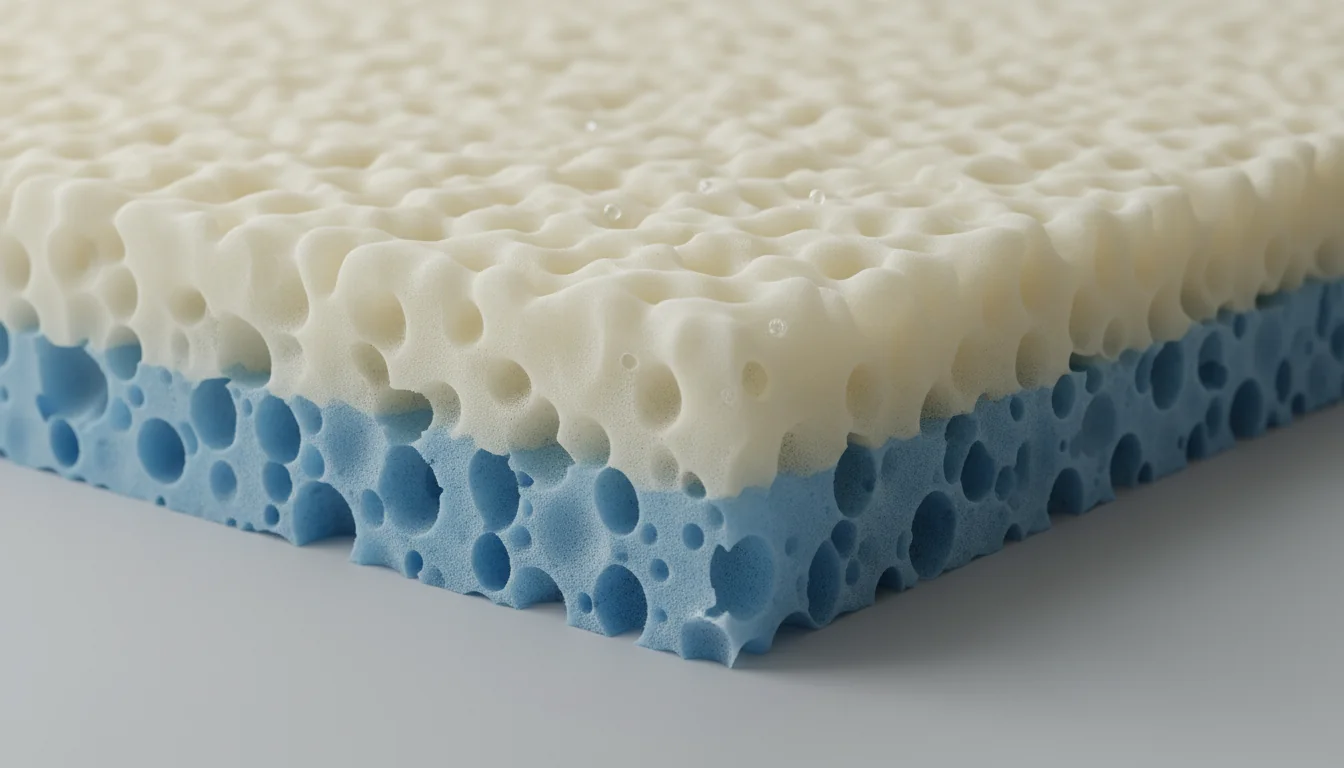
Viscoelastic foam redistributes pressure across a larger footprint. That’s why memory foam feels “even” beneath your step compared with basic foam pads.
Think of density as how much “cushioning energy” the mat holds underfoot. The right balance avoids both bottoming out and teetering.

Grip and barriers: safe steps
Comfort underfoot only counts if the mat stays put. On tile or vinyl, a textured, non-slip backing stabilizes the foam while a moisture barrier keeps spills from soaking through to floors.
- Non-slip backing (rubberized or patterned) prevents shear when you pivot or step out of the shower.
- A moisture barrier protects subfloors and slows water ingress, helpful for bath mats and sinks.
- Kitchen runners benefit from anti-fatigue foam paired with grippy edges to reduce curl and tripping.
- On stairs, denser foams or frothed foam underlays keep things tight and safe beneath your feet.
- Avoid pads that slide on high-gloss surfaces; test the base before full use.
“Non-slip” claims vary. Press your weight from heel to toe; if the mat creeps, upgrade the backing or add a compatible rug pad for better control underfoot.
For a more refined finish and durable underfoot stability, browse this premium bath selection to compare barrier layers and backing patterns.
If you regularly step onto a wet mat, prioritize quick-dry surfaces and a base that disperses water so the feel underfoot stays consistent.
In kitchens, choose anti-fatigue mats with beveled edges and moderate firmness so you don’t “sink” and strain ankles during long preps.
Resilience: lasting comfort below
Underfoot feel should hold up from day one to year two and beyond. Compression set (how much foam stays flat after load) separates a fleeting cushion from dependable support.
- Memory foam offers pressure relief; higher density reduces permanent dents in busy zones.
- Polyurethane blends can boost rebound; “prime,” “rebond,” or “frothed” structures resist collapse.
- Choose thickness for your traffic: ~15 mm for general use; up to ~20 mm for standing tasks.
- Look for sealed edges; they help the mat keep shape and feel steady beneath your feet.
- For acoustic calm, a denser pad also cuts heel thump and softens room noise.
A moisture barrier also protects foam cells from repeated wetting, which helps preserve the mat’s bounce and comfort underfoot.
If you enjoy textured sensations beneath your feet, explore these pebble-inspired options that add subtle massage while maintaining grip.
Rotate mats 180° every few weeks. It evens wear patterns and keeps the feel underfoot balanced across high-use zones.

Moisture, hygiene, freshness
Water changes the underfoot story. A saturated mat loses spring, while a breathable core with a moisture barrier preserves loft and feel between washes.
- Moisture barrier stops spills from reaching subfloors and slows soak-through.
- Ventilated foam and quick-dry surface fabrics help comfort stay consistent underfoot.
- Antimicrobial treatments resist odor build-up, useful in humid bathrooms.
- Hang-dry after showers to restore the plush step feel faster.
Wash cold, gentle cycle; air‑dry flat or low heat to protect foam cells and keep comfort consistent beneath your feet.
Prefer tactile surfaces that massage the sole? See our pebble-texture selections for a nuanced feel under foot pressure.
Room-by-room foot comfort
Match density and base to the way you stand and move in each space. The goal is reliable comfort underfoot without compromising safety or upkeep.
- Bathroom: mid density with absorbent top and surefooted non-slip base.
- Kitchen: anti-fatigue mats with higher density and beveled edges for long prep sessions.
- Bedroom: softer mid density for a gentle morning step; avoid high pile near doors.
- Hallway or entry: denser foam, thin profile; easy to lift for quick cleaning.
Near stairs, pick dense, thinner mats. They improve traction underfoot and reduce edge lift that can catch a heel.
For kids’ zones, choose mid density with strong backing to resist playful shuffling while keeping steps cushioned.
Durability and rebound feel
Compression set measures how much foam fails to bounce back after loading. Lower set means your underfoot feel stays lively instead of going flat.
- ILD (firmness) guides pushback; pair ILD with density to predict support under pressure.
- Visco + high-density polyurethane blends resist sagging in high-traffic spots.
- Edge stability matters: firmer borders help the mat stay flush to the floor.
- Rotate mats monthly to distribute wear and preserve consistent footfall comfort.
Standards like HUD UM72a help frame minimum cushion performance. For home mats, look for specs on density and backing quality.
Well-made memory foam mats maintain their contouring effect longer, keeping the sensation underfoot predictable and calm.
How to spec perfect underfoot comfort
- Measure the zone. Leave door clearance and a safe edge gap near stairs.
- Pick density for use: mid for bath, higher for anti-fatigue kitchens.
- Match thickness to density so you don’t bottom out or wobble.
- Choose a non-slip base compatible with tile, vinyl, or wood.
- Confirm care: machine washability and dry time keep the feel consistent.
If you stand for long prep sessions, prioritize higher density over extra thickness. Your arches will thank you.
For a soft microfiber top that still supports well beneath your feet, consider this microfiber memory foam option.
If you need a versatile mat that balances cushioning and grip across rooms, look at this adaptable memory foam format.
Why focus on the feel beneath your feet?
Because underfoot comfort drives real-world use: less fatigue in kitchens, safer post-shower footing, and calmer balance when you pivot or reach.
How does memory foam compare to standard foam underfoot?
Viscoelastic memory foam spreads load more evenly, reducing hot spots. Standard foams rebound faster but may not relieve pressure as effectively.
What density feels best for bathroom stepping?
Around mid density (~8 lb/ft³) keeps the first step plush yet steady. Pair it with absorbent fabric and a non-slip base to stabilize traction.
Is a moisture barrier essential for comfort beneath your feet?
It helps. Barriers block soak-through, keeping foam lively after showers. For faster dry-back underfoot, see this highly absorbent choice.
Which thickness avoids wobble at doorways?
Slim to mid profiles (about 0.4–0.8 in) with higher density feel stable and resist edge curl where doors and feet meet.
Can one mat work across rooms without losing that underfoot feel?
Yes, if density is balanced and the base grips multiple surfaces. Explore this balanced-density option as a reference point.
Underfoot comfort depends on a smart pairing of density, thickness, and grip so every step feels cushioned, stable, and dry.
- Choose density first; let thickness follow to avoid bottoming out.
- Backings matter: a non-slip base turns softness into safe footing.
- For a textured massage feel, review this pebble-style memory foam.
Use these 2026 guidelines to tune the feel beneath your feet—calm, cushioned, and confidently grounded.
0 comments