


Step out of the shower. Your feet expect ease, warmth, and support. But which delivers true comfort: a memory foam mat or standard foam?
This 2026 guide focuses on comfort only—how each core feels under pressure, how warm or cool it runs, how stable it is when wet, and how it affects your balance and relaxation over time.
You’ll learn what “real comfort” means for bare feet at home, with concrete tests, quick checks, and a practical selection path you can apply today.
Pressure relief: cushioned support
Comfort starts with pressure relief. Memory foam conforms to your arches and heels, spreading load over a wider surface. Standard foam pads you from the floor but compresses more uniformly, with a springier feel and less contouring.
- Pressure mapping: memory foam reduces peak pressure at heel and forefoot, easing post‑run soreness.
- Standard foam offers a lighter, bouncier step that some prefer for a quick, responsive feel.
- For joint sensitivity, contouring gives a softer “landing,” especially on tile or stone.
- Look for firmness (ILD) and density specs to predict comfort, not just thickness.
Memory foam’s slow rebound cradles your foot shape for a few seconds after you step off. That lingering contour is a hallmark of plush, pressure‑easing comfort.
| Comfort factor | What to expect |
|---|---|
| Pressure relief (memory) | Slow‑moulding contour, softer heel landing, less hotspot fatigue. |
| Pressure relief (standard) | Even padding, springier response, less deep cradling. |
| Firmness feel | Memory: ILD ~ 8–15 (soft). Standard: wider spread, often medium. |
| Density cues | Memory: 40–55 kg/m³ common. Standard: often lighter foams. |
If you like a plush sink but want support, pair a soft memory core with a slightly firmer base layer to balance coziness and stability.
Comfort is personal. If you enjoy a gentle “hug” underfoot, memory foam shines. If you prefer a buoyant, quick rebound, standard foam may feel more energetic.
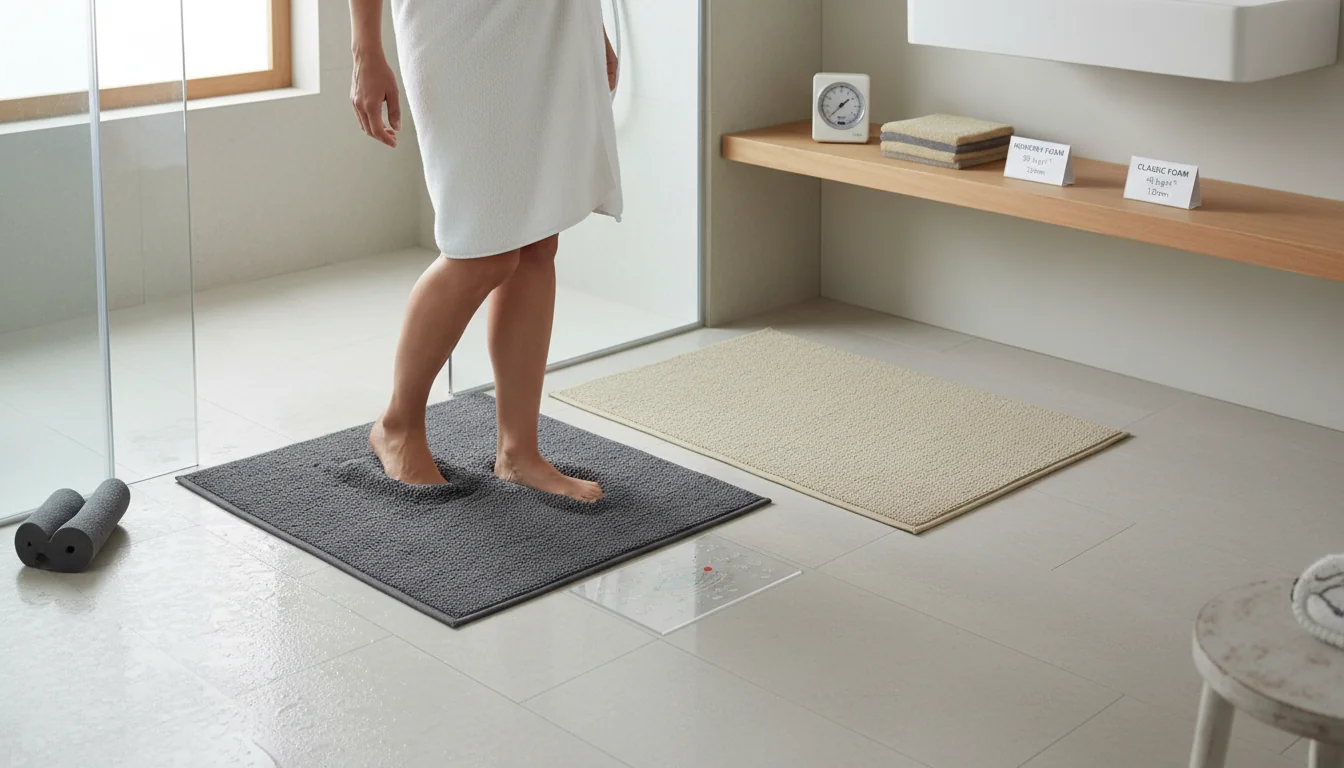
Warmth underfoot: thermal ease
After hot water, tile can feel cold and jarring. Thermal comfort matters. Memory foam’s microcells trap a bit of warmth, softening the temperature contrast. Standard foam feels more neutral, with faster heat exchange.
- Thermal feel: memory foam reads slightly warmer; standard foams feel crisper underfoot.
- Toppers matter: microfiber piles add a cozy surface and protect the core.
- Open‑cell builds breathe better; gel‑infused memory foams moderate warmth.
- Drying time influences comfort the next day; airflow is key.
A soaked core feels clammy. For real comfort, choose a mat that dries within 24 hours in your bathroom’s typical conditions.
In compact bathrooms with limited ventilation, a breathable cover and open‑cell core prevent lingering dampness. That keeps morning steps cozy rather than cool and sticky.
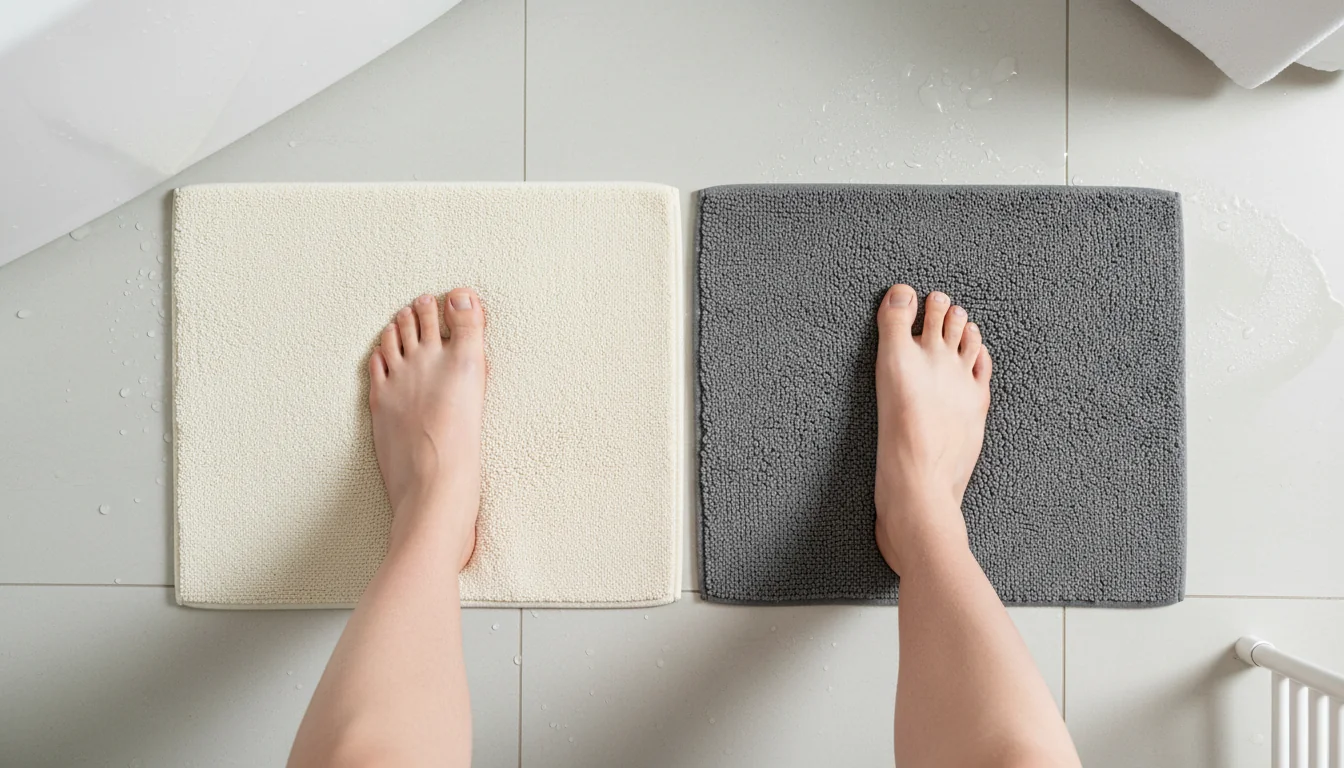
Step stability: confidence and quiet
Comfort is also psychological: you relax when you trust every step. Memory foam’s slow rebound reduces wobble by cushioning impact, while standard foam’s quick spring can feel livelier underfoot.
- Grip matters: look for textured, non‑slip backings (e.g., TPR) to steady the mat on tile.
- Edge firmness prevents “rolling” at the border when you pivot.
- Acoustic comfort: foam mats absorb footfall and reduce echoes in hard bathrooms.
- For kids or older adults, a stable feel boosts confidence when drying off.
A thicker pile top can increase perceived traction. The combination of pile texture and a firm anti‑skid base is a comfort win.
If you want calm, steady footing, memory foam’s damping feel excels. If you like a springy push‑back, standard foam gives that lively response.
Lasting plushness: build and care
Long‑term comfort depends on materials. Memory foam comfort correlates with density and recovery rate. Standard foams can compact sooner if too light, but higher‑grade variants hold shape well.
- Density: mid‑to‑high memory foam densities resist bottoming out over time.
- Thickness: aim for 10–20 mm core thickness for cushioned steps without bulk.
- Compression set: outlines how much foam “remembers” a dent; lower is better.
- Covers and bindings protect edges, keeping comfort consistent across the mat.
Two‑layer builds—soft comfort core over a firmer support base—offer plushness without a mushy feel at the edges.
Maintenance supports comfort too. Washable textiles, quick‑dry covers, and materials that resist odours preserve that fresh, welcoming feel each morning.
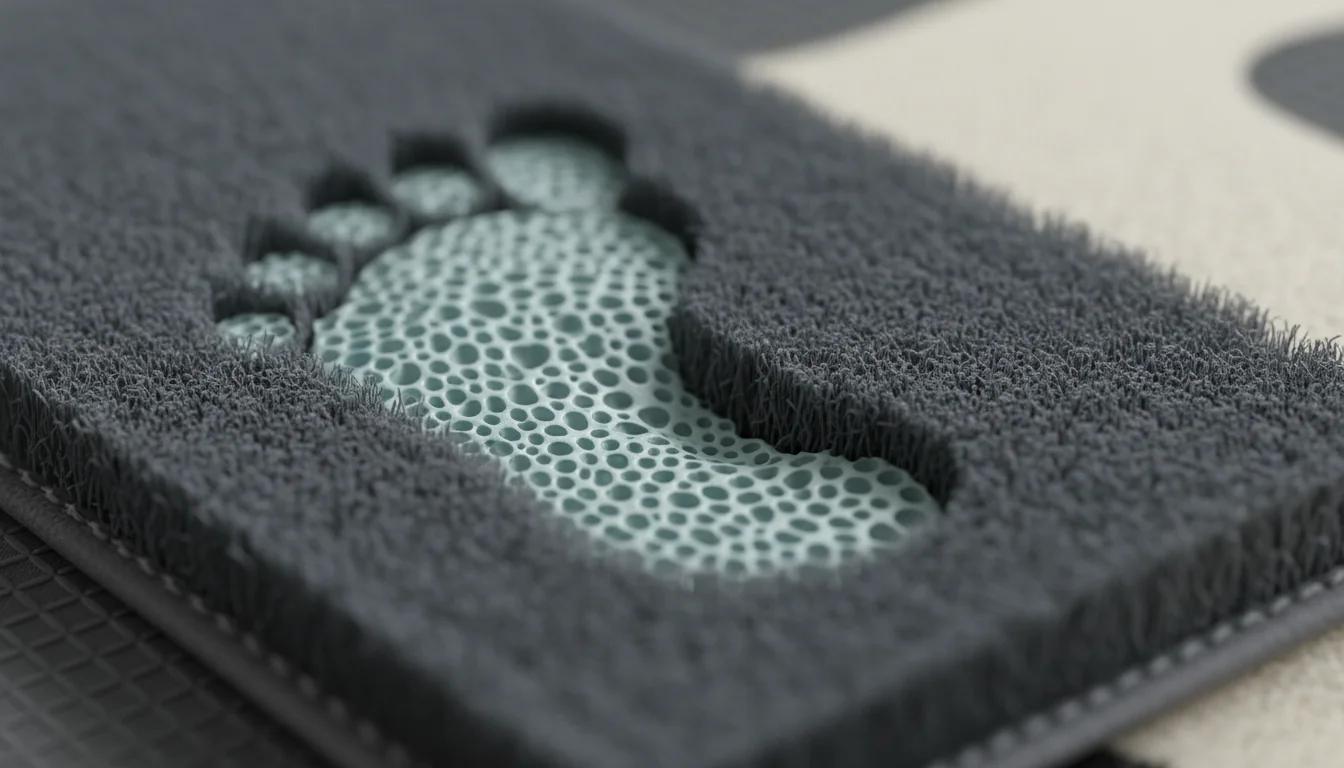
Design comfort: texture, thickness, density
Material specs shape comfort. Thickness, density, and surface texture change how soft, stable, and warm a mat feels underfoot.
- Thickness sweet spot: 15–25 mm for plush yet controlled sink
- Memory foam density: often 45–60 kg/m³ for cushioned support
- Standard PU/EVA density: lighter, springier feel, quicker rebound
- Top texture: velvet-like microfiber = softer touch; low pile = crisper feel
- Multi-layer builds: dual-layer cores tune comfort and stability
A firmer base layer under a softer top layer keeps that cloudlike first touch while resisting bottoming out on tiles.
Match density and thickness to your body weight and space. That’s how you turn specs into everyday comfort.
Guide 2026: choose in 5 steps
- Define your comfort goal: deep plush or lively support?
- Check thickness (15–25 mm) and density to balance sink and stability.
- Pick a warm-feel top if you dislike cold floors (microfiber helps).
- Verify non-slip backing suited to tiles or vinyl.
- Choose drying speed that fits your routine and climate.
Combine a plush top with a grippy base to feel soft without sacrificing confidence on wet tiles.
If you want plush underfoot with contouring support, consider a microfiber memory option with a cushiony core.
Over-thick mats can feel unstable in small bathrooms. Test turn-and-step motions, not just standing still.
If drying speed boosts your sense of cleanliness and comfort, look at this high-absorption pick to reduce clamminess between showers.
Why focus on comfort over price or style?
Because your feet meet the mat daily. Pressure relief, warmth, and stability shape how relaxed you feel after bathing. In 2026, comfort-centric choices reduce fatigue and make small spaces feel more inviting.
How does memory compare to standard foam for comfort?
Memory foam contours and softens impact; standard foam feels bouncier and cooler. For a contoured feel, see a pressure-relieving format with a plush top and steady base.
What are the top comfort advantages of each?
Memory: superior cradling and warmer touch. Standard: lively rebound and nimble balance. Both can be comfortable if thickness, density, and backing match your space and habits.
Is a memory foam mat suitable for kids or seniors?
Yes, if stability is tuned. Choose moderate thickness and strong base grip. A cushioned bath mat like this comfort-focused option helps soften steps while keeping traction.
How do I maintain comfort over time?
Shake after each use, hang to dry, and wash every 1–2 weeks. Use cold water, gentle spin, and air-dry flat. This preserves loft, backing grip, and that soft hand-feel.
Which specs define “real comfort” for me?
Aim for 15–25 mm thickness, a dense but not rigid core, a warm-touch top, and a reliable anti-slip base. Test both standing still and turning to mimic real use.
Real comfort blends softness, support, warmth, and safety—memory foam excels at cradling, while standard foam keeps things lively and quick to recover.
- Pressure relief tilts toward memory foam for gentle landings.
- Stability comfort improves with moderate thickness and strong base grip.
- Thermal feel depends on top fabric and drying speed.
Prefer a cozy, sculpted touch? Explore this pebble-textured memory choice to align materials with how you want your feet to feel every day.
0 comments