


Mornings can feel great—or like a jolt. That jolt is often a form of thermal shock from abrupt temperature swings between bed, bathroom, shower, and the outdoors.
Ever felt dizzy after a hot shower, or breathless stepping into cold air? This 2026 guide shows you how to build a morning wellness routine focused on avoiding thermal shock without losing the energizing benefits of heat or cold.
You’ll learn the physiology behind sudden heat or cold, safe temperature ranges, and practical micro-steps that stabilize circulation, skin, and breathing—so you feel steady, warm, and clear-headed all morning.
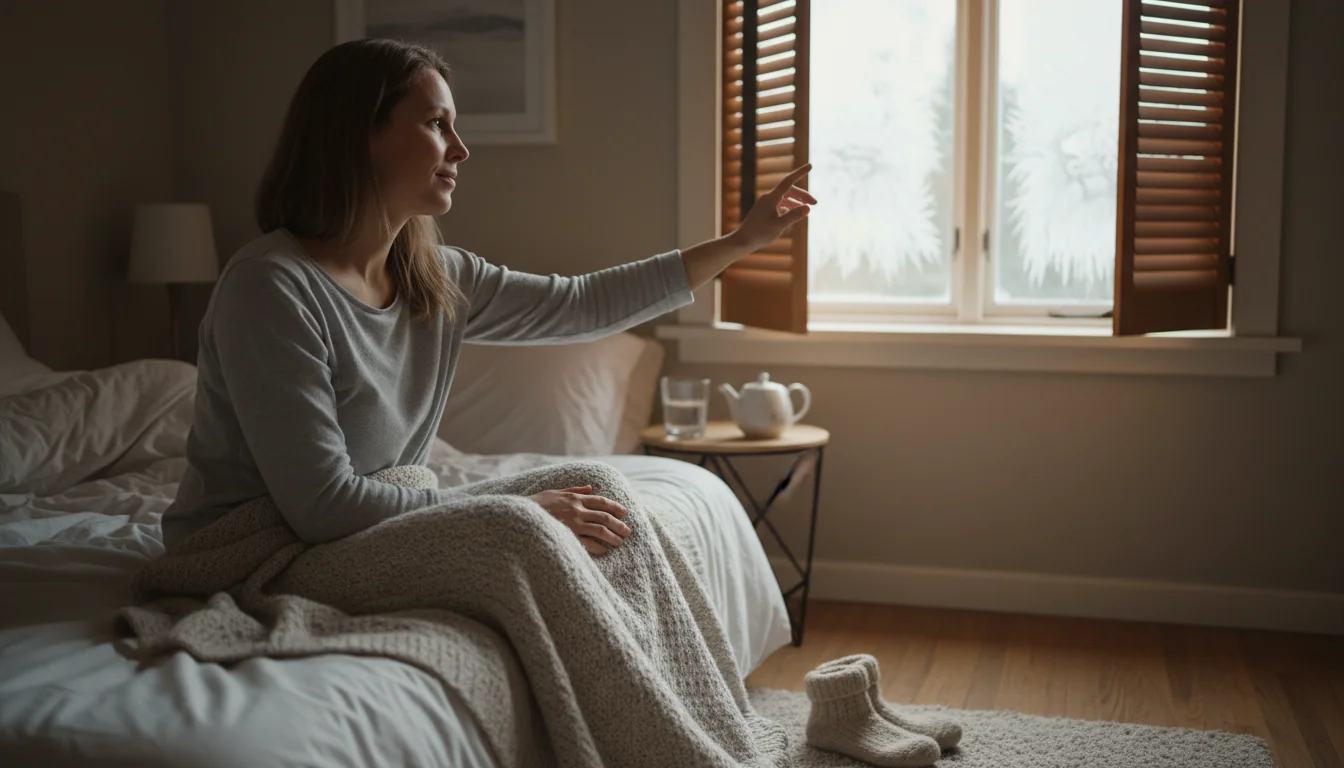
Gentle wake‑up: protect your core
The first minutes after waking set the tone. Rapid skin cooling or heating can trigger a circulatory surge and a cold or heat shock response. Keep your core temperature steady before moving to the bathroom or outdoors.
- Pause sitting on the bed edge for 60–90 seconds to stabilize blood pressure and avoid a vasovagal dip.
- Wear warm socks or a light robe to cut the skin-cooling spike from floor contact.
- Sip 150–250 ml of warm water to signal parasympathetic balance and reduce cold shock sensitivity.
- Practice 4 calm nasal breaths (4–6 seconds each) to prevent a gasp reflex if you meet cooler air.
- Pre‑warm the bathroom to 22–24°C to avoid an abrupt skin-temperature drop.
Layer first, then move. Put on socks or a robe before you stand. This small step blunts the initial temperature shock better than cranking the thermostat later.
This gentle start preserves the cortisol awakening response without provoking a thermal jolt that can cause dizziness, palpitations, or tension headaches.
Smart water: calibrate your shower
Most morning instability arises in the shower. Scalding heat followed by cool air—or ice-cold blasts at wake-up—can produce a pronounced shock response. Use a ramp, not a cliff.
- Start lukewarm: 34–36°C for 60–90 seconds to acclimate skin thermoreceptors.
- Increase heat slowly: 1–2°C per minute; avoid >41°C to protect skin barrier and circulation.
- Finish with a mild cool-down: 28–33°C for 10–30 seconds if you like; avoid sudden icy bursts on the chest/neck.
- Keep your head out of the first temperature change; start with legs and arms.
- Step out into a pre‑warmed room to avoid a second shock from cool air.
| Abrupt change | Gradual ramp |
|---|---|
| Ice blast at wake-up, 10–15°C for 60–120 s | Lukewarm start, brief cool finish, 28–33°C for 10–30 s |
| Common outcomes: gasp, dizziness, after‑drop, skin tightness | Common outcomes: alertness without a shock response |
Skip extreme contrasts if you have cardiovascular disease, migraines, Raynaud’s, or are pregnant. Morning cold shock may provoke faintness in sensitive people.
You still get a clear, energizing effect—without the destabilizing cold shock or the heavy slump some feel after very hot showers.
Circulation safety: room‑to‑outdoor
Going from a warm home to cool, dry air can trigger a thermal shock ripple: superficial vasoconstriction, quicker breathing, and a racing heart. Ease the gradient before you step outside.
- Use a vestibule routine: 30–60 seconds by a cooler doorway to pre‑adapt skin.
- Layer smart: breathable base, insulating mid‑layer, windproof shell; open/close zips to fine‑tune.
- Switch to nasal breathing outside for the first 10–15 breaths to warm and humidify air.
- Wear a light scarf to shield the neck; this blunts cold shock receptors near major vessels.
- If you feel light‑headed, return indoors and re‑warm gradually. Do not push through the jolt.
Mild heat stress during a warm shower can nudge heat‑shock responses that support resilience—if the change is progressive, not a scalding surge.
This approach prevents the sudden cold shock many experience at the door and keeps your energy steady through the commute.

Cold exposure, minus the jolt
Cold dips are trending in 2026, but the benefit comes from controlled dosing, not from a dramatic shock. Start with temperatures and times your body can absorb safely.
- Begin with cool, not frigid: 18–20°C water for 30–60 seconds; add 10–20 seconds per week.
- Keep shoulders out initially; immerse limbs first to prevent a chest‑triggered cold shock reflex.
- Use calm exhales; avoid breath‑holds, which intensify the gasp response.
- Warm up after with light movement and layers, not a scalding shower that flips you into a second shock.
- Never plunge alone; skip entirely if you feel unwell, shivery, or numb.
Avoid extreme claims like “5 minutes at 1°C” on wake‑up. Such cold shock loads are risky for many and unnecessary for alertness.
With gradual conditioning, you’ll gain the mood and focus lift without the destabilizing cold shock that can leave you drained an hour later.
Caffeine, hydration, and heat
Beverage temperature can amplify or buffer shock responses. Manage your first drinks to protect your throat, gut, and circulation while still getting a clean lift.
- Delay caffeine 30–60 minutes to let your natural cortisol rise stabilize.
- Choose warm, not steaming: 55–60°C coffee or tea lowers scald risk and heat shock to the esophagus.
- Hydrate first: 250–400 ml water at 16–22°C to avoid a gut chill that can feel like internal cold shock.
- Skip iced drinks on an empty stomach if you’re shock‑sensitive; add them later with food.
- If you love contrast, pair warm beverage + cool room, not hot drink + icy air outdoors.
Test your range: if warm water calms you but iced water cramps you, keep morning beverages between 16–22°C.
You’ll keep the alertness benefit of caffeine and hydration while sidestepping temperature‑induced shock signals from the mouth to the stomach.
Design your space to blunt spikes
Your home can remove most morning shock triggers. Small environmental tweaks stop sudden skin-temperature swings and post‑shower chills.
- Schedule a smart thermostat to pre‑heat the bathroom to 22–24°C, 15 minutes before wake‑up.
- Use a thick bath mat and a pre‑warmed towel to avoid a foot and skin cold shock on exit.
- Ventilate after showering, but delay opening windows for 5–10 minutes to prevent a draft shock.
- Aim for 40–60% humidity; overly dry air heightens cold stress on airways.
- Stage layers by the door to modulate temperature in 10‑second adjustments.
Surface temperature matters: floors and towels near skin can trigger or buffer a shock even when room air feels fine.
These environmental “buffers” eliminate the most common, avoidable sources of morning thermal shock without adding complexity to your routine.
Morning protocol 2026: step‑by‑step
- Sit up slowly; feet down; 60–90 seconds to prevent a shock‑related head rush.
- Layer socks/robe; sip 200 ml warm water; 4 calm nasal breaths.
- Shower ramp: 34–36°C start; avoid >41°C; optional 10–30 s mild cool finish.
- Dry with a warm towel; step into a room at 22–24°C; dress in layers.
- Delay coffee 30–60 min; choose warm, not scalding; hydrate again before going out.
Contrast safely: if you enjoy a brief cool finish, keep your chest and neck for last, and stop the moment shivering starts.
Do not jump from a very hot shower directly into cold outdoor air. That back‑to‑back contrast doubles the shock and invites a mid‑morning crash.
Why prioritize thermal shock in the morning?
Morning is when blood pressure, breathing, and alertness are already shifting. An abrupt temperature hit stacks on that change, raising risks of dizziness, chest tightness, and fatigue later.
How does a gradual ramp compare to a cold blast?
A ramp elicits alertness with minimal shock, while a blast triggers a gasp reflex and after‑drop. Most people report steadier energy and better skin comfort with gradual changes.
What are the clear benefits of shock‑aware routines?
Fewer head rushes, steadier heart rate, calmer breathing, reduced post‑shower chills, and less skin tightness. Many also notice fewer mid‑morning slumps.
Is a cool finish safe for everyone?
Not always. If you have cardiovascular issues, migraines, Raynaud’s, asthma, or you’re pregnant, consult a clinician and avoid aggressive cold shock. Use mild cool water only if tolerated.
Can I still do cold immersion in 2026?
Yes—dose, don’t dramatize. Start at 18–20°C for 30–60 seconds with calm breathing. Progress slowly and avoid layering heat and cold shocks back‑to‑back.
What shower temperatures prevent a shock response?
Start at 34–36°C, avoid >41°C, and keep any cool finish in the 28–33°C range for 10–30 seconds. Ramp by 1–2°C per minute for comfort.
Does coffee temperature matter for shock?
Yes. Scalding drinks intensify heat shock in the throat and may trigger reflux. Choose 55–60°C and delay caffeine 30–60 minutes after waking.
How do I know if I’m overdoing contrast?
Warning signs: shivering that persists, chest tightness, dizziness, or an energy crash. If these occur, reduce contrasts and eliminate aggressive cold shock.
Bottom line: a stable morning comes from temperature control—small, progressive changes that preserve circulation and breathing while avoiding thermal shock.
- Ramp water and air; avoid sudden extremes.
- Use layers, warm towels, and a pre‑warmed space.
- Hydrate, breathe calmly, and delay caffeine slightly.
Apply these simple steps in 2026 and enjoy a Morning Wellness Routine that energizes—without the jolt.
0 comments