


Sharing one bathroom with a crowd multiplies small risks. In 2026, large households need a simple, reliable way to stop slips without slowing the morning rush.
Does your busy home juggle toddlers, teens, and grandparents in the same space? This non-slip bathroom checklist for large families shows exactly what to install, where to place it, and how to keep it working every day.
You’ll get room-by-room traction fixes, grab bar positions, water temperature safeguards, and fast maintenance routines tailored to households like yours.
Safer layout: traffic zones
In big households, slips often start with congestion. Define clear “wet” and “dry” zones so relatives can move without cutting across puddles or clutter during peak times.
- Create a dry path from door to sink to toilet; keep towels and hampers off that route.
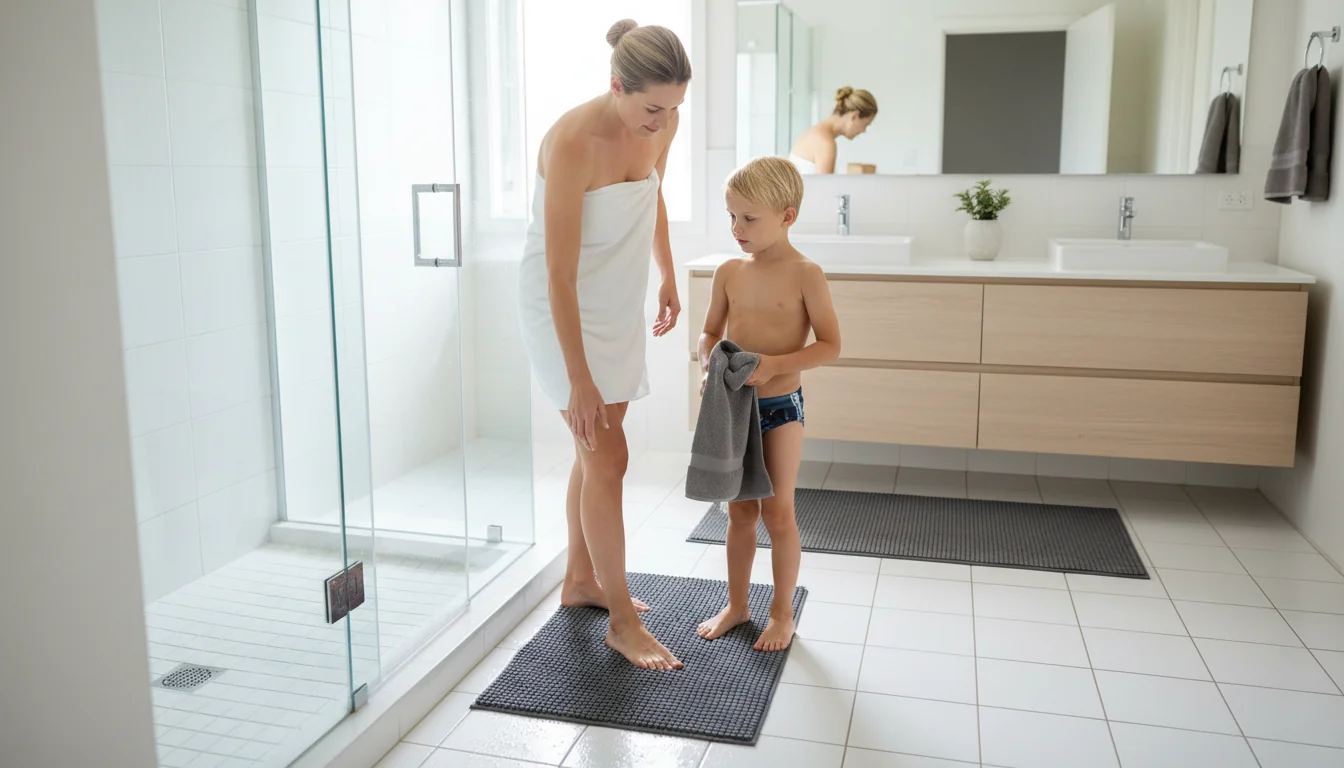
- Place a non-skid rug at the door and a rubber mat outside the tub or shower entry.
- Use open hooks instead of towel bars near the shower to avoid drops on the floor.
- Add motion night lights along the hallway and inside the bathroom for nighttime trips.
- If remodeling, aim for a curbless shower with a slight slope to drain.
Dry zone first: set the bath mat just outside splash range, not flush with the door, so shoes step onto a clean, grippy surface.
For multi-child homes, label hooks by name or color. This reduces towel pileups that drip and make floors slick when everyone rushes before school.

Better traction: flooring that grips
Traction is the backbone of any non-slip bathroom checklist for large families. Combine permanent grip underfoot with removable aids where water collects most.
| Area | Non-slip fix |
|---|---|
| Inside tub/shower | Adhesive non-slip strips or decals; textured coating for full coverage |
| Outside tub entry | Rubber bath mat with non-skid backing; quick-dry weave to limit pooling |
| Main floor | Textured porcelain or vinyl with R10+ slip rating; small-format tiles for extra grout grip |
| Sink splash zone | Low-profile mat with beveled edge; waterproof backing |
- Avoid loose rugs; if you keep one, secure all edges with non-slip backing or tape.
- Choose suction-cup mats with drainage holes to prevent mildew underneath.
- Refresh worn decals when they smooth out; traction fades with soap residue.
- For quick upgrades, add anti-slip coatings to the tub floor; clean with mild detergent first.
Lift and rinse bath mats after each use. Trapped soap turns the underside slick and can cause sudden slides.
For multigenerational families, textured tiles in a light-matte finish offer grip without harsh cleaning. Glossy stone looks elegant but becomes slippery when wet.
Firm support: bars and toilet setup
Support points prevent falls when feet lose traction. Install sturdy grab bars where hands naturally reach as people enter, turn, or stand up—especially near the shower and toilet.
- Mount grab bars to wall studs; avoid suction-only models for daily family use.
- Place one vertical bar at the shower entry and one horizontal inside the enclosure.
- Add a bar next to the toilet; combine with a raised seat if grandparents visit often.
- Use a handheld shower and a folding seat for anyone with balance concerns.
- Set the water heater to 120°F max to reduce scald risk for kids and elders.
ADA-style heights offer reliable guidance. A common range puts horizontal bars around 33–36 inches from the floor for steady leverage.
If you plan major changes—like a walk-in shower—local rules may require a building permit. Check before work starts to ensure safe, compliant installation for a large household.
Kid control: storage that prevents slips
In families with small children, the biggest slip trigger is clutter—bottles, toys, cords, and towels landing on wet floors. Organize so every item has a place within reach of the right person.
- Lock medicines and cleaners high; use childproof latches on low cabinets.
- Assign a shower caddy per child to prevent slippery product spills on shelves.
- Store hair tools unplugged in a ventilated bin; keep cords off the floor.
- Use mesh toy bags that drip inside the tub, not onto the bathroom floor.
- Place laundry baskets outside the wet zone to stop drop-and-soak piles.
Color-code storage for each child. It speeds cleanup and reduces puddles from items shuttled across the room.
If your household also uses a home safety checklist for your elderly relatives, align storage so adults can reach essentials without bending or stepping into wet areas.
Faster routines: clean and check cycle
Traction fails when soap scum builds. A short, regular routine keeps grip reliable for big families, even during the busiest weeks.
- Daily: squeegee glass and tub floor; hang mats to dry on the rim or bar.
- After showers: run the fan for 20 minutes to clear moisture.
- Weekly: scrub decals and mats with a soft brush; rinse thoroughly.
- Monthly: test grab bars for any movement; retighten as needed.
- Seasonally: replace worn mats or faded strips; check caulk at the shower base.
Don’t bleach suction mats too often. Over time it hardens rubber and reduces grip.
Make it a family habit: the last person out does a 60‑second “dry and tidy.” This tiny step prevents puddles that cause slips when the next person rushes in.

Inclusive access: multigenerational details
Large families often include older adults and small kids. Borrow proven accessibility ideas so everyone can move safely without special instructions.
- Use lever handles on doors and faucets for easier grip with wet hands.
- Choose a contrasting toilet seat color for visibility in all-white bathrooms.
- Keep a stool with non-slip feet for young children at the sink.
- Ensure a clear, well-lit path from bedrooms to the bathroom at night.
- Consider a low-threshold shower entry; aim for ½ inch or less if feasible.
ADA standards target public spaces, but the principles translate well at home: clear width, firm support, and good lighting reduce everyday slips.
These small choices work far beyond standard setups and help when someone is injured, pregnant, or recovering after surgery.
Quick-start guide: 15‑minute weekly check
- Scan floors: remove puddles, wring and hang mats, clear the dry path.
- Test grip: rub a foot on decals and mats; replace if they feel smooth.
- Pull on bars: ensure zero wobble; tighten screws into studs.
- Check storage: lock meds, unplug tools, empty overfilled caddies.
- Vent and temp: clean fan grille; confirm heater set to 120°F.
Rotate roles among teenagers and adults. Post the checklist on the door so anyone can run the audit fast.
Don’t place thick rugs near the tub. Their edges curl, catch toes, and slide on splashes.
What makes a bathroom safe for big households?
Clear dry paths, reliable traction, and firm handholds. In families, setup beats supervision: non-slip strips in the tub, grippy mats outside, and grab bars near the toilet and shower.
Are adhesive strips better than suction mats?
Strips hold steady under scrubbing and stay put for months. Mats add cushioning and can be lifted to dry. Many households use both: decals inside, a rubber mat outside.
Where should grab bars go for multigenerational use?
Mount a vertical bar at the entry, a horizontal bar inside the shower, and one beside the toilet. Fix to studs for strength; avoid suction-only models in daily family traffic.
What water temperature is safest for children and elders?
Keep the heater at 120°F max. Add anti-scald valves to showers. Test with your wrist before kids step in, especially in busy morning routines.
How do we prevent clutter-caused slips with kids?
Give each child a labeled caddy and a mesh toy bag that drains into the tub. Lock chemicals high, and keep laundry baskets outside the wet zone to avoid drop puddles.
Which flooring works best for a constant-use family bath?
Textured porcelain or quality vinyl with an anti-slip rating. Smaller tiles increase grout grip. Avoid high-gloss stone; it’s slick and harder to maintain with children.
Do we need permits to improve bathroom safety?
Not for simple add-ons like strips or mats. For structural changes—grab bars into new blocking, curbless showers, or widened doors—check local building permit rules first.
A safer bathroom for large families comes from smart layout, steady traction, and dependable supports—maintained in minutes each week.
- Define dry paths and place grippy mats where feet land.
- Install grab bars near the shower and toilet, fixed to studs.
- Run a simple weekly check: dry, test, tighten, and replace.
Apply this checklist today and keep every member of your household steadier, from the first shower to the last bedtime rinse.
0 comments