


Slippery floors turn a quick rinse into a risk. In a walk-in shower, water, soap, and smooth trays can undermine your footing fast. Looking for a non-slip shower mat for walk-in shower use that actually works day after day?
In this 2026 guide, you’ll learn how to choose safe traction in the shower, match mats to your surface, align drain holes, size coverage, and clean correctly. Short, practical tips—so your next shower feels steady, not stressful.
Grip that lasts: surface match
Traction starts where your mat meets the shower floor. Smooth ceramic tile behaves differently from textured mosaics, pebbled bases, or acrylic trays. The right underside and top texture prevent slips even with shampoo and body wash in play.
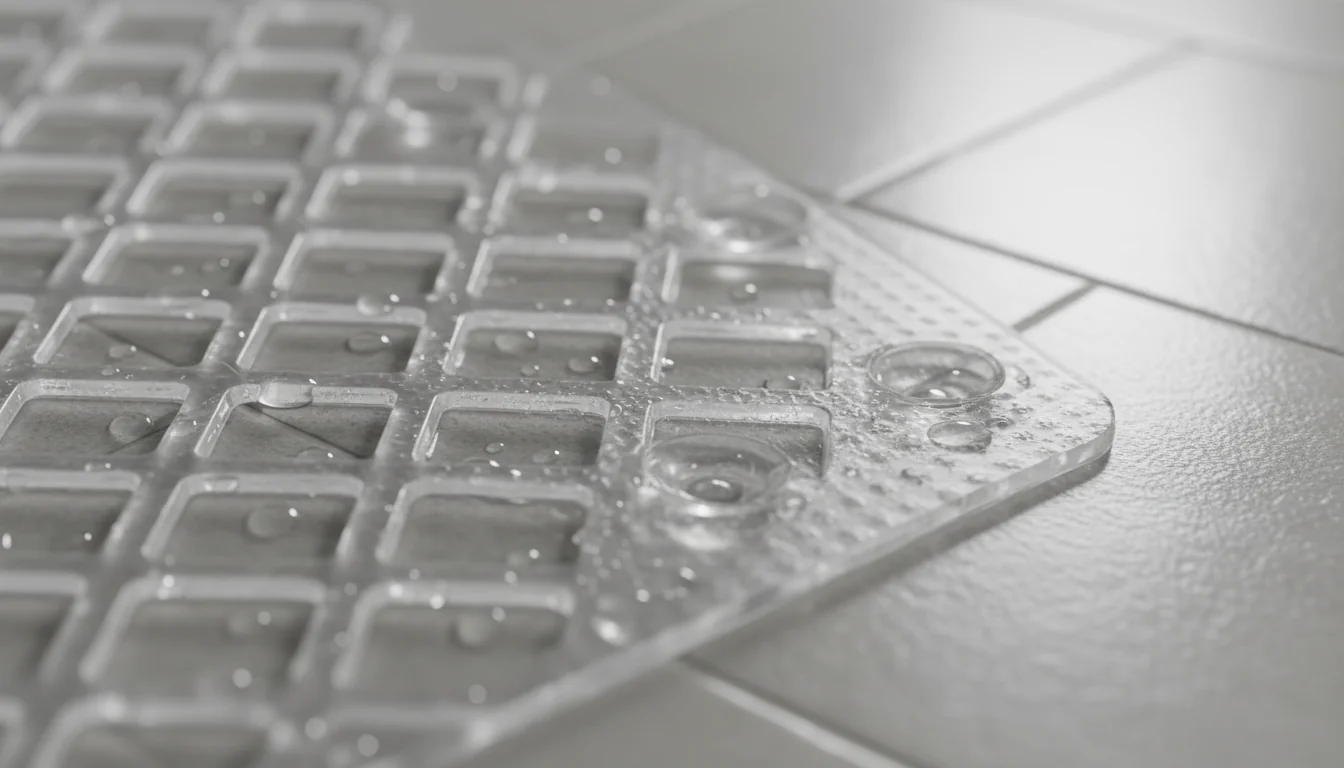
- Smooth tile or acrylic: suction cups with drain holes for water release.
- Textured or pebble floors: open-weave “loofah” PVC/TPE that grips without cups.
- Large stalls: extra-large squares/rectangles to cover entry and rinse zones.
- Round drains centered: square mats with a center cutout align best.
- Use with a chair: firmer top texture prevents feet from sliding while seated.
Do a wet hand test: press the mat on the shower floor with your palm. If it slides when soapy, switch to a different underside style.
Unlike thin bath rugs, a shower-safe mat balances anti-slip traction with fast drainage. That balance is what keeps your footing predictable during rinsing and turning.

Drainage and drying: hygiene
In a walk-in enclosure, water flow is constant. Choose patterns that move water to the drain and let air circulate beneath. Good drainage reduces soap film and makes cleaning quicker.
- Perforations across the whole mat prevent pooling and slick spots.
- A center opening aligns with common stall drains for faster flow.
- Open-weave surfaces dry quicker than solid tops in wet areas.
- Machine-washable PVC/TPE simplifies periodic deep cleaning.
| Drainage pattern | Best use in a walk-in |
|---|---|
| Center-hole grid | Stalls with central drains; faster vertical flow |
| Full perforation | Slow drains; prevents puddles across the floor |
| Open-weave “loofah” | Textured bases; quick evaporation and light scrubbing effect |
Avoid plush or memory-foam bath mats inside the shower. They absorb water, trap soap, and increase slip risk when saturated.
For an outside-the-stall drying zone, explore this bathroom mats selection to pair quick-dry options with your shower area while keeping the wet zone mat strictly non-absorbent.

Coverage and layout: safe turns
Walk-in stalls vary widely: square, rectangular, even neo-angle entries. Size your mat to cover where your feet land during washing, turning, and stepping out.
- Square stalls: 22"–27" squares suit compact spaces with a central drain.
- Rectangular enclosures: larger 24"×36" or 32"×47" formats improve coverage.
- Linear drains: full-perf mats without center holes avoid misalignment.
- With a shower chair: ensure full foot placement under the seat.
- Cut-to-fit edges: trim TPE/PVC carefully to maintain smooth borders.
Stand where you shampoo, rinse, and grab the towel. Those footprints mark the minimum mat coverage in your shower.
If your walk-in is particularly wide, review our large-format options for better edge-to-edge stability around the stall threshold without creating a trip lip.
Sizing and layout: full stall coverage
In a walk-in, you pivot more than in a tub. Coverage matters. Square formats (about 21×21 to 27×27 inches) fit shower stalls; extra-large rectangles (up to ~47×32 inches) suit generous enclosures or linear-drain layouts.
- Cover the footprint where you stand to shampoo and where you turn to rinse.
- Keep 1–2 cm clearance from the drain to avoid blocking flow.
- If doors swing inward, ensure the mat doesn’t bunch beneath the sweep.
- Cut-to-fit edges help around shower seats, niches, or benches.
Test your turning radius: step in, rotate 180°, and lift one foot. If any slick tile shows where you pivot, upsize the mat.
Guide 2026: install and care, step by step
Follow these short steps to seat a mat securely and keep the shower floor clean.
- Clean the base with a non-oily cleaner; rinse thoroughly and squeegee dry.
- Place the mat; press from center outward to expel trapped air and water.
- Check anchor points: tug at corners; re-press any loose sections.
- After showering, lift and hang; weekly, machine wash if allowed.
- Quarterly, inspect for hardening, curl, or biofilm; replace if degraded.
If a shower chair is used, confirm the legs sit flat on the mat and don’t catch in large holes.
Prefer a slim, suction-free feel for textured tile? Consider this grip-first option for walk‑in setups that drains fast and stays stable without cups.
Looking for a spa look inside the shower zone? Explore a wood‑effect surface that channels water while softening the visual tone.
Never apply oil-based cleaners or conditioners on the shower base; they reduce friction and defeat a mat’s grip.
Why choose a stall mat for a walk-in?
Walk-in showers have constant spray and no curbs, so puddles spread. A stall mat adds wet traction, guides water to the drain, and cushions feet on tile—especially helpful for older adults or anyone rehabbing.
How does it compare to adhesive strips?
Adhesive treads are low profile and permanent, but they don’t cushion or cover as widely. A mat like this walk‑in friendly format offers broader coverage and can be lifted to clean underneath.
What are the best materials for shower use?
PVC loofah and TPE perform well in showers: quick drainage, soft texture, and easy rinsing. For smooth trays, a suction-cup square like a minimalist stall mat stays planted during long rinses.
Will a mat work on textured tile floors?
Yes—choose suction‑free designs with a grippy underside. Loofah-style mats conform to microtexture and drain well. Interlocking tiles also handle uneven mosaics in shower stalls.
How do I clean a mat used daily in the shower?
Rinse after use, hang to dry, and machine wash weekly if allowed. Outside the enclosure, a low-pile rug—such as this soft sage tone—can catch drips; launder it regularly to prevent odors.
What size suits a compact shower stall?
Squares around 21×21 inches fit most stalls; go 27×27 for more turning space. Ensure the mat clears the drain and any inward-swinging door in your shower.
A thoughtful non-slip layer transforms a walk-in shower from slick to secure. Match the anchoring method to your base, prioritize drainage, and keep maintenance simple.
- Choose by surface: suction for smooth, suction‑free for textured.
- Align drainage so water never pools beneath the mat.
- Clean and hang after showers to preserve grip and hygiene.
Apply these 2026 pointers and enjoy steady footing every time you step into the shower.
Materials and feel: wet-area fit
Material defines both grip and comfort underfoot. In a shower, surfaces must stay firm and textured when wet yet rinse clean without holding residue.
- PVC loofah: cushioned mesh, quick dry, good for textured floors.
- TPE with suction cups: soft touch, strong hold on smooth tile.
- Rubber compounds: durable grip and weighty stability.
- Wood-look slats: spa feel for outside drying zones; ensure anti-slip feet.
Top textures that feel “soft” can still be non-slip. Micro-texture increases friction without irritating bare skin.
For a natural, spa-inspired edge outside the shower, consider these bamboo choices—they ventilate well and complement stone, pebble, or mosaic shower finishes.
Safety details that matter
Small choices improve security in a stall, especially for seniors or anyone with limited mobility. Aim for predictable footing, clear drainage, and easy maintenance to reduce slips and near-misses.
- Edge profile: low, beveled borders avoid toe stubs while turning.
- Top texture: fine ribbing or pebble-like bumps raise the friction.
- Weight and stiffness: heavier mats resist lift in fast-flow showers.
- Cleaning cadence: weekly wash minimizes soap scum and biofilm.
Caregiver forums often raise home safety questions about wet areas. Consistent routines plus the right mat reduce fall risk in walk-in spaces.
If your shower already has strong texture underfoot, consider nonskid strips instead of a mat, ensuring legs of a shower chair won’t snag on perforations.
0 comments