


Choosing a non-slip shower mat isn’t just about color or size. The hidden hero is the backing—the underside that creates grip and keeps you upright on wet surfaces.
Should you pick a mat with suction cups or go for a latex-backed base? In this 2026 field guide, you’ll learn how each underside system works, where it excels, how to clean it, and when to replace it.
Safety underfoot: grip physics
Grip starts at the underside. Suction cups create a pressure seal on smooth acrylic or enamel. Latex backing uses a tacky coating to boost friction on dry tile or vinyl floors outside the tub.
- Suction base: best for a smooth bathtub or shower pan, even when soaked.
- Latex-coated back: best for bathroom floors; not for standing water in the tub.
- Textured surface on top helps underfoot traction for either foundation.
- Drain holes in tub mats reduce hydroplaning and soap pooling.
| Suction-cup base | Latex-coated underside |
|---|---|
| Locks to smooth tubs; excels in wet showers | Grips dry floors; designed for bath rugs/mats outside |
| Requires periodic lift to dry the back | Hates standing water; coating can absorb moisture over time |
| Works on fiberglass, ceramic, acrylic if smooth | Works on tile, vinyl, stone when floor is dry and clean |
If you shower in the tub, choose a mat with non-slip suction and drain holes. For stepping out, a latex-backed bath rug outside the tub works best.
Bottom line: match the backing to the surface and water exposure. That’s what keeps slips at bay.
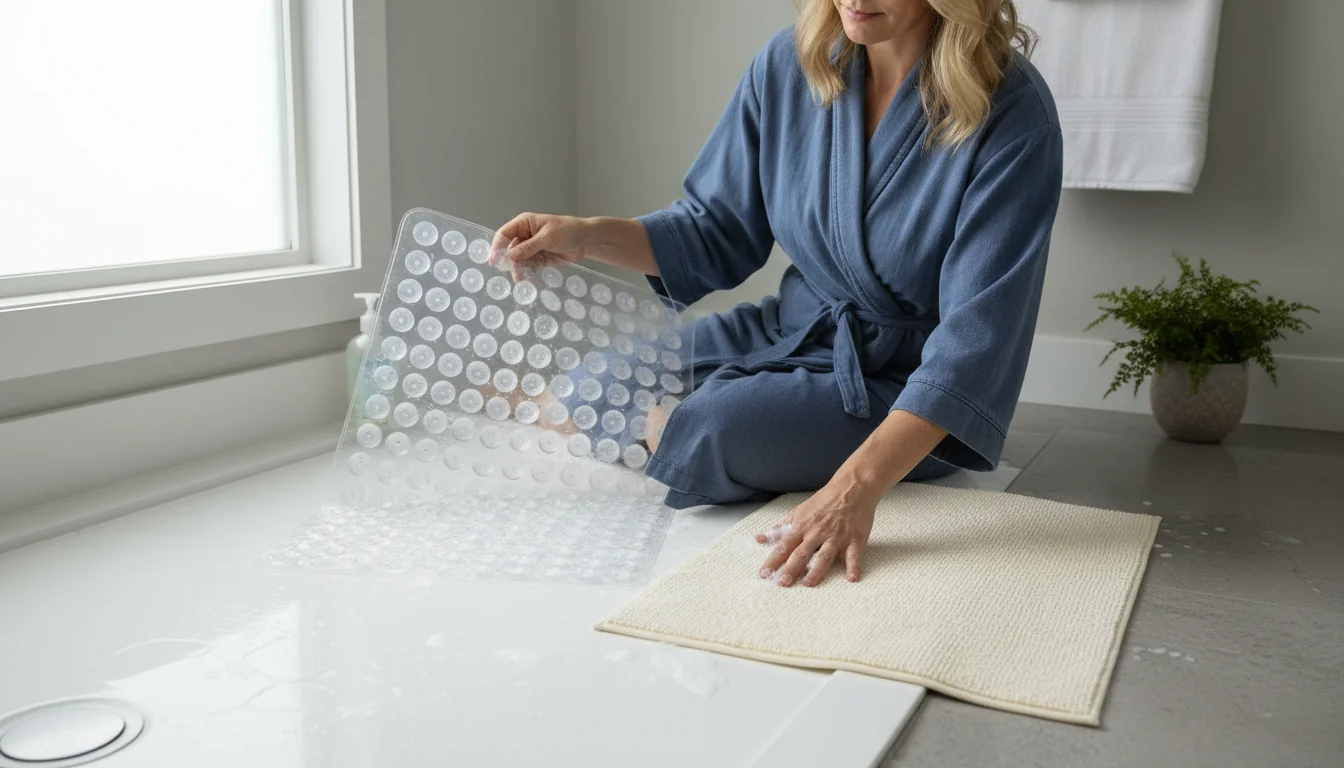
Surface fit: tubs, stalls, floors
Not all backings suit all bases. Suction cups need a smooth, non-textured tub. Latex backing needs a clean, dry bathroom floor to maintain friction.
- Smooth tub walls: suction-backed mats anchor securely and resist slipping.
- Textured tubs: cups may not seal; consider alternatives without cups.
- Outside the shower: latex-backed bath mats reduce skids on dry tile.
- Materials: natural rubber, PVC, or TPE bases behave differently on finishes.
Cups won’t grip matte stone or pebbled textures. The backing can only do its job on a surface it’s engineered to meet.
If you’re mapping options for a shower stall, scan our shower mat selection to compare formats sized for enclosures and tubs.

Hygiene and drying: underside rules
Backing changes how a mat dries. Suction mats trap splashes under the base; lift and hang to prevent mildew. Latex backing prefers low moisture; keep it out of standing water.
- Drain patterns matter: more holes = faster water escape, cleaner tub.
- Machine-washable designs simplify deep clean cycles.
- Look for BPA- and phthalate-free materials for regular skin contact.
- Air dry only for rubber and latex; avoid heat which can warp the back.
Lift after each use. A moist backside—whether cups or latex—invites mold. A 30–60 second rinse and hang extends lifespan.
For outside-the-tub safety, explore the anti-slip bath range designed with grippy back coatings for dry floors.
Durability: wear on the base
Backings age. Suction cups can deform, collect residue, and lose vacuum. Latex backing can crack, flake, or leave a sticky print if exposed to heat or cleaners.
- Signs of failure: curling corners, cups that won’t stick, or a chalky residue on tile.
- Material notes: natural rubber stays supple longer; PVC and TPE resist some chemicals.
- Sizes like 27×14, 28×16, or 17×36 inches change handling and drying effort.
- A textured top with soft nubs adds comfort and foot massage without hurting grip.
Replace when the non-slip backing starts failing. Safety declines fast once the base loses integrity.
Keep detergents gentle. Avoid bleach on latex-coated backs. For cups, scrub the underside to remove soap film that breaks the seal.

Use cases: who needs which base?
Match the backing to your routine. Kids, seniors, and anyone with balance concerns benefit from in-tub suction mats that hold firmly on smooth surfaces.
- Daily showers in a smooth tub: suction-backed, with drain holes and soft texture.
- Walk-in, textured stalls: consider no-cup designs; latex backing won’t work in standing water.
- Outside the tub: latex-backed bath rugs reduce slips on dry floors after toweling off.
- Rental care: seek latex-free labels if allergies are a concern.
Wet, smooth tub? Choose cups. Dry bathroom floor? Choose a grippy coated back.
This split keeps the backing doing the job it was built for, with less effort from you.
Step-by-step: pick, install, maintain
- Match surface to base: smooth → cups; textured/dry zone → latex coat.
- Size for coverage but avoid blocking the main drain entirely.
- Seat the mat: clean floor, wet slightly, press cups or smooth the coated underside.
- Weekly: lift, rinse the base, and hang to dry within 24 hours.
- Replace when the backing peels, hardens, or cups refuse to reseal.
Do not install over bath oils or residual cleaner film. Even the best backing system will slide.
Need full-floor coverage inside a typical tub? Consider this tub-floor format to balance anchoring and drainage along the length.
Alternate quick rinses with a monthly soak in mild detergent; always air-dry the grip layer vertically.
Why focus on the base layer?
Because the backing decides real-world safety. Top textures feel comfy, but the underside controls traction, drying, and how easily you can clean residue that causes slips.
How do cups compare with a latex coat?
Cups anchor best on smooth pans and tubs; latex-backed mats excel on bathroom floors. For large stalls, an extra-large option with ample holes prevents water lift underfoot.
What are the key advantages of each?
Suction-backed mats provide firm anti-slip inside the wet zone and stay flat even when thin. Latex-coated bases offer plush feel and floor friendliness in drier areas near the sink or toilet.
Is the underside choice different for walk-in showers?
Yes. Large-format stalls benefit from wide coverage and drainage. A walk-in friendly design like this low-profile surface balances grip, flow, and quick lift for cleaning.
How do I maintain the grip layer long-term?
Rinse weekly, deep-clean monthly, and air-dry. If you prefer compact coverage over a central drain, try a round profile that’s easy to lift and hang after use.
Can I use bleach or hot drying?
Avoid bleach and tumble dryers. Both degrade the non-slip backing. Use cool water and mild detergent; dry vertically to protect the base.
When should I replace the mat?
Replace when cups stay dented, the coating becomes sticky or powdery, or when the mat curls and won’t lay flat—signs the underside system has failed.
Bottom line for 2026: choose the backing that matches your surface and routine—cups for smooth, wet interiors; latex-coated friction for bathroom floors and drier zones. For walk-in areas, this low-profile model illustrates a balanced approach.
- Match surface type to base technology before size or style.
- Clean the grip layer routinely; residue defeats traction.
- Replace when cups deform or the coating peels or hardens.
Choose with care, maintain with intention, and your mat will stay safe and steady day after day.
0 comments