


Textiles touch skin, homes, and the environment. That is why clear standards matter in 2026. Yet many labels look similar and signal very different things.
Wondering what OEKO-TEX certification levels really cover, and how they compare across textile requirements?
This mobile‑friendly guide decodes OEKO‑TEX schemes, the safety classes, process audits, and input control. You will learn how to read the labels, verify certificates, and apply the right standards framework to your use case—fast, practical, and precise.
Clarity first: how levels align
OEKO‑TEX is a modular system. Different labels validate different parts of the value chain. Think product safety, facility practices, and chemical input control—three layers of textile standards logic.
- STANDARD 100: product safety testing for harmful substances in textiles, including accessories.
- LEATHER STANDARD: analogous product testing for leather and leather goods.
- STeP: facility certification for sustainable textile and leather production (levels 1–3).
- ECO PASSPORT: input control for chemicals, colorants, auxiliaries used in processing.
- MADE IN GREEN: traceable label linking tested-safe products to audited production.
- ORGANIC COTTON: verifies organic origin claims and tests for residues.
- RESPONSIBLE BUSINESS: company‑level due diligence across supply chains.
Match the label to your decision: product safety (STANDARD 100/LEATHER STANDARD), process credibility (STeP), and chemistry vetting (ECO PASSPORT).
Seven certifications cover output, process, and inputs. Used together, they deliver a coherent “Standards & Certifications” strategy.
Next, we unpack the “levels” most people ask about: the safety classes in STANDARD 100 and the maturity levels in STeP.
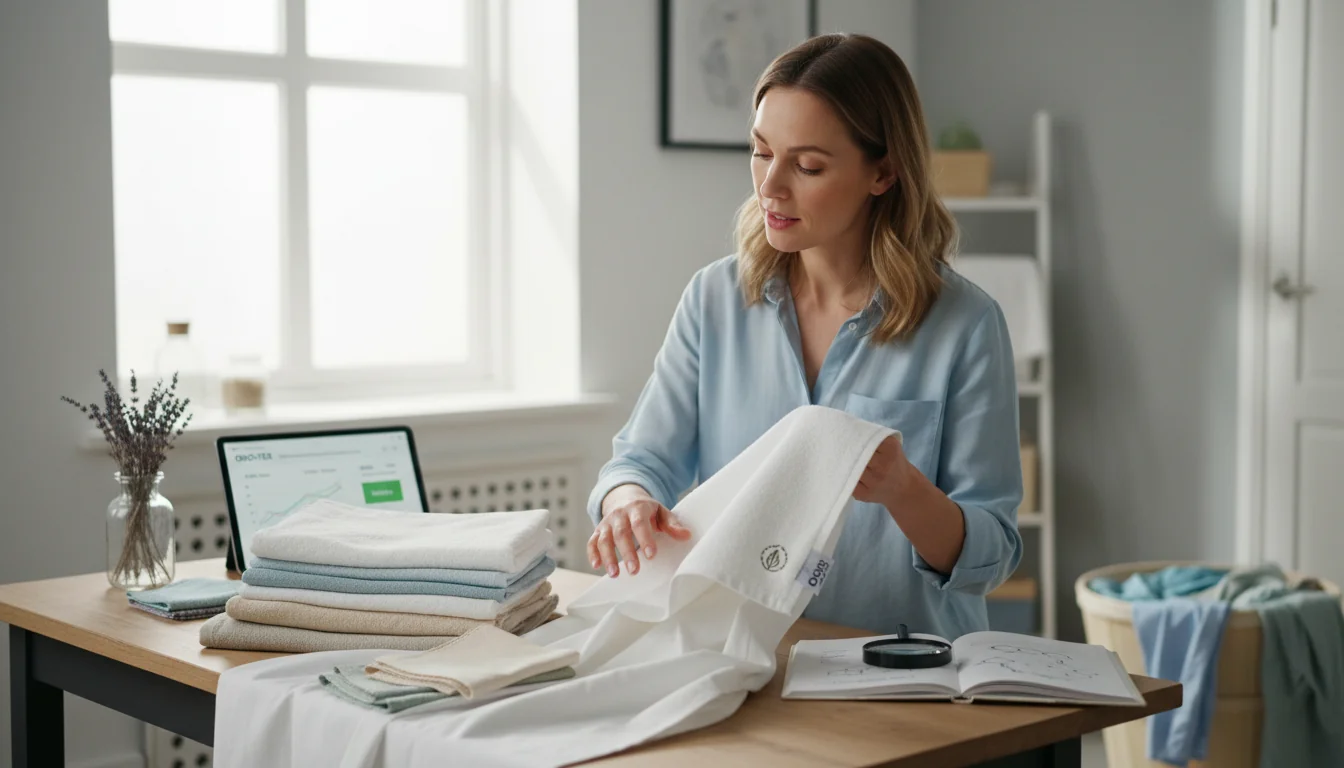
Product safety: the four classes
OEKO‑TEX STANDARD 100 divides products into four classes according to intended use and skin contact. The closer the contact, the stricter the criteria and limit values.
| Product class | Intended use | Key emphasis |
|---|---|---|
| Class I | Babies and children up to 3 years | Strictest thresholds; saliva‑fast dyes; accessories tested |
| Class II | Direct, prolonged skin contact | Tight limits for body‑contact textiles and bedding |
| Class III | Little or no skin contact | Appropriate limits based on indirect exposure |
| Class IV | Home textiles and decoration (curtains, etc.) | Focus on occasional contact and indoor air relevance |
- Testing covers textiles and non‑textile accessories (threads, zippers, prints).
- Screening targets harmful substances such as certain pesticides, heavy metals, formaldehyde, and restricted plasticizers.
- Criteria are updated regularly to reflect science and regulations.
- Certificates are valid for a limited period and require renewal.
STANDARD 100 confirms human‑ecological safety of the product. It does not, by itself, certify factory conditions or supply chain ethics.
For leather goods, the logic is similar, with chemical lists adapted to tanning and finishing realities.
Leather and home: tailored criteria
The LEATHER STANDARD applies OEKO‑TEX product safety to hides and ready‑made leather articles. It mirrors the class system and adapts test lists to leather chemistry.
- Checks for chrome VI risk, restricted azo dyes, formaldehyde, and heavy metals.
- Applies to semi‑finished and finished leather articles, as well as composites.
- Combines with textile criteria when non‑leather components are present.
- Aligns limits with human contact and intended use scenarios.
Home textiles often fall into Class IV under STANDARD 100, where indoor exposure and occasional skin contact drive the requirements.
For nurseries and sensitive settings, prioritize Class I or II articles and confirm coverage of trims, foams, and coatings.
This product‑focused view complements the next pillar: facility‑level assurance via STeP.
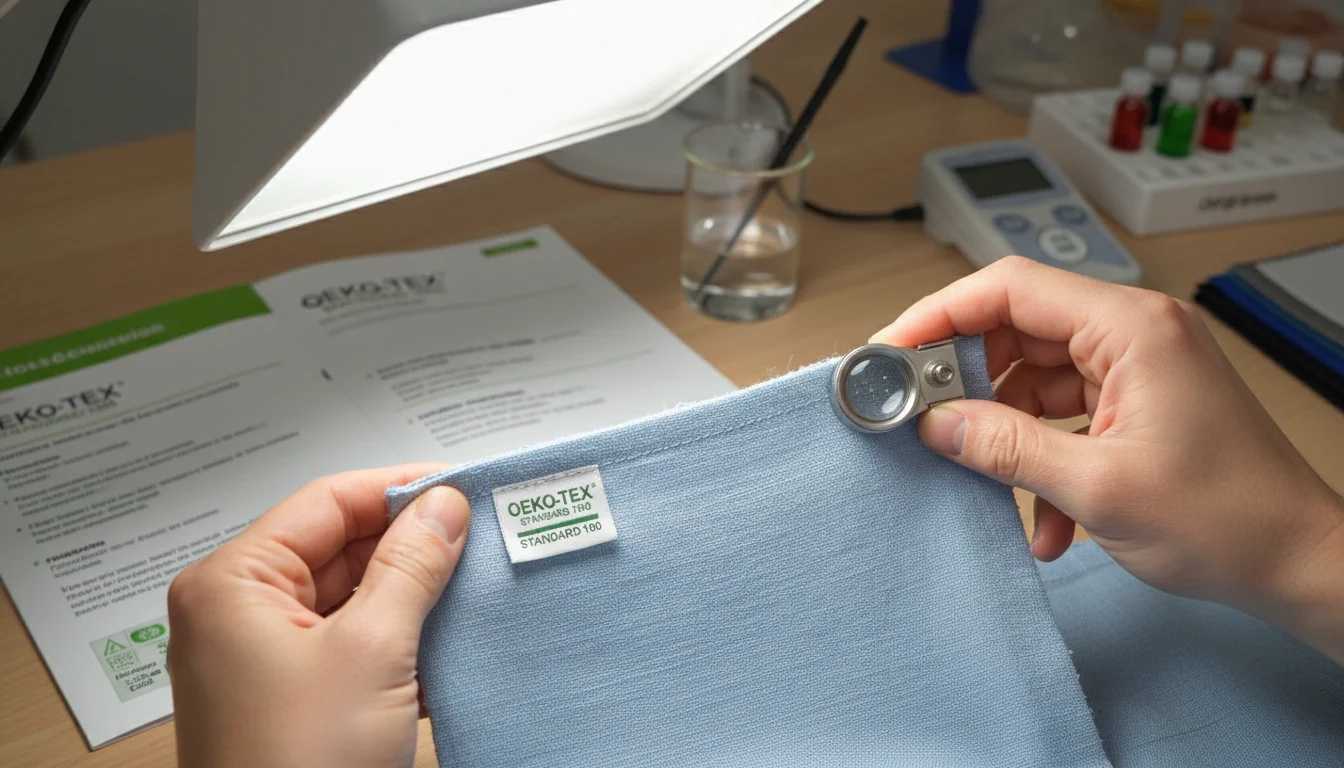
Process maturity: STeP levels 1–3
STeP certifies production facilities for sustainable textile and leather manufacturing. It assesses management systems and performance across several modules.
| STeP level | Meaning in practice |
|---|---|
| Level 1 | Foundational controls; compliance systems in place; improvement roadmap defined. |
| Level 2 | Consistent implementation; measurable performance across modules. |
| Level 3 | Best‑practice manufacturing; exemplary results and continuous improvement culture. |
- Modules typically include chemicals management, environmental performance and management, social responsibility, OHS, and quality.
- Audits and data verification underpin the level rating.
- Levels help you benchmark sites and plan upgrades in 2026 sourcing programs.
Facility certification (STeP) does not replace product testing. Combine STeP with STANDARD 100 or LEATHER STANDARD for end‑to‑end assurance.
Request the STeP scorecard and improvement targets alongside certificates. It turns a label into a continuous‑improvement tool.
To control risks upstream, pair STeP with verified input chemistry.
Input control: ECO PASSPORT essentials
ECO PASSPORT certifies chemicals used to make textiles and leather. It screens declared ingredients, verifies through lab tests, and can include an optional site visit.
- CAS screening against restricted and candidate lists to flag hazards early.
- Analytical testing confirms formulations meet human‑ecology and environmental criteria.
- Optional on‑site review checks management systems and documentation.
- Integrates smoothly with downstream OEKO‑TEX labels and common MRSL frameworks.
ECO PASSPORT is true “input control.” It reduces risk before chemicals enter your dyehouse or tannery.
In 2026, ask suppliers for the ECO PASSPORT certificate IDs for dyestuffs, prints, and auxiliaries tied to your products.
With inputs and facilities under control, traceability completes the picture.

Traceability: MADE IN GREEN and origin
MADE IN GREEN is a traceable product label. It links tested‑safe products to STeP‑certified production and gives a scannable ID for transparency.
- Confirms STANDARD 100 or LEATHER STANDARD compliance plus audited facilities.
- Enables supply‑chain visibility for buyers and end users.
- Useful for public reporting and procurement requirements.
The ORGANIC COTTON label verifies organic claims and screens for pesticides and GMOs, then tests for harmful substances. It addresses raw‑material integrity in addition to product safety.
MADE IN GREEN signals traceability and safer chemistry; ORGANIC COTTON validates organic origin and testing. They serve different standards roles.
For organic claims across processing, compare with widely used organic textile frameworks alongside OEKO‑TEX scope.
Together, these labels turn complex supply chains into verifiable, comparable information.
Guide 2026: verify and apply textile standards
Use this rapid, standards‑first method to select, verify, and maintain credible certification across Home and apparel categories.
- Define exposure: choose the right STANDARD 100 class or LEATHER STANDARD scope.
- Validate certificates: check label IDs and expiry dates before onboarding.
- Map facilities: request STeP level and modules covered for each site.
- Control inputs: require ECO PASSPORT for key dyestuffs and auxiliaries.
- Trace outputs: prefer MADE IN GREEN for transparent production chains.
Add certificate checks to vendor onboarding and annual reviews. Make it a standing “Standards & Certifications” control.
Do not assume fiber or yarn certificates cover finished goods. Each product configuration must be certified.
Standards in context: quick comparison
A concise matrix helps you match your goal—consumer safety, process credibility, or raw‑material claims—to the correct OEKO‑TEX pathway.
| Label/Certificate | Scope |
|---|---|
| STANDARD 100 | Product‑level testing for harmful substances in textiles and accessories. |
| LEATHER STANDARD | Product‑level testing tailored to leather chemistry and contact scenarios. |
| STeP (levels 1–3) | Facility‑level system verifying sustainable production practices. |
| ECO PASSPORT | Input control for textile and leather chemicals and formulations. |
| MADE IN GREEN | Traceable label linking certified products to STeP‑audited sites. |
| ORGANIC COTTON | Verified organic origin plus harmful‑substance testing of cotton materials. |
- For consumer safety, prioritize product labels (STANDARD 100 or LEATHER STANDARD).
- For supply‑chain governance, combine STeP and RESPONSIBLE BUSINESS.
- For chemical stewardship, require ECO PASSPORT on priority inputs.
- For transparent claims, use MADE IN GREEN as the traceability layer.
Levels and Textile Standards align best when you select one label per goal, then layer them for full coverage.
Why choose OEKO‑TEX standards?
They provide third‑party testing and audits, transparent criteria, and global recognition. You get consistent safety thresholds and credible documentation that procurement and consumers can trust in 2026.
How do these compare to other textile standards?
OEKO‑TEX focuses on harmful‑substance safety, input control, and responsible production. Some organic frameworks emphasize fiber origin and processing rules. Use them together for complete assurance.
What are the main advantages of the levels?
STANDARD 100 classes tailor limits by exposure. STeP levels benchmark facility maturity. ECO PASSPORT filters risky chemistry. MADE IN GREEN adds traceability. Each level addresses a distinct risk area.
Are these standards suitable for children’s items?
Yes. Choose STANDARD 100 Class I for babies and toddlers. Verify trims and prints are covered. Confirm certificate validity and scope before production or purchase.
How do I maintain compliance after certification?
Track expiries, retest on material or supplier changes, and audit inputs via ECO PASSPORT. Keep STeP improvement plans active to meet evolving 2026 expectations.
Does OEKO‑TEX cover leather and Home textiles?
Yes. The LEATHER STANDARD covers leather articles. STANDARD 100 covers Home textiles, with classes aligned to contact intensity and indoor exposure.
What documents should buyers request?
Certificate copies with scope, class, and expiry; STeP level and modules; ECO PASSPORT IDs for key chemistry; and MADE IN GREEN product IDs for traceability.
In 2026, credible textile assurance means layering the right OEKO‑TEX certifications—product safety, process governance, and input control—into one coherent standards strategy.
- Match labels to goals: safety, process, inputs, traceability.
- Use classes wisely: pick the correct STANDARD 100 class.
- Verify and renew: check IDs, scope, and STeP levels yearly.
Apply this framework, and your textiles meet rigorous standards—clearly, consistently, and with proof.
0 comments