


Does your bathroom feel like a sauna after showering, with foggy mirrors and dripping walls? In a poorly ventilated bathroom, steam from showering spikes humidity fast, feeding condensation and mold risk.
This 2026 How To article shows exactly how to cut moisture during and after your shower. You’ll learn science-backed tactics, safe dehumidifier use, exhaust-fan timing, and small habit tweaks that work in windowless spaces too.
Home > Blog > How To: level up the health of your bathroom configuration with clear steps you can apply today.
Condensation 101: steam in action
Hot water from showering loads the air with vapor. In small, poorly ventilated rooms, that warm, moist air hits cooler tiles, paint, and mirrors, turning to water droplets—classic bathroom condensation.
- Relative humidity often surges to 70–90% during a hot shower.
- Condensation forms when surface temperature is below the air’s dew point.
- Porous materials (drywall, grout) soak up moisture, inviting mold growth.
- In winter, colder surfaces intensify water beading and “wall sweating.”
- Lingering steam equals elevated humidity hours after showering ends.
Keeping average bathroom humidity near 40–60% between showers disrupts mold cycles that thrive above 60%.
Understanding this physics guides every tactic below: manage heat, move air, and dry surfaces quickly after showering.
| During your shower | Right after you finish |
|---|---|
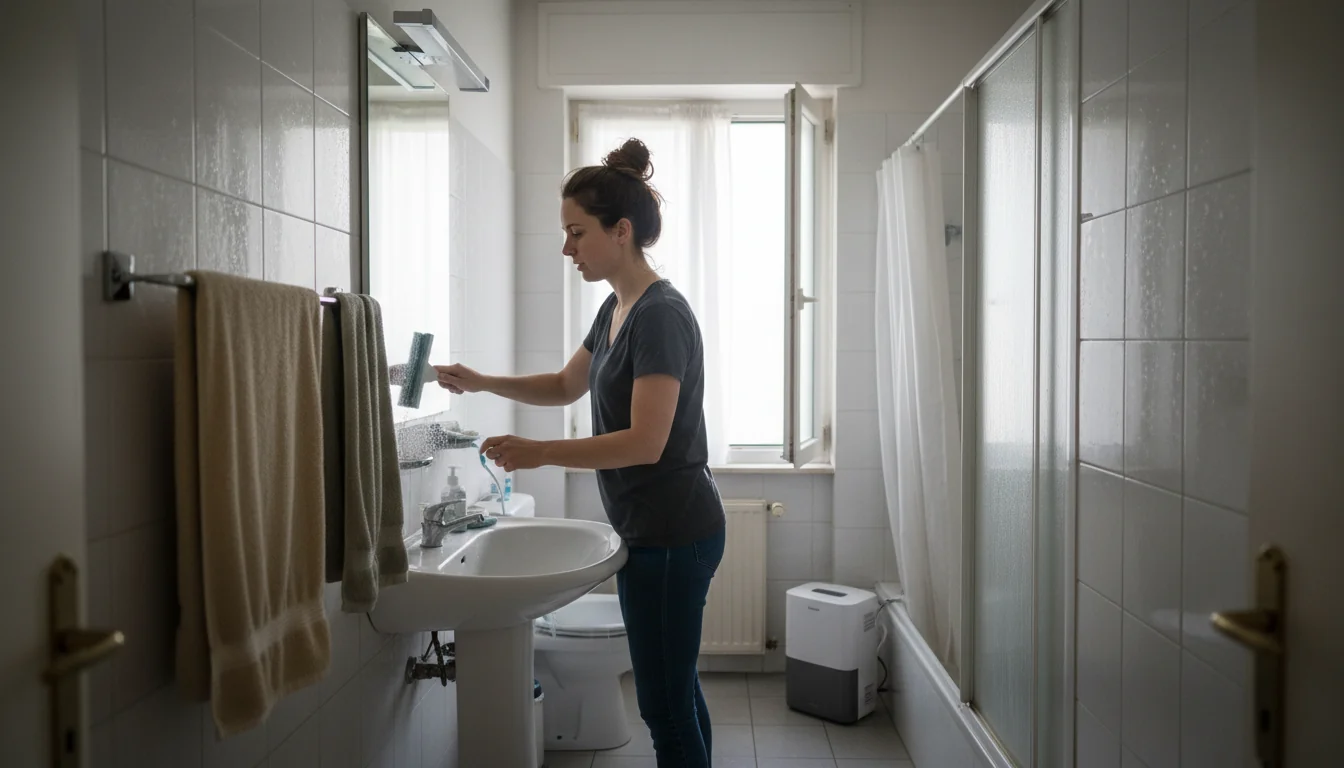
| Lower temp, reduce spray time, run fan early | Fan 20–45 min, open window when possible, squeegee and wipe |
| Leave a small door gap for crossflow | Hang towels outside bathroom to dry faster |
During use: trap less steam
The cheapest humidity is the humidity you never make. Small tweaks during showering cut vapor at the source, especially in a poorly ventilated bathroom.
- Start the exhaust fan 5 minutes before showering to establish airflow.
- Dial water from hot to warm; finish with a 30–60 sec cooler rinse to shrink steam.
- Close the curtain/door while washing; leave a small door gap to feed the fan fresh air.
- Use a high-coverage showerhead at lower flow to reduce air splash and mist.
- Keep bottles off ledges; less overspray means less evaporation later.
Crack the bathroom door toward a drier hallway. This reduces negative pressure stalls and keeps the fan drawing steam out.
Catching water at your feet also helps. A fast-drying mineral surface underfoot limits floor evaporation after showering—see a mineral-dry bath mat option as a practical example.
Right after: clear the air fast
Post-shower routines decide whether moisture lingers for hours. Focus on rapid extraction plus surface drying to avoid mold-friendly conditions.
- Run the fan for 20–45 minutes after showering; longer in humid climates or winter.
- Open a window fully when safe; keep the bathroom door closed to vent steam outside, not into bedrooms.
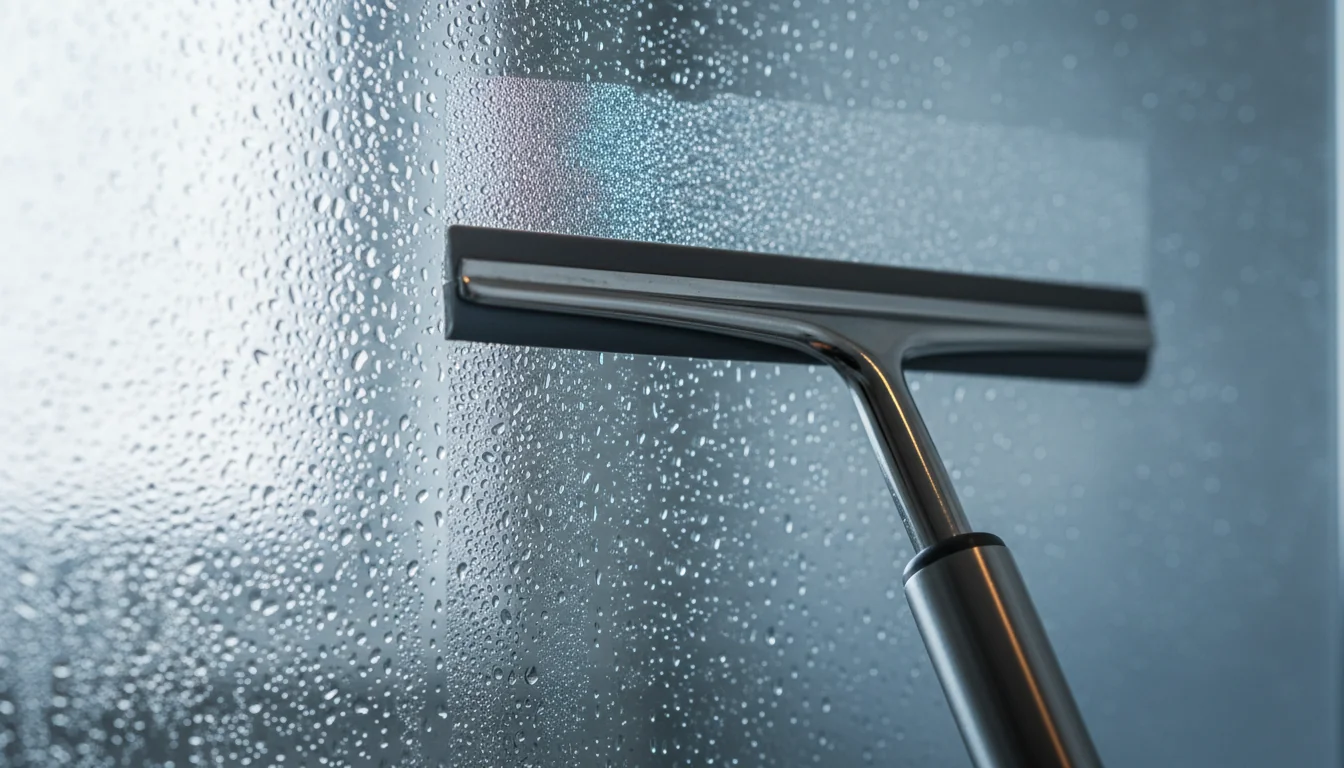
- Squeegee glass and tile; wipe mirrors and painted walls where condensation beads.
- Pull the curtain fully open or the door ajar to ventilate the enclosure.
- Remove damp towels and bathmats; dry them in a ventilated space.
If your mirror stays fogged with the fan running, either the fan is undersized, ducts are long or kinked, or it’s not vented outside.
If you prefer a stone-dry feel underfoot as you exit, consider this classic stone-like option to curb puddles that keep humidity elevated.
| Action | Why it reduces humidity |
|---|---|
| Squeegee walls | Less surface water = less evaporation back into the air |
| Door closed, window open | Directs moist air outdoors instead of spreading through the home |

No fan? Practical workarounds
A bathroom without a window or exhaust fan can still recover quickly after showering. Create airflow paths and capture moisture where it forms.
- Open the bathroom door toward an adjacent room with an open window; place a small fan facing out of that window.
- Park a portable dehumidifier just outside the door right after showering; empty the tank and clean filters regularly.
- Use microfiber towels on walls and ceilings where droplets collect; target corners and the ceiling above the shower.
- Hang textiles in a hallway with airflow; avoid drying inside the bathroom.
- Track RH with a hygrometer; aim for ≤50% within an hour after showering.
Hot shower plumes aerosolize tiny water droplets. Rapid air exchange clears those droplets before they migrate to cold surfaces.
A few minutes of “burst” ventilation (wide-open window, door managed to the hallway) can evacuate steam faster than a long, weak trickle of air.
| Workaround | Mechanism |
|---|---|
| Box fan in adjacent window | Pulls humid air out; draws drier air in through the door gap |
| Dehumidifier in hallway | Condenses moisture from air moving out of the bath |
Surfaces and habits that dry faster
Post-shower drying is easier when materials resist moisture and routines remove water promptly. This reduces condensation time—and mold risk—after showering.
- Seal grout periodically; refresh mold-resistant caulk where joints flex.
- Keep surfaces warmer: a gentle radiator, heated rail, or floor warming shortens drying time.
- Treat glass to repel water; less clinging means faster squeegee results.
- Declutter the shower; fewer items = fewer wet surfaces evaporating later.
- Wash and fully dry bath textiles frequently; musty odors signal trapped moisture.
Target humidity: ≤50% within 60 minutes after showering. Use a hygrometer to verify recovery time and adjust routines.
Prefer a softer landing but still want quick drying? Choose plush textiles you can hang immediately in airflow—see a plush underfoot choice you can air-dry outside the bathroom between uses.
Health signals and safety checks
Lingering moisture after showering isn’t just a comfort issue. It signals risks that deserve quick attention—especially in smaller or poorly ventilated bathrooms.
- Mirror-fog test: If fog persists with the fan on, size or ducting is likely inadequate.
- Musty odors that linger point to hidden dampness behind surfaces or textiles.
- Visible spotting on grout or ceilings indicates repeated high humidity or leaks.
- Allergy or sinus flares post-shower can be triggered by elevated humidity and mold.
- Target a daily average 40–60% RH; above 60% supports mold growth.
Using dehumidifiers near water requires caution. Keep them away from splash zones and use a GFCI-protected outlet.
If black mold appears or the area exceeds roughly 10 sq. ft., consider professional remediation and correct the moisture source immediately.
Quick guide: reduce humidity after every shower
- Pre-ventilate: start the fan 5 minutes before showering; crack the door for makeup air.
- Lower heat: keep water warm, not scalding; finish cool for 30–60 seconds.
- Dry surfaces: squeegee glass and tile; wipe mirrors and painted walls.
- Control floors: step onto this extra-fast-drying board to curb puddles and evaporation.
- Recover air: fan 20–45 minutes; window wide open when safe; remove damp textiles.
Set a fan timer for 30–45 minutes so you never forget post-shower extraction.
Why focus on showering specifically?
Showering creates a short, intense humidity spike that overwhelms small rooms. Managing steam at the source is the fastest way to prevent condensation, mildew smells, and surface damage in a poorly ventilated bathroom.
How does showering compare to taking a bath?
Both raise humidity, but a hot shower aerosolizes moisture more efficiently. The result is faster mirror fogging and wall beading. Shorter, warmer baths typically release moisture more slowly than steamy showers.
Should my mirror fog with the fan running?
Light fog can be normal mid-shower. Persistent fog after showering suggests undersized CFM, long or leaky ducting, or a fan that’s not vented outdoors. Increase extraction and improve duct layout to fix it.
What’s the ideal humidity level after showering?
40–60% RH is the healthy daily range. Aim to return to ≤50% within an hour of finishing your shower. A small digital hygrometer makes this easy to track.
How can I reduce humidity in a very small bathroom?
Use pre-ventilation, door crack airflow, and immediate squeegeeing. Move towels out right away. For floors, a compact mat helps at the exit—see a space-saving format that limits puddles.
Is a dehumidifier better than a bathroom fan?
They serve different roles. Fans remove moist air rapidly during and after showering. Dehumidifiers are slower and best as supplements, placed safely away from water and used after you finish.
Any quick wins to stop mold from showering steam?
Shorten hot water time, squeegee surfaces, extend fan runtime, and improve cross-ventilation. Seal grout, refresh caulk, and dry textiles outside the bathroom. These steps prevent mold before it starts.
In a poorly ventilated bathroom, controlling humidity from showering is about timing, airflow, and fast drying—not guesswork.
- Pre-ventilate and keep the fan running 20–45 minutes post-shower.
- Squeegee and wipe to stop moisture from re-evaporating.
- Target ≤50% RH within an hour; adjust routines until you hit it.
Apply these steps today, and your bathroom will feel drier, cleaner, and healthier after every shower.
0 comments