


A premium bath mat can redefine how your bathroom feels and functions. In a minimalist setting, the smallest surface often sets the tone for calm, light, and order.
Wondering how to pick a mat that protects the bathroom floor, dries fast, and still looks effortless?
This 2026 guide shows you how to select materials, sizes, and colors that support a serene bathroom, with clear advice on safety, upkeep, and placement around the shower door and vanity.
Materials and safety in bathrooms
Minimalist rooms thrive on clarity. Your bath mat must earn its place with non-slip grip, strong absorption, and a silhouette that feels calm in the bathroom. Choose material first; everything else follows.
- Diatomaceous earth stone: ultra quick-drying, low maintenance, sleek slab look; best for shower exits and high-humidity zones.
- Solid teak or iroko slats: warm tactility, drains fast, ideal on tile where airflow reduces mildew risk.
- Cotton terry: soft underfoot, hotel-like comfort; choose low-lint, dense loops to keep the bath looking neat.
- Microfiber: high absorption, lightweight, machine-washable; pick low-pile to reduce visual bulk.
- Memory foam: cushion and warmth; ensure a robust non-slip backing to stabilize on smooth floors.
Match material to moisture: stone or teak near the shower; cotton or microfiber near the vanity where splashes are lighter.
For a material-first overview that keeps the bathroom serene, browse a broader bathroom mat selection organized by texture and function.
Quick comparison: material vs. bathroom benefit
| Material | Primary benefit in the bathroom |
|---|---|
| Diatomaceous stone | Instant moisture control, sleek look, minimal upkeep |
| Teak slats | Warmth + airflow, suits spa-like minimalism |
| Cotton terry | Softness underfoot, easy machine care |
| Microfiber | High absorption with low visual weight |
Whatever you choose, verify slip resistance on your specific flooring. Smooth porcelain behaves differently from textured tile.
Once the material suits your bathroom microclimate, you can refine thickness, pile, and edge profile to stay true to minimalist decor.
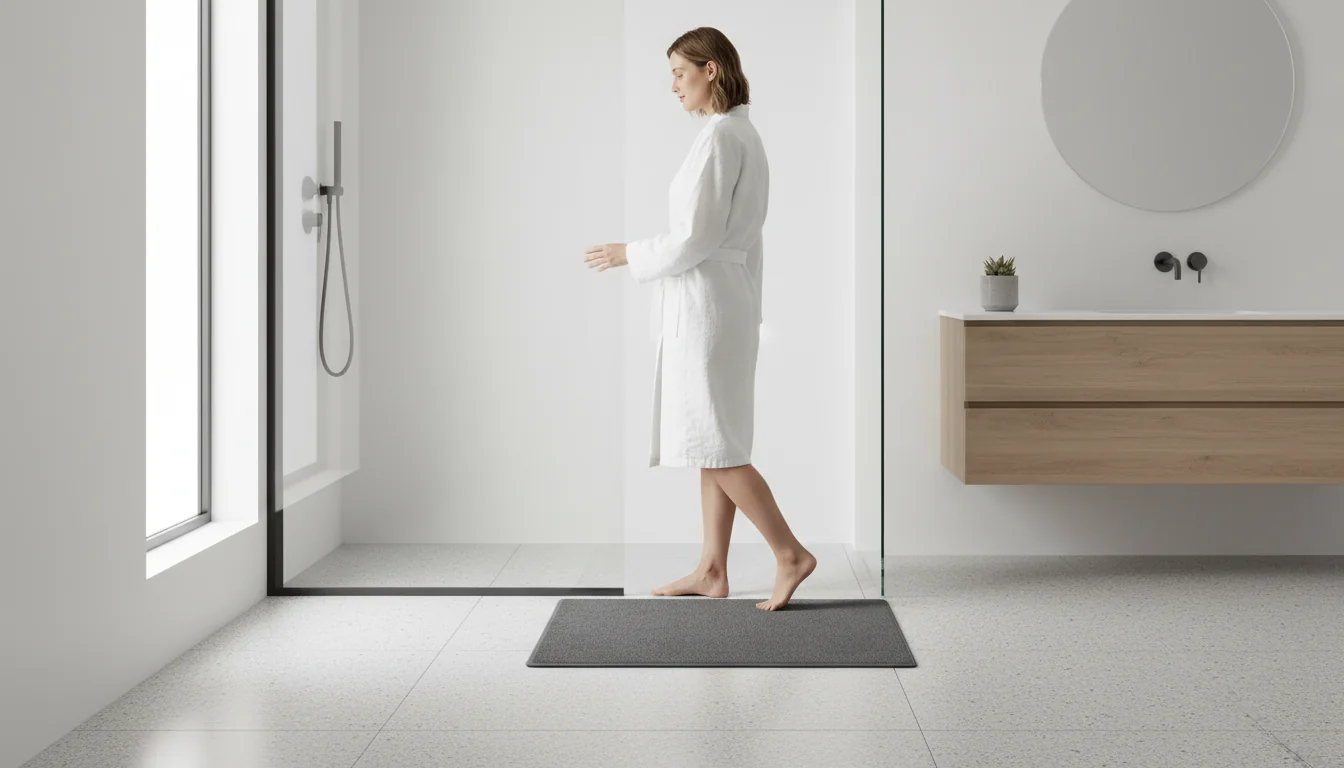
Proportion and placement: bathroom flow
A minimalist bathroom relies on contour and spacing. The right mat size supports safe footing and guides circulation without crowding the floor plane.
- Common sizes: 20 × 30 inches at the tub; 27 × 45 inches anchors double vanities.
- Keep at least a finger-width gap from grout lines to reduce visual clutter.
- Align a stone slab mat with the shower door threshold for a crisp look and quick-dry performance.
- For long vanities, consider a runner; ensure consistent reveals to walls and toe-kicks.
A mat that’s too small can make a modern bath feel busy. Slightly larger coverage often calms the geometry.
Zones and suggested sizes
| Bathroom zone | Suggested dimension |
|---|---|
| Shower or tub exit | 20 × 30 in or stone slab ~24 × 16 in |
| Single vanity | 21 × 34 in low-pile textile |
| Double vanity | 27 × 45 in or a narrow runner |
Door clearance: 0.5 inch minimum if you prefer plush rugs. Test swing before committing to thickness.
Working with a larger primary suite? Explore oversized options for large floors to keep the main bathroom coherent and luxurious.
Keep spacing consistent: equal gaps to walls, tub skirts, and vanity edges help the bath read calm and intentional.

Aesthetic harmony in your bathroom
Minimalism isn’t only white. In a modern bathroom, black, gray, and muted blue can feel equally serene when the rug’s pattern and pile are restrained.
- Monochrome: white tile + white bath mat = seamless plane; add contrast with matte black fixtures.
- Gray on gray: use a low-pile rug to avoid heaviness; vary tone for depth.
- Japandi cues: warm wood with stone bath surfaces; keep forms simple for quiet luxury.
- Geometric accents: thin, abstract lines; avoid busy motifs that crowd small baths.
Let your bath mat echo grout color. Matching the grid softens edges and keeps focus on clean architecture.
For statement-free lines that still elevate a minimalist washroom, see design-led picks for pure lines that support a cohesive palette.
Low contrast reduces visual noise. In small baths, softer edges and fewer hues feel more luxurious.
If you crave subtle personality, consider a narrow border, pebble-loop texture, or a discreet abstract line that nods to geometry without stealing attention.
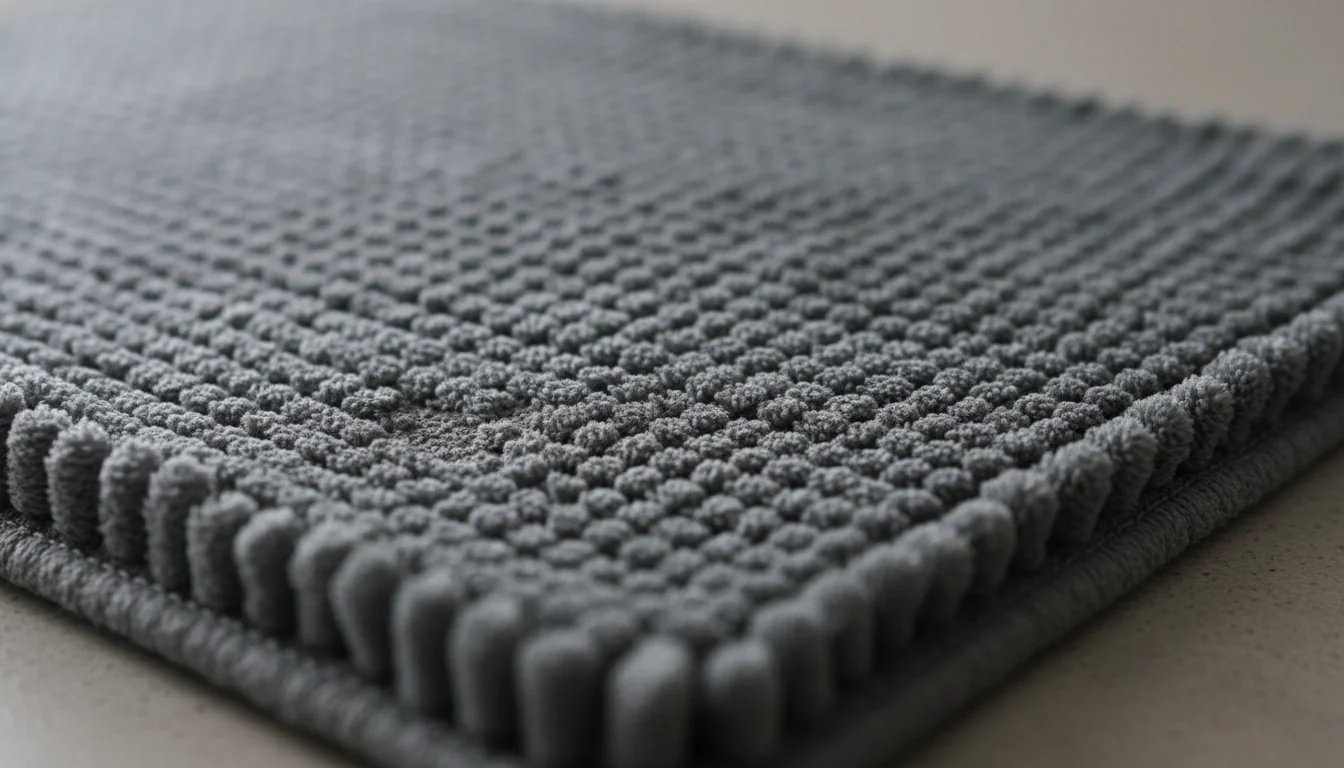
Care routines: cleaner surfaces
A minimalist bathroom looks effortless when upkeep is light. Match maintenance to humidity, ventilation, and daily shower habits.
- Wash cotton on a cool cycle; tumble low; shake lint outdoors.
- Refresh stone with a light sanding if marks appear; wipe with a damp cloth.
- Stand mats upright after use to let the bathroom air out fully.
- Avoid harsh bleach; it weakens fibers and can yellow whites.
Rotate two mats. While one dries completely, the other keeps the bathroom floor safe and tidy.
For everyday textiles that align with minimal lines, explore a broader bathroom-rug range and pick low-pile options that dry fast.
How to choose and place
If you need rapid evaporation in a compact bathroom, consider a quick-drying stone option before you measure.
- Map wet zones: shower exit, tub edge, and vanity front.
- Measure door undercut and swing to set max thickness.
- Pick material by routine: stone for speed, cotton for plush.
- Select a calm color: white, gray, or black to match grout.
- Test stability on your tile; add a non-slip layer if needed.
Avoid oversized memory foam near a shower door. Bulk can trap water and impede movement in a small bathroom.
For larger vanities or a long bath edge, look at an oversized anti-slip choice that keeps a single, uninterrupted line across the bathroom floor.
This year favors matte textures, Japandi warmth, and geometric edges that read as architecture, not ornament.
Why choose a premium mat for a minimalist space?
Because the bathroom is compact and reflective, one surface can steady the whole scene. A premium mat manages water, improves footing, and keeps lines clean with restrained color and texture.
How does a stone mat compare to textiles?
Stone dries fast and stays flat; textiles feel plush and soak more. For wet tiles, consider a true non-slip textile if you prefer warmth underfoot in the bathroom.
What colors work best in a minimalist bathroom?
White, gray, and black align with grout and fixtures. Use a single tone to anchor the floor, or a geometric border for gentle contrast on a light bathroom tile.
Will a mat make a small bathroom feel bigger?
Yes—use one larger rectangle to reduce visual seams. Keep low pile near the shower door and match the mat to wall or floor tones for a seamless read across the bathroom.
How should I care for my mat in a humid bathroom?
Air-dry fully between showers, wash textiles cool, and lightly sand stone if discolored. A neutral option like a neutral gray design also disguises lint between washes.
Which patterns still feel minimalist?
Abstract lines, fine stripes, and simple geometric borders. Keep contrast low, stick to two tones, and align edges with grout lines to calm the bathroom floor.
In 2026, the premium bath mat is a small but decisive anchor: it safeguards steps, dries the bathroom faster, and reinforces a minimalist mood through texture and tone.
- Pick materials by routine: stone for speed, cotton for warmth.
- Size for door swing and wet zones; keep edges low and neat.
- Consider a soft-touch alternative when you want warmth without visual bulk.
Choose with intention, and your bathroom will look calmer and work better every single day.
0 comments