


Premium vs. entry-level bath mats: is the price gap worth it in 2026? You feel it every time you step out of the shower—the difference between a soft landing and a slippery surprise.
This guide cuts through vague claims and focuses on value you can measure: safety, drying speed, hygiene, durability, and cost per use. By the end, you’ll know when paying more truly pays off—and when a basic option is sufficient.
Comfort per dollar: pile and density
Comfort is the first thing your feet judge, but is plushness alone worth the premium? What matters is how fibers, pile height, and density convert softness into daily relief and thermal insulation on cold tile or LVP.
- Pile height vs. density: taller isn’t always softer—tight loops can feel plusher and last longer.
- GSM (fabric weight): higher GSM often means fuller cushioning and better water uptake.
- Fiber choice: cotton feels natural and warm; microfiber wicks fast; blends target balanced comfort.
- Underfoot support: foam cores add rebound but can trap moisture if ventilation is poor.
- Edge binding: premium stitching resists curling—a hidden driver of long-term value.
Your feet perceive “luxury” when softness and warmth arrive together. Dense loops often outperform lofty, sparse piles on that sensation.
If comfort is your top criterion, a premium mat can be worth the gap—provided its density and binding outlast weekly washing. Otherwise, a basic, dense microfiber may hit a sweet spot for value.
| Comfort factor | Entry vs premium impact |
|---|---|
| Warmth on cold floors | Premium density retains heat better; entry-level varies widely |
| Underfoot cushioning | Consistently higher with dense loops or multi-layer cores |

Safety value: slip resistance proof
A bath mat’s real job is preventing slides on wet tile or vinyl. The “worth” test here is simple: does the backing grip under real humidity and soap residue, week after week?
- Backings: rubber or TPE often grip better than thin PVC films, especially when damp.
- Coefficient of friction: aim for wet COF ≥ 0.42 as a practical benchmark on smooth tile.
- Edge stability: heavier hems resist rolling, which can cause trip points.
- Residue build-up: shampoo or fabric softener films reduce grip across all tiers.
- Low profile: thinner edges pass under doors and reduce snagging in tight bathrooms.
Press your full weight and twist slightly on a wet floor—if the mat creeps, its safety payoff is weak regardless of softness.
If you prioritize slip control for kids, seniors, or guests, the premium tier often justifies the gap thanks to thicker backings and better binding. For comparisons, see this curated premium range that emphasizes grip and stability.
Hygiene payoff: drying and odor control
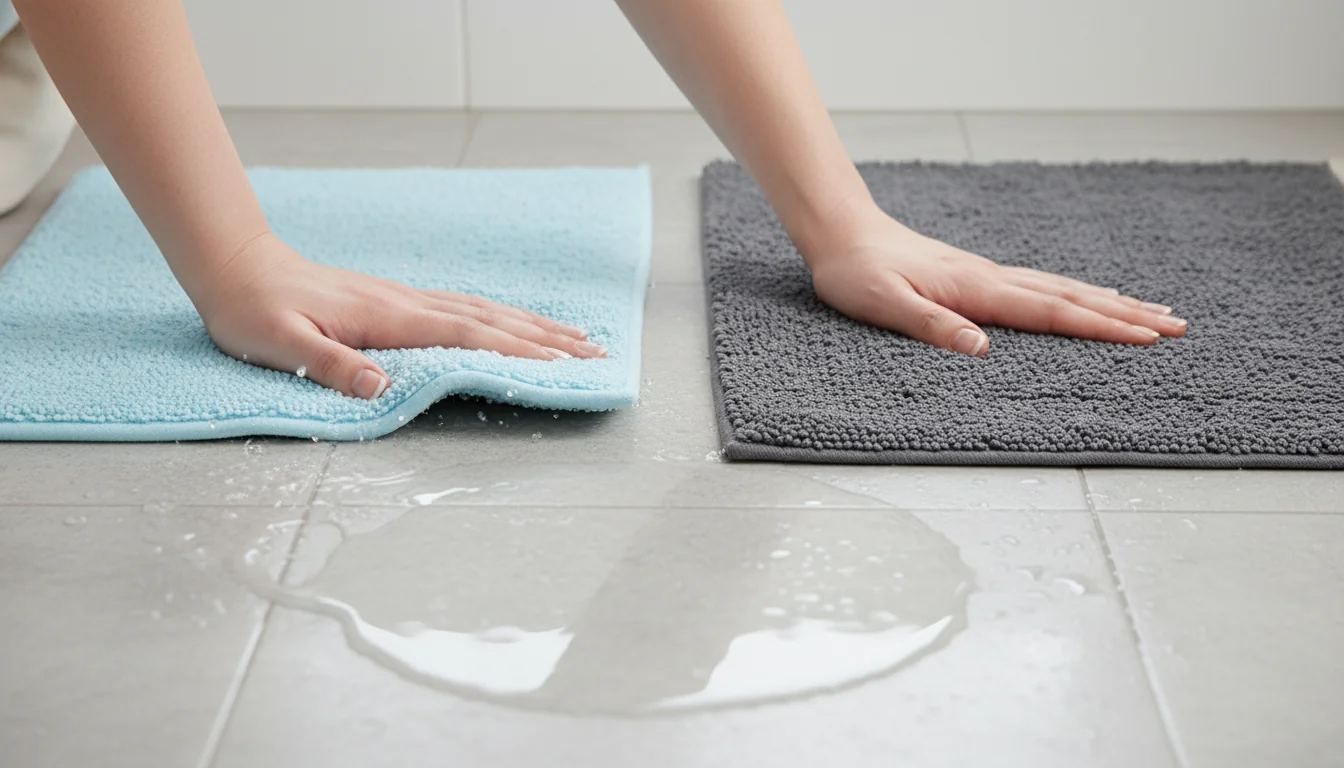
Drying speed is a silent driver of value. Mats that shed water fast feel fresher, smell better, and harbor fewer microbes. That freshness is a daily signal that the price difference delivers.
- Open-loop textiles breathe; dense foam cores need airflow to avoid musty buildup.
- Quick-dry microfibers can feel less “natural” but often win the refresh race.
- Multiple users? Larger surface area prevents re-stepping on wet zones.
- Antimicrobial finishes help, but regular washing is still the main defense.
- Ventilation matters: a great mat under a slow fan still struggles.
Avoid fabric softeners—they coat fibers and slow drying. Air-dry fully between showers if your bathroom lacks strong airflow.
Households with back-to-back showers may find the premium gap warranted purely for faster refresh. If splash zones are wide, consider oversized bath-mat formats to keep water off flooring seams.
Durability return: stitching and backing
Value shows up after month three. Do edges fray? Does the backing crack? The “return” on a mat is the number of clean, safe exits it delivers before flattening, curling, or shedding.
- Edge binding density: double-stitched hems resist unraveling at corners.
- Backing composition: higher-grade rubber resists brittleness better than basic PVC blends.
- Colorfastness: premium dyes fade less under warm washes and bathroom light.
- Shedding control: tightly twisted yarns reduce lint and blocked traps.
- Warranty signals: longer coverage can reflect confidence in stitching and backing.
Low-profile designs are friendlier to door clearances and can align with accessible, low-threshold layouts.
If your last mat curled at the edges or the backing flaked onto the floor, the higher tier often earns its keep. For durable constructions across sizes and fibers, explore a broader bathroom mat assortment.
Care time saved: washability metrics
Maintenance is part of the price. A mat that cleans easily, dries fast, and resists clumping saves minutes every week—time that compounds into real value over 2026 and beyond.
- Machine care: check max temperature and spin speed; premium labels are often clearer.
- Dryer use: some backings prefer air-drying to prevent cracking.
- Lint control: tightly spun loops shed less into filters and drains.
- Stain release: treated fibers let soap scum rinse out with less scrubbing.
- Colorfast whites: optical-bright look vs. premature yellowing is a long-term split.
Never wash with fabric softener. Use a mild detergent, cold-to-warm water, and avoid bleach on rubber-backed mats to protect grip.
If you value low-effort upkeep, the premium tier is often worth it for stable backing and clearer care instructions that protect performance.

Aesthetic impact: size and design
Bathrooms read “clean” when mats frame the vanity or tub correctly and colors harmonize with tile and towels. Visual calm is part of the value—especially in guest spaces.
- Proportions: larger runners keep drips off grout lines and make rooms feel longer.
- Palette: near-whites signal spa-level freshness; mid-tones hide lint and hair.
- Texture mix: ribbed paths near the tub, plus plush by the vanity, adds function and polish.
- Door swing: measure clearance—thick plush can snag where low doors swing inward.
- Set cohesion: align mat tones with towel stacks for a tidy, hotel-like look.
If your space is narrow, consider long, low-profile runners to avoid bunching and to guide wet feet to dry zones.
If aesthetics shape daily satisfaction, a premium finish can be worth the gap—especially where guests form impressions quickly.
Decision guide 2026: when paying more pays off
- Profile the risk: smooth tile, frequent splashes, kids, seniors, or pets raise the safety bar.
- Time the dry: step, then check after 20 minutes. Still damp? You’ll value quick-dry tech.
- Count users: more feet mean bigger mats and tougher backings are justified.
- Compute cost per use: price ÷ weeks of service × weekly uses.
- Check care fit: if you air-dry, pick low-weight mats; if you machine-dry, verify backing limits.
If you’ve had one slip scare, treat grip as non‑negotiable. That alone can make the premium gap sensible.
For dense comfort plus durable binding, benchmark against a dense, hotel-grade mat and see how its care label aligns with your routine.
If traction is the deciding factor, compare wet‑tile stability with a reinforced anti-slip option to judge the real-world value gap.
| Scenario (weekly uses) | Illustrative cost-per-use |
|---|---|
| Entry-level, light use (3×/week for 30 weeks) | Lower unit price, but fewer clean exits before flattening |
| Premium, heavy use (10×/week for 52 weeks) | Higher unit price, lower cost per safe, dry exit if durability holds |
When is a premium mat truly worth it?
When slip risk is high, drying is slow, or you host guests often. In these cases, the extra grip, faster refresh, and longer life convert the gap into daily safety and comfort dividends.
How does it compare to other upgrades (like towels)?
Upgrading towels feels indulgent; upgrading mats is preventive. If you must choose, prioritize the mat. For plushness seekers, test a feather-soft pick and confirm it still grips underfoot when damp.
What material offers the best value?
For many homes, dense microfiber balances quick drying with easy care. Cotton feels classic and warm. Memory foam is cushy but demands airflow. The right choice depends on your ventilation and washing routine.
Does memory foam justify the price gap?
It can, if standing comfort matters and your bathroom vents well. Foam traps warmth and feels plush, but it must dry fully. Compare against a memory-foam alternative and time the refresh between showers.
What about a “hotel-like” look—is that worth it?
If presentation boosts your daily mood or guest experience, yes. A refined edge, stable backing, and cohesive color elevate the room. Consider a plush luxury piece where aesthetics play a role in perceived cleanliness.
How should I maintain value over time?
Rinse soap residue monthly, avoid fabric softener, and air-dry when possible. Wash more frequently if you notice lingering dampness or a change in grip—both affect long-term value.
In 2026, the price gap is justified when safety, drying, and longevity convert into lower cost per use and fewer hassles—especially in busy, humid bathrooms.
- Safety first: stable backing often makes the premium tier pay for itself.
- Drying speed: freshness and odor control are daily value drivers.
- Durability: stitching and backing quality reduce replacements.
Focus on the outcomes you feel and measure; that’s how “worth” becomes a clear, confident choice.
0 comments