


Planning a 2026 bathroom renovation? One quiet upgrade drives daily safety and cleanliness: the shower mat non-slip quick dry for bathroom renovation.
Which type fits your new floor, drain, and layout without creating maintenance headaches? This guide shows how to specify, place, and care for a mat that supports your remodel goals, from code-aware slip resistance to mold control.
You’ll get actionable criteria, layout tips, and pro checks to align the mat decision with your renovation timeline and finish choices.
Safety first: code‑aligned choices
A remodel is the best moment to design out slip risk. Plan the mat in parallel with tile selection, drain position, and ventilation so safety is built in, not patched later.
- Slip rating matters: look for wet-surface grip aligned with ASTM F462 or equivalent guidance.
- Match base to surface: suction cups excel on smooth acrylic; stone or loofah PVC suit textured tile.
- Quick‑drain design: perforations or a raised mesh let water pass without puddling near the outlet.
- Quick‑dry performance: super absorbent surfaces or hard stone that dries in minutes limit mold growth.
- Lifecycle view: choose materials that stay grippy after routine cleaning during renovation and beyond.
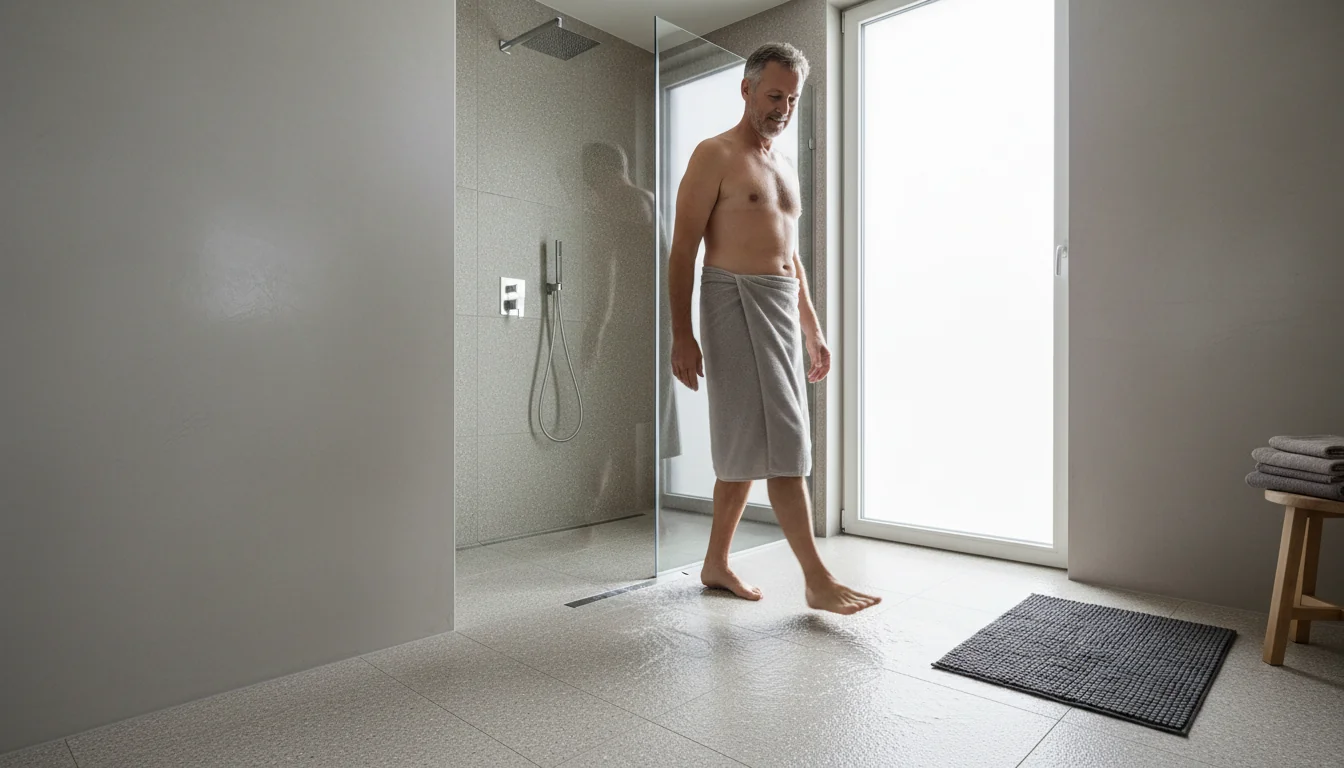
If your renovation includes a curbless entry, specify a mat with quick drain holes or a rigid drying surface to keep the path clear.
In short, integrate the mat choice early in the renovation brief so it complements slope, grout texture, and user needs.
Materials: match tile and usage
Material drives drying speed, feel underfoot, and hygiene. Choose with your tile, shower base, and traffic in mind during the remodel.
| Material type | Renovation fit |
|---|---|
| Diatomaceous earth (stone) | Hard surface, instant dry feel (often under 15 seconds), sleek look; place on flat tile or stone. |
| Loofah‑style PVC mesh | Soft, drains fast, ideal on smooth shower pans; easy to trim to new layouts. |
| Rubber‑backed textile | Comfortable step‑out rug; pick super absorbent fibers, wash regularly post‑renovation. |
- Stone bath mats suit minimalist refits and cool palettes; they keep floors clean and dry.
- Loofah mesh offers cushion in family showers and adapts to niches and benches.
- Textile rugs work best outside the wet zone as a bathroom floor accent after tiling.
- For a curated wet‑area overview, explore our shower‑zone selection as a benchmark when specifying.
Stone mats are naturally inorganic, so they don’t host fibers that trap moisture—a hygiene win in new showers.
Decide early which material aligns with your renovation’s slip goals and cleaning routine.
Drainage: slope, size, and fit
A quick‑dry plan fails without proper slope and sizing. Coordinate the mat with drain location and door swing in your remodel drawings.
- Confirm fall to drain: target around 1/4 in per foot toward the outlet for efficient runoff.
- Size to clear doors and channels; trim loofah PVC if needed, not stone.
- For tubs, center a non‑slip mat away from overflow and avoid covering the drain entirely.
- Factor in curbless thresholds; keep the drying surface flush to prevent toe stubs.
Suction cups don’t hold well on textured or small mosaic tile. Prefer a loofah mesh or a stone base in such renovations.
Outside the wet zone, a soft textile can add comfort after your refit—see the plush options in this chenille range for the step‑out area.
Hygiene: fast‑dry, mold control
Renovations are your chance to reduce moisture load. A non‑slip, quick‑dry mat supports airflow, keeps floors drier, and cuts cleaning time.
- Diatomaceous stone dries fast and wipes clean; refresh with a light sanding if stained.
- Loofah PVC can be rinsed and hung; its open structure sheds soap and hair.
- Rubber‑backed textiles need frequent washing; specify quick‑dry piles during the refit.
- Coordinate with exhaust and undercut doors to move damp air out quickly.
Quick‑dry mats reduce the time surfaces stay wet, a key lever for anti‑mold objectives in a 2026 upgrade.
If you prioritize visual continuity in your renovation, browse design‑forward bath selections to align pattern and color with new tile.
Aesthetics: color and texture
Your mat’s look should reinforce the remodel’s material story without sacrificing safety. Think palette, grout tone, and light temperature.
- Stone mats read modern and minimal; they echo ceramic and stone tile.
- Loofah mesh appears matte and discreet, ideal for spa‑like schemes.
- Textiles add warmth near vanities; choose rubber backing to prevent drift.
- Contrast can aid visibility for seniors; lighter mats on dark floors help wayfinding.
Repeat a grout hue in the mat tone to create a calm, intentional thread across the renovation.
Balance texture and drying speed so the finish feels coherent with your refit’s lighting and fixtures.

Budget: lifecycle and upkeep
A renovation budget isn’t just fixtures. Factor mat durability, cleaning time, and replacement cycles into total cost of ownership.
- Stone mats last years with periodic surface refresh; no laundry cycles.
- Loofah PVC is affordable, trim‑friendly, and machine‑rinsable.
- Textiles are cozy but need frequent washing; stock two for rotation post‑refit.
- Count time saved by quicker drying as an ongoing value after the overhaul.
Avoid adhesives that permanently bond to new tile. They complicate future maintenance and may void surface warranties.
Choose once, maintain simply, and your 2026 remodel will feel safer and cleaner for longer.
How to specify and install
- Confirm floor type and slope in plans; choose suction, loofah, or stone accordingly.
- Measure clear space: drain, door swing, and benches; leave 1–2 cm tolerance.
- Select drying tech: for instant dryness, consider a mineral hard‑surface option.
- Test placement dry; then wet the base (if suction) and press from center out.
- Set a cleaning cadence that matches household traffic post‑renovation.
In curbless layouts, align the mat’s edge with the dry zone boundary to preserve visual width and free drainage.
Don’t span over the drain. Choose a mat with cutouts or position it so water can exit freely.
Why prioritize the mat in a remodel?
Safety and drying are easier to solve during design. You can align slope, tile texture, and a non‑slip surface to reduce moisture and falls. For the step‑out, a low‑profile option like this compact exit mat keeps pathways tidy.
Stone vs loofah vs textile—what fits best?
Stone dries fastest and suits flat tile. Loofah PVC drains well on smooth pans and trims to fit niches. Textiles bring warmth outside wet zones. Match each to your renovation’s surfaces and cleaning routine.
Small bathroom—how to keep floors dry?
Prioritize quick‑dry surfaces and airflow. A mineral mat with light texture, like this grid‑pattern hard option, absorbs fast without adding bulk in tight footprints.
Curbless shower—any special considerations?
Yes. Keep the mat’s edge out of the primary drain channel and choose a style that won’t migrate. A flat, quick‑dry surface prevents snags on the new threshold and supports accessibility.
Care and cleaning after the upgrade?
Rinse loofah PVC weekly; machine wash if allowed. Wipe stone; sand lightly if stained. Launder textiles often. For a soft accent near the vanity, the playful tone of this artistic bath rug pairs well with frequent washing.
Families or guests—what to specify?
Choose gentle underfoot texture, clear contrast for visibility, and fast drainage. In guest baths, prefer mats that hang or dry quickly so spaces reset fast between uses during peak seasons.
A well‑chosen non‑slip, quick‑dry surface turns a 2026 bathroom renovation into a safer, cleaner daily routine—without complicating maintenance.
- Plan with the floor: match material to slope, tile, and drain.
- Prioritize drying: pick designs that shed water fast and resist mold.
- Think lifecycle: simple cleaning beats frequent replacements.
For a color accent that supports your refit’s palette, consider a quick‑dry textile like this blue‑patterned option for dry zones near the vanity.
0 comments