


A small bathroom can feel boxed-in, but the shower floor is your secret lever to reclaim precious room. Want ideas that genuinely boost usable area and visual openness?
In this 2026 guide, you’ll learn how layout, thresholds, tile patterns, drainage, and storage choices turn a tight shower into an airy, efficient zone. We’ll focus on floor-centered strategies that expand your footprint without remodeling the whole bath.
More Floor: Corner layouts
Start with geometry. Corner or neo‑angle showers tuck into unused edges, clearing central walkways and preserving a generous turning radius around the vanity and toilet.
- Choose a neo‑angle base to clip the door swing and open floor paths.
- Run the curb (or better, go curbless) so lines flow with the room’s axis.
- Consider a single fixed glass panel to reduce hardware and visual weight.
- Place recessed niches on side walls to keep the entry zone uncluttered.
Aim for a clear 30–32 inches of approach in front of the shower to maintain comfortable movement in compact rooms.
If a corner isn’t possible, a one‑wall “galley” arrangement with a sliding door minimizes swing clearance and keeps the footprint tight yet workable.
Avoid outswing doors that collide with the vanity or towel bars. Sliding or fixed glass preserves circulation and perceived volume.
Clear Sightlines: Minimal barriers
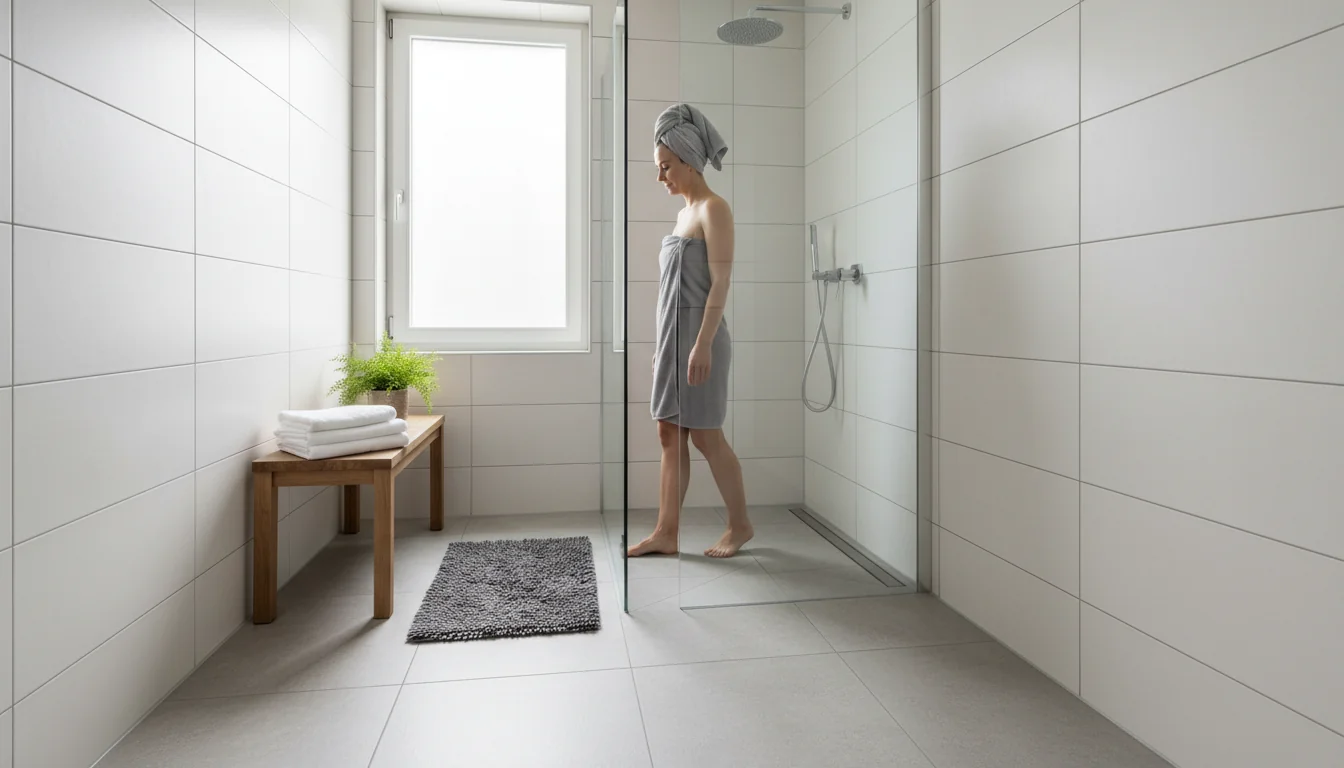
Strong sightlines grow perceived area. Frameless glass, narrow channels, and slim thresholds reduce visual breaks and extend the floor plane from door to back wall.
- Use a fixed panel + walk‑in entry to remove door swing requirements.
- Keep metal profiles thin; fewer edges mean more openness.
- Continue floor tile into the shower for a seamless, larger feel.
- Hang vanity lighting to bounce off glass and brighten corners.
Transparent barriers expand light paths. More light equals more apparent volume, especially in windowless bathrooms.
To keep floors clear while softening acoustics outside the enclosure, consider design‑led bath rug picks that visually recede in tone and pattern near the shower exit.
Mount the showerhead higher and angle it down. A steeper spray reduces splash while protecting that open entry.
Vertical Gains: Wall storage
Freeing the floor is the fastest way to reclaim area. Build storage into walls so bottles and tools never touch the base or curb.
- Add a recessed niche on the control wall for easy reach.
- Use stacked corner shelves for compact organization in tight stalls.
- Run niches full‑height to exploit every inch of vertical real estate.
- Choose slim hooks outside the shower to keep towels off the floor.
A single 12×24‑inch niche replaces one or two freestanding caddies, clearing several square feet of visual clutter.
Reserve a small zone outside the wet area for quick‑dry textiles. If you want softness without bulk, explore plush chenille choices that compress low yet feel cushioned underfoot.
Keep the first 12–18 inches inside the entry clear of storage to prevent tripping and protect the main traffic lane.
Drainage First: Slim floor builds
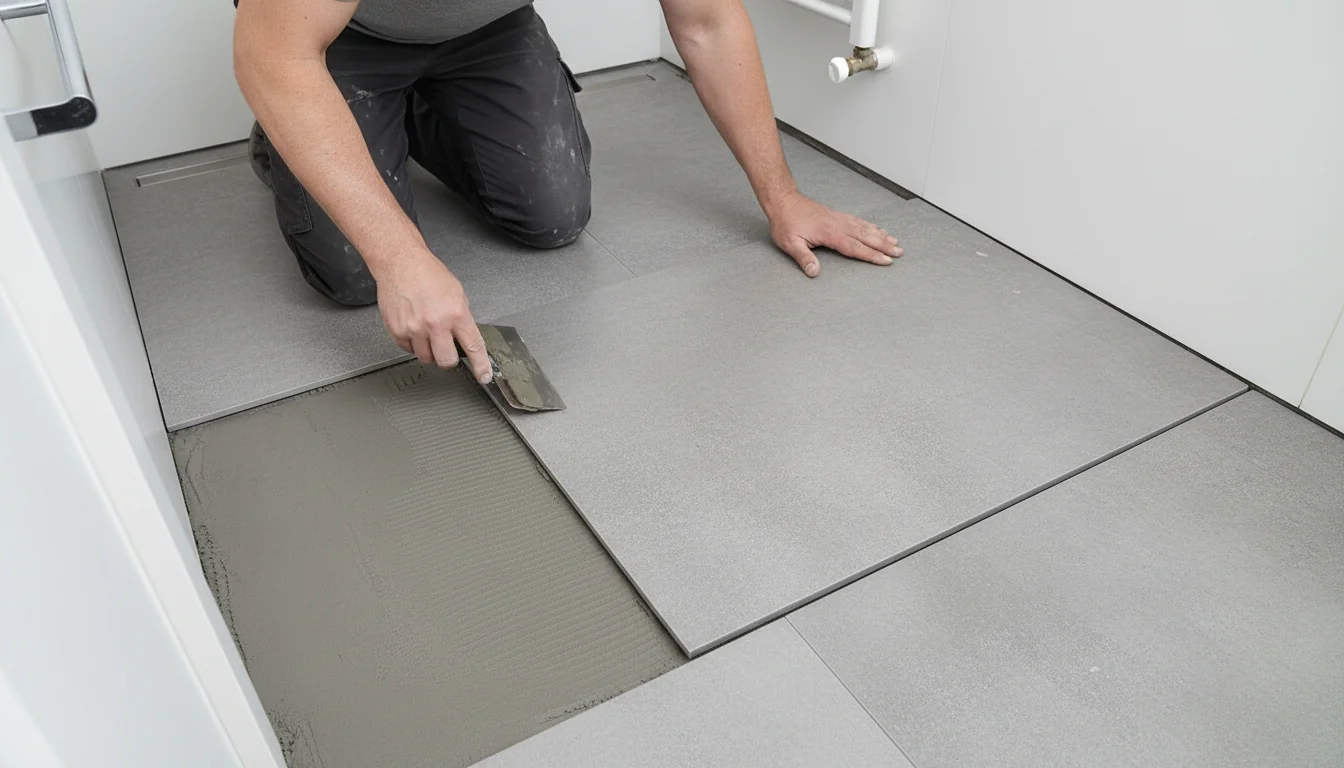
A thin, well‑sloped base shrinks thresholds and unifies the room. Prioritize curbless entries, linear drains, and compact tile choices for safe, efficient runoff.
- Target a fall of ~1/4 inch per foot (≈2%) toward the drain.
- Specify tiles with ≥ 0.42 wet DCOF for traction.
- Use mosaics (1"–2") to flex over slopes and improve grip.
- Consider a linear drain at the wall to keep the main plane flat.
Run the same floor tile into the shower when using a wall‑line drain. The uninterrupted surface visually widens the footprint.
| Shower floor option | Spatial effect + notes |
|---|---|
| 1"–2" porcelain mosaic | Best grip, adapts to slope; more grout but reads as a soft, uniform field. |
| Large‑format slab/porcelain | Minimal joints, sleek look; pair with linear drain to avoid lippage. |
| Textured stone/pebble sheet | Spa feel, high friction; mind grout maintenance in tiny rooms. |
Prefer cushioning at the exit? A low‑profile mat avoids bulk near the threshold; explore this shower mat assortment to keep the dry zone tidy without eating floor area.
Confirm subfloor depth before committing to curbless. In renovations, a compact pre‑sloped tray can preserve head height and layout.
Visual Stretch: Color and pattern
Use tone and alignment to “stretch” the plan. Lighter, low‑contrast palettes bounce illumination and fuse boundaries for a larger feel.
- Match grout to tile for fewer visual breaks across the floor.
- Lay subway tile vertically to lift the eye above tight clearances.
- Continue baseboard tile into the shower for a wrapped effect.
- Limit accent bands to one zone to avoid chopping the room.
Floor‑to‑ceiling tile in the shower reduces horizontal “cuts,” which often make small bathrooms feel segmented.
Where you need softness outside the wet zone, pick hues that echo wall tile so textiles visually disappear, preserving openness.
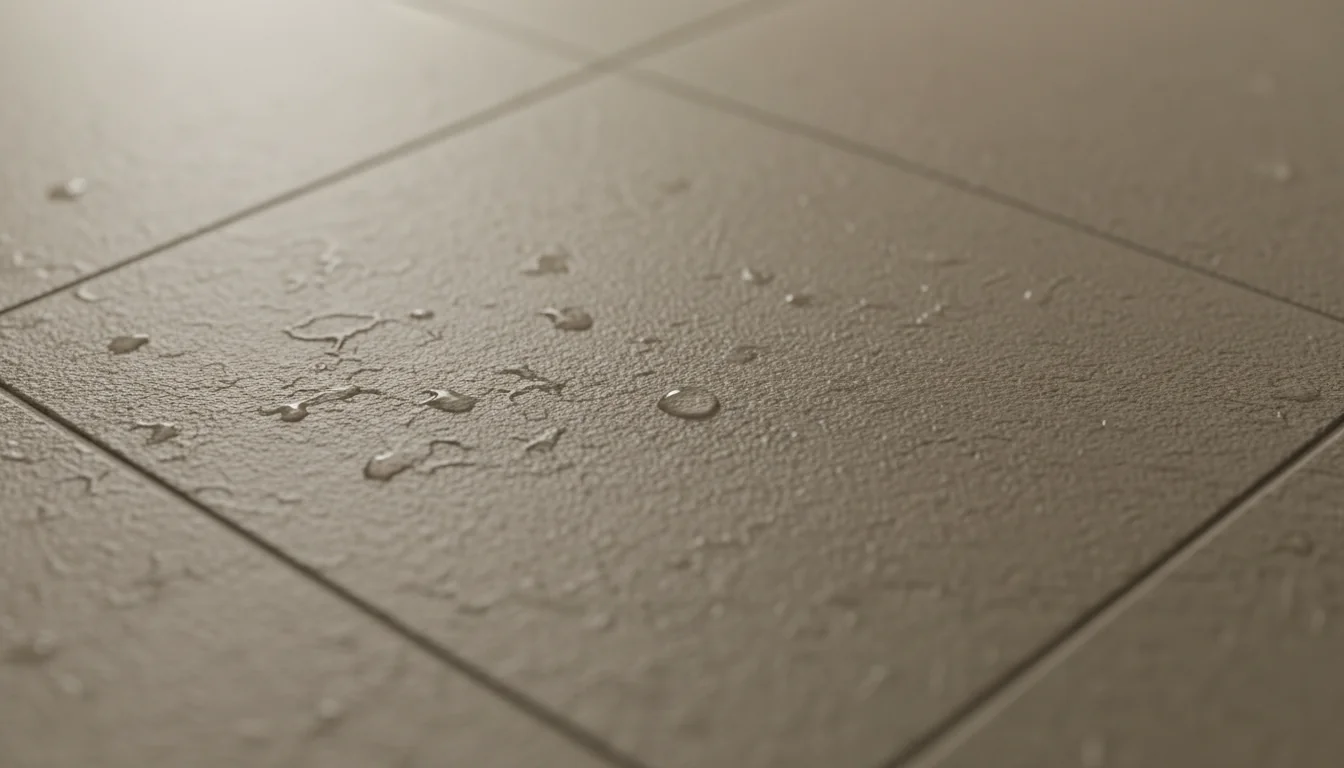
Glossy wall finishes inside the stall reflect light; choose matte or textured tile underfoot for safe traction.
Guide 2026: Plan a compact shower
Use these fast steps to design for a bigger feel and a tighter footprint.
- Map clearances. Lock a 30–32 inch approach in front of the stall.
- Pick the base. Corner, neo‑angle, or curbless with linear drain.
- Select tile. Low‑contrast field; mosaics or a slab with proper slope.
- Add vertical storage. Recessed niche sized to your tallest bottles.
- Finish with glass. A fixed panel or slider to protect circulation.
A thin hard‑surface mat dries fast and keeps the exit zone lean. Consider a slim diatomite board to limit moisture transfer without crowding the walkway.
Prefer a touch of color without shrinking the visual field? Echo wall tones in textiles; a restrained pattern such as this blue pattern option can harmonize with cool tiles and keep the floor reading as one plane.
Multiple bold borders across the floor chop the footprint. Keep patterns continuous in small rooms.
Why focus on the shower floor for more room?
The base sets thresholds, slope, and sightlines. Optimize these, and you free circulation, declutter the footprint, and expand perceived volume across the whole bathroom.
Walk‑in vs tub‑shower: which preserves area?
A walk‑in with a fixed panel or slider usually wins. It removes bulky rims, reduces swing clearances, and lets floor tile run uninterrupted for a larger look.
What tile patterns make a small stall feel bigger?
Low‑contrast mosaics, vertical stacks, and large slabs with linear drains stretch lines. Matching grout helps the floor read as one continuous surface.
How do I add warmth without shrinking the floor visually?
Keep tones close to your wall color. A gentle accent like a soft‑peach motif adds warmth yet blends, so the eye reads an open expanse.
Are there safety targets I should know?
Traction matters. Look for tiles rated around ≥ 0.42 wet DCOF and ensure a ~2% slope to the drain for fast runoff without pooling at entries.
What if I want extra softness around the exit?
Choose low‑pile textiles in tight palettes. For comfort that doesn’t add bulk, try a turquoise chenille mat just outside the drip line.
Do mats reduce the sense of openness?
They can if high‑contrast or thick. Keep profiles slim and colors close to the floor tile so the room reads broader and calmer from door to wall.
Maximizing a compact shower is less about square footage and more about how the floor guides movement, light, and sightlines.
- Simplify thresholds with curbless builds and slim glass.
- Unify surfaces so the eye reads one broad plane.
- Store vertically to keep every inch of floor clear.
To finish with a light footprint underfoot, consider a graphic bath rug that echoes your tile, or browse compact textiles such as design‑forward bath rugs, plush chenille options, and a tidy shower‑exit mat range to suit your layout.
0 comments