


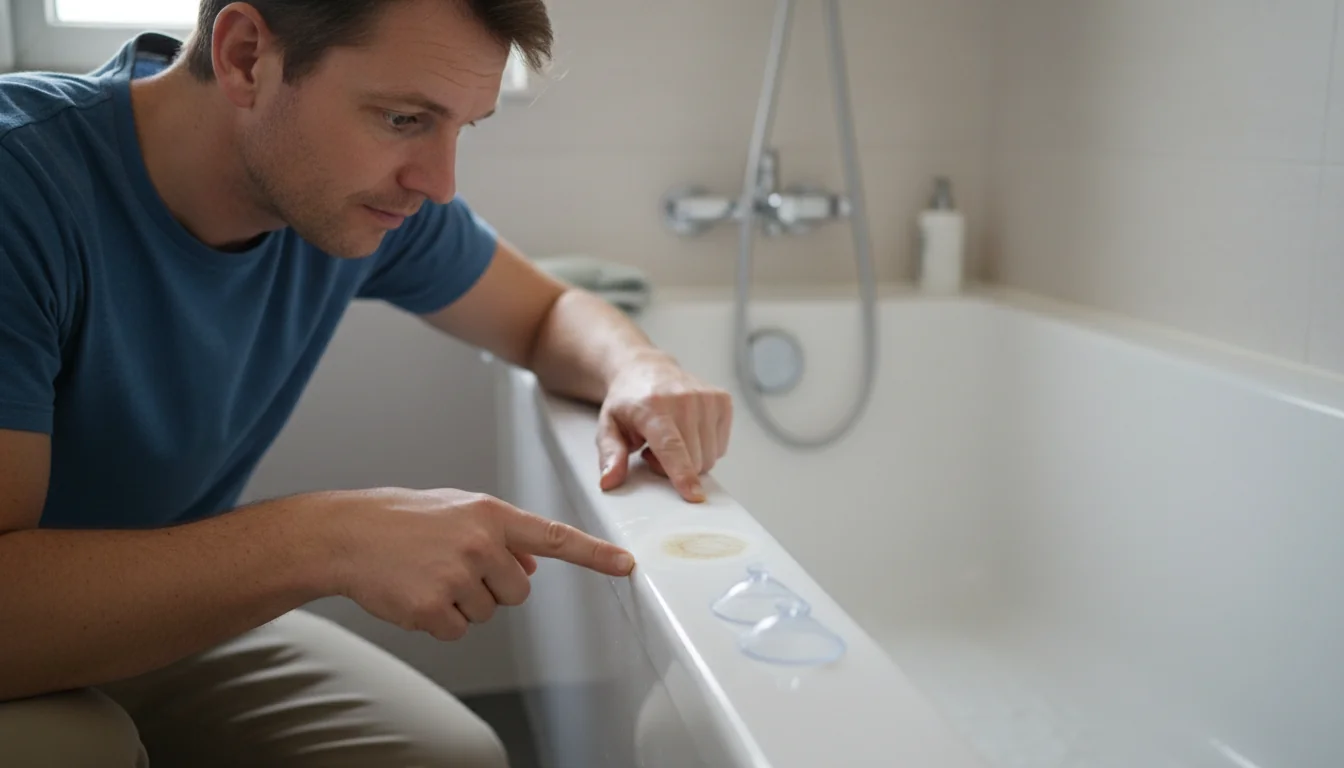
Those pale rings under a bath mat? That’s them—suction cup marks. They show up as circles, stains, or dull spots that seem to cling to your tub’s finish.
Do you want a clear plan to keep them from forming, and to deal with any that already appeared?
This 2026 guide explains why they happen, how to block them on every tub surface, and the safest ways to erase them without harming your bathtub.
What Causes Them: Surface Science
Suction cups work by pushing out air and creating a partial vacuum. When water, soap film, or oils sit under a bath mat, that micro‑seal lingers—and so do the marks they leave behind.
- Pressure rings: cup edges compress the finish and trap moisture.
- Residue shadows: soap scum protects spots while the rest dulls.
- Color transfer: PVC plasticizers can yellow acrylic or fiberglass.
- Light blocking: shaded zones age differently, creating halos.
- Micro‑etching: abrasive grit under mats scours circles as you move.
Plasticizer migration can cause yellow rings that won’t scrub off easily. Minimizing cup contact time is the simplest way to stop them.
If you still want in‑tub coverage without over‑sealing the floor, explore this range for full‑base protection and choose designs that allow drainage and airflow.
Block Them: Finish‑Specific Moves
Not all tubs react the same. A refined approach makes the difference between spotless porcelain and stubborn circles you can’t buff away.
- Acrylic and fiberglass: avoid harsh chemicals; lift mats daily to dry the base.
- Porcelain‑on‑steel: limit dwell time; use perforated mats with wide drainage.
- Refinished bathtub: skip suction entirely; use non‑suction traction options.
- Textured floors: cups don’t seal well; consider strips or weighted designs.
- Stone or tile bases: prioritize treads; never trap water under rigid cups.
On reglazed tubs, cups can pull the coating and leave permanent rings. Most pros advise “no suction” for the life of the finish.
| Surface | Risk of Marks |
|---|---|
| Acrylic / Fiberglass | Medium—yellowing and halos if cups sit wet |
| Porcelain‑on‑Steel | Low to medium—pressure rings, soap shadows |
| Refinished (reglazed) | High—coating lift and round stains likely |
For reliable grip without over‑sealing, look at these non‑slip choices and select models that you can remove quickly after bathing to keep them from forming.

Routine Wins: Keep Them Away
Most rings are preventable with a short, repeatable routine that starves them of moisture, residue, and time on the surface.
- After each use: lift the mat, rinse the floor, and stick it to the wall to drip.
- Daily: squeegee the tub; quick wipe breaks the scum cycle.
- Weekly: soak the mat inverted; scrub cup rims with a soft brush.
- Monthly: deep clean cups and floor; re‑inspect for early halos.
- Chemicals: if you must use them, pour them into the drain and rinse the area well.
Flip mats so cups face up during soaking. It exposes cup edges, where buildup makes them stick and mark.
If your shower is the main splash zone, consider this shower‑specific shower mats to keep coverage high while reducing the chance they appear along the base.
For broader housekeeping tactics that stop sticky buildup, see our guide to debris on damp floors. Removing residue removes the food source for them.
Safer Options: Avoid Them Entirely
You do not need suction cups to stay upright. Several proven alternatives deliver traction without the circular aftermath they tend to leave.
- Weighted, suction‑free mats that drain well and don’t float.
- Textured non‑slip strips that bond to the floor and dry fast.
- Built‑in textures: when present, skip a mat and just squeegee.
- Benches and grab points to reduce foot shuffling on slick spots.
- Outside‑the‑tub runners to manage exit drips and tracking.
On tiled bases or textured floors, cups rarely seal well. Alternatives outperform and eliminate the risk of them.
For inside‑the‑tub coverage that emphasizes grip over suction, browse this design‑led selection and prioritize generous drainage holes to keep them from showing up later.
If splashes swamp your floor after showers, read these splash‑control tips. Drier surroundings mean fewer deposits that can feed them under cups.

Already There? Erase Them Safely
Marks look similar, but causes vary. Match your method to the stain and the tub material so you lift them without scratching or bleaching the finish.
- Soap shadows: dish soap + warm water + soft cloth; rinse and dry.
- Mineral rings: 50/50 white vinegar and water; short dwell; wipe.
- Yellow halos: oxygen‑based cleaner; avoid chlorine on acrylic.
- Stubborn residue: baking soda paste on a damp sponge; no scouring pads.
- Refinished tubs: stick to non‑abrasives; test in an inconspicuous spot.
Never dry‑scrub circles. Add water first, then use a soft sponge. Abrasion can turn faint them into permanent dull spots.
| Stain Type | Try First |
|---|---|
| Soap scum rings | Mild soap, microfiber, warm rinse |
| Hard‑water circles | Diluted vinegar, short dwell, wipe |
| Yellow halos | Oxygen cleaner; avoid chlorine on acrylic/refinished |
To reduce friction damage during cleaning, see this article on abrasion in wet rooms. Gentle tools protect the finish while you remove them.
Love nature‑inspired palettes? Choosing a towel or mat hue that hides residue can be tempting. If color matters, explore these green‑toned bath mats and still lift coverage daily so they don’t set.
How to Prevent Them: A Quick 5‑Step Plan
- Start clean: remove old rings with gentle methods before new use.
- Choose traction: prefer suction‑free options when possible.
- If using cups: pick perforated mats and avoid textured bases.
- After each bath: lift, rinse, and wall‑hang to dry fully.
- Weekly: deep clean cups and tub; check for early halos.
Set a reminder for once a week. A 5‑minute cup scrub prevents weeks of stain removal later.
If you prefer a thin, suction‑free base that stays flat and drains quickly, consider a low‑profile base mat to reduce the chance they appear at all.
Why do them appear even on clean tubs?
Pressure rings plus trapped moisture create halos. Residue shields spots while surrounding areas dull. Even a spotless surface can show them if the mat stays wet and unmoved.
How do cups compare to suction‑free options?
Cups grip well on smooth floors but can leave circles. Weighted or treaded options provide traction without sealing, so you avoid them and improve drainage on most bases.
Can I use cups on a refinished bathtub?
It’s strongly discouraged. Cups can pull at the coating and form permanent rings. Use non‑suction traction and remove any mat after each use to keep them away.
How can I make cups hold on a tiled wall?
They need a smooth, non‑porous tile and a truly clean surface. Wipe both sides, press firmly to expel air, and avoid grout lines. If they still fail, use adhesive‑backed treads or a rail instead to avoid them on tub edges.
What cleaners safely remove them?
Start mild: dish soap, then diluted vinegar for minerals, then oxygen cleaner for yellowing. Avoid abrasives on acrylic or reglazed finishes so you don’t etch them deeper.
How do I prevent slips without cups for kids?
Use suction‑free mats or tread strips, and dry the base after use. For safer pathways, see these kid‑friendly route tips. Good habits stop falls and them.
Do outside mats help stop them?
Yes. Catching drips outside limits residue inside the tub. Less scum under mats means fewer circles and less work removing them later.
Preventing suction‑cup circles is about airflow, limited contact time, and gentle care matched to your surface. Apply a simple routine and they won’t return.
- Lift and dry mats after every use.
- Choose traction that doesn’t seal the floor.
- Clean cups and tub before rings settle in.
For moisture issues near the base that can aggravate them, see this guide to recurring damp marks. Small tweaks keep your bathtub bright.
Soap film reduces hold: that applies to all bath tub mats.
0 comments