


Finishes decide how a tufted textile looks, feels, grips, and lasts. If you care about touch, hygiene, and stability, the finish matters as much as the yarn.
Curious how surface treatments change comfort and performance? This mobile-first 2026 guide breaks down the principle, advantages, and—above all—the finishes that turn a tufted structure into a reliable everyday surface.
You will learn what each finish does, how to compare options, and simple tests you can run at home before committing. Finishes are not cosmetic extras—they are the real-world difference between delight and disappointment.
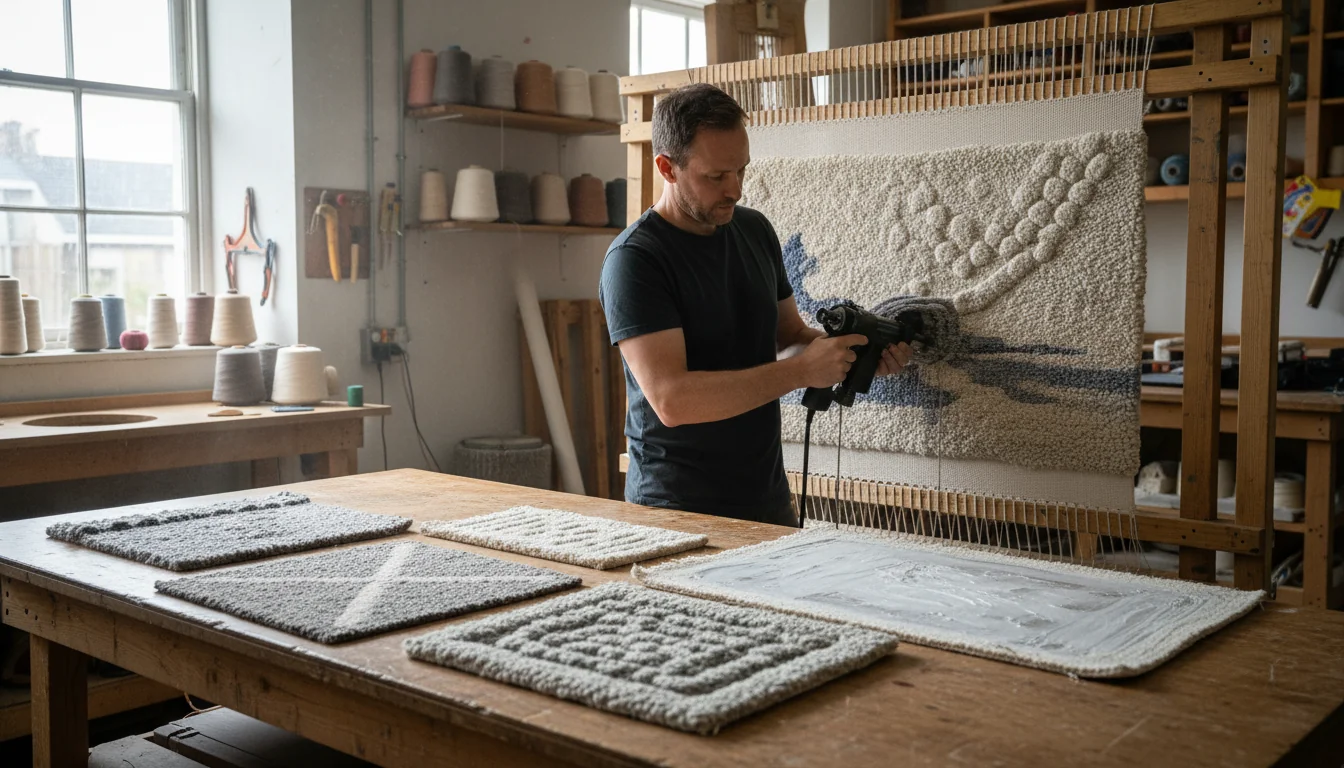
Surface feel: cut and loop
Tufted weaving inserts yarn loops into a base cloth, then locks them. What you feel comes from surface finishing operations like cutting, shearing, carving, or blending loop and cut zones to build relief and clarity in the design.
- Cut pile (velour): dense, soft hand; ideal for warmth and comfort underfoot.
- Level loop: tidy loops; excellent texture retention and track-resistance.
- Tip-sheared: lightly trimmed loop peaks for a matte–gloss mix.
- High–low sculpt: multi-height pile that adds shadows and graphic depth.
- Carved accents: channels cut between motifs to sharpen contours.
Ask for a small swatch showing the chosen surface finish beside an uncut zone. The contrast makes the effect easy to judge on mobile photos.
Compared with flat-woven alternatives, these surface decisions let you tailor touch and acoustics. That is the core link between principle, advantages, and finishes: same process, many outcomes.
| Finish type | Surface effect |
|---|---|
| Cut pile (sheared) | Velvety look, plush feel, richer color depth |
| Level loop | Textural grain, high stability, less shading |
| Tip-sheared | Softened loops, subtle matte–gloss contrast |
When you review a blog cover image, try to “read” the finish: cut zones look darker; loops sparkle; carved lines cast thin shadows.
Durability gains: heat-setting
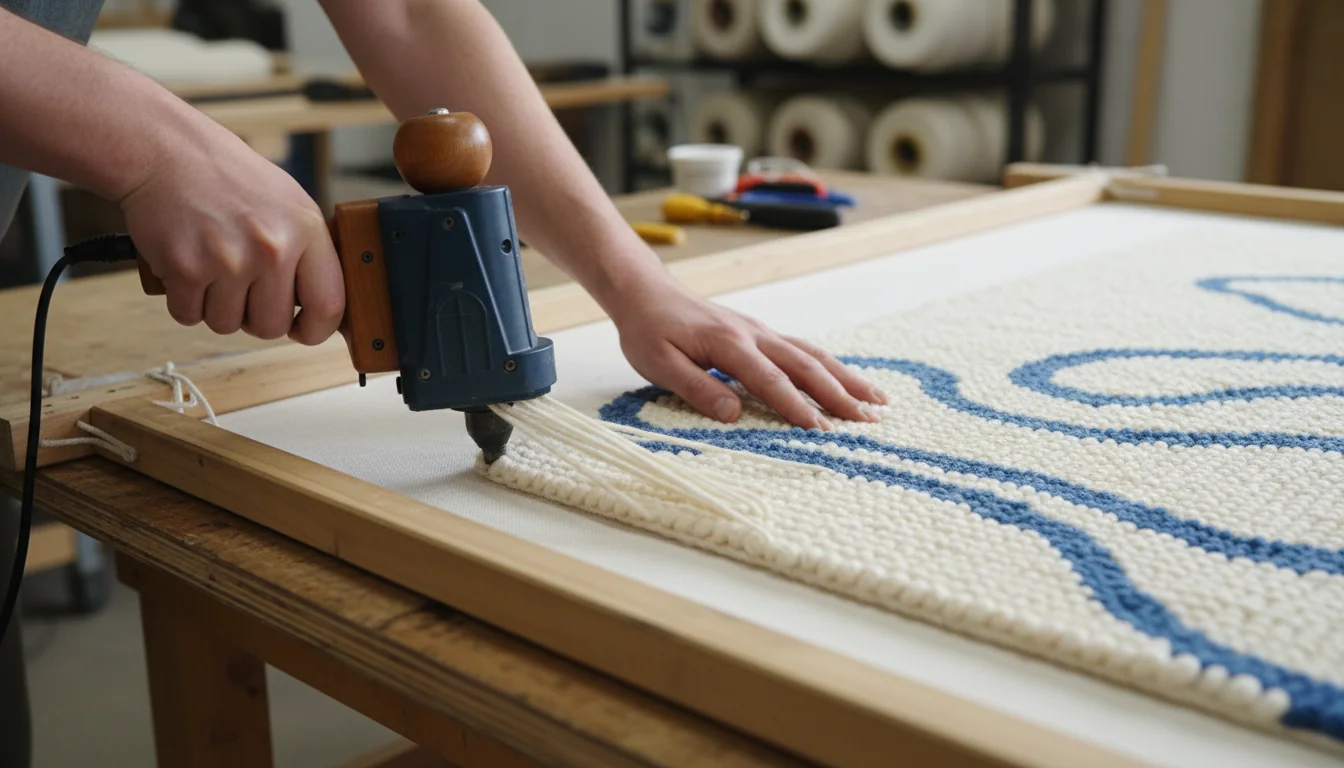
Beyond the surface, performance grows from technical end‑treatments. Heat-set yarn locks twist to curb fuzzing. Controlled shearing evens the face. Protective finishes add stain resistance or reduce static build-up.
- Heat-set fibers: better resilience and pattern definition over time.
- Final shearing: lower shedding in the first weeks of use.
- Soil-guard: slows wetting and helps spots lift in cleaning.
- Anti-static: useful in dry climates and low‑humidity interiors.
- Antimicrobial options: targeted where hygiene is critical; verify claims.
Many “advantages” people credit to fiber type are often achieved by finishes—like crisp edges or reduced shedding—after the tufting step.
In a mobile-first comparison, note how the same design can look sharper post heat-setting. That visual “snap” is a finish result, not just the base process.
Always check care labels. Aggressive detergents can strip surface treatments, dulling color or reducing stain resistance.
This is where principle meets proof: the tufted base delivers speed and variety; the finishes translate those advantages into daily performance.
Safety first: non‑slip backings
Backings and coatings are finishes too. They fix the pile, stabilize the shape, and add traction—vital in bathrooms, entryways, and kitchens where slip risk is higher.
- Latex or TPR: grippy base for tapis de bain (bath mats) and small rugs.
- Foam‑laminate: cushioned step; popular in luxury bath mat designs.
- Woven secondary: dimensional stability for larger formats.
- Micro‑suction dots: removable traction on smooth floors.
For bathrooms, prioritize a non‑slip finish over thickness. Grip and quick drying outweigh extra loft.
Hospitality standards often require consistent slip resistance, fast drying, and colorfastness. Tufted weaving makes it feasible; the right finish package seals the result.
Washing can reduce traction. Test your mat’s grip after the first wash and replace if the backing hardens, cracks, or peels.
Guide 2026: test finishes in minutes
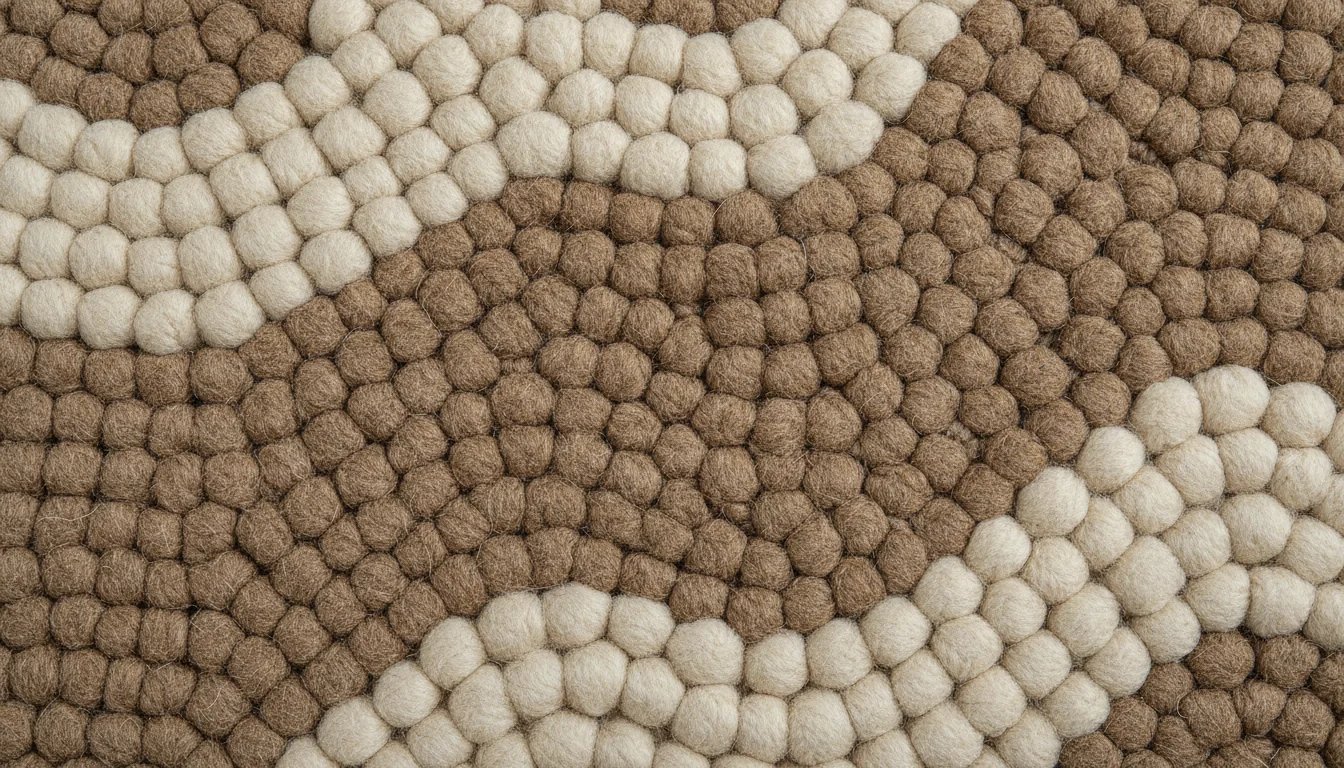
- Water bead test: drop water; good repellency beads for 10–30 seconds before soaking.
- Slip check: on a safe dry floor, press and twist—grip should resist sideways movement.
- Color rub: white tissue, gentle rub; minimal transfer hints at decent fixation.
- Pile recovery: press with your palm for 5 seconds; high-quality shearing rebounds quickly.
- Edge audit: tug the corner; serging or binding should not reveal loose threads.
For bath mats, test anti-slip again with a damp tile—carefully and with support—to confirm real-world grip.
These quick checks surface the core principles, benefits, and finishes differences you can feel and measure.
“Tufted weaving” is also called tufting; in French you may see “tissage tufté.” The finishes discussed apply across both names.
Why focus on finishes?
They control handfeel, slip resistance, hygiene, and color stability. The same yarn can perform very differently depending on the final surface and backing treatments.
How do these compare to other constructions?
Tufted structures accept a wider range of finishing steps—pile shearing, carving, anti-slip, stain guards—letting you tune performance beyond what some flat wovens allow.
Top advantages linked to finishing?
Custom comfort, safer footing, easier cleaning, and longer shape retention. A well-chosen finish multiplies the base material’s benefits.
Are these finishes suitable for bathrooms?
Yes—choose anti-slip backing, mildew-inhibiting chemistry, and quick-dry pile. For sensitive floors, confirm the backing is colorfast when wet.
Any care advice specific to finishes?
Vacuum gently in pile direction, blot spills, and avoid harsh solvents. Reproof stain protection if the bead test weakens over time.
What about sustainability in 2026?
Prefer water-based binders, PFAS-free repellents, and low-VOC labels. Ask for documentation that matches the exact finish applied.
Tufted Weaving: Principle, Advantages, and Finishes comes to life when you choose the right surface and backing treatments for your space and habits.
- Pile finishes drive touch, texture, and visual depth.
- Backing and edges secure shape, safety, and longevity.
- Protective chemistry simplifies cleaning and hygiene.
Use this 2026 guide to compare finishes with your real needs—and test them. The right finish turns a good tufted piece into a dependable daily companion.
Edges that last: binding options
Edge finishing protects the pile base and frames the design. It also steers style: neat, tailored, or artisanal. Good edges prevent fray, curling, and uneven wear.
- Serged edge: overcast yarn thread; soft, rounded look.
- Fabric binding: tape‑wrapped for a crisp border.
- Hidden turn‑under: minimal border; design bleeds to edge.
- Heat‑cut or sealed: synthetic piles lightly fused to resist fray.
Rounded corners reduce edge lift in high‑traffic paths compared with sharp right angles on the same finish.
| Edge finish | Best suited for |
|---|---|
| Serging | Soft aesthetics; cozy, comfort‑led interiors |
| Fabric binding | Graphic borders; contemporary design lines |
| Turn‑under | Minimal look; seamless “cover image” style shots |
Here again, finishes do the work: the tufted process builds the canvas; borders and backings deliver daily advantages.
0 comments