


Stepping out of the shower should feel safe, dry, and soothing. If you’re weighing choices among ultra-absorbent microfiber bath mats, this 2026 guide helps you decide with confidence.
You’ll learn how smart choices on pile type, backing, size, and care translate into real benefits at home. Expect clear criteria, quick comparisons, and practical steps to lock in trusted picks.
Right size: safer picks
Great choices start with format. Ultra-absorbent microfiber bath mats work best when their size and shape match high-splash zones around the tub, shower, and sink. Fit also affects safety, since proper coverage reduces wet, slippery patches on the bathroom floor.
- Standard rectangle (20"×32"): reliable coverage for shower exits and single vanities.
- Runner rugs (47"+ long): ideal along double vanities or bath-to-shower pathways.
- U-shaped contour: sits around the toilet base for targeted absorbency and a cleaner look.
- Two-piece sets: pair a shower mat with a sink-side rug to split drying zones.
- Door clearance: ensure shaggy or plush piles don’t snag under doors—check swing and gap.
| Room setup | Best format |
|---|---|
| Shower stall next to a single vanity | 20"×32" microfiber bath rug by the door of the shower |
| Freestanding tub with a wide apron | Extra-long runner to span the step-out area |
| Compact powder room with a toilet only | U-shaped contour mat to frame the base |
Measure the splash path from tub or shower to towel hook. Choices that cover this route reduce drips and help keep tiles dry.
If you need substantial coverage for a large layout, explore our oversize formats to keep wet footprints off the main walkway.
Dialing size first makes later choices simpler: once length, width, and contour are set, you can focus on absorbency and grip with fewer trade-offs.
Grip and drying: evidence-led
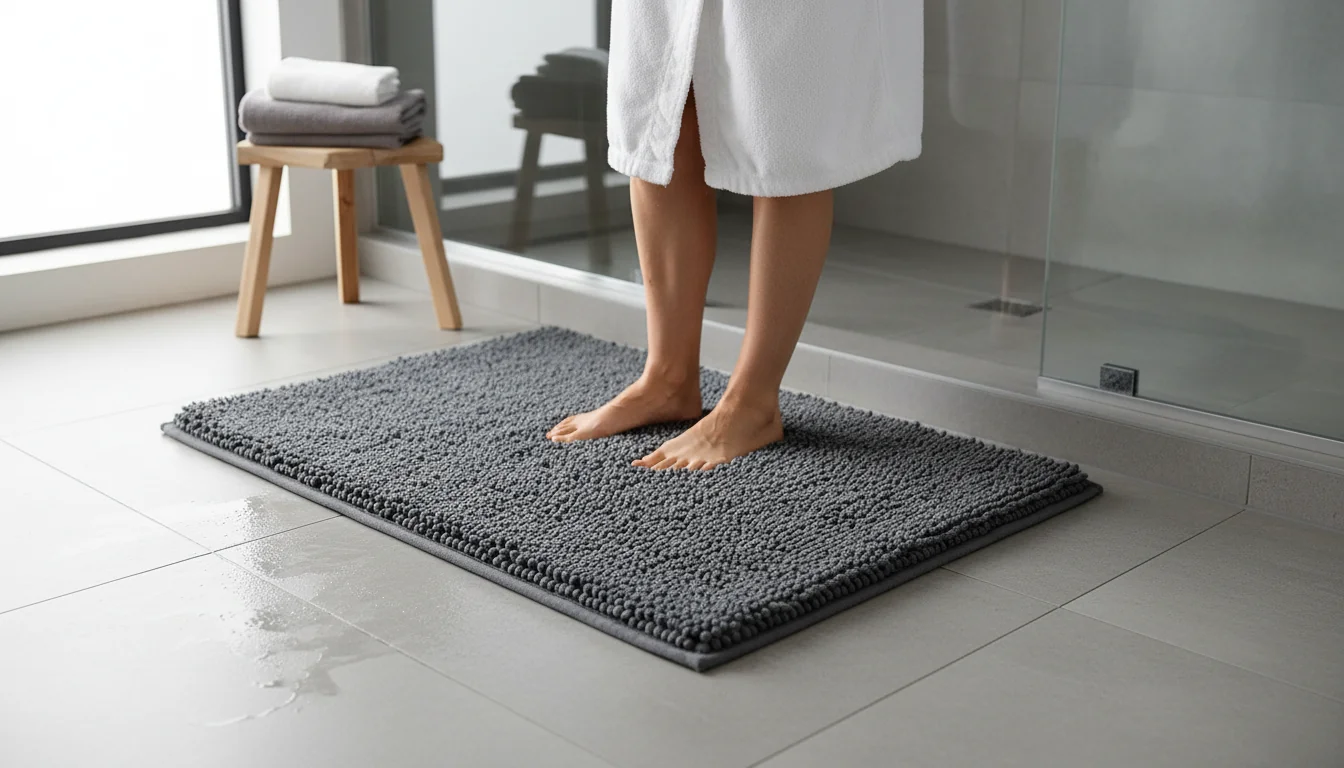
Ultra-absorbent mats must also stay put. Look for non-slip backing with steady traction on tile, vinyl, or sealed stone. Good choices combine quick-drying microfiber piles with backing that resists curling after washes.
- Non-slip rubber or TPR backing: consistent hold on smooth, dry floors.
- Soft, shaggy chenille: high surface area for fast water pickup from wet feet.
- Quick dry construction: piles that release moisture faster between showers.
- Machine washable: robust stitching and backing that tolerate gentle cycles.
- Edge stability: bound edges reduce fray and corner lift after repeated wash/dry.
Avoid placing a mat over loose rugs or wet floors. Even trusted options can slip if the tile underneath is soapy or saturated.
To sanity-check your choices at home, try a “heel twist” on dry tile and a “towel drag” test after misting the surface. A sound pick won’t skid or bunch during either test.
If you want to compare formats and pile types beyond this shortlist, browse a broader bathroom selection to align performance with your decor plan.
Ventilation speeds drying. Leave a 1–2 cm gap under doors or crack a window so microfiber releases moisture faster between uses.
Choices that balance grip with drying reduce mildew risk and keep backing flexible over time, especially if you stick to low heat when machine drying.

Materials decoded: reliable picks
Not all microfiber bath rugs feel the same. Chenille “noodles” are plush and soft underfoot, while tightly woven piles trade fluff for quicker release of water. Your choices hinge on comfort preference, dry-time needs, and care habits.
- Chenille microfiber: plush, soft and absorbent; cushy after a bath or long shower.
- Low-pile microfiber: slimmer profile, tends to quick-dry and fit under doors.
- Memory foam core (alternative): comfy step but slower to release moisture.
- Rubber backing: stable on tile; look for even dot patterns or full sheets.
- Machine-washable builds: reinforced seams and colorfast fibers.
OEKO-TEX STANDARD 100 screens every component against more than 1,000 chemicals, helping you align choices with safer household textiles.
If sustainability guides your choices, look for Global Recycled Standard notes such as contains at least 50% recycled material, which indicates verified recycled content through the supply chain.
Prefer faster turnarounds? Choose slimmer microfiber piles for a quick-drying routine, especially in low-vent bathrooms.
For a natural look in low-splash zones, compare microfiber with bamboo alternatives that bring a spa vibe while draining water underneath.
By weighing comfort, certification, and upkeep, your short list narrows to trusted options that hold up through frequent wash cycles.
Care plan: washing and drying
Durability comes from care routines that protect fibers and backing. Your care choices affect lifespan and comfort.
- Machine washable is essential; wash cold, around 30°C, gentle cycle.
- Skip fabric softeners; they reduce absorbency on microfiber.
- Tumble low or air dry; high heat can stress rubber or TPR backing.
- Shake out between uses to release moisture and lint.
STANDARD 100 by OEKO‑TEX screens components against over 1,000 substances of concern, supporting informed picks.
If sustainability guides your decision-making, the Global Recycled Standard signals verified recycled content across the supply chain. Climate-focused labels often require at least 50% recycled input.
Always verify care tags before laundering sets; some foam cores need air drying only.
Prefer natural textures in certain zones? Consider bamboo-style alternatives where fast airflow helps, and keep microfiber in splash-heavy areas to balance your choices.

Color sense: palettes and mood
Visual harmony matters. Your color decisions can make the bathroom feel brighter, calmer, or warmer in an instant.
- Gray and silver pair well with chrome fixtures and cool tiles.
- White reads clean and airy; coordinate with towels for unity.
- Bold accents like violet or teal highlight feature walls.
- Striped or geometric textures add depth without clutter.
Test under your bathroom lighting. LED warmth can shift how colors read—crucial for final choices.
When shortlisting trusted choices, aim for one anchor tone (rug), one complement (towels), and one subtle contrast (accessory) to keep cohesion.
Buying guide 2026: shortlist fast
- Map wet zones: tub exit, shower door, sink.
- Pick pile style for absorbency vs. dry time.
- Confirm non-slip backing suits your floor type.
- Check care tags: machine washable and low-heat dry.
- Match a color plan to fixtures and towels.
Keep one spare mat per zone. Rotating extends life and keeps choices fresh-looking.
If plush comfort leads your decision, preview this ultra-soft example to gauge pile height and density against your routine.
Need a mood lift? A saturated tone can anchor your selection—see this colorful reference to test accents against tile and paint.
Skipping measurements. A 20×32 in mat crowding a door swing can derail otherwise solid choices.
Why choose microfiber over cotton?
Microfiber offers faster wicking and quick-dry performance, ideal for daily showers. It balances absorbency and maintenance, making it a reliable base for trusted choices in busy bathrooms.
How do these compare to stone or foam mats?
Microfiber feels softer and handles splashes better than rigid stone. Versus foam, it often dries faster and launders more easily—helpful when narrowing options to practical, long-term picks.
Which colors help a small room?
Light tones open space. For a calm accent that still reads rich, consider a soft hue like this violet-toned reference and pair with neutral towels.
Are there standards I should check?
STANDARD 100 by OEKO‑TEX and the Global Recycled Standard help validate safer chemistry and recycled content. They add confidence to choices without dictating style.
What suits minimal, spa-like decor?
Crisp neutrals keep lines clean. Test a matte option like this white-toned pick against your grout and fixtures for harmony.
Best pick for high-traffic floors?
Mid-to-dark grays mask lint and wear. A textured chenille surface—see this dark gray example—adds grip while staying soft on bare feet.
Microfiber succeeds when your selection balances rapid soak-up, safe footing, the right size, and smart care. That’s how trusted choices are made in 2026.
- Prioritize absorbency + dry time to suit your routine.
- Lock in non-slip backing matched to your floor.
- Measure zones accurately, then color with intent.
Apply these criteria step by step, and your final pick will feel like the obvious choice every time you step out of the bath.
0 comments