


Slippery walk-in showers are preventable hazards. Looking for clear, effective tips that actually boost traction under bare feet?
In this 2026 field-tested guide, you’ll get targeted advice—not theory—on walk-in shower anti-slip solutions: effective non-slip safety tips you can apply today. Expect precise placements, product categories that work, and upkeep routines that protect grip long term.
Immediate traction: quick-win moves
Start with fast fixes that add grip where you stand. These pointers focus on placement and texture, so each step in your shower feels planted, not tentative.
- Use non-slip decals or grip strips in a checker pattern; leave 1–2 inches between strips to channel water.
- Choose a suction-backed mat with drain-through design to avoid hydroplaning on trapped water.
- Lay interlocking wet-area tiles for full-floor coverage when surfaces are very slippery.
- Apply a clear non-slip coating if you dislike the feel of mats but need finer texture underfoot.
- Create a dry “landing strip” just outside the entry with a low-profile, rubber-backed runner.
Place grip where heels land: two strip rows at the entry, one near the drain, and one under the showerhead. This targeted map prevents “bald spots.”
These non-slip safety tips outclass generic suggestions because they treat traction as a layout problem, not just a product choice.
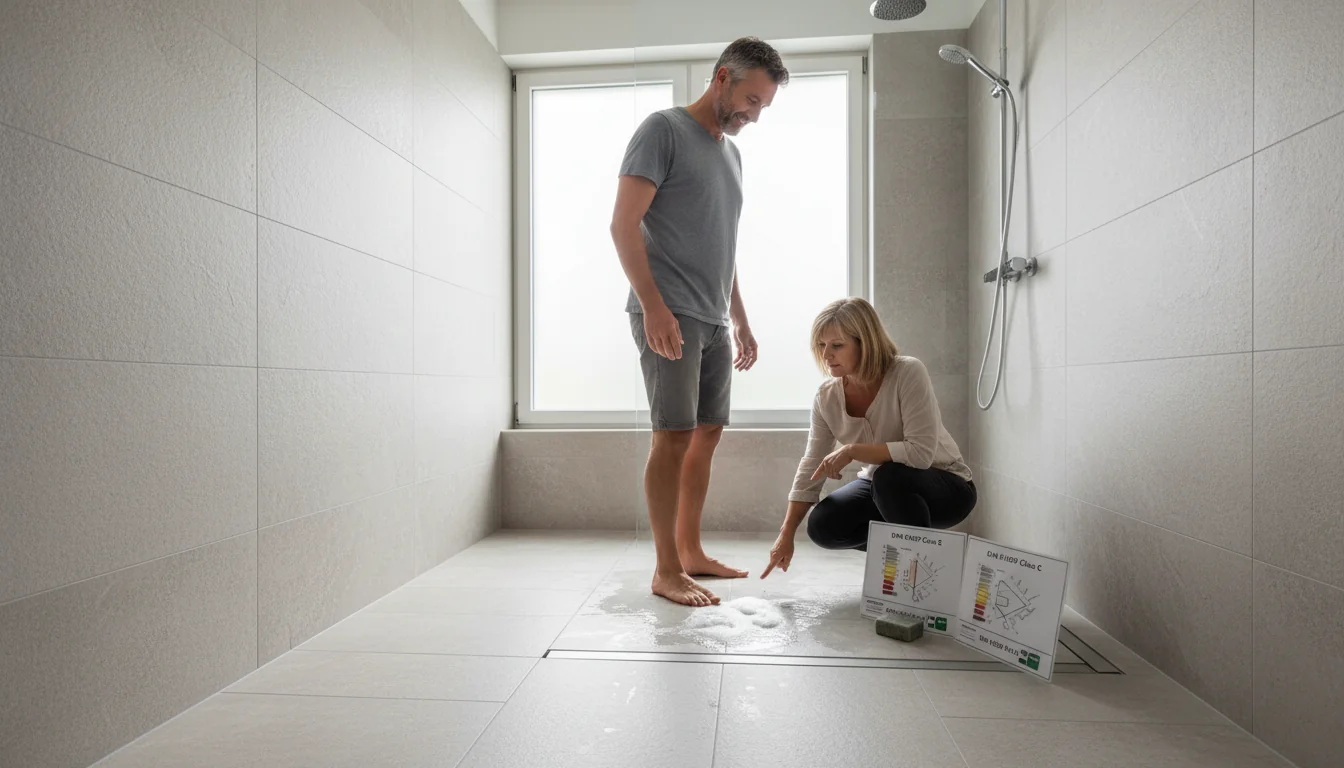
Long-term grip: surfaces that last
If you’re remodeling or upgrading a base, focus on permanent surfaces with built-in texture. The right surface keeps you stable in soapy, wet use.
| Anti-slip option | When it shines |
|---|---|
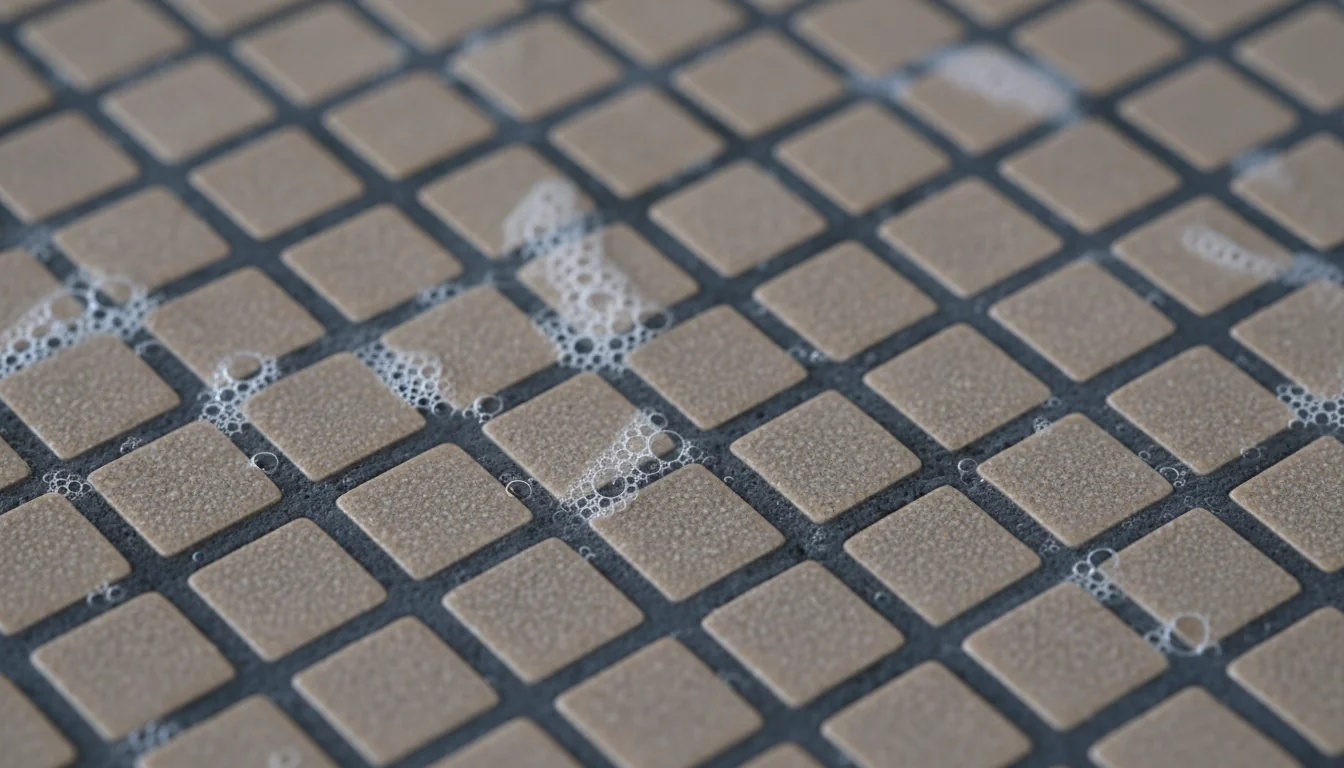
| Textured porcelain with small tiles | Extra grout lines add micro-grip; ideal for walk-in showers. |
| Molded slip-resistant shower pans | Consistent texture underfoot; quick installs with low thresholds. |
| Vinyl with slip-resistant finish | Comfortable on joints; easier maintenance for family wetrooms. |
| Epoxy quartz broadcast (professional) | High traction and durability; specify barefoot-friendly grit. |
- Ask for DCOF ≥ 0.42 (wet) on tiles in shower zones; it’s a practical benchmark for traction.
- Favor matte or micro-textured finishes; glossy surfaces lose grip when soapy.
- Smaller formats (2×2 in.) improve drainage and micro-traction for bare feet.
- Contrast color slightly to help low vision users spot wet areas.
Grout acts as texture. More joints mean more tiny edges, which improves anti-slip performance without feeling harsh.
Prefer the feel of a platform underfoot? Consider this wood‑look shower platform that lets water drain underneath while adding stable, barefoot-friendly grip.
Avoid stone sealers that leave a glossy film. They can reduce friction dramatically in wet use.
These non-slip safety tips around materials ensure your walk-in stays safe beyond the first months of use.
Safer entries: rails and seating
Traction is half the story. Strategic supports help you maintain balance during transitions, when most slips happen.
- Install grab bars 33–36 in. high; add a vertical bar at the entry and a horizontal bar along the back wall.
- Angle one bar at 45 degrees for versatile leverage when rising or stepping in.
- Use a shower bench or chair; add rubber tips on the bottom of the legs to prevent slipping.
- Choose a handheld shower to reduce twisting and reaching while seated.
- Keep thresholds low; zero- or low-step entries reduce tripping risk at the curb.
Position soap, shampoo, and a squeegee at mid-chest height on a rail shelf. Less bending = fewer slips.
These guidance points complement traction upgrades—together they form walk-in shower anti-slip solutions that work day to day.

Water control: drier, safer floors
Managing splash is a simple way to boost safety fast. Less water migration means fewer surprises outside the shower.
- Use a weighted curtain or fixed panel; aim the spray away from the opening.
- Verify floor slope of ~1/4 in. per foot to the drain; fix ponding areas.
- Place a narrow, rubber-backed runner just outside the entry as a moisture trap.
- Keep a squeegee on a hook; 30 seconds post-shower reduces film that kills traction.
Travel bathroom safety tips for hotel stays: bring adhesive grip strips and a small microfiber runner; place them at the entry for a temporary, safer setup.
Never use fluffy loose rugs at the exit. Low-profile, non-slip backing only—no curled edges.
These anti-slip safety tips keep the area outside the shower as dependable as the floor inside.
Maintenance rhythm: keep friction high
Traction declines when soap film builds up. A light, regular routine protects the micro-texture that prevents slips.
- Weekly: clean with a mild, non-oily cleaner; rinse thoroughly to preserve texture.
- Monthly: de-scale around the drain and corners; deposits can slick surfaces fast.
- Quarterly: do a “barefoot slide test.” If it feels glassy, deep clean or refresh coatings.
- Never wax shower floors; polishes reduce grip and defeat anti-slip features.
Switch to body wash that rinses clean. Some oils leave a film that cuts traction on textured bases.
These upkeep tips are small habits with outsized safety impact—especially in busy family bathrooms.
For seniors: confidence without strain
Aging in place relies on predictable, low-effort movement. These practical suggestions prioritize stability and ease.
- Seat height should allow knees at ~90° when seated; add arms for supported stands.
- Arrange toiletries within arm’s reach; eliminate reaching across the wet zone.
- Set hot water to 120°F max to reduce scald risk during seated bathing.
- Use night lights and illuminated switches to negate dark-hour missteps.
If balance is inconsistent, add a second grab bar near the entry. Support at both hands reduces wobble when stepping in.
Simple cues like a contrasting floor strip at the entry guide foot placement—an easy win for seniors and low-vision users.
These targeted tips help seniors move securely, while also reducing strain on caregivers.
How to anti-slip a walk‑in: a 5‑step plan
- Map wet zones: entry, under spray, near drain—add grip there first.
- Install grab bars at the entry and main wall before floor work.
- Add decals/strips or a drain-through mat in high-traffic spots.
- Control splash: adjust showerhead and set a weighted curtain/panel.
- Lock a cleaning routine: weekly wash, monthly de-scale, quick squeegee.
Aim for two forms of traction: one built-in (texture/coating) plus one removable (mat/tiles) for redundancy.
If you prefer a platform feel that sits flush, explore an anti‑slip insert for flush showers that drains instantly and adds stable footing without blocking water.
Do not overlap mats or strips. Overlaps trap water and create skatey patches.
Why focus on practical tips over generic advice?
Because slips happen at specific spots and moments. Concrete tips target entries, heel landings, and soapy zones—where prevention matters most.
Are mats the only answer, or are there smarter alternatives?
Not at all. Combine decals/coatings with a slim, drain-through insert. For flush entries, a dedicated option like this low‑profile walk‑in insert adds grip without trapping water.
What’s the quickest, high-impact tip for seniors?
Add a bench with rubber-tipped legs, place a vertical bar at the entry, and move essentials within reach. Three small changes—big stability gains.
How do I choose surfaces that stay non-slip?
Ask for DCOF ≥ 0.42 (wet), matte textures, and smaller formats. These specs keep grip consistent in real-world soap and water.
Any cleaning tips that won’t ruin traction?
Use mild, non-oily cleaners and rinse well. Avoid waxes or polish. A squeegee pass after each shower preserves micro-texture.
What about travel—how can I stay safe in hotel showers?
Pack adhesive grip strips and a compact runner. Place strips under the showerhead and the runner at the exit to reduce surprise slides.
Where should grab bars go for the best leverage?
One vertical at the entry for the step, one horizontal along the back wall, and one at a 45° angle near seating. Check wall backing and local codes.
The most effective non-slip safety tips blend targeted traction, smart supports, and steady maintenance—so your walk-in feels predictable every time.
- Map and treat heel landings first; add a second layer of grip as backup.
- Pair grab bars with seating and a handheld shower to cut risky moves.
- Keep exits dry; a low-profile outside runner or a flush‑entry bath rug style helps manage drips safely.
Adopt two or three of these tips today, and your 2026 bathroom will reward you with calmer, safer routines.
0 comments