


Slippery floors, splashes everywhere, and a wriggly pup—your bathroom can turn into a hazard zone fast. Looking for a wet dog non-slip bathroom mat that actually works in a small washroom or a busy family shower area?
In this 2026 guide, you’ll learn how to choose and position a dog-friendly mat that stabilizes paws in the tub and controls water on the bathroom floor. We’ll cover traction, materials, sizing, drainage, and maintenance—plus a streamlined setup for stress-free dog grooming at home.
Safer footing: bathroom‑grade traction
In the bath or shower, traction comes first. A wet dog non-slip bathroom mat should stabilize paws on smooth tile, acrylic tubs, or shower pans without shifting as water and shampoo run off.
- Strong suction cups under the mat create negative pressure on smooth surfaces for reliable grip.
- Loofah texture or pebbled top adds micro-grip so paws don’t skate when soapy.
- Raised channels and drainage holes reduce hydroplaning by moving water away fast.
- Edge stability: low-profile borders reduce curl and help prevent toe catch or corner lift.
- For floor rugs, a non-slip backing (rubberized or TPE) maintains footing on tile or vinyl.
Suction mats adhere best to smooth tubs and shower floors. Textured bases reduce suction; consider a loofah-style mat without cups for textured stalls.
Quick test: press the mat down in several spots, then tug from a corner. If it peels easily, clean the surface, re-seat with water under the cups, and re-check.
Faster drying: moisture control indoors
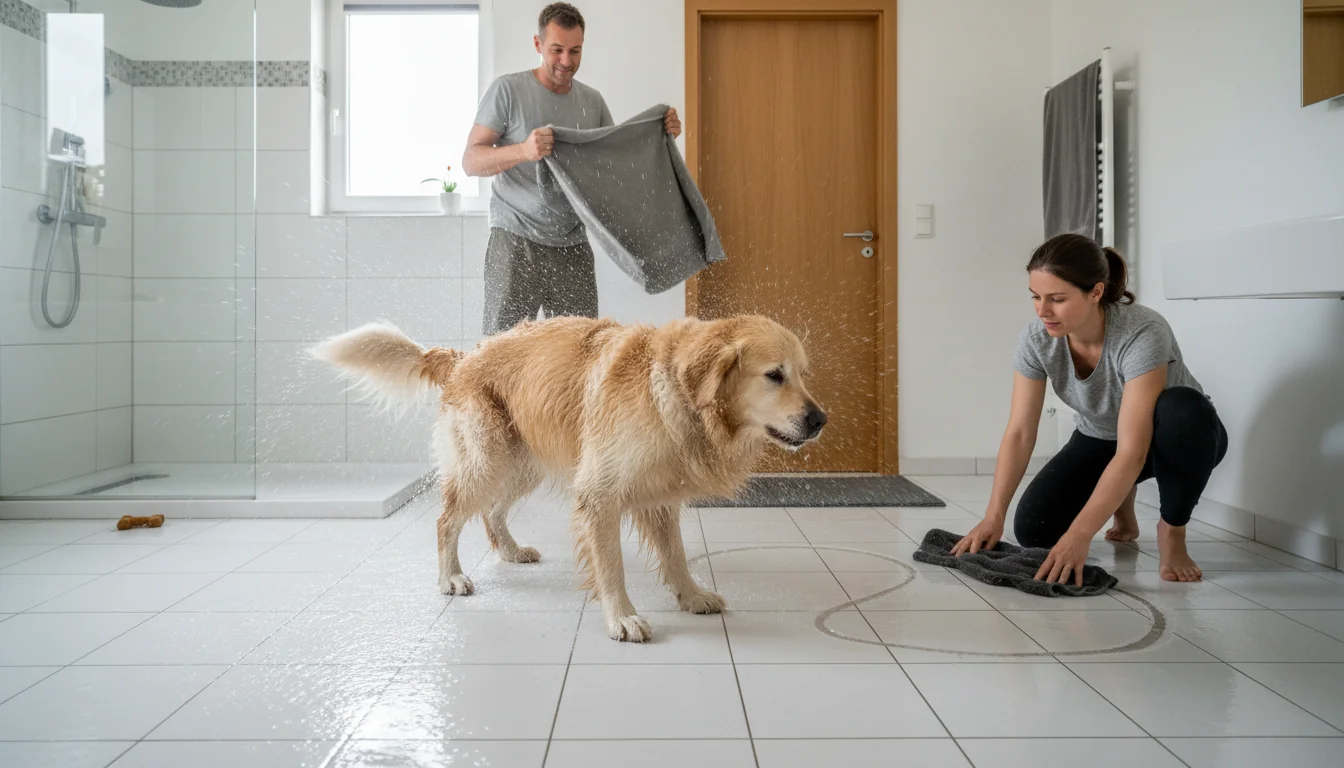
A dog bath spreads water beyond the tub. In the bathroom, combine in-tub traction with an absorbent floor rug to keep wet paws from tracking slick moisture across tiles.
- Chenille microfiber piles are super absorbent and feel soft under bare feet.
- Memory foam cushions well but can dry slower; ensure ample airflow.
- Diatomaceous stone mats dry ultra-fast; place outside the shower for instant water wicking.
- Look for quick-dry construction and vented pads to limit mildew in humid spaces.
- Rotate two rugs so one fully dries while the other is in use.
Place the absorbent rug parallel to the tub edge to catch the first two steps out of the bath—this is where most water lands.
For additional ideas on high-capacity drying in the bath zone, browse this absorbent selection.
Smarter sizing: zones that fit right
Good coverage depends on location. Inside the tub, a long rectangle anchors paws. In a shower stall, keep the center drain clear. On the bathroom floor, size for the landing path.
| Bathroom location | Recommended mat type |
|---|---|
| Inside bathtub | PVC/TPE traction mat with drainage holes and 100+ suction cups |
| Shower stall | Loofah-style mat trimmed to fit; ensure center drain access |
| Floor outside tub | Chenille or stone mat; non-slip backing on tile |
- Measure tub length and mark the drain to avoid blocking it.
- For large dogs, consider extra-long mats to cover front and rear paws at once.
- Leave a 1–2 cm gap around a shower drain to maintain flow.
- Floor rug width should equal the distance of your dog’s first two steps out.
Aligning a mat’s perforations with your drain reduces pooling, which is a common cause of slips in compact bathrooms.
If your washroom is narrow, trim loofah mats with a straightedge so edges sit flush with grout lines.

Right materials: comfort and cleanup
Material choice affects safety, feel, and maintenance in the bathroom. Match in-tub stability with floor comfort to build a complete wet-dog routine.
- PVC or TPE: grippy in wet conditions; ideal for tubs; rinse clean quickly.
- Chenille microfiber: soft, machine washable, high absorption; shake out hair before laundry.
- Memory foam: cushioned; ensure thorough drying to prevent musty odors.
- Diatomaceous stone: ultra-quick dry; best for outside the shower; wipe mineral dust gently.
- Rubberized backings: stable on tile; avoid high heat to prolong adhesion.
Rinse in-tub mats after each bath to remove shampoo film—it restores grip and keeps the surface fresh.
Cleaning cadence in humid rooms: floor rugs weekly, stone mats every few uses, and in-tub traction mats after each session.
Bathroom workflow: calmer bathtime
A calm setup lowers stress for your dog and keeps the bathroom orderly. Prepare the surface, create an exit path, and manage water at every step.
- Inside the tub: traction mat seated firmly; test before turning on water.
- Shampoo, towels, and brush staged within arm’s reach; avoid leaving the stall.
- Exit runner: absorbent rug from tub lip toward the door to catch drips.
- Voice and pace: steady instructions; rinse with a low-pressure stream.
Never place loose towels on tile as a substitute for a mat—towels slide easily when wet.
For bathroom renovations in 2026, consider slightly textured tiles around the tub zone to complement your non-slip mats without trapping grime.

How to set up a wet-dog bath station
- Seat the tub mat: press down across the surface; align with the drain.
- Stage the floor rug: place parallel to the tub lip for a two-step landing.
- Gather tools: cup for rinsing, washcloth, low-suds shampoo, two towels.
- Control flow: gentle water pressure; rinse from neck to tail.
- Dry fully: pat dry on the rug; air out both mats after use.
Trim a loofah mat to clear a center drain, then sand edges lightly for a smooth, snag‑free border.
For a patterned accent that still fits a dog-friendly bathroom, consider a geometric accent option.
Prefer plush underfoot on the exit path? Look at a plush beige chenille rug to create a soft, non-slip landing strip.
Why use a non-slip mat in the bath?
Wet porcelain, acrylic, and tile get slick fast. A bathroom-grade mat adds paw traction, reduces slips, and keeps your footing steady while you rinse and dry your dog.
How does an in-tub mat compare with a floor rug?
In-tub mats prevent sliding while soapy. Floor rugs absorb runoff and stabilize wet paws afterward. Use both to manage safety and water in the same bathroom routine.
What materials are best for dog grooming in a shower?
PVC or TPE traction in the stall, chenille or stone on the floor. For a cozy exit in darker tones, explore this brown chenille piece.
Will a stone mat feel cold underfoot?
Stone dries extremely fast but can feel cooler than textile rugs. Place it where speed matters most, and keep a plush runner nearby for comfort.
How do I maintain mats in a humid washroom?
Rinse in-tub mats after use, machine wash textiles weekly at temperature: 30°C, and air-dry fully. For a fun touch that still grips, try a playful cat motif on the floor.
Can I use anti-slip tape instead of a mat?
Tape improves traction but won’t absorb water and can be harsh on paws. In a bathroom, pair traction in the tub with an absorbent rug outside for safer, cleaner results.
Upkeep rhythm: fresher bath spaces
Consistent care keeps mats gripping and bathrooms odor-free. Build a short, repeatable routine around your dog’s schedule.
- After each bath: Rinse tub mat; hang to drip-dry so water leaves the cups and channels.
- Every week: Machine wash chenille rugs; shake out hair first to protect your washer.
- Monthly: Wipe stone mats; if needed, lightly sand glaze buildup to refresh absorption.
- Check backings: if curling appears, air-dry flat and avoid high heat cycles.
Air-dry upright on hooks or over a bar to speed moisture escape and prevent musty smells in small bathrooms.
If the mat’s top feels slick, it’s often shampoo residue—use warm water and a drop of mild soap, then rinse thoroughly to restore texture.
With the right wet dog non-slip bathroom mat in the tub and a stable, absorbent rug outside, your 2026 bath routine becomes safer and calmer—consider finishing the path with this striped bath rug for clear visual guidance.
- Traction inside: suction or loofah texture to prevent sliding.
- Absorption outside: chenille or stone to manage wet paws.
- Simple upkeep: rinse after use; wash weekly; dry fully.
Set the space once, follow the same flow, and your bathroom will stay tidy, safe, and ready for the next splashy session.
0 comments