


Bamboo Bath Mat


Stepping out of the shower shouldn’t mean stepping into a puddle. A bamboo bath mat solves the two problems that make bathrooms tricky—wet floors and slow drying—by pairing elevated slats with a non-slip base. This platform keeps feet above splash zones, lets water drain, and stabilizes each step.
Compared with fabric rugs, a bamboo bath mat dries faster, resists saturation, and is simpler to wipe clean. That translates into fewer wash cycles, reduced moisture on tile, and a steadier surface when you exit the tub or shower. Below, explore how this mat’s design choices—slatted panels, rubberized feet, water‑resistant coatings—deliver measurable gains in safety, cleanliness, and day‑to‑day ease.
Ready to refine your bathroom routine? Keep reading for sizing guidance, care tips, and expert comparisons to choose the right bamboo bath mat for your space.
The core value of a bamboo bath mat is grip. A rigid platform spreads weight evenly, while non‑slip elements keep the mat in place on tile or stone. Unlike soft rugs that can bunch or slide, this mat acts like a firm step that won’t distort under pressure.
Look for details that improve real-world traction: discreet rubber feet, a slightly textured underside, and a frame that doesn’t flex. On wet mornings, these under-the-radar choices matter more than decorative patterns.
| Grip feature | What it does on a mat |
|---|---|
| Rubberized feet (corner and mid-span) | Anchors the platform on tile, limiting drift under diagonal force when stepping out of shower. |
| Textured underside runners | Increases friction on slightly damp floors without leaving marks. |
| Cross-braced frame geometry | Reduces flex; keeps all slats parallel for even contact and safer footing. |
Place any wooden or bamboo mat on supported bases. Thin RV or acrylic pans can flex; constant point loads may stress them. Test stability dry first, then wet, and verify no rocking occurs across the surface.
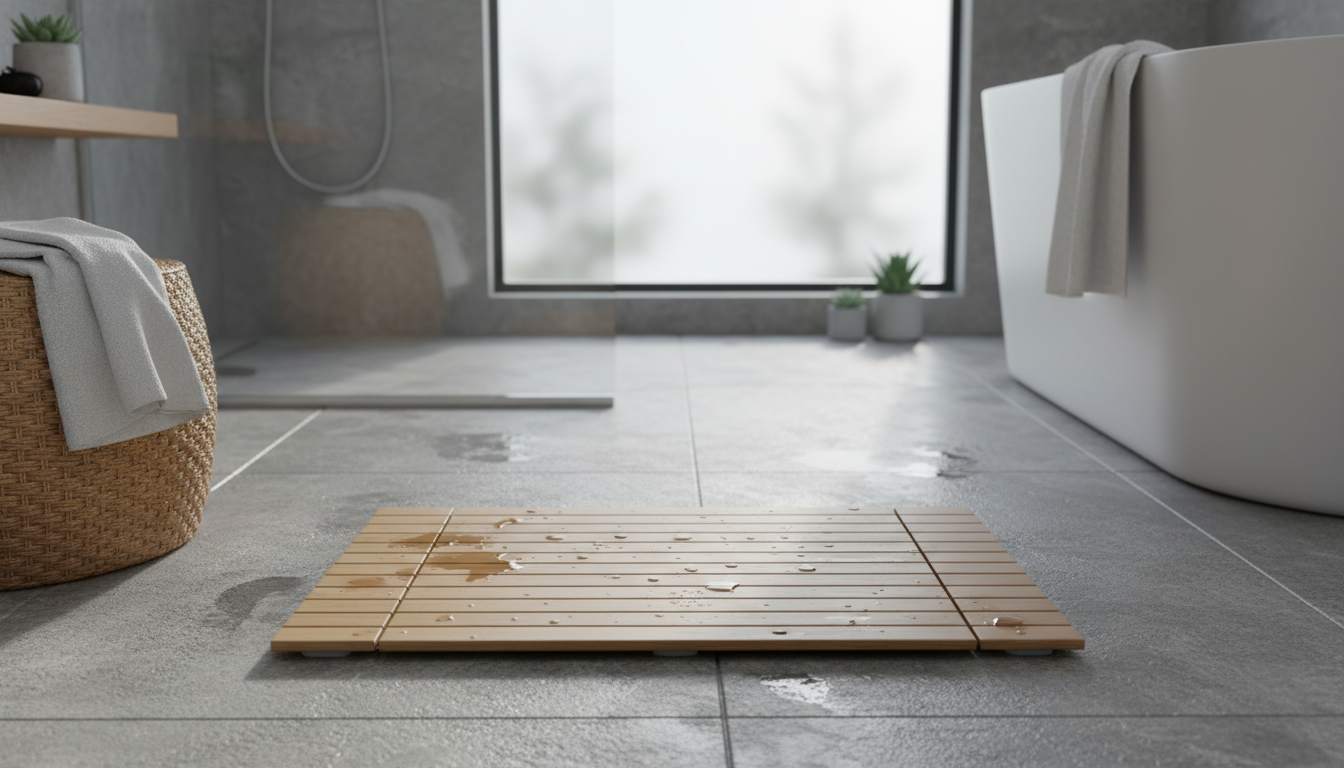
Drying speed distinguishes a bamboo bath mat from textile rugs. Slatted construction lifts your step, letting water escape instantly while air circulates around each strip. The result is quick drying and fewer damp spots underfoot after a shower.
| Surface type | Typical dry-back after shower |
|---|---|
| Bamboo slatted mat (elevated) | Fast; channels and airflow shorten drying windows compared with absorbent rugs. |
| Plush fabric bath rug | Slower; fibers retain moisture, often requiring laundering and machine drying. |
| Solid wood plank pad | Moderate; fewer vents than bamboo strips can extend evaporation time. |
Want to explore alternatives by surface type and pile? See the wider bathroom mat range for additional formats while keeping the slatted platform benefits in mind.
Stand the bamboo bath mat on its long edge after morning use. That simple move adds airflow under the base, doubling evaporation versus leaving it flat on tile.
Coatings and construction choices make a bamboo bath mat resilient in damp environments. Look for sealed or lacquered surfaces that resist swelling, and slats that are kiln-dried to minimize warping. Maintenance is straightforward: wipe, air, repeat.
| Care step for a bamboo mat | Benefit to durability |
|---|---|
| Wipe with a damp cloth weekly; avoid harsh acids | Preserves finish; prevents haze from soap film. |
| Stand upright after daily use | Increases ventilation; reduces moisture dwell time. |
| Inspect pads; keep non‑skid feet intact | Maintains non-slip grip and even contact. |
If you prefer added traction beyond a platform’s pads, consider reviewing the anti-slip range for complementary floor safety near the shower exit.
A bamboo bath mat with elevated design can reduce the contact area with damp tile by more than 80%, which helps surfaces recover faster between showers.
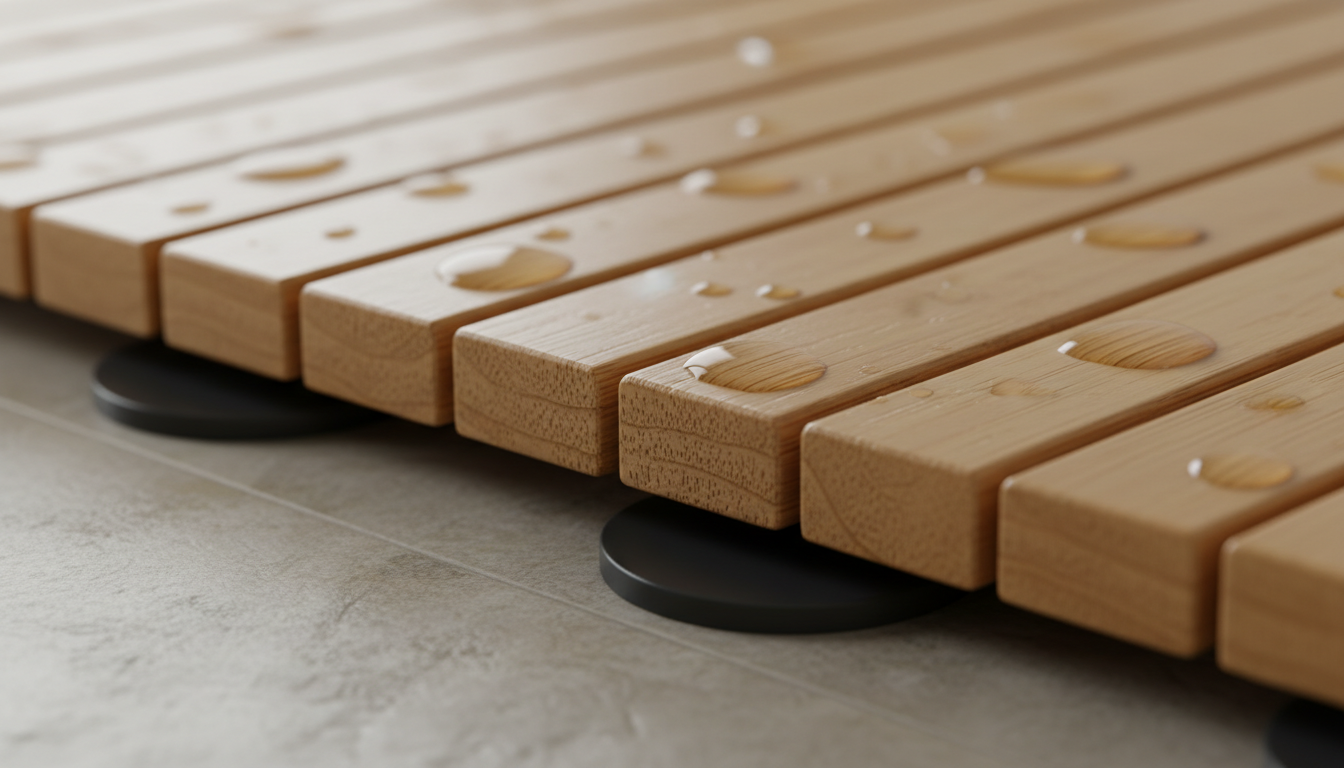
Finish and dimension matter as much as function. Natural tones (light ecru to medium brown) coordinate with stone, porcelain, or painted floors, while darker stains anchor monochrome spaces. Two-tone strips or understated lacquers deliver a clean, spa‑like look without visual clutter.
| Placement for a mat | Recommended dimension & reason |
|---|---|
| Shower exit (single door) | ~24" × 16" to 24" × 18": spans drip zone while staying clear of door swing. |
| Tub step-out (alcove) | 21.3" × 14.2" minimum: aligns with tub length; keeps feet above splash ridge. |
| Vanity line | Larger 24" × 18": catches drips during face-wash, protects high-traffic tile. |
For design-led textures and complementary formats, glance at design-forward bath rugs that can layer nearby while the bamboo bath mat defines the wet zone.

Selecting the right bamboo bath mat starts with measuring your splash zone and matching construction to use patterns (daily showers vs. occasional baths). Consider the points below before you buy.
| Mat format | Best for |
|---|---|
| Rigid slatted platform | Daily shower exits; maximum stability and fastest drying on tile. |
| Roll-up slatted strip mat | Compact storage; outdoor rinse areas; travel or seasonal setups. |
| Foldable panel design | Shared bathrooms; easy stand-up drying and quick closet stowage. |
For a ready-to-place slatted frame that embodies these criteria, consider a slatted bamboo platform sized for the common shower step-out.
If you want the same ventilated concept in another material category, compare it to a wood-based bath platform to see how finish and weight differ from bamboo.
Trending formats include beige “faux bamboo” quick‑dry platforms popular across Home Supplies and Bathroom Supplies listings and social commerce (e.g., TikTok Shop). Evaluate the non-slip design and ventilation first—finish is secondary.
A bamboo bath mat dries rapidly thanks to slats and elevation, while a rug absorbs water and can stay damp. The mat’s ventilated base reduces moisture on tile, and rubberized pads add stability—useful where slip risk is highest, such as shower exits or tub edges.
Compared with other woods, bamboo often weighs less for the same thickness and favors narrow slats for airflow. Many users prefer this for fast drying. If you want to assess a hybrid build, review this bamboo-wood variant for a different feel and finish balance.
Key gains include:
Yes—by poolside showers, saunas, or beach rinse stations, a bamboo bath mat’s slats and water-resistant finish work well. Dry it between sessions and store indoors. For darker palettes in shaded patios, see a dark-toned bamboo option that hides outdoor scuffs.
Wipe with a mild detergent and a soft cloth; avoid harsh acids. Stand the mat upright after use to ventilate. Inspect pads and replace if worn. For an easy‑care reference specimen, check this bamboo floor mat and mirror its simple routine.
Beige “faux bamboo” mats can emulate the linear look while using composite slats. Evaluate them like any platform: slat spacing, non-slip base, water-resistance, and weight distribution. If grip and ventilation check out, they can be an aesthetic choice alongside natural bamboo.
A bamboo bath mat isn’t just a floor accent; it’s a functional platform engineered for wet zones. Elevated slats drain water, the base grips tile, and sealed finishes simplify care. If you’re ready to refine your routine with a clean, spa‑like step-out, explore this bamboo floor mat to anchor the splash zone with certainty.


