


Black Bath Mat


Water gathers where you step out—at the tub edge, by the shower threshold, and in front of the sink. That’s exactly where a black bath mat earns its place: compact, grippy, and made to drink up splash zones. Unlike broad rugs, the mat targets high-moisture footprints, boosting surface traction and keeping floors drier where slips start.
A focused mat in deep black brings two measurable gains: non-slip stability at critical stepping points and quick-dry response that shortens the window for dampness. The result is fewer wet patches, cleaner transitions, and a cleaner line under fixtures—without crowding your bathroom layout.
Read on for sizing clarity, backing options, fiber choices, and maintenance built around the mat itself—what it grips, what it absorbs, and how it holds color. Then refine your setup with practical tables, care notes, and expert comparisons.
A mat is a purpose-built safety and drying pad designed for the step-off zone. Its footprint concentrates rubber backing or high-friction textures where feet land, delivering a firmer hold than broader rugs that spread traction across low-moisture areas. This smaller format also speeds up drying, as less surface needs to release water vapor.
| Criterion | Mat vs. Rug vs. Runner |
|---|---|
| Primary purpose | Mat: safety and drying at the landing zone. Rug: comfort and decor over a larger area. Runner: long paths in front of double vanities or long baths. |
| Slip resistance | Mat holds firm thanks to concentrated backing; rugs vary; runners may shift if not anchored. |
| Drying speed | Mat dries faster due to smaller surface and airflow under edges; large rugs retain moisture longer. |
| Best placement | Mat: tub/shower exit or sink front. Rug: broad floor area. Runner: long walls or double sinks. |
If water pools near the drain side of your tub, align the mat’s long edge a few centimeters under the rim. This channels drips into the pile instead of onto tile grout lines.
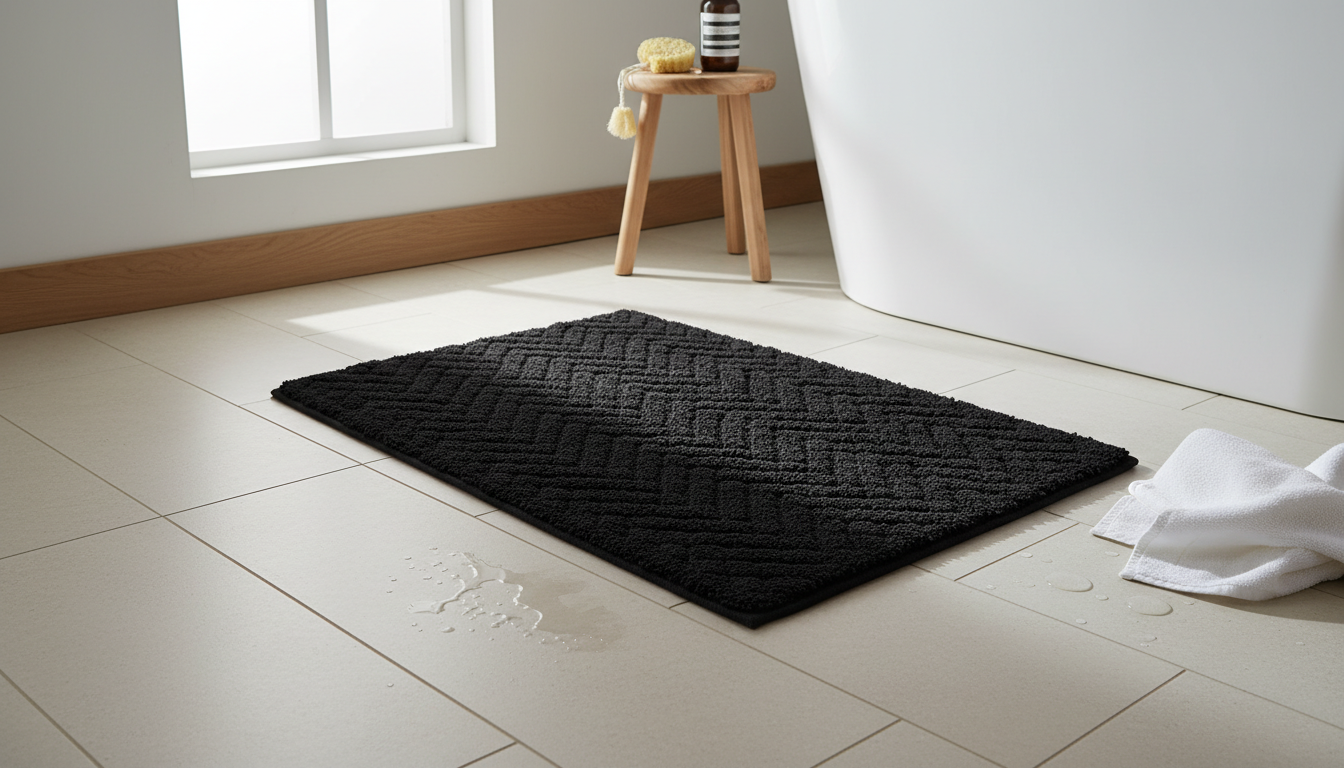
Absorbency and drying time depend on fiber, weight, and base. Cotton terry and chenille microfiber sip up splash quickly; memory-foam styles cushion steps and hold warmth. For a mat, look for a balanced pile that absorbs fast yet releases moisture promptly to avoid a damp feel at the next shower.
| Material/Back | Drying + Care Notes |
|---|---|
| Cotton terry + TPR | Fast wash, moderate dry time; reliable grip on tile; suitable for heated floors below 27°C. |
| Chenille microfiber + latex | Lightweight and quick to dry; vacuum-friendly pile; wash in a mesh bag to protect fibers. |
| Foam core + PVC | Ultra-soft step; air-dry flat to prevent base curl; avoid high heat to preserve structure. |
If you want even more emphasis on soaking power across similar formats, explore the absorbent bath range here: absorbent bath range. Use these as complements where greater water pickup is needed beyond the single landing zone that a mat covers best.
Independent textile standards such as OEKO-TEX 100 help ensure every component—from loops to thread—meets strict chemical criteria, a relevant plus for mats used barefoot daily.
Black localizes visual weight exactly where the mat sits. In a light bathroom, that contrast anchors the tub edge or sink, reading as a crisp base under chrome or matte fixtures. Where a large rug might dominate, the compact mat delivers the same graphic clarity with less coverage.
If you are weighing a broader decorative field versus the concentrated footprint of a mat, compare with this wider bathroom rugs range: bathroom rugs range. It’s a useful reference when deciding how much floor area should carry black versus staying open.
"Switching from a wide rug to a focused mat clarified the sightlines and kept the tub exit safer without adding clutter."
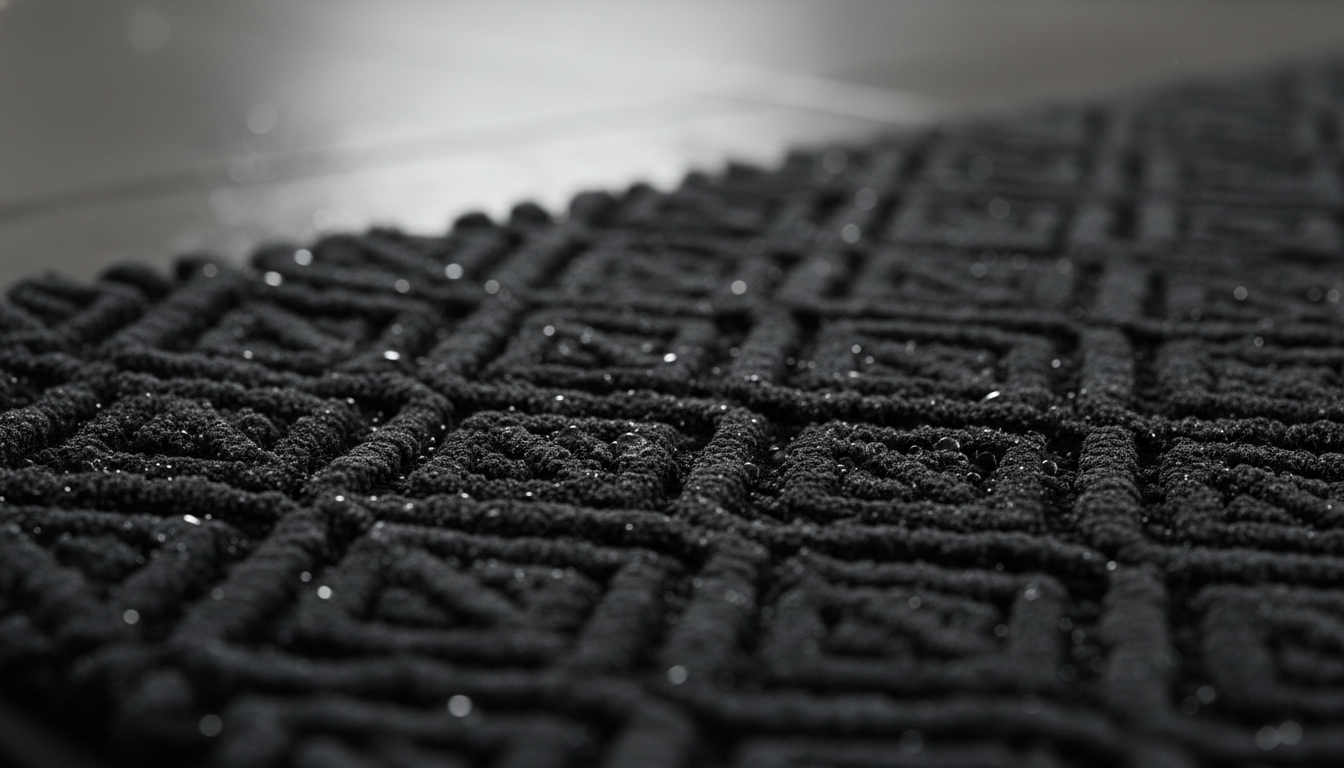
Correct sizing is what separates a mat from a rug or runner. A mat should mirror the width of the fixture it serves, leaving a slim margin at each edge for airflow. That spare geometry enhances both drying speed and perceived order in tight bathrooms.
| Common Mat Size | Best Placement & Notes |
|---|---|
| 17" x 24" (43 x 61 cm) | Compact tubs, shower stalls; slip neatly in front of a narrow pedestal sink. |
| 20" x 32" (51 x 81 cm) | Most-used format for standard tubs and vanities; balances absorption and free floor area. |
| 24" x 36" (61 x 91 cm) | Wider enclosures or soaking tubs; leaves a 2–5 cm reveal at each side for a tailored look. |
| 20" x 60" (51 x 152 cm) | Runner-style mat for long wall-to-wall sinks; consider anti-curl corners for door clearance. |
Balancing dark and light? Review contrasting options here: white bath options. Pair a black mat at the tub with a lighter companion at the sink to define zones without visual overload.
Avoid oil-based cleaners on the floor under the mat; residues can undermine non-slip grip. Clean hard floors with a neutral pH solution, rinse well, and fully dry before placing the mat back.
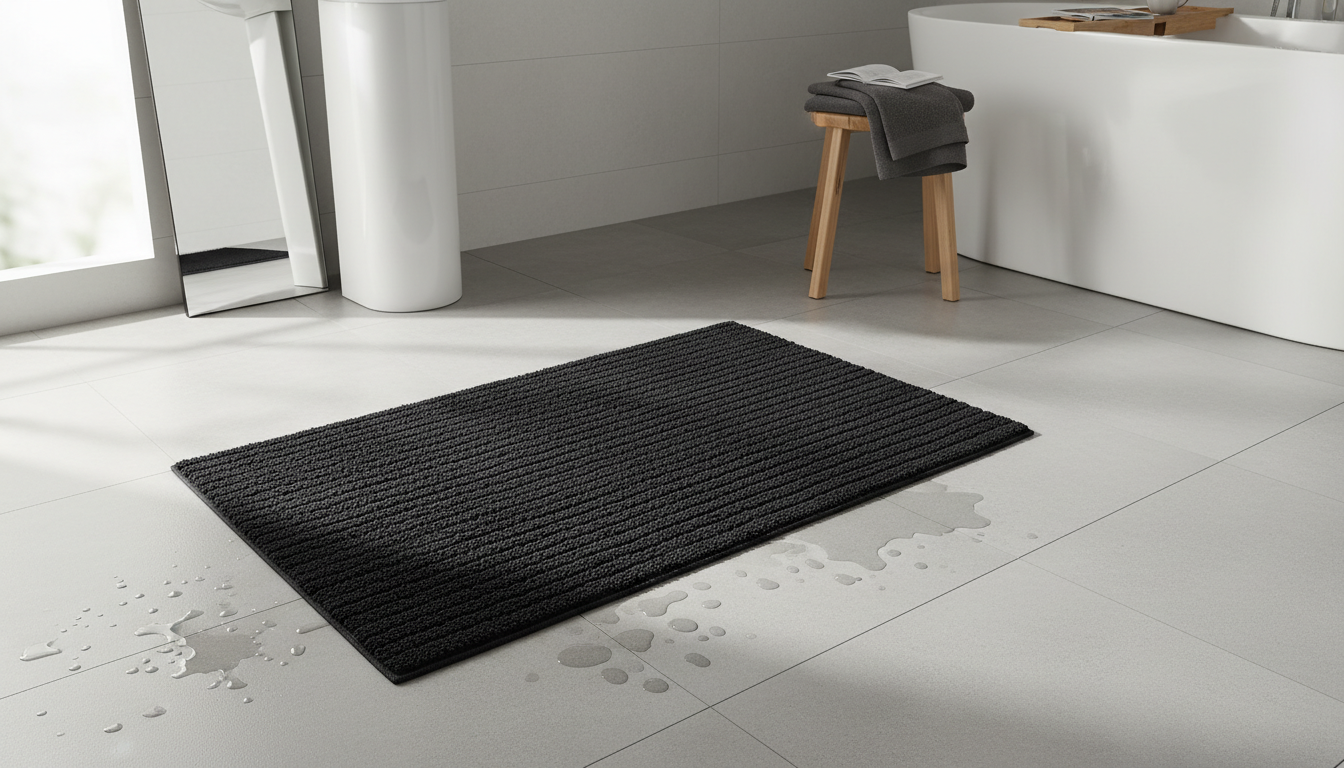
Selecting a mat is about fit, traction, and drying—right where water falls. Start with the landing zone, then confirm backing type and pile construction. Shape and color nuance come next, with black offering precise edges and welcome contrast.
If you want a bolder graphic within the same format, consider this patterned black option that stays squarely in the mat category: patterned black option. It keeps the compact footprint while adding texture and visual rhythm.
For crisp contrast at the tub edge without moving up to a full rug, a two-tone piece is a strong choice: two-tone bath mat. The print breaks up water marks and frames the stepping area clearly.
A mat should solve for step-off safety and local moisture first; decor only matters once the landing zone is locked in.
A mat targets the high-risk, high-drip area, delivering localized grip and faster drying. A larger rug spreads material where it isn’t needed, holding more moisture. The compact format also lifts and washes more easily, encouraging frequent cleaning without filling up the machine.
Runners span long vanities but can reduce airflow and take longer to dry. A black mat anchors the tub or shower exit, where traction matters most. If you want added contrast across the same compact format, explore a graphic option here: graphic black-and-white design.
Backings increase friction on tile or stone, improving stability under wet feet. TPR excels in firm hold and wash durability; latex offers greater flexibility. Both reduce lateral slip compared with loose-woven pads. Always dry the floor fully before placing the mat to maximize grip.
Black conceals minor splash marks better than pale shades, yet lint or soap residue may show. Choose looped terry or patterned textures to break up residue visually, such as this balanced monochrome piece: black–white–gray piece. Regular vacuuming between washes keeps the pile crisp.
Only if it’s a dedicated tub mat with suction cups and drainage channels. Standard floor mats are for outside-the-tub use. For in-tub grip, pick a model tested for submerged areas and clean it weekly to prevent buildup beneath the suction zones.
Wash cool with similar colors; avoid bleach. Use mild detergent and minimize fabric softener, which can coat fibers and reduce absorbent pile. Tumble low or line-dry to protect backing integrity. Shake out after each shower and hang over a bar for airflow.
A black bath mat is a precision tool: compact coverage, non-slip base, and fast moisture control where it matters most. It frames the step-off point, clarifies the layout, and washes on a simpler schedule than larger rugs—all while sharpening contrast under pale fixtures.
If you prefer a crisp graphic within the same format, consider a check motif that preserves compact control: checkerboard black and white mat. To refine your setup further, alternate a dark mat at the tub with a lighter counterpart at the sink for balanced zones.


