


Brown Bath Mat


Slippery tiles, cold floors, and visual clutter can turn a simple rinse into a daily hassle. A brown bath mat addresses those pain points with one decisive move: it grounds the room, softens each step, and adds stable traction right where water collects. Beyond comfort, the mat’s earthy tone reduces visual noise, pairing calmly with ceramics, stone, or painted walls.
Choose a brown bath mat for measurable benefits: better underfoot grip, efficient absorbency, and color that conceals lint more gracefully than pale textiles. In the sections below, discover how this mat’s tone, texture, and backing work together, how to size it precisely, and how to care for it so it lasts. Ready to refine your bathroom’s footing and feel? Start with the mat.
Brown is uniquely practical for a bath mat because it absorbs visual contrast from grout lines and hardware while echoing natural materials like wood and stone. Where lighter textiles highlight every splash, a brown surface feels balanced and hides micro‑lint, letting the mat look composed between washes.
Unlike multi‑color rugs, a single‑tone brown bath mat sharpens focus on form and function: the edge binding, pile height, and backing. That clarity makes the layout more intentional and the floor safer, especially in front of the vanity and shower curb.
| Brown shade | Pairs with | Visual effect on the mat |
|---|---|---|
| Light cocoa | White subway tile, brushed steel, pale oak | Softens contrast; airy yet grounded underfoot |
| Mid mocha | Beige stone, cream walls, sand‑tone towels | Balanced warmth; conceals lint and minor drips |
| Deep espresso | Matte black hardware, walnut, charcoal grout | High definition; crisp outline and sleek presence |
Switching from pale textiles to a brown mat can reduce perceived floor glare by up to 20% under warm white lighting, making edges and thresholds easier to read at a glance.
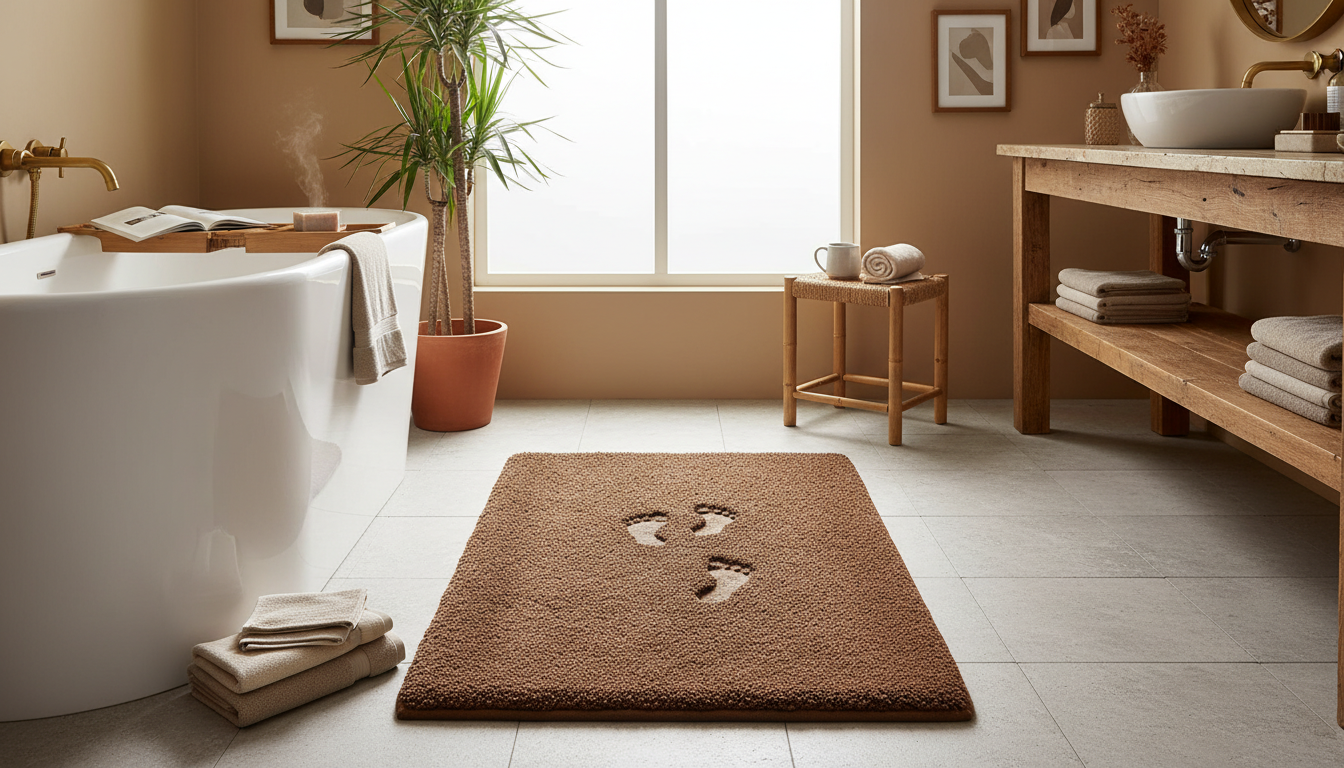
In front of the shower and tub, the mat’s backing matters as much as its pile. A brown bath mat with a textured rubber or TPR underside resists lateral movement when you pivot or towel off, while the pile absorbs drips to limit puddles that cause skids.
| Backing type | Grip on tile | Care notes |
|---|---|---|
| Rubber (patterned) | High traction when dry and clean | Machine wash cold; avoid high heat to prevent hardening |
| TPR (thermo‑plastic rubber) | Consistent grip; flexible in thin profiles | Air dry flat; keeps elasticity over time |
| Latex blend | Good stability on porcelain floors | Spot clean; verify sensitivity if household has latex concerns |
If splashes are frequent, prioritize pile that absorbs quickly and a base that resists suction rings. For high‑traffic rooms, browse absorbent options to pair traction with faster moisture uptake in front of the shower door.
For the mat to perform, the floor beneath must be dry and free of soap residue. Wipe the area once a week; residues can reduce grip on smooth tiles.
The pile’s construction determines how effectively the mat drinks up water and how fast it releases moisture. Brown terry cotton in the 900–1500 gsm range delivers substantial uptake and a cushioned feel; microfiber dries fast and hides color variation well; memory foam pads the foot but needs airflow to stay fresh.
| Material | Typical density/feel | Drying & care |
|---|---|---|
| Cotton terry (brown shades) | Thick loops, plush hand, stable drape | Machine wash warm; tumble low; shake to re‑loft loops |
| Microfiber pile (solid brown) | Velvety surface; efficient uptake for its weight | Fast drying; wash cold to preserve nap |
| Memory foam core, knit top (brown) | Cushioned landing; uniform color appearance | Air out after use; spot clean; confirm machine‑wash spec |
Look for independently tested dyes and low‑lint weaves. Darker brown mats show water marks less than pale textiles, but consistent washing keeps the pile clean and the absorbent core working as intended. If you’re coordinating beyond the floor, explore the wider bathroom range to match towels and accessories by tone rather than exact shade.
Spin at 800–1000 rpm to protect backing adhesion. Higher speeds can crease rubber layers and shorten the mat’s service life.
“A brown bath mat is more forgiving than pale pile. It stays looking composed longer between laundry days, especially around busy morning routines.”
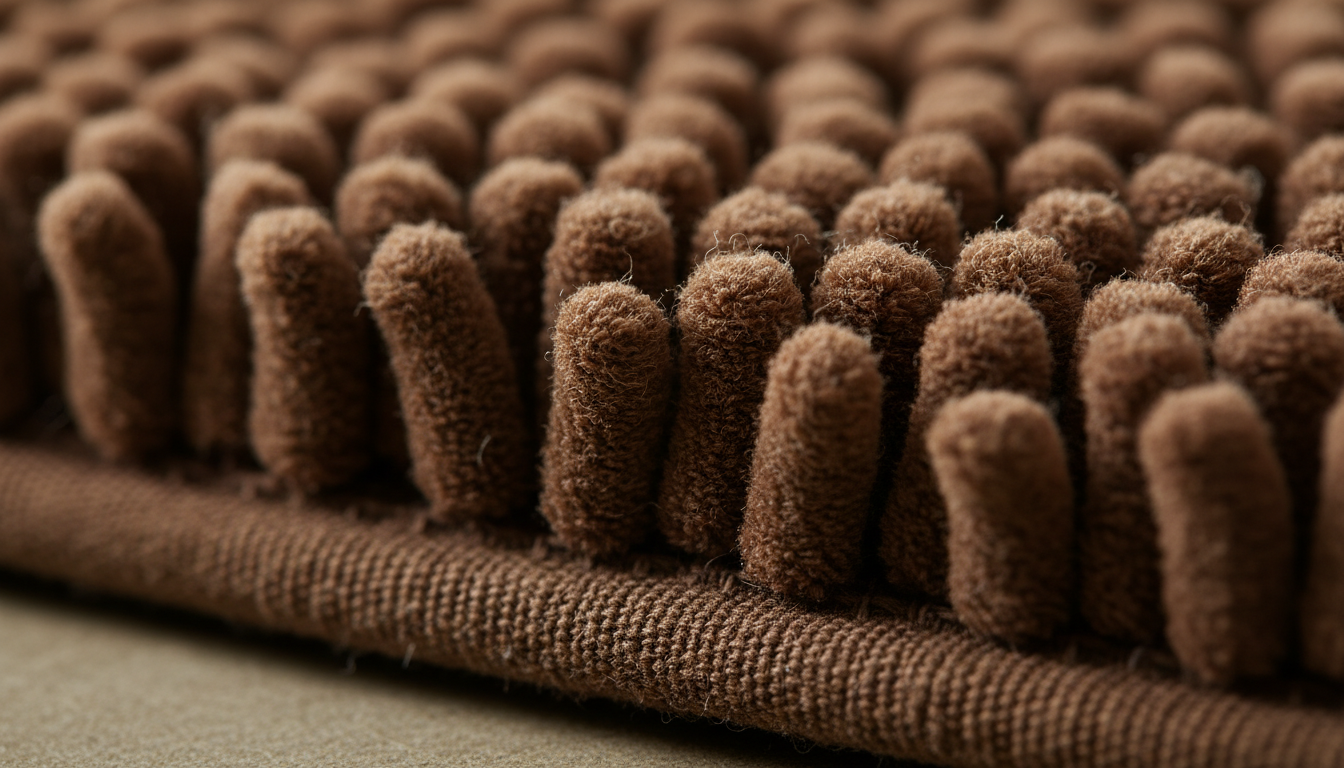
Sizing a mat is about covering the splash path without interrupting door swings or vent airflow. Standard single pieces run 17×24, 20×32, and 24×36 inches; runners (17×47 or longer) suit galley bathrooms. Brown reads slimmer than light colors, so a slightly larger footprint still feels tidy.
| Placement for the mat | Recommended size range | Why this works |
|---|---|---|
| Front of shower curb | 17×24 to 20×32 | Splash capture without blocking door arc |
| Tub apron zone | 20×32 to 24×36 | Wider stance; safer pivot after stepping out |
| Double vanity run | 17×47+ runner | Continuous cushion; uniform brown tone across sinks |
If you need a lighter partner to balance dark cabinetry, consider neutral grey options alongside the brown mat—this contrast can guide foot traffic while preserving warmth where it matters most.

Prioritize what you feel underfoot and how the mat behaves after each shower. Use these criteria to decide quickly and confidently.
| Use case | Mat spec to target |
|---|---|
| Low‑ventilation bathroom | Microfiber brown mat; quick‑dry, thin profile, vented backing |
| Family rush hour | High‑gsm terry with rubber base; 20×32 or larger at tub |
| Long galley layout | Brown runner (17×47+); channel backing for even grip |
Prefer a deeper hue? See this deep chocolate tone for a crisp outline against pale tile without overwhelming the room.
A brown bath mat visually anchors the floor, hides lint and minor drips, and reads warmer under most lighting. It pairs easily with stone, wood tones, and matte fixtures, making the space feel composed between washes while delivering the same grip and absorbency you expect from a quality mat.
Single‑tone mats reduce visual clutter and make slip risks easier to spot than busy patterns. A brown surface keeps attention on secure footing and water control. If you want texture without prints, consider a looped or tufted chenille variant that adds dimension while staying color‑solid.
Benefits concentrate on three areas:
Not if you balance it. Keep walls and towels lighter so the mat defines the wet zone, not the whole room. For bathrooms with black fixtures, a darker shade can sharpen lines while still reading warm against glossy tile.
Wash cold or warm with mild detergents; avoid bleach. Tumble low or air dry flat to protect the backing. Shake to re‑loft the pile. For extra softness underfoot, a soft chenille pick benefits from a quick brush after drying to realign fibers.
Yes—check the backing’s heat tolerance first. Many rubber and TPR bases handle gentle radiant warmth; keep the surface temperature moderate and use a thin profile for efficient transfer. Rotate the mat weekly to distribute wear and keep even contact with the floor.
A brown bath mat unites warm tone, confident traction, and low‑maintenance care in one purposeful piece. Choose the density that fits your routine, the backing that grips your tile, and the size that cleanly covers the splash path. For a tactile, natural look that echoes wood accents, see this wood‑look mat.
If you want to complement the scheme further, coordinate by tone (not exact shade), and keep the mat’s role clear: absorb water, stabilize steps, and visually anchor the room. That is how a simple brown mat elevates comfort, safety, and daily ease.


