


Gray Bath Mat


Wet floors, dim morning light, and busy routines create a tricky moment right after the shower. A gray bath mat solves this daily problem with measured traction, controlled absorbency, and a tone that quietly anchors the room. Unlike generic bathroom rugs, a dedicated mat is engineered for the splash zone: denser pile where it matters, secure backing underfoot, and edges that resist curling.
Choose this neutral surface to gain sure footing and quick-dry comfort without visual noise. From soft pewter to deeper charcoal, the color keeps lint discreet and pairs effortlessly with towels and shower curtains. Keep reading to compare materials, sizes, and care methods specific to the mat format—and find a Gray Bath Mat that performs as well as it looks.
A mat is purpose-built for post-shower steps. Where a decorative bathroom rug emphasizes pattern, the mat prioritizes non-slip grip, water control, and a stable profile that resists rucking. The gray palette adds functional benefits too: it reduces glare on glossy tile and helps you visually place your feet on a defined landing zone.
| Mat surface | Underfoot feel / Grip / Dry time |
|---|---|
| Cotton loop (light to medium gray) | Natural touch; reliable traction with dot backing; moderate drying, great for daily rotation |
| Microfiber chenille (smoky gray) | Plush cushioning; strong contact grip; quicker moisture release than cotton when pile is spaced |
| Memory foam (whisper gray) | Contoured support; needs a quality backing to avoid slip; dries slower, rotate to prevent saturation |
| Stone-like composite (pewter) | Quick-dry surface feel; firm footing; excels at high-humidity drying cycles |
“A mat differs from a decorative rug by design: it’s tuned for splash, grip, and predictable drying—right where you step, every single day.”
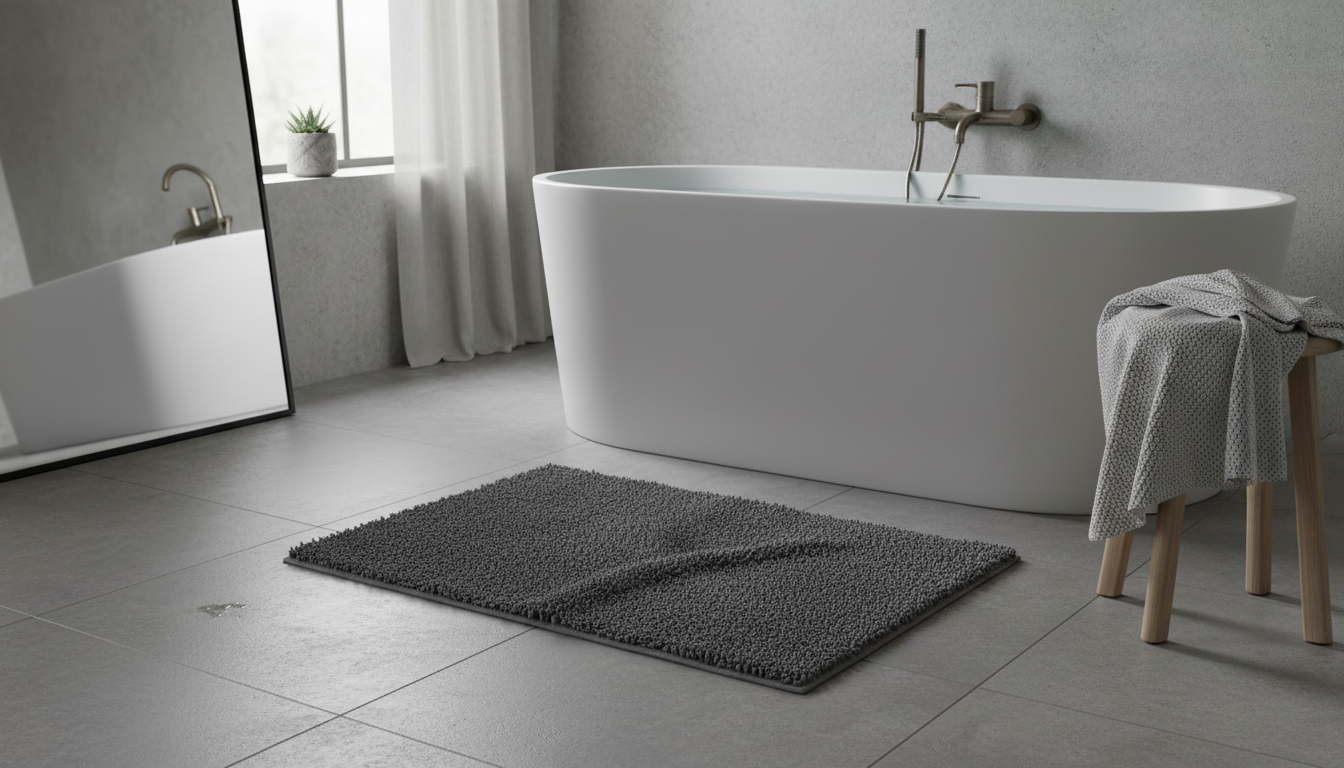
Gray supports the function of a mat in subtle ways that color theory can measure. Lighter silver reflects ambient light, illuminating a safe landing; deeper charcoal frames a precise target for your feet. Both temper visual clutter—vital when a mat sits inches from a busy shower curtain or patterned tile.
| Gray nuance (LRV guide) | Best use and visual effect |
|---|---|
| Light gray / silver (LRV 55–65) | Brightens low-light bathrooms; pairs with white towels; hides water rings better than pure white |
| Medium gray (LRV 35–45) | Balances contrast near chrome fixtures; reduces glare; minimizes footprints between washes |
| Dark charcoal (LRV 15–25) | Low-lint appearance in high-traffic settings; crisply outlines a landing zone on pale floors |
| Pewter gray (LRV 30–40) | Pairs with brushed nickel; excellent with stone-look tile; sophisticated, not cold |
If constant splash is your reality, consider an absorbency-first family of mats. See the absorbent range here: the high-soak selection.
The mat’s footprint dictates safety as much as style. Aim to cover the full step-out path yet avoid door interference. Typical rectangles near the “2x3” class (about 20 x 34 inches) suit most bathtubs, while compact 17 x 24 formats anchor pedestal sinks and powder rooms.
| Mat size (inches) | Best placement and notes |
|---|---|
| 17 x 24 | Sink or shower threshold; minimal door sweep needed; quick to wash and hang to dry |
| 20 x 34 | Bathtub exit; generous toe-off area; ensure secure backing across full width |
| 24 x 40 | Double-vanity run; check door clearance; rotate to promote even drying |
| Runner (22 x 60+) | Galley bath; continuous landing; verify anti-slip performance along entire length |
Warm accents emphasize gray’s neutrality. If you need a second mat in a guest bath with wood cabinetry, explore brown-toned counterparts to add contrast while keeping the format strictly mat-focused.

Because a mat lives at the splash line, care routines are different from a general rug. Maintenance safeguards traction, color, and softness while preventing trapped moisture.
| Material | Care guidance (bath mat–specific) |
|---|---|
| Cotton (tufted or looped) | Wash cold with mild detergent; tumble low or hang to dry to preserve backing adhesion |
| Microfiber chenille | Machine wash gentle; shake to fluff; hang to dry if backing is heat-sensitive; avoid fabric softener |
| Memory foam core | Spot clean between washes; air dry fully; never high heat, which can warp the foam or weaken grip |
| Stone-like composite | Rinse and stand on edge for airflow; occasional light sanding refreshes the quick-dry surface |
If your bathroom floor is ultra-smooth, test the mat’s grip with wet feet before full use. For contrast-heavy designs or small spaces, a black option in the same size can frame the landing zone; compare with deep-toned alternatives while keeping the mat format constant.

Use this checklist to select a mat that fits your floor plan, light level, and drying routine.
| Criterion | Mat-specific recommendation |
|---|---|
| Light-challenged bathroom | Pick light gray/silver with a subtle rib or woven dot to reflect light and define the landing |
| High splash zone | Microfiber chenille or stone-like surfaces for faster drying cycles between showers |
| Foot comfort priority | Memory foam cushioning with a dense anti-slip base; rotate to dry thoroughly |
For compact spaces that need lift and clarity, a pale gray option can brighten the floor line without glare; explore a subtly toned piece such as a light-gray bath surface to prove the effect next to white or chrome fixtures.
If you prefer a softer silver with gentle warmth, a pearl-toned mat bridges cool tile and beige towels; see a pearl gray choice for color matching against brushed-nickel hardware.
Place the mat’s long edge parallel to the tub for a wider toe-off area; in narrow baths, rotate vertically and verify that the door skims freely.
Gray gives a mat practical advantages: it softens reflections on glossy floors, hides lint more gracefully than white, and offers visual contrast against pale tile for safer foot placement. The neutrality also supports easy pairing with towels and shower curtains across seasons.
A mat is optimized for wet zones—think anti-slip backing, controlled pile, and edges that resist curl—whereas many rugs prioritize pattern and loft. If you want a darker anchor for strong contrast, consider a deep-tone variant such as a charcoal-grade mat instead of a decorative rug near the tub.
The mat provides predictable grip, a defined landing zone, and reliable drying across repeated showers. Sizes map to real paths (17 x 24 for sinks, 20 x 34 for tubs), and backings are engineered for wet tile. Materials—cotton, chenille, foam, or stone-like—let you tune softness and dry time precisely.
Yes—choose a medium-to-dark gray for clear visual boundaries and prioritize traction. For shower entries, pair the bath mat with a dedicated safety piece such as a slip-resistant shower mat, ensuring both pieces use compatible non-slip bases for the floor type.
Follow labels, but as a rule: use cold or warm water with mild detergent, avoid bleach on colored fibers, and prefer air drying for sensitive backings. If tumble-drying, choose low heat. Standing the mat on edge for airflow speeds the process and preserves non-slip stability.
A 24 x 40 rectangle or a runner offers continuous coverage along the vanity line. Keep at least 2–3 inches from cabinet bases for airflow, and verify door sweep clearance before committing to a memory-foam core.
A Gray Bath Mat unites stable traction, controlled absorbency, and a tone that works hard in real bathrooms. Choose the surface tech for your splash zone, match the size to your step-out path, and set a routine that keeps grip and color consistent. If you prefer a brighter landing field, compare a lighter gray bath mat to frame the floor with calm precision.


