


Luxury Bath Mat


Water on tile is unforgiving. Step out of the bath or shower without the right mat and you invite slips, puddles, and discomfort. A luxury bath mat solves that tangible problem with high absorbency, secure footing, and a soft landing every single day. Unlike broader bathroom rugs, the mat lives at the splash zone—right by the tub, shower, or sink—where performance matters most.
This page is devoted to that specific format: the bath mat. We translate fiber science, pile density (GSM), and backing technology into clear choices so you can match your space, your routines, and your maintenance preferences. Expect practical comparisons, measurable benefits, and design notes that keep the focus on the mat’s role in your bathroom.
Scroll on to evaluate absorbency ratings, non-slip construction, quick-dry behavior, and size guidance for a truly refined mat setup—then choose with clarity.
A mat concentrates its performance under the feet that matter most—yours—right at the wettest points. Compared with broader bathroom rugs, a mat’s tighter footprint funnels investment into water-shedding surface and non-slip backing, translating to genuine day-to-day safety and comfort.
Use this comparison as a benchmark. Actual performance varies with yarn quality, construction, and mat thickness.
| Mat surface | Typical absorption (g water/g fabric) |
|---|---|
| Long-staple cotton terry | 3.0–4.0 |
| Chenille microfiber | 3.5–4.5 |
| Woven cotton (flat) | 2.0–3.0 |
| Diatomite stone mat (hard) | 1.0–1.5 (evaporative) |
Place the mat so your first step off the tub lands fully within its footprint. A 2–3 cm overlap beyond tile grout lines improves stability and keeps water localized.
“A bath mat may be compact, but in a wet zone it carries an outsized share of comfort, cleanliness, and safety.”
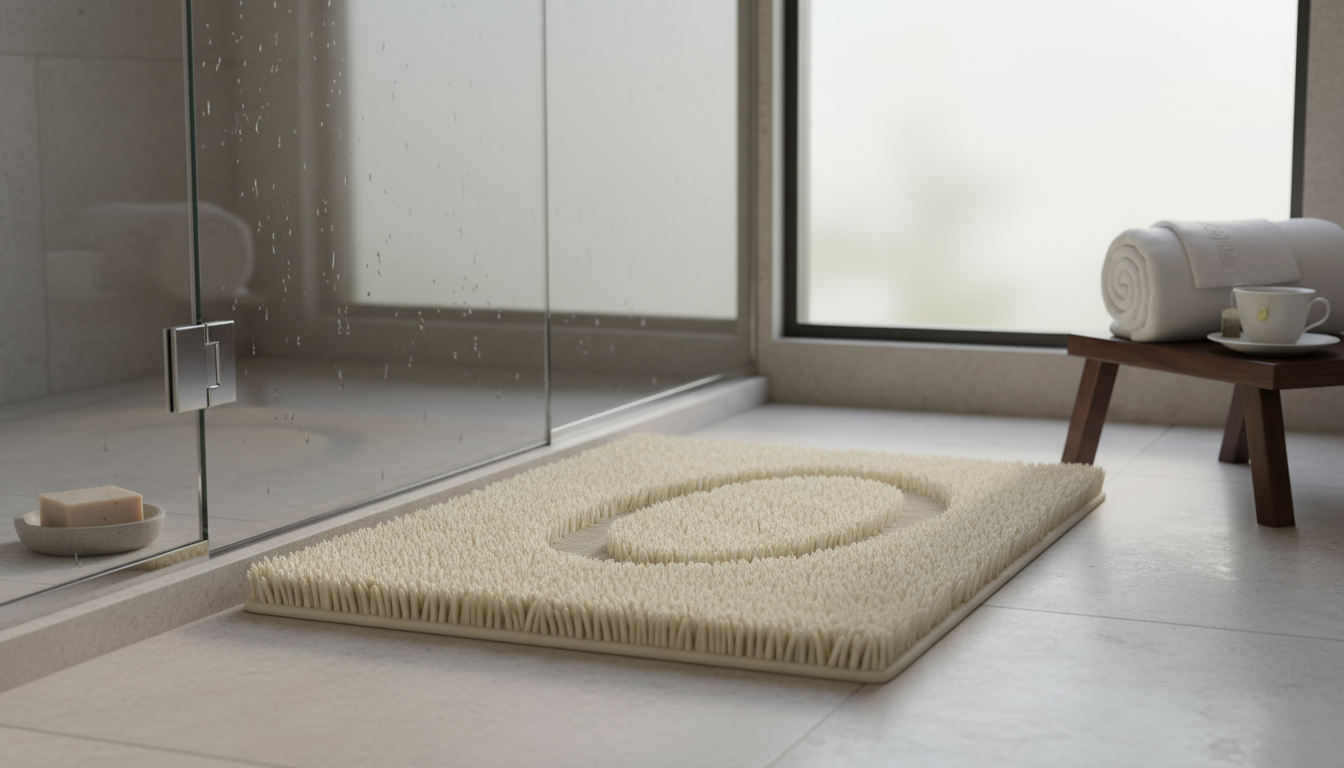
The fiber and pile structure define how a mat drinks water and dries between uses. Long-staple cotton terry, chenille microfiber, flat weaves, and hard-surface diatomite each respond differently to spray, humidity, and daily traffic. Here’s how to read the construction so you pick the right density and quick-dry loops for your climate and routine.
| Construction | GSM / thickness guide |
|---|---|
| Cotton terry (looped) | 400–700 g/m² (lighter, faster-dry) | 800–2000 g/m² (cushioned) |
| Chenille microfiber (tufted) | Medium pile with plush loft; foam core optional for extra cushion |
| Flat-woven cotton (low pile) | Low profile; excellent door clearance; fast laundering |
| Diatomite (stone) | Rigid 0.9–1.2 cm slab; evaporative “self-dry” surface |
Edge binding does more than look tidy; it stabilizes the mat shape, reduces fray, and helps prevent corners from rolling after repeated washes.
If your priority is superior splash control in front of a shower, explore an absorbent bath range to compare dense loops and chenille thickness against your drying conditions.
Unlike larger bathroom rugs that carry aesthetic presence across the floor, a mat is sized to intercept water at a precise point. That precision guides measurements and placement around tub, shower, and vanity. Keep the footprint focused and the edges flat for low-profile thickness that never snags under doors.
| Fixture / zone | Suggested mat size and notes |
|---|---|
| Shower entrance | 20×30 in; choose faster-dry terry or chenille for frequent use |
| Freestanding tub | 24×36 in; higher GSM for cushioned step-out, non-slip backing essential |
| Double vanity | Two mats 20×30 in each; spacing aligned to sinks for balanced symmetry |
If a mat catches on a door sweep, move to a flatter construction or reduce GSM; a snagging edge shortens product life and can become a trip hazard.
Planning a cohesive floor plan across sink and tub zones? Consider broader bathroom-floor collections to pair a precise mat near water with a complementary rug elsewhere.
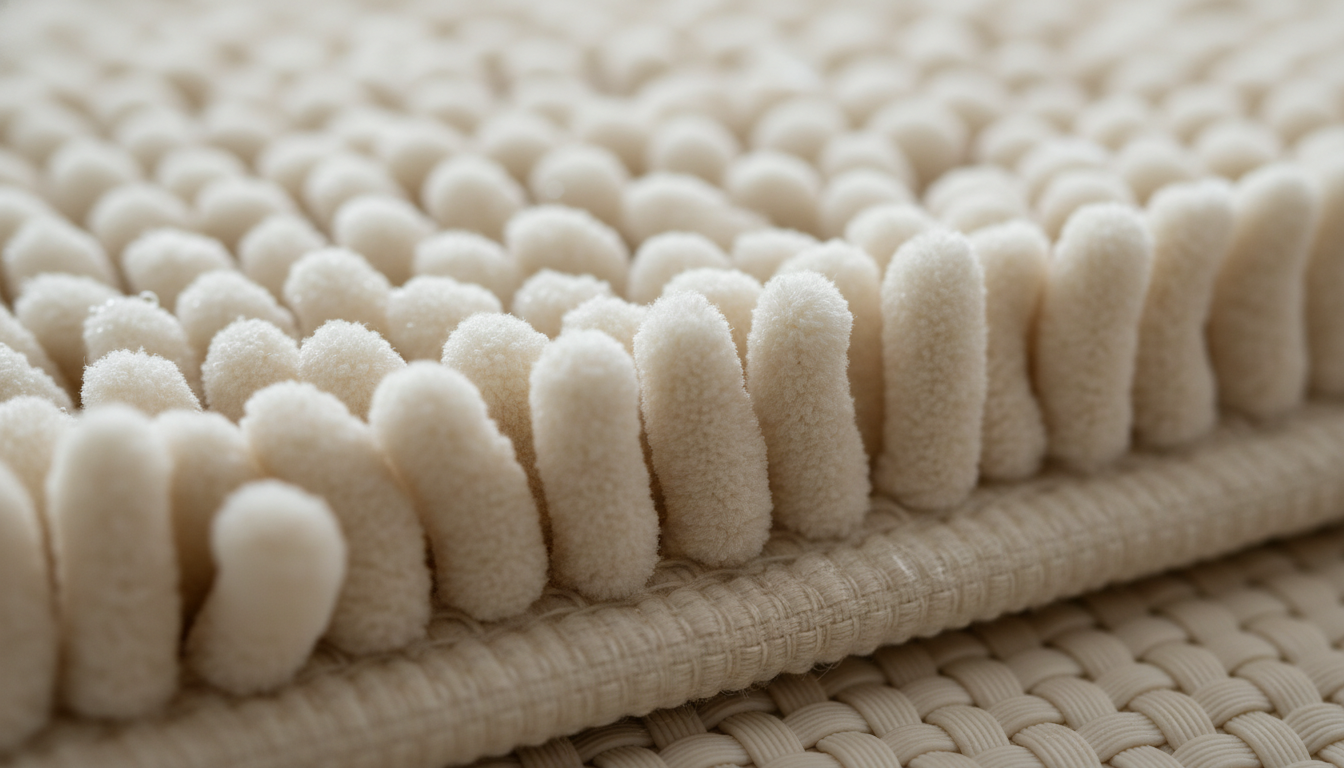
Because a mat absorbs the most splash, it carries the heaviest maintenance load. The goal is simple: quick laundering, fast drying, minimal odor, and sustained grip. Choose materials and backings that align with your wash schedule and ventilation so performance stays steady month after month.
| Care factor | Best practice for a mat |
|---|---|
| Drying time | Hang after each use; choose mid-weight GSM in humid rooms for faster turnover |
| Odor control | Wash weekly; avoid fabric softeners that can impede absorbency |
| Backing integrity | Tumble-dry low; inspect for peel or cracks and replace if grip degrades |
A higher GSM mat offers plush comfort but can extend drying time. For daily showers, a mid-weight terry can outlast heavier piles by staying drier between cycles.
If traction is your top criterion—kids, guests, or sleek tile—browse targeted anti-slip options and match grip types to your flooring.
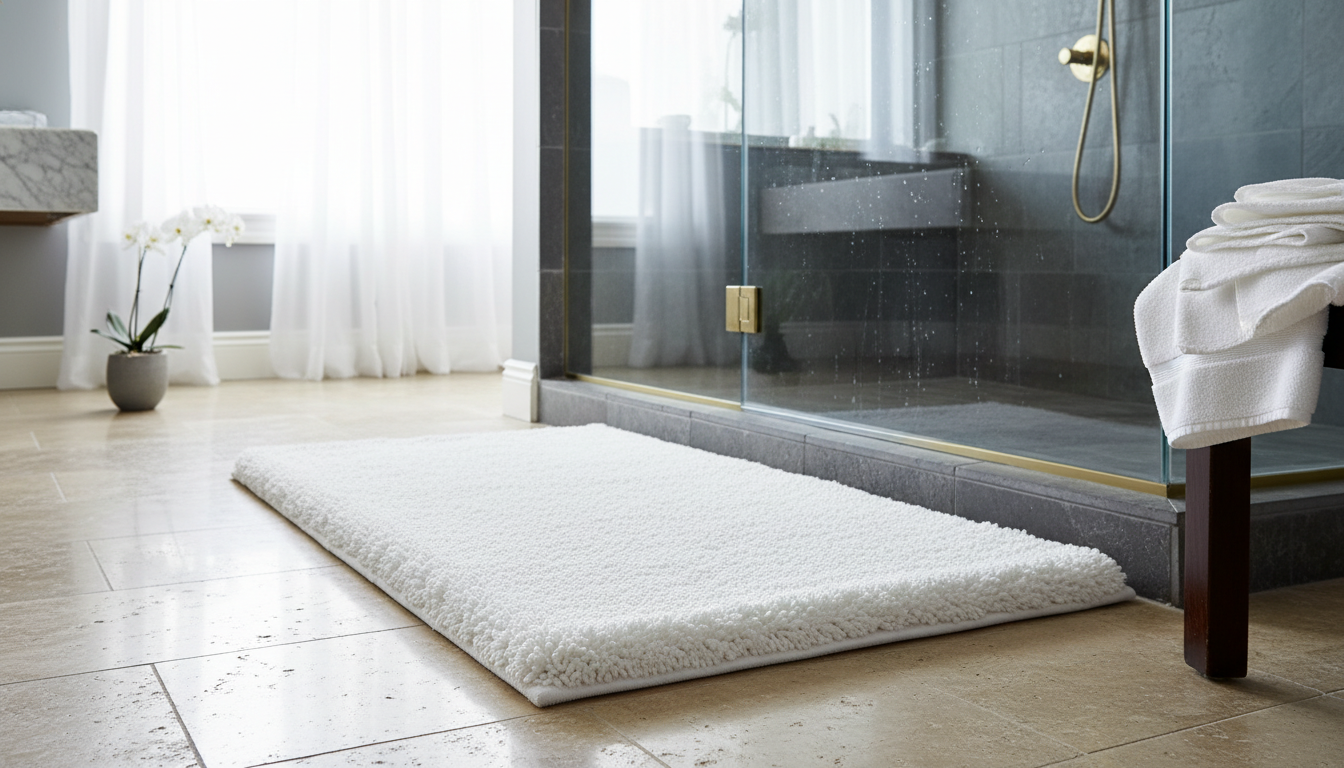
Use these criteria to narrow to the mat that fits your space, maintenance rhythm, and tactile preferences.
| Priority | Mat choice to consider |
|---|---|
| Maximum absorbency | Chenille microfiber or high-GSM terry (bound edges) |
| Fast-dry turnover | Mid-weight terry or flat-woven cotton |
| Ultimate traction | TPR-backed terry or diatomite stone mat |
If you want a cushioned step-out with refined detailing, consider a premium bathroom mat featuring bound edges and dense loop construction.
Prefer plush texture and exceptional water uptake near a shower? Explore the chenille grey option for a soft, sink-in feel and easy machine care.
A mat concentrates resources where they matter—at the splash line. You get higher absorbency per square centimeter, targeted non-slip control, and easier laundering. Rugs spread coverage and style; the mat maximizes safety and comfort underfoot at the tub, shower, or sink.
A runner spans a longer path and is less focused on heavy splash; a contour rug addresses toilet bases. The mat’s role is water interception and grip at exits. For streamlined layouts, see a modern-profile mat that balances low profile with traction.
Three stand out: enhanced absorbency that keeps tiles drier, secure underfoot grip that reduces slip risk, and refined pile density that delivers tactile comfort. Together, they elevate daily routines without overwhelming the bathroom footprint.
Yes—choose a TPR-backed terry or a stone-style mat for high-traction zones. For extra grip and plush feel, consider a grippy high-end choice that couples absorbency with reliable stability on smooth finishes.
Shake daily, hang to dry after use, and launder weekly. Avoid heavy fabric softeners to preserve uptake. Tumble on low and ensure full dryness to maintain pile and backing life. For stone mats, wipe and let air-dry; lightly sand if the surface becomes slick.
A luxury bath mat is a small footprint with major impact: it absorbs splash, anchors footing, and delivers cushioned comfort where water meets tile. Specify fiber, GSM, backing, and size to match your layout, then refine the palette—consider a warm-toned mat for calm, grounded schemes.
Choose confidently: focused protection at the splash zone will keep your bathroom quieter, cleaner, and more comfortable day after day.


