


Modern Bath Mat


A bathroom floor gets wet, slick, and busy—every single day. That’s why the humble mat deserves focused attention. A Modern Bath Mat is engineered as a low-profile safety layer that soaks up splash, speeds up evaporation, and stays put underfoot. Unlike plush bathroom rugs or decorative runners, a mat prioritizes non-slip backing, fast-drying fibers, and door-friendly thickness so the room functions smoothly.
Choose the right mat and you gain measurable benefits: quicker dry times, safer exits from the tub, cleaner grout lines, and less humidity trapped indoors. This page zeroes in on the technical choices behind a modern mat—materials, thickness, edges, and traction—so you can match performance to real-world use. Browse the pillars below to compare builds, sizes, and finishes, then upgrade the landing zone that matters most.
A mat differs from high-pile bathroom rugs in three core ways: thickness, traction, and recovery time after splash. The target is a low profile—typically 0–10 mm pile height for textiles or a slim slab for stone—so doors clear and edges don’t curl. Underneath, a grippy layer (rubber, TPR, silicone dots) resists lateral slip, especially on glazed tile. On top, fibers or a stone surface disperse water to reduce puddling and dry quickly between uses.
If doors skim the floor, measure the gap. A mat that sits under ~0.5 in (12–13 mm) prevents snagging. Stone and low-pile textile mats excel where door clearance is tight.
Consider alternatives only to frame the choice: a runner extends past a double vanity but adds seam length to manage; a plush rug adds loft but holds moisture longer. The modern mat prioritizes controlled thickness, secure grip, and fast recovery—performance first, aesthetic second—so the bathroom stays drier and easier to maintain.
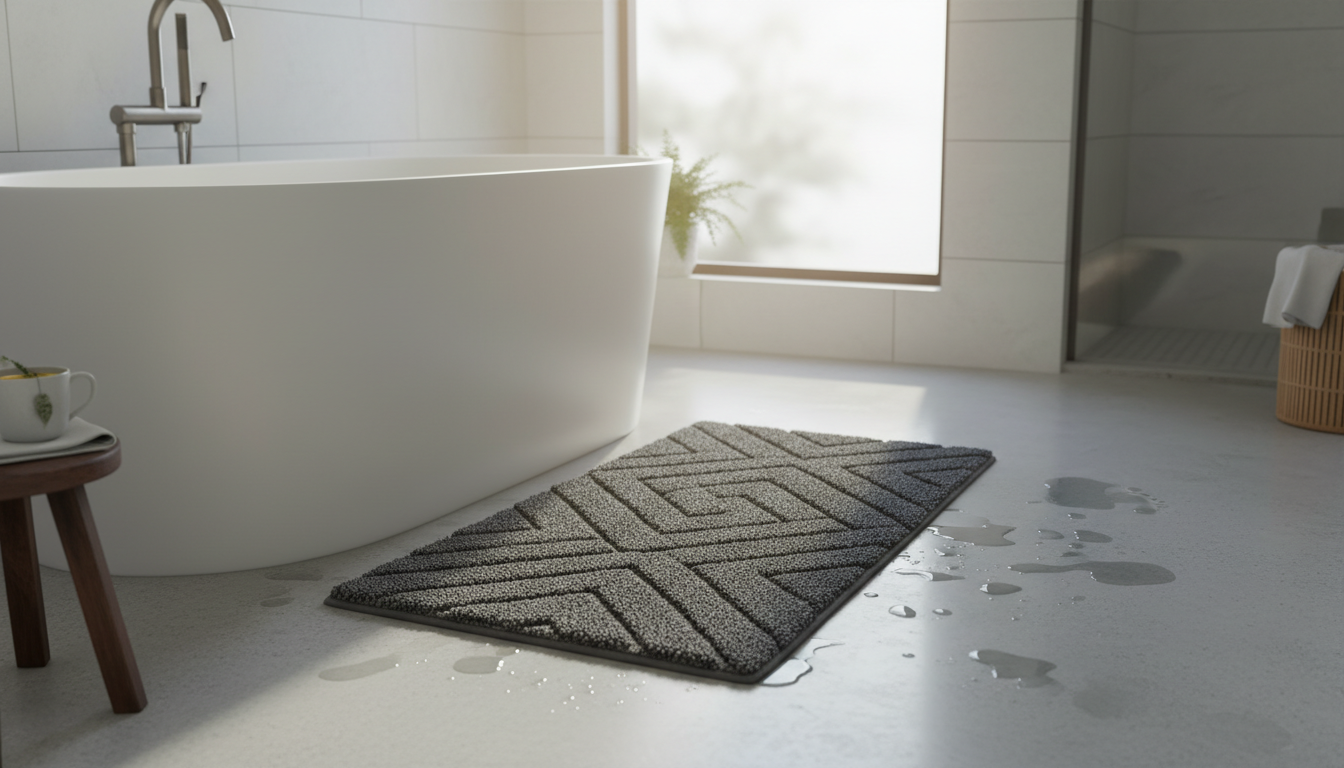
Material drives how a mat behaves after splash. Cotton loops excel at initial uptake; microfiber (often polyester) wicks and evaporates fast; memory foam cushions yet must vent; diatomaceous earth stone moves water into a porous matrix for nearly instant surface dry. The table below compares common builds.
| Material | Absorbency & Dry Time | Grip & Care |
|---|---|---|
| Organic cotton (loop/terry) | Strong uptake; moderate dry (depends on GSM); airy weaves dry faster than plush. | Non-slip backing recommended. Machine-wash warm; tumble low. |
| Microfiber / 100% polyester | Quick-drying due to fine fibers; high wicking; resists compression. | TPR/rubber base; wash cold; air or low-heat dry to protect grip. |
| Memory foam core (3PCS sets common) | Cushioned step; medium uptake; needs airflow for interior drying. | Spot clean or gentle cycle; avoid high heat; ensure full dry before reuse. |
| Diatomaceous earth stone | Surface feels dry in seconds; channels moisture into micro-pores; mold-resistant surface. | No wash cycles; wipe or sand lightly; use a non-slip pad beneath on smooth tile. |
| Bamboo/teak slatted | Water-shedding vs absorbing; air gaps help evaporation; good for shower exits. | Rubber feet; wipe dry; oil occasionally to maintain finish. |
Pair stone or slatted mats with an anti-slip layer if floors are glossy. For textiles, clean the base regularly—soap film reduces traction.
Looking to coordinate beyond the primary mat without adding height? Explore complementary pieces in the bathroom mats range here: selection of bathroom mats.
Match the mat to the landing zone. A 16" × 24" rectangle suits compact shower doors; 20" × 32" fits tub-side or single vanities; specialty cuts like 19.5" × 21.3" hug tighter spaces. Keep 1–2" from walls to avoid curling and to improve air circulation. If thresholds are tight, target slim textile builds or stone for reliable door glide.
| Typical Size | Best Placement | Door / Clearance Tips |
|---|---|---|
| 16" × 24" | Shower exit; powder room sink | Low-profile textile or stone prevents snag under near-flush doors. |
| 20" × 32" | Tub-side; single vanity; wider shower stalls | Aim for ≤ 0.5" height; check baseboards or toe-kicks for edges. |
| 23.6" × 15.7" / 31.5" × 15.6" | Narrow vanities; galley bathrooms; runner effect without bulk | Rectangular shape tracks with grout lines—align for visual calm. |
| Contour/specialty | Around fixed features; limited spaces | Confirm base contact; small gaps reduce slip on textured tile. |
A mat placed 2–3" off the tub lip reduces capillary drip onto grout. That small gap speeds evaporation and keeps edges cleaner.
For rooms where splash is constant and pull-dry speed matters most, consider specialized absorbent choices: see this refined set of absorbent options to pair with your primary mat.
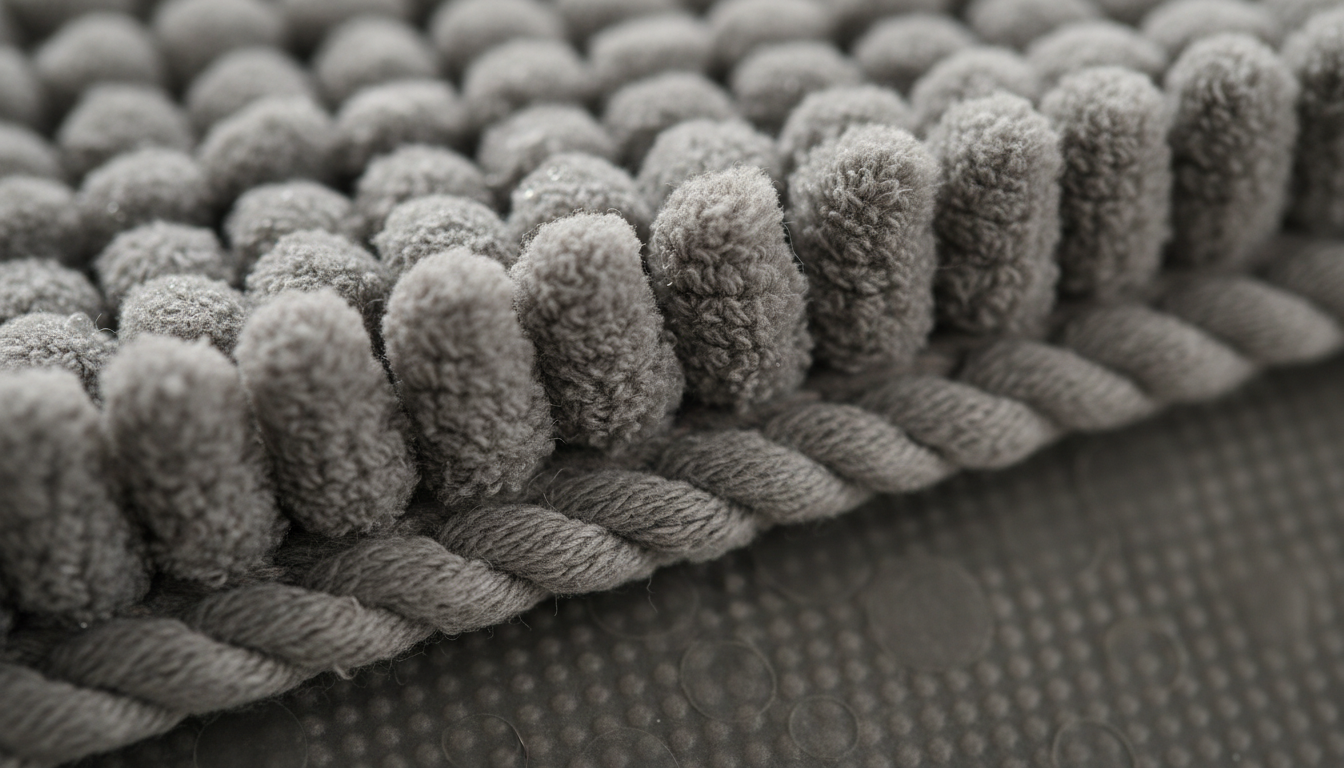
A mat earns its place by function, yet design language matters. Modern motifs—abstract geometry, minimalist typography, two-tone borders, or mid-century shapes—work best when they reinforce performance. Darker neutrals (black, charcoal) disguise lint; warm whites and oatmeal read spa-like; gray and taupe bridge tiles; black-and-white patterns add contrast without visual weight.
“Think of the mat as equipment that can also be beautiful: geometry that guides placement, color that hides wear, and materials that dry fast.”
Curious about sleek stone surfaces with near-instant dry feel? Compare choices in the dedicated diatomite series to complement your textile mats.

If your priority is instant surface dryness with minimal thickness, evaluate this natural stone option: natural diatomite mat.
A mat is built as functional equipment: low-profile edges for door glide, firm traction, and faster drying. Rugs emphasize loft and warmth but typically hold more moisture. For high-traffic tub exits, a mat reduces slip risk and cleans faster—especially in compact bathrooms with limited airflow. See also this solid diatomite piece for ultra-fast recovery.
Runners cover length but add seams to manage, more fibers to dry, and often more height. A single mat concentrates grip where feet land, keeps edges tidy, and minimizes wash load. If you need length at a double vanity, two mats often dry faster than one long textile runner.
Near-instant surface dry, flat profile that fits under doors, and wipe-clean care. The porous matrix pulls water away, limiting film and odor. Add a thin anti-slip underlay on polished tile. For maximum absorption in a slim format, consider this absorbent stone choice.
Yes—choose strong base grip and beveled edges. Low-profile mats reduce trip points; microfiber or stone surfaces dry quickly between back-to-back showers. Avoid thick fringes, and verify full base contact on uneven tile. Periodically clean the backing to maintain traction.
Shake out after use, then wash on gentle cycles; low-heat dry to protect the grip layer. Keep soaps and conditioners off the base—residue reduces friction. Where anti-slip is the top priority, review this high-grip design featuring a resilient base.
Geometric motifs with mid-scale repeats read modern without visual noise; two-tone borders can anchor compact floors. Neutral gray, warm white, and black accents pair well with chrome or matte black hardware while still hiding lint and splash marks effectively.
A Modern Bath Mat is a purpose-built layer: non-slip backing that stays put, quick-drying materials that bounce back between showers, and profiles that let doors glide. Choose dimensions for the landing zone, pick a finish that supports airflow, and elevate safety without adding bulk. If you favor crisp edges and rapid dry, explore this classic stone mat for a refined, equipment-grade look.


