


Non Slip Bath Mat


Wet porcelain and smooth acrylic make bathrooms one of the most accident‑prone rooms at home. A puddle on a glossy tub or a tiled shower base is all it takes for a foot to slide. A non slip bath mat addresses this specific risk inside the bathing area—in‑tub grip that floor rugs simply can’t deliver. With a textured top layer and suction‑cup backing, the mat stabilizes your stance where water is constant.
This collection focuses solely on the mat—designed for bathtubs and shower stalls—not on plush bathroom rugs. Expect quick‑drain design, non‑skid underfoot contact, and materials that resist mould. Below, you’ll find how to select the right size, surface texture, and compound (TPE, rubber, or PVC) for your space, plus expert care tips to keep the mat fresh for daily use. Explore the details and choose the coverage that turns each shower into a steadier step.
Unlike bathroom rugs meant for the floor, a mat is purpose‑built for the wet zone. Its underside uses dozens—often hundreds—of suction cups to anchor to a smooth tub or shower base. The top surface adds micro‑texture to increase friction so feet feel secure, even when shampoo or soap film is present. This pairing—vacuum hold below, textured top layer above—delivers the anti‑slip function where it matters most.
| Grip system | How it works inside the tub/shower |
|---|---|
| Suction‑cup mat (the mat in this collection) | Hundreds of cups adhere to smooth surfaces to prevent slips and falls; ideal for bathtubs and shower stalls with untextured bases. |
| Adhesive tub treads (stickers/decals) | Permanent strips increase friction in specific zones; good for textured bases where suction can’t seal, but offer less cushioned coverage than a mat. |
| Coated anti‑slip surfaces | Professional coatings add texture to the base; not movable, needs resurfacing to remove; a mat remains removable and washable. |
"Looks good and non slip, but the end curled until we laid it flat overnight. Once settled, the suction held firmly and felt secure during showering."
A suction‑cup mat needs a clean, smooth base. It won’t adhere well on pebble‑textured, tiled, or refinished surfaces. For those, consider adhesive tread alternatives or mats engineered specifically for textured bases.
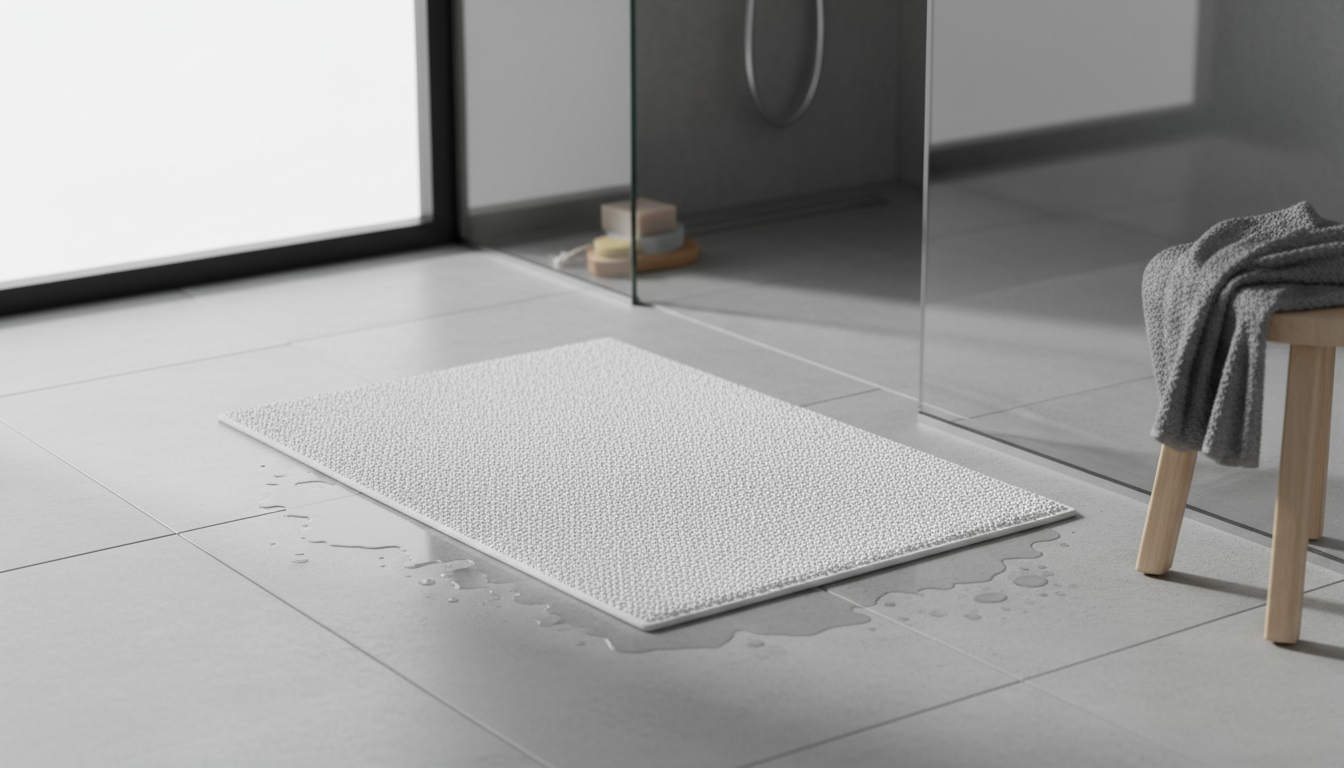
Water left under or on a mat invites mildew. A true in‑tub mat combats this with generous drain holes and a raised channel design so water circulates and evacuates quickly. Many models are machine washable on gentle cycles, and hang‑drying returns the surface to a fresh, odour‑neutral state. This drainage‑first build distinguishes a mat from absorbent floor rugs that are not designed to sit in flowing water.
| Drainage pattern | Effect on drying and cleanliness |
|---|---|
| Large perforations (center + perimeter) | Fast water release, easier rinse‑through after soapy baths; ideal when the drain sits near the center. |
| Dense micro‑holes (even grid) | Uniform flow across the surface; great for shower stalls with consistent spray coverage. |
| Slotted channels (ribbed layout) | Encourages airflow beneath the mat; quicker dry‑back between family showers. |
Rinse the mat after use and hang it on a hook or over the tub edge. This 10‑second habit extends anti‑mould performance and keeps the surface fresh.
If you’re comparing in‑tub drainage with room‑side coverings, see our broader bathroom floor pieces for outside the wet zone via a wider bathroom mat range. The items there are designed to absorb splashes on tile—not to live under running water like a mat does.
Material choice defines how a mat feels, how it grips, and how it ages. Common compounds include TPE for flexibility and low odour, PVC for durable structure and loofah‑style surfaces, and rubber for dense non‑skid stability. Regardless of material, look for descriptions such as latex‑free and BPA free when sensitivity is a priority, and confirm machine‑wash instructions if you prefer deep‑clean cycles.
| Material | Grip & feel inside the tub/shower |
|---|---|
| TPE (thermoplastic elastomer) | Soft, flexible, often odour‑light; strong suction with good cold‑weather pliability; easy to roll and store. |
| PVC (including loofah‑style tops) | Structured support; can feature mesh/loofah surfaces that drain quickly and feel cushioned yet grippy underfoot. |
| Rubber (latex‑free variants) | Dense, secure stance with a traditional textured surface; typically heavier with robust non‑skid behaviour. |
Loofah‑style PVC tops feel cushioned yet drain very fast. Waffle and spiral patterns enhance non‑slip traction without harsh abrasiveness.
Need an absorbent partner for outside the tub? Compare with absorbent bath rugs designed to soak up drips on the bathroom floor. Remember: those are for dry‑down and warmth; a mat stays inside the splash zone for safety.
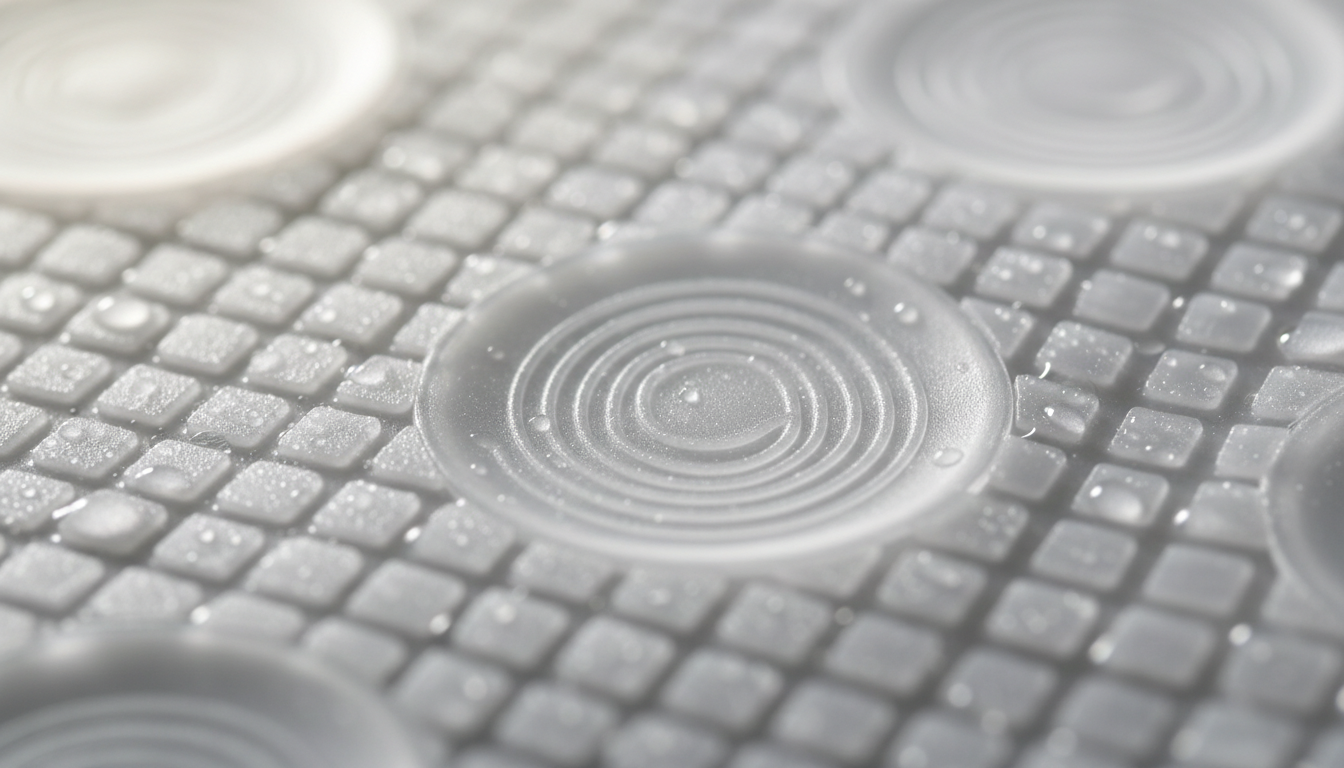
Coverage is as crucial as grip. Measure the zone where feet land when entering, turning, and rinsing. Rectangular formats like 35 x 16 in or 40 x 16 in span the central lane in most tubs, while 24 x 16 in suits compact shower stalls. Square plates fit corner stalls; some mats include a cut‑out or perforation cluster to sit over a centered drain.
| Typical size | Best use inside bathing area |
|---|---|
| 24 x 16 in (approx.) | Shower stall with limited floor area; focuses grip where you plant both feet. |
| 35 x 16 in (approx.) | Standard bathtub lane; covers entry and rinse positions with consistent traction. |
| 40 x 16 in (extra‑long) | Extended tubs or users who prefer heel‑to‑toe coverage; fewer exposed slick spots. |
| Square 20–24 in | Corner shower; keeps stance centered over the drain without blocking flow. |
If your layout is a stall with continuous spray, a shower‑specific footprint can help. Compare formats in the dedicated shower lineup engineered around compact, tiled enclosures.
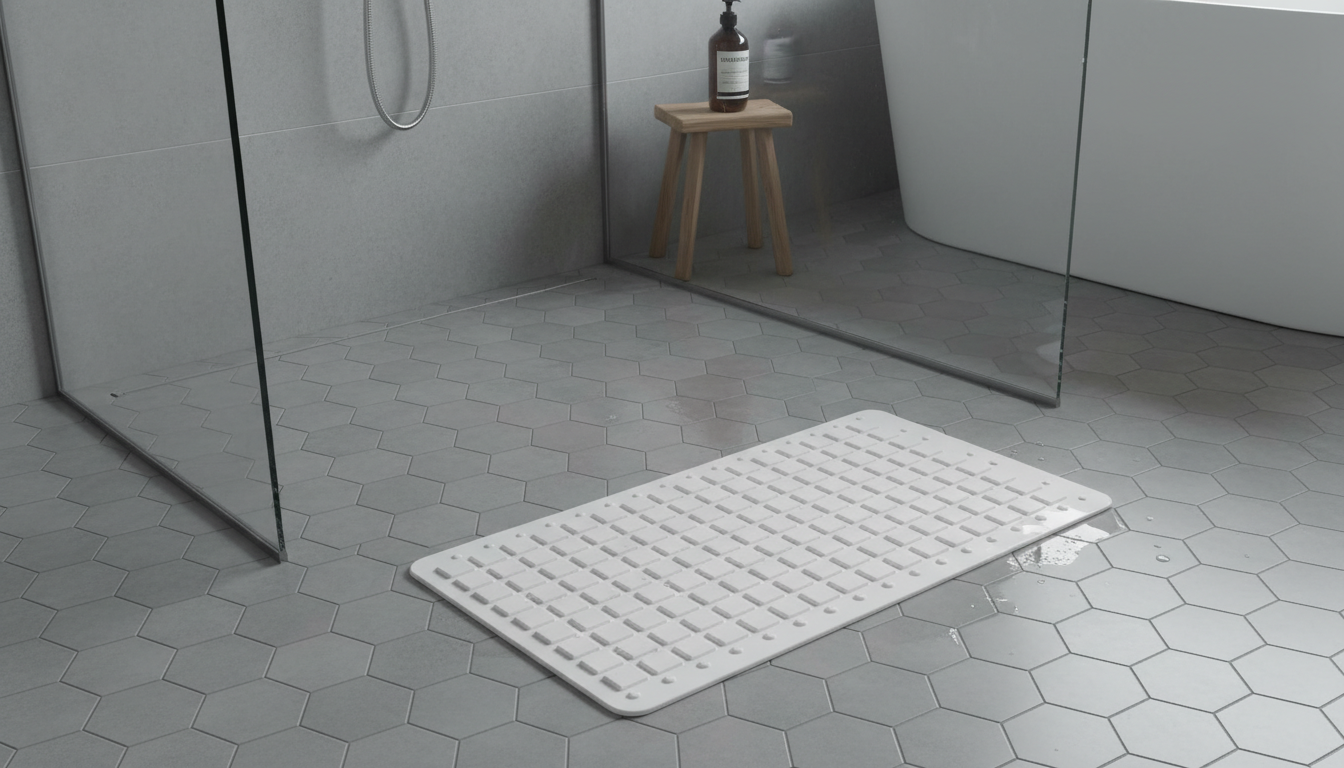
Start with the surface. A suction‑cup mat adheres best to smooth acrylic or enamel. If your base is clean and smooth, a classic in‑tub rectangle is the straightforward pick; for bathtubs, consider an in‑tub base mat that covers the central standing path from faucet to drain.
| Criterion | What to prioritize for a safe mat |
|---|---|
| Grip | Suction‑cup density and a textured top surface; confirm compatibility with your base. |
| Drainage | Quick‑drain holes near your drain location; channelled underside for airflow. |
| Comfort | Pebble or waffle top for cushioned feel without sacrificing traction. |
| Care & hygiene | Machine washable or rinse‑clean designs; hang points for daily dry‑back. |
For mixed layouts (a shower‑over‑tub or frequent transitions), a hybrid footprint can help. See a bath‑to‑shower option that balances stall coverage with tub‑length traction while preserving drainage access.
A rug absorbs water on the floor; a mat stabilizes feet inside the bathing area. The mat’s in‑tub grip, suction‑cup base, and quick‑drain perforations target slips at the source—on wet, soapy surfaces—where rugs can’t be used.
Stickers boost friction in zones but don’t cushion and are semi‑permanent. A mat adds broad non‑skid coverage, comfort underfoot, and removable, washable hygiene. On textured bases where suction can’t seal, stickers may be the practical alternative.
Pebble, ribbed, geometric, or waffle patterns improve micro‑traction and disperse water films. These textures help maintain secure footing during turns and when rinsing soap or conditioner off your feet.
Yes—look for extra‑long coverage, strong suction arrays, and high‑contrast colors to define the safe zone. For targeted support, consider a senior‑focused shower safety mat with stability‑first texture and generous drainage.
Rinse after each use; hang to dry. Weekly, wash according to instructions (often a cold, gentle cycle) to remove soap residue. Avoid bath oils that can reduce friction and leave residue on the mat’s surface and cups.
Yes—choose designs with hole clusters aligned to the drain or square formats for corner stalls. Confirm the mat doesn’t block flow and that quick‑drain perforations keep water circulating beneath your stance.
Suction cups require smooth contact; they can detach on textured or refinished surfaces. In such cases, look to adhesive treads or a non‑skid base liner designed to work without vacuum adhesion.
Absolutely—patterned tops (pebble, spiral, or animal‑themed graphics) help kids see the safe zone and stand still while rinsing. Explore a playful panda‑themed option that balances fun with firm traction.
A non slip bath mat is a safety component, not a decorative rug. It delivers anchored grip under running water, fast drainage to curb mould, and materials tuned for comfort and easy care. Measure your standing zone, match the surface type, and choose the texture that feels secure underfoot. Ready to step into a steadier routine? Select the coverage that suits your bath or shower today.


