


Orange Bath Mat


If puddles gather at the tub edge and tiles feel slick after showering, the problem isn’t your towels—it’s the wrong bath mat choice. An Orange Bath Mat solves a specific task at the step-out zone: capture water fast, stabilize footing, and dry back to neutral quickly so the bathroom stays clean and safe. Unlike decorative rugs, a mat is a compact, engineered surface built for wet contact areas.
Here you’ll find how a mat behaves underfoot, which backings prevent slip, how pile height and GSM affect absorbency, and how orange tones—from bright to burnt—visually anchor the floor. Read on to choose the right orange bath mat for your bathroom, with clear specs, size guidance, and material comparisons.
A mat is purpose-built for the wet perimeter—bathtub, shower threshold, and sink splash zone. Its success depends on three elements working together: non-slip backing, absorbent face yarns, and a stable form factor sized to the exit path. This differs from bathroom rugs that prioritize coverage or décor over wet-zone performance.
| Criterion | What matters for a mat |
|---|---|
| Slip resistance | Continuous TPR/latex backing, full-floor contact, dry substrate before placement |
| Water capture | High-absorbency pile with enough density to hold drips; cotton or microfiber works well |
| Recovery time | Quick-dry surface and breathable base help limit moisture build-up |
If your bathroom leans decorative, you can still maintain mat-level function while exploring pattern and texture—browse design-led options in this curated set of creative bath mats to keep the step-out zone practical without losing character.
Test grip by stepping on the dry mat with wet soles. If it creeps, clean the tile with alcohol to remove residue, then reposition; this helps TPR or latex achieve full contact.
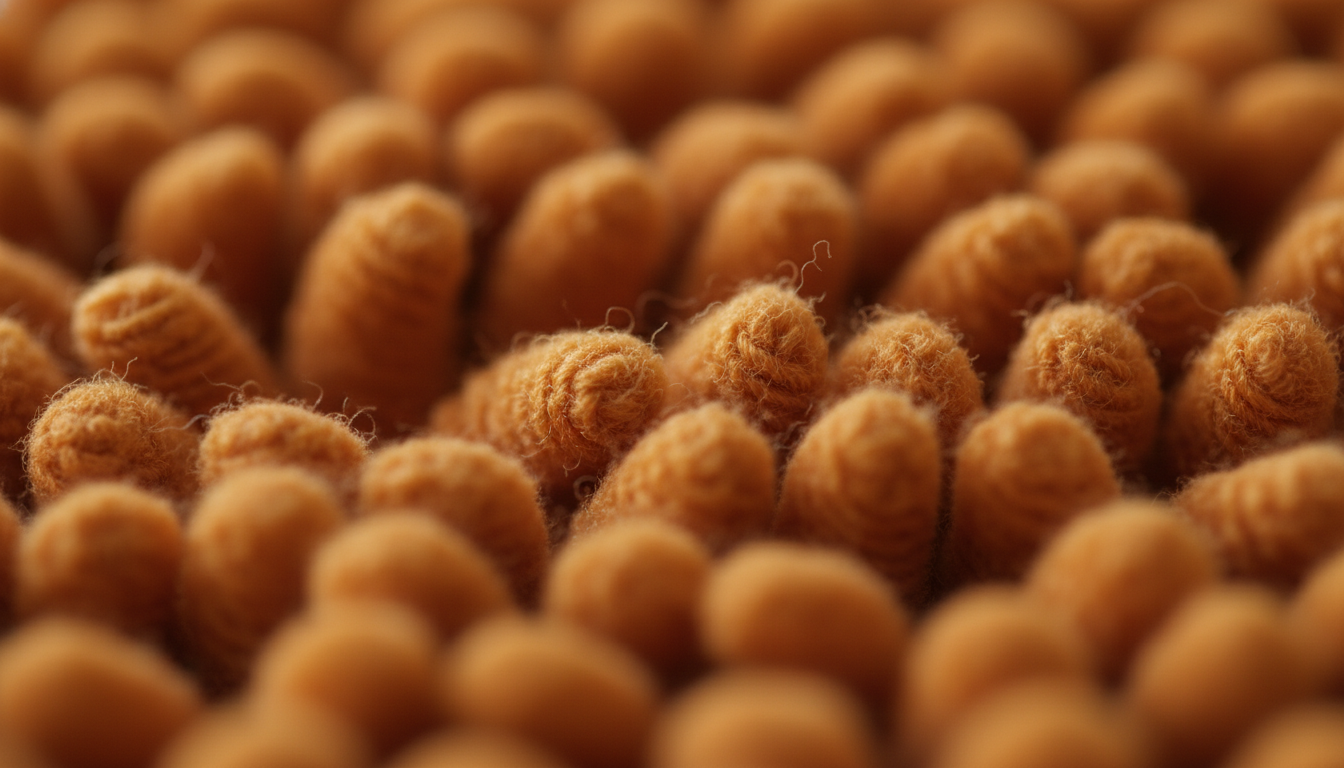
What distinguishes a mat from a general bathroom rug is how efficiently it handles water. Absorbency comes from fiber type, pile density (GSM), and loop geometry. Drying speed is equally important: a mat that dries overnight reduces musty odors and helps keep tiles cleaner around the shower and sink.
| Material | Behavior in a mat |
|---|---|
| Cotton terry (e.g., ~700 GSM) | Thirsty loops pull water rapidly; plush feel; machine washable; moderate drying time; great for daily baths. |
| Microfiber chenille | Dense “noodles” trap drips; quick-dry structure; lightweight; good for frequent showers and busy bathrooms. |
| Memory foam core + fabric top | Cushioned step; distributes pressure; very comfortable underfoot; surface absorbs less than terry, so pair with good ventilation. |
If absorbency is your leading criterion, explore the high-absorbency picks that prioritize pile density and water-holding capacity without sacrificing grip.
“A mat that dries before the next shower prevents that damp, metallic smell in the bathroom—microfiber leads on turnaround time, while terry wins on plush soak.”
Machine-washable mats last longer when you skip fabric softener; it coats fibers and reduces absorbency. Air-dry flat to protect the backing.
A mat’s footprint is strategic. Width should match the tub or shower door, while depth should catch the first two steps. Typical sizes include 18 × 26 inch for compact showers, 20 × 32 inch for standard baths, and longer runner formats for double vanities. Oval or rounded corners reduce curl and snag near the doorway.
| Placement | Recommended mat spec |
|---|---|
| Tub exit | 20 × 32 inch, ~1–1.5 cm thick, full-contact backing, high-absorbency face |
| Compact shower | 18 × 26 inch, quick-dry microfiber or chenille, rounded corners for stability |
| Double vanity | Runner-length mat; memory foam or terry depending on stand-time comfort needs |
Need more traction on polished stone or glazed ceramic? See the anti-skid range that pairs grippy compounds with sturdy edge binding to resist movement in wet routines.
A slightly heavier mat feels more planted. If you like lightweight mats for laundry ease, pick a denser backing so it stays put even when thin.
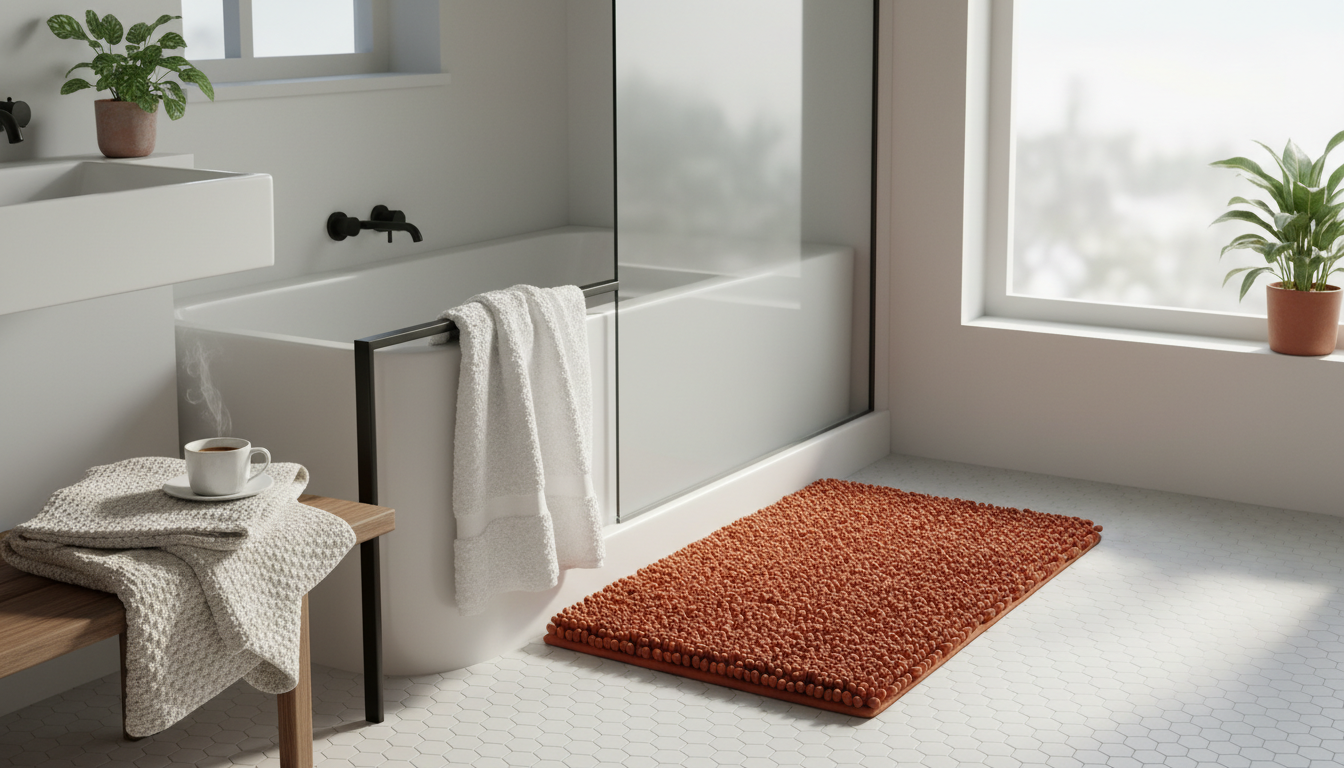
Because a mat anchors the step-out point, its orange tone becomes the visual cue that guides the eye from tile to tub. This compact field of color is concentrated where movement is highest, so hue choice changes both mood and perceived cleanliness of the wet zone.
Unlike a wide bathroom rug set, the mat’s smaller footprint lets you try bolder shades without overwhelming the scheme. It is also easy to rotate: keep a vivid option for daylight hours and a duskier tone for evening routines, each wash-ready and quick to dry.

If cushioned support is a priority at the sink, a memory-foam microfiber choice balances comfort with a stable base that won’t bunch underfoot.
For fast recovery between back-to-back showers, consider a chenille option in orange; the noodle-like pile traps droplets, then releases moisture efficiently in open air.
A mat is engineered for wet contact: absorbent face, grippy base, and a footprint that targets the first steps out of the tub. Rugs cover more area but aren’t optimized for water control. The mat keeps splash zones drier and stabilizes footing where it matters most.
Unlike runners that extend across the bathroom, a mat concentrates absorbency at the threshold and stays easy to launder. Shower inlays live inside the base, but a step-out mat protects the outer tiles, reducing drip trails between the shower and vanity.
For frequent showers, microfiber chenille wins on drying speed. For post-bath indulgence, higher-GSM terry feels plush. For long grooming sessions, memory foam support reduces fatigue. If color consistency matters, solution-dyed yarns hold bright or burnt orange tones longer.
Yes—because a mat is compact, orange reads as an accent, not a takeover. Pair with ivory or gray towels to balance saturation. A 18 × 26 inch format suits tight layouts, while rounded corners avoid snagging near compact toilet clearances.
Wash warm with mild detergent, avoid softeners, and air-dry flat to preserve backing grip. For orange tones, wash with similar colors first. Ventilate after showers so the mat can release moisture; this helps prevent that pinkish film common in damp corners.
Often yes. The tub exit benefits from a high-absorbency terry or microfiber build, while the vanity area may suit a cushioned or decorative face. For a no-fuss color anchor, consider a classic orange mat sized to the bathtub span.
Look for tufted or cut-loop patterns atop a stable base. A motif works if pile density remains high and the backing is continuous. See an orange mat with a distinctive motif that keeps the step-out zone efficient.
Yes—theme graphics are fine as long as the structure remains mat-grade: absorbent face, non-slip base, and easy care. For a fun accent that still behaves like a true mat, explore a playful corgi-themed mat built on a grippy backing.
An Orange Bath Mat is more than color—it’s the engineered surface that tames water at the step-out point. Choose the right build—cotton terry for soak, microfiber for quick-dry, or cushioned memory foam for stand-time—paired with a stable backing and a shade that suits your bathroom’s light. Add a second mat to rotate on laundry day and keep performance consistent.
Want to extend your search by function and style? After selecting your mat, consider complementary ranges like pattern-forward designs, absorbency-focused options, or grip-centric builds to round out your bathroom setup.


