


Pebble Bath Mat


Slippery puddles after a shower, damp footprints that linger, and thin floor linens that bunch up—these are all signs you need a better bath mat. A pebble bath mat solves the problem at the source: the mat surface is engineered to grip, channel water, and feel pleasantly textured underfoot, so your bathroom stays calmer and drier in real daily use.
This page focuses on the pebble-style mat itself—how the stone-like texture adds traction, how different materials dry, and how sizing affects placement. Scan the sections below to compare options, find practical tips, and choose a pebble bath mat that upgrades safety and comfort in minutes.
Unlike flat rugs, a pebble-patterned mat uses raised “stones” to increase micro-contact points. That tactile topography does two things at once: it creates more friction for secure footing and forms tiny pathways that let water move off the surface instead of pooling. Many designs are inspired by smooth river stones; the subtle variation between “pebbles” makes the mat feel grounded and spa-like without being slick.
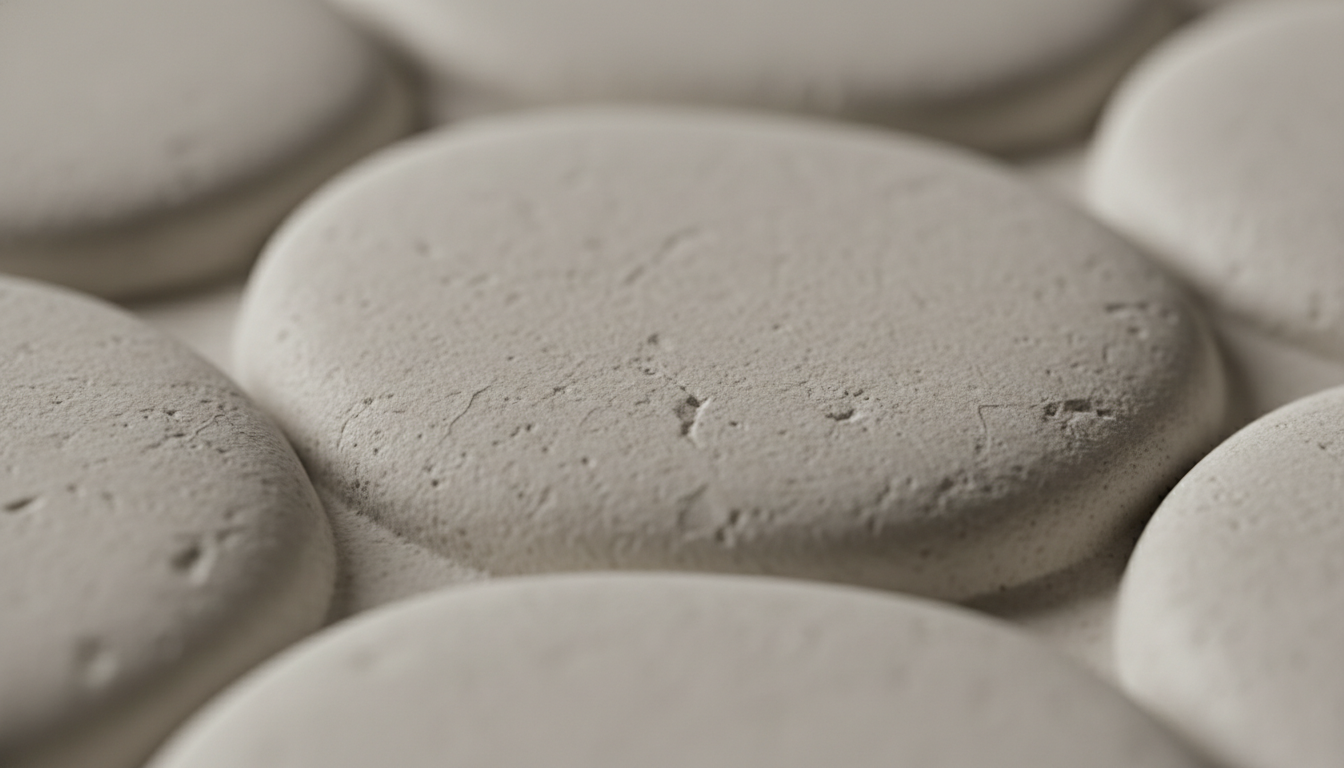
Stone-like mats rely on a mix of curvature and spacing. Slightly raised “pebbles” increase traction more effectively than flat loops at the same thickness because pressure concentrates on multiple contact points.
Surface finish matters. A smooth-but-grippy dome is pleasant to step on, while highly polished plastic can feel slick when soapy. If you prefer inside-shower use, look for a mat with textured tops and a base that adheres to non-textured tubs; if you place the mat outside the bath, prioritize cushioning and absorption at the surface.
| Texture detail | Effect on use |
|---|---|
| Rounded pebble domes (3–6 mm relief) | Gentle massage feel; increases friction; comfortable for daily stepping |
| Micro-channels between “stones” | Encourages drainage; limits puddling; supports quicker surface drying |
| Matte, non-polished tops | Reduces slipperiness with soap and conditioner residue |
If you’re emulating a river-stone look, prioritize materials with a matte surface. As a rule of thumb, “not slick and polished” beats glossy when the mat will be exposed to soapy water.
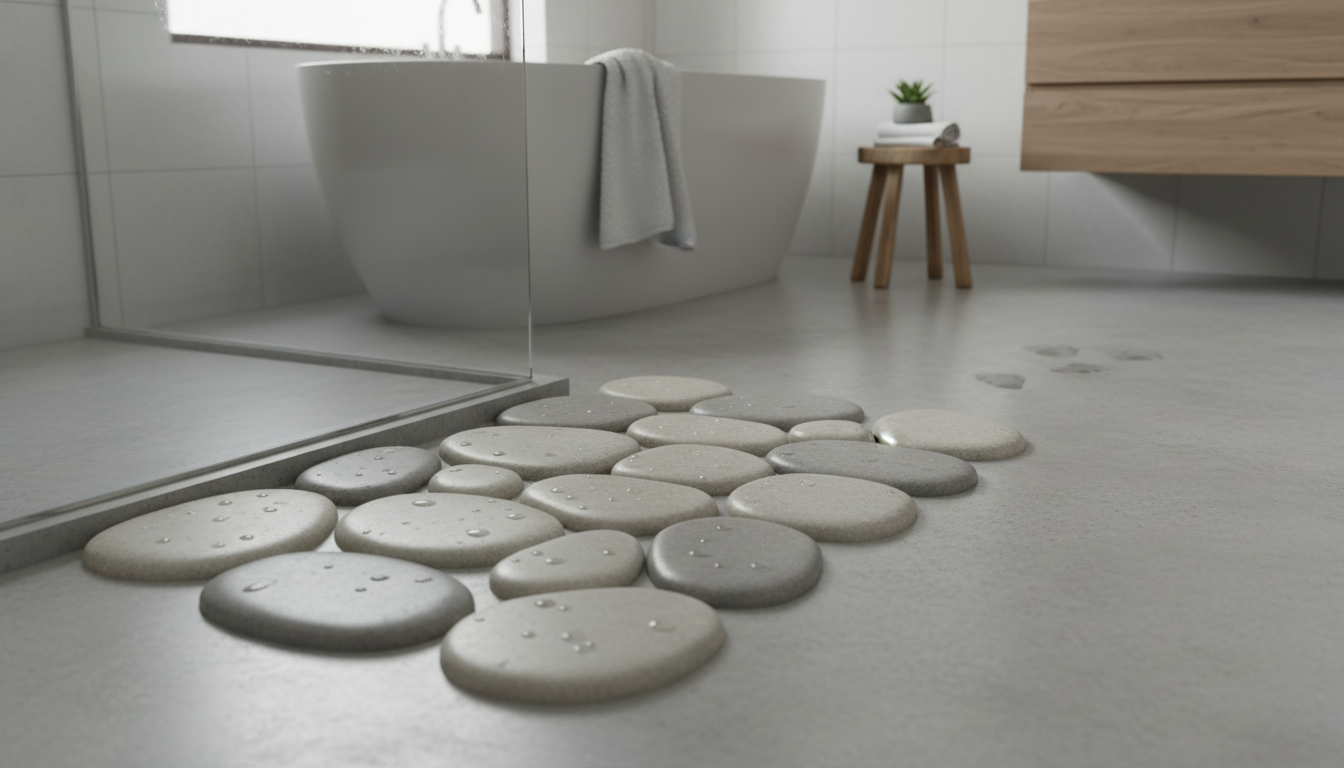
Material choice defines how a mat handles water. Cotton pebble weaves soak up drips and feel plush; PVC pebble designs sit inside showers and let water pass through drain holes; mineral-based “stone” boards made from diatomaceous earth transfer moisture away and dry rapidly. Each pebble-style mat manages water differently—pick according to where you place it and how often the bathroom is used.
| Material type (pebble look) | Water handling characteristics |
|---|---|
| Cotton terry with pebble pile | Absorbs rapidly; plush; best just outside bath or shower; machine-washable |
| PVC pebble with drain holes | Water flows through; ideal inside shower/tub; pairs with suction cups for stability |
| Diatomaceous stone board (pebble finish) | Quick-dry surface; channels moisture away; resists musty odors with proper airing |
If you lean toward high-capacity absorption, explore a complementary range such as the absorbent bath options, then return to a pebble texture for the sensory benefits and river-stone look.
A mineral “stone” mat thrives when the surface is kept free of soap film. A light scrub and rinse keep pores open so evaporation remains efficient.
The structure beneath a pebble-patterned mat is as critical as the textured top. For inside tubs and smooth shower bases, suction cups anchor the mat so it won’t shift. For exterior placement, a grippy underside and sufficient weight keep the mat flat when the floor is damp. The pebble relief helps even when soap is present, but the base is what locks the mat in place.
| Base design | Best location for the mat |
|---|---|
| Full suction cups (PVC) | Inside tub or shower stall; smooth/non-textured bases only |
| Rubberized grip backing (textile) | Outside the bath; high-traffic areas where puddles form |
| Mineral board with feet | Dry-down zone at the shower exit; fast evaporation between uses |
If you’re weighing broader floor-covering formats to pair with a pebble-patterned mat, consider browsing the wider bathroom rug families to coordinate grip needs across the room without losing the tactile benefits of the pebble design.
Sizing is not cosmetic—it decides how well a mat captures drips and stabilizes your stance. A common outside-bath width is around 20–24 inches; lengths range from 30 to 35 inches for full coverage alongside a tub. Inside-shower formats are narrower for stalls and include rounded corners to sit neatly around a center drain.
| Mat placement | Typical dimensions (inches) |
|---|---|
| Outside tub (full side) | 20 x 32 to 24 x 35 |
| Shower stall interior | 16 x 28 to 16 x 35 (with drain-friendly spacing) |
| Vanity zone (compact) | 17 x 24 to 20 x 30 |
For households prioritizing traction at every step, complement a pebble-patterned piece with references from the anti-slip families, ensuring the main mat still carries the stone-inspired look you want.

Use this checklist to select the right mat for your bathroom routine and layout.
Prefer cushion and a pebbled contour outside the bath? See a memory-foam interpretation with a stone motif here: a cushioned pebble-look option.
For a textile mat whose pattern echoes river pebbles while remaining machine-washable, consider this design: a washable stone-pattern piece.
A pebble bath mat adds relief and micro-channels that reduce pooling and increase grip. The stone-inspired surface feels supportive underfoot and directs water away from your stance, so the contact zone stays more stable during busy, multi-shower days.
Mineral boards dry fast and feel like natural rock; textile pebble weaves absorb and cushion more. Inside-shower PVC pebble mats prioritize drainage with suction cups. To echo pebbles in a soft textile, see this stone-pattern bathroom piece for an easy-care alternative.
Key benefits include: increased traction from the textured top, options for rapid evaporation (diatomite) or high absorption (cotton), comfort that’s soft underfoot, and formats designed for both inside-shower drainage and outside-bath drying zones.
Yes—if the base uses suction cups and the surface includes drain pathways. For a mat used outside the shower, a rubberized backing is recommended. If you want a pebble silhouette in a compact footprint, this stone-shaped format handles small zones neatly.
Textile mats: machine-wash per label and air-dry to preserve the pile. PVC mats: rinse, scrub lightly, and hang to dry; keep suction cups clean. Mineral boards: gently scrub to remove soap film and allow air circulation so pores can evaporate moisture efficiently.
Yes. The raised texture draws water off your feet faster than flat loops at similar thickness, and the channels direct moisture away from the primary stepping spot, reducing the “trail” effect on nearby tiles and keeping the dry-down zone clearer.
A pebble bath mat focuses on what matters at floor level: a non-slip grip, directional water control, and a calming, stone-like texture. Choose your material for absorbency, drainage, or rapid evaporation; size it to the path you step most. Prefer a darker, graphic pebble look? See this refined variant: a deep-tone stone motif.


