


Pink Bath Mat


Cold tiles, stray drips, and a slippery floor are everyday bathroom headaches. A targeted solution is not another generic rug, but a purpose-built pink bath mat engineered for wet zones. By design, a mat dedicates most of its surface to moisture control and non-slip backing, two factors that change how safe and comfortable your bathroom feels day after day.
Choose a mat in the right shade of pink to shape the room’s light, soften hard finishes, and warm the space visually. Then focus on the “mat” specifics: absorbent pile that dries fast, edges that lie flat, and grip that stays put on smooth tiles. Expect practical gains you can feel underfoot—cushion on landing, a stable stance when stepping out of the shower, and a floor that stays drier between baths.
Scroll to compare constructions, sizes and finishes, then pick the pink bath mat that fits your routine. Prefer help choosing? Jump to the concise checklist and the FAQ below.
A mat sits at the bathroom’s most active splash zone, so its color and texture do more than decorate. Because a mat is low-profile and flat-laying, pink tones read consistently across the surface, unlike thicker rugs that shadow and mute color. This makes the mat a reliable way to introduce baby pink, blush, or bubblegum hues without visual noise from deep pile variance.
| Pink shade | Best room effect on a mat surface |
|---|---|
| Baby pink | Softens cool light; pairs with white grout and pale stone; ideal for compact bathrooms needing lift. |
| Blush / pale pink | Adds warmth without glare; suits matte tiles; keeps the mat visually calm near the shower curb. |
| Bubblegum / vivid pink | Creates a focal point; contrasts cool fixtures; the mat’s flat plane maintains color clarity. |
| Dusty rose | Mutes high contrast; complements terrazzo; ideal when the mat needs to blend yet warm the floor. |
Unlike a thicker bath rug, a mat’s footprint ends cleanly where you place it—front of the vanity, along the tub, or outside a walk‑in. This precise boundary helps you “draw” pink where it matters most: the exact stepping zone. That is the visual advantage of a mat format.
“Use a pink mat to control both color and function in the same square feet: it guides the eye and grounds your stance right where water meets tile.”
Test color in the intended spot by placing the mat and dimming overheads; pink appears cooler on glossy tiles and warmer on matte stone. The mat’s edge binding should read the same tone as the field for a seamless look.
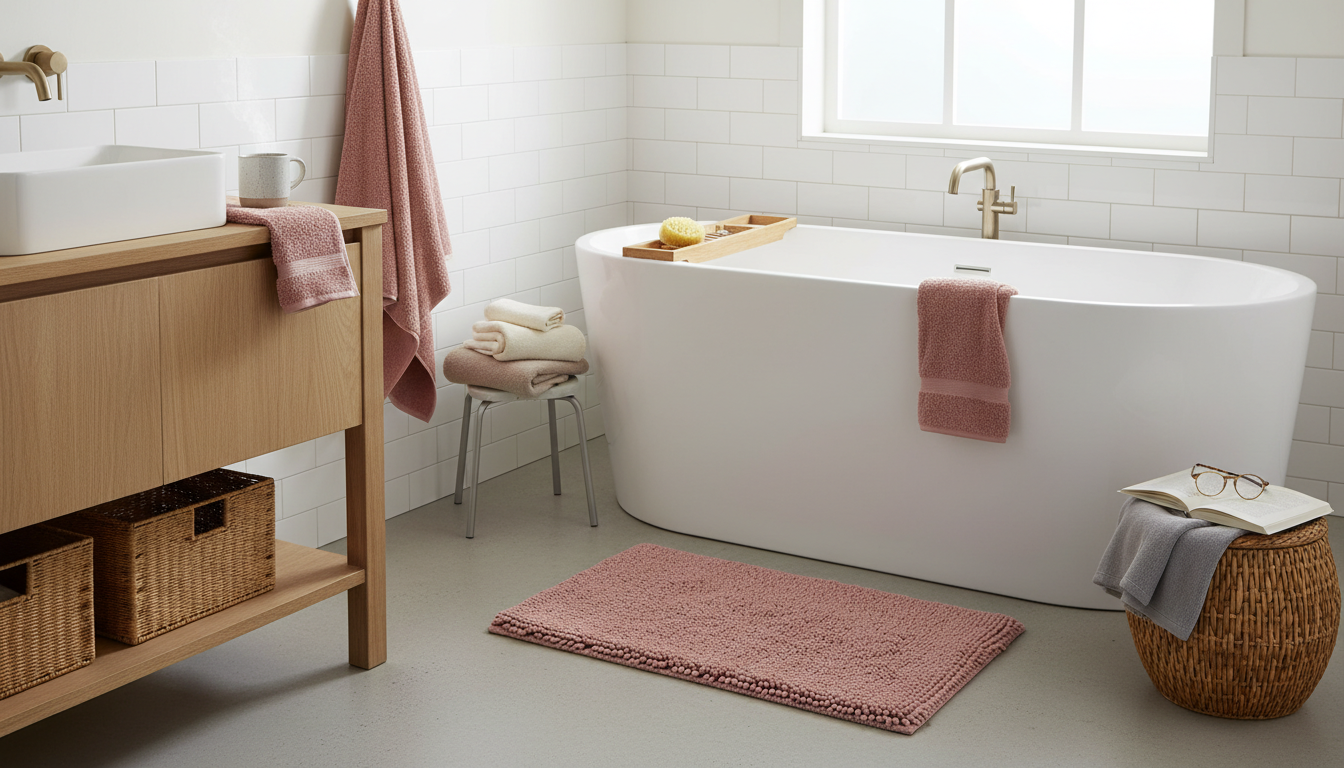
Safety is where a mat differs most from a decorative rug. A bath mat integrates a non-slip backing that grips smooth floors even when humidity rises. The goal is steady contact without residue, curling, or transfer. Look for backings that balance tack with breathability so moisture can evaporate underneath.
| Backing option | Grip feel on tile (dry/wet) |
|---|---|
| TPR sheet | Secure/secure—balanced traction, good for family bathrooms. |
| Latex coating | Very secure/secure—high friction; avoid high dryer heat to maintain elasticity. |
| Silicone dots | Stable/stable—airflow helps faster underside drying in humid settings. |
Unlike standard rugs that may “walk” on tile, a mat is meant to stay put under lateral movement as you towel off. Always place the mat on a clean, dry, smooth floor and press down across the edges to engage the grip. Wash cool to preserve the backing’s friction profile.
If traction is your primary criterion, explore a broader antislip range of bathroom options in specialized non-slip selections that extend this safety-first approach across formats.
A bath mat is for dry-floor placement only. Do not submerge or use on textured wet surfaces like inside a tub. For best results, launder at low temperature and avoid high-heat drying to protect the grip.
The point of a mat is to catch water where it lands and to release it quickly afterward. Construction and fiber choice define how the pink surface performs under daily showers. Microfiber chenille, looped cotton, and memory foam all behave differently in absorbency and evaporation.
| Mat build | Absorbency & drying rhythm |
|---|---|
| Microfiber chenille (polyester) | Fast uptake, fast dry; great for multiple showers per day; retains pink vibrancy after washes. |
| Looped cotton (high GSM) | High soak capacity; moderate dry time; soft feel, especially in pale pink tones. |
| Memory foam core + knit cover | Cushion-first; absorbs under pressure; slow dry; rotate to keep the mat fresh. |
On a busy schedule, the mat format helps because it’s engineered to lie flat for airflow. Hang by a corner or drape over a rail to accelerate drying. For households where absorbency is the top priority, compare more moisture-focused options in absorbent variants curated for heavy splash zones.
Pile density impacts both feel and color. A denser mat looks richer in pink and resists “flatten trails.” Balance density with drying needs to suit your bathroom’s ventilation.
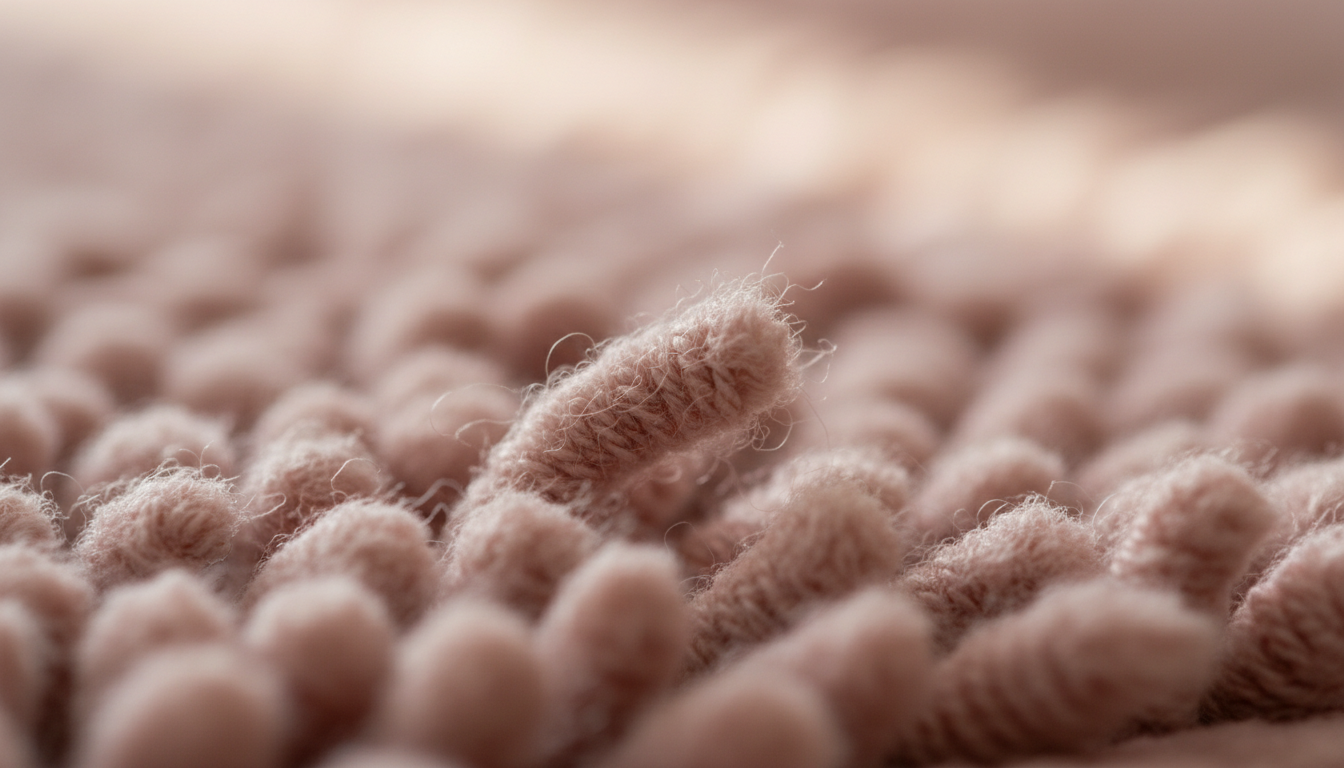
A mat delivers by fitting the use-zone precisely. Common sizes include ~20x32 inches for tub fronts and ~24x36 inches for larger vanities. The mat’s edge finish—overlock, binding, or scallop—keeps the perimeter flat so corners don’t curl as traffic increases.
| Placement | Suggested mat size & notes |
|---|---|
| Front of standard tub | 20x32 in: centers well; ensure edge binding is smooth to prevent toe-catch. |
| Double vanity | 24x60 in runner-style mat: continuous coverage without bulk of a thick rug. |
| Walk-in shower exit | 20x24 to 20x32 in: compact length preserves door swing; prioritize grip. |
If you want to step back and compare layouts beyond a single pink piece, browse a broader bathroom mats overview via a complete bathroom mats overview to align formats with each zone before finalizing your pink choice.

Use this checklist to select a mat that serves your routine and space.
Need a pink option that prioritizes stability at the tub exit? See a rose non-slip option configured for tiled floors: a grip-focused pink choice.
Looking for a statement piece that stays true to the mat format while adding pattern? Consider a design-led pink mat with balanced pile height for clarity underfoot.
A bath mat solves for two priorities—traction and drying—in the smallest footprint. Choose the format first, then refine shade and texture.
A mat is built for wet thresholds: it lays flatter, grips better, and prioritizes water absorption. Pink adds warmth and ties in towels or tiles, while the mat format keeps edges clean and prevents the “bulk” that rugs introduce near the shower curb.
Memory foam mats cushion more but dry slower; cotton loop mats absorb generously with moderate dry times. A balanced pick in pale tones—see a soft blush option—offers comfort without sacrificing flat lay and traction near the tub.
Integrated backing reduces lateral slip, a common issue with decorative rugs. The mat’s perimeter stays stable, and the lower profile avoids edge lift. Place only on clean, dry, smooth floors, and wash cool to protect the grip layer’s elasticity.
Yes. The mat’s defined footprint keeps the floorplan visually open, while baby pink or blush brightens tight spaces. Choose a 20x32 in format and a bound edge; rotate the mat weekly to maintain flatness where doors or drawers sweep by.
Wash cold with mild detergent, skip bleach and fabric softeners, and tumble low or air-dry. For pattern-forward bathrooms, explore a playful pink theme that remains easy-care while preserving backing integrity.
No. A bath mat is designed for the dry floor outside wet fixtures. For inside surfaces, seek solutions specified for immersed use. Keep the mat out of direct pooling and hang after use for faster evaporation and a fresher underfoot feel.
A pink bath mat focuses on what matters at the splash zone: secure footing, effective absorption, and a refined color field that brightens daily routines. Select the construction that matches your rhythm—quick-dry microfiber, plush cotton, or cushioned cores—then size precisely for your stepping path.
If you love a richer hue and tactile texture, consider a fuchsia chenille style like a deep-toned chenille pick that keeps the mat’s flat, grippy behavior while adding dimensional tufting.
Ready to refine the splash zone? Start with the mat format, then tune color and feel to your bathroom’s light and layout.


