


White Bath Mat


Stepping out of the shower should feel secure and serene, not slippery or soggy. A White Bath Mat solves that exact moment with targeted performance: quick-dry surface where water lands first, and dependable traction underfoot. Because it is a mat—not a loose rug—it’s engineered for wet zones, with defined edges, weight, and backing that stay put on tile or stone.
Beyond safety, a white mat brightens the bathroom by reflecting light and signaling cleanliness. It pairs effortlessly with white towels, black accents, or wood cabinetry, while making maintenance straightforward: you see when it needs washing, then refresh to brilliant white again. Below, explore materials, textures, sizes, and care so you can choose the right mat with confidence.
Unlike decorative rugs, a bath mat is built to control splashes right where you step. The right construction channels moisture away from the skin, anchors firmly to the bathroom floor, and resists shifting. Materials influence how fast water disappears and how stable you feel.
| Material type | Absorbency & Drying |
|---|---|
| Cotton terry or jacquard | High absorbency; medium drying time; familiar towel feel |
| Microfiber chenille | Very high absorbency; quicker to dry; extra cushioning |
| Diatomite stone | Moderate uptake; ultra-rapid evaporation; firm stepping surface |
| Memory foam fabric mat | Moderate absorbency; medium drying; soft pressure relief |
If kids sprint from the shower, favor a mat with rubber suction or a textured TPR grip. For a serene, low-humidity spa setting, a diatomite panel keeps puddles from forming in the first place.
"A reliable mat should do two jobs in under five seconds: give stable footing and pull moisture off your soles."
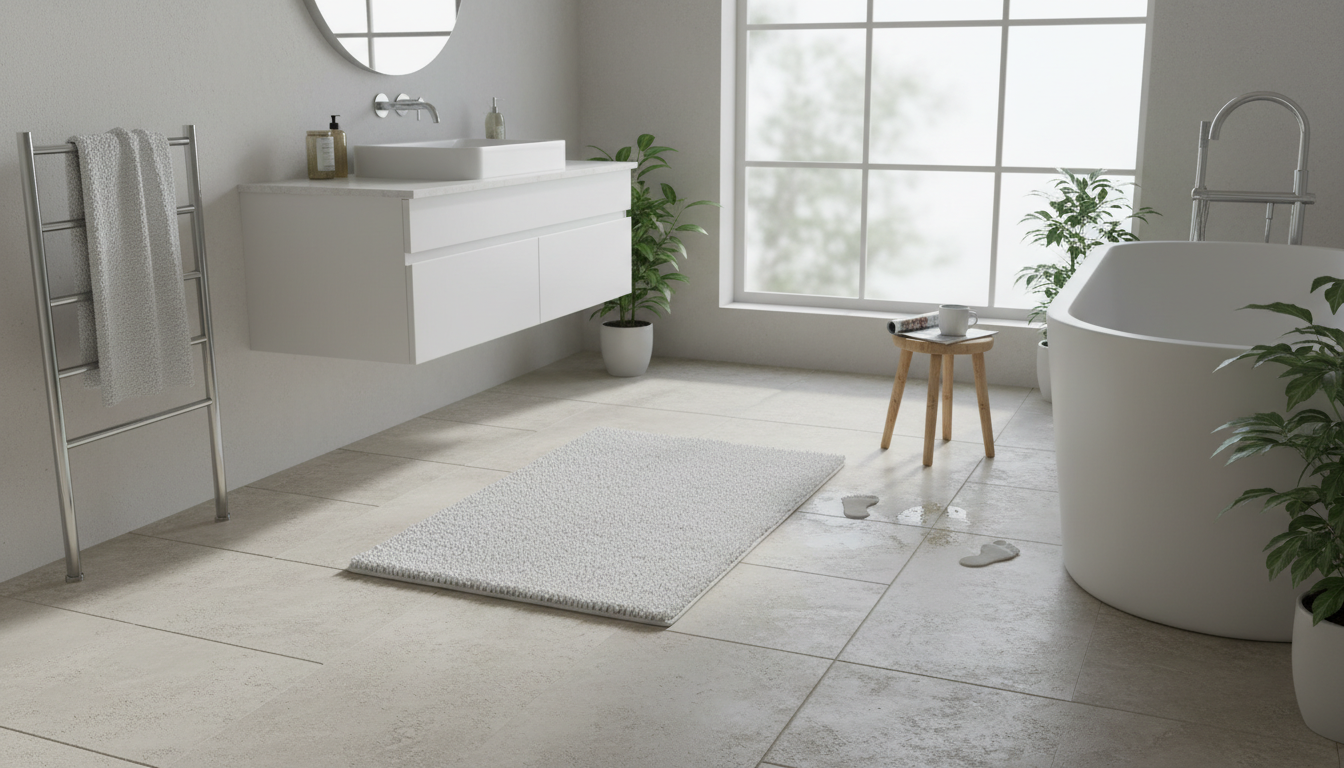
Texture is where a mat comes alive. In white, relief patterns and yarn types catch the light, from crisp borders to scalloped edges. The tactile choice affects comfort, drying speed, and how easily lint or footprints show on the surface.
| Texture | Feel & Practical effect |
|---|---|
| Looped terry (solid white) | Crisp hotel touch; absorbs fast; shows lint slightly more, cleans easily |
| Chenille pile | Deep plush; excellent comfort; dries moderately fast with airflow |
| Quilted surface | Even stepping plane; refined geometry; easier door clearance |
| Twill channels | Guides water off soles; medium pile height; quick refresh between uses |
If absorbency is your top priority, compare textures within an absorbent bath mats range to balance plush feel with drying time for your layout.
A bright white mat will echo nearby tones. Next to charcoal grout or black fixtures, raised textures create subtle black-and-white contrast without adding pattern.
Mats work because they sit exactly where water lands. Select dimensions that match your shower threshold, tub edge, or vanity zone, and check door swing so edges don’t curl. Typical formats include rectangular 20x30 in, 24x17 in, 28x16 in, and extra-long 24x36 in for double vanities or soaking tubs.
| Use zone | Recommended mat size & notes |
|---|---|
| Shower entry | 24x17–28x16 in; ensure 2–4 in clearance from door sweep; choose slim edges |
| Tub exit | 20x30 in; plush pile favors warm step; add rubber backing for stability |
| Double vanity | oversized 24x36 in; spans both sinks; pick medium pile to speed drying |
| Inside tub or stall | Suction-cup tub mat; textured surface; verify fit at 16x28 or 22.5x14 in |
For narrow bathrooms, a flatter quilted mat eases door glide while still absorbing stray splashes.
Need to contrast placements or add a second piece by the vanity? Explore a broader bathroom mats assortment to coordinate sizes without crowding the floor plan.
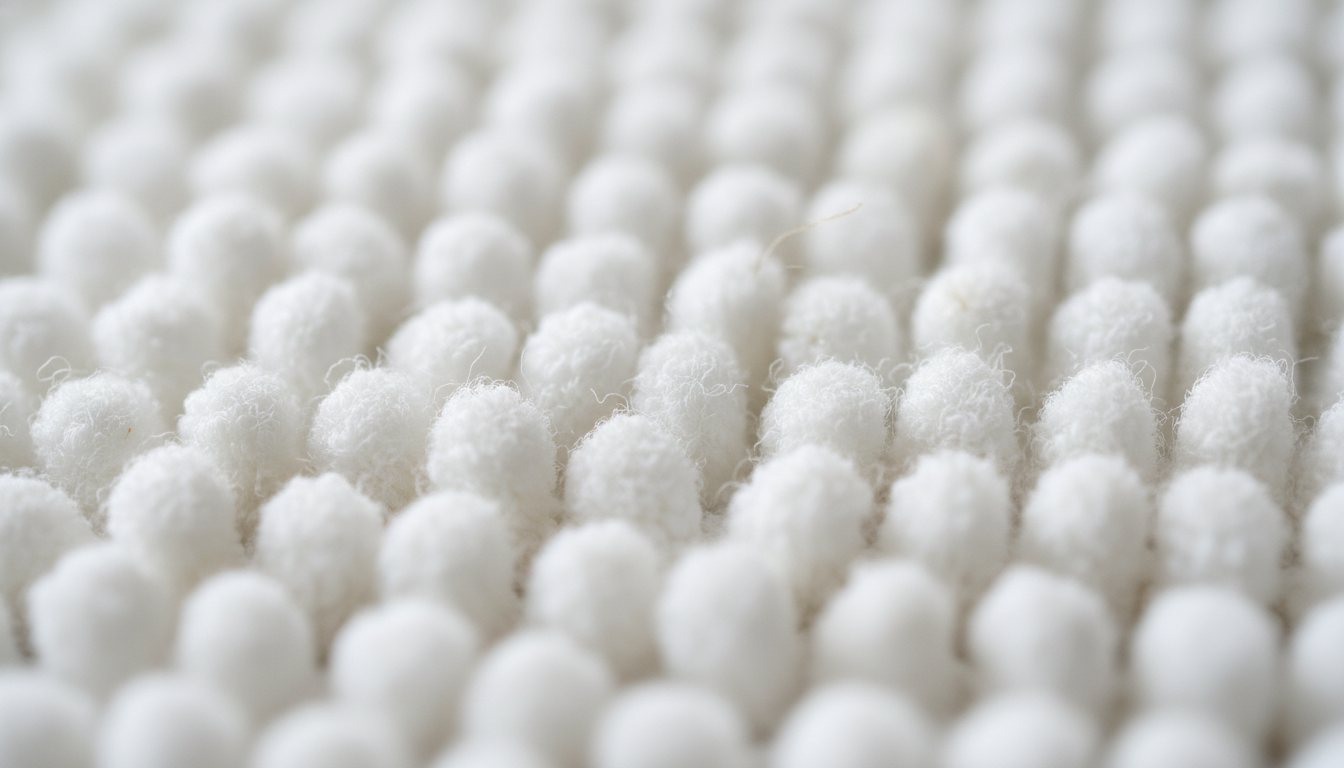
A white mat signals freshness, so care routines matter. Cotton and microfiber mats typically wash warm; diatomite panels air-dry; rubber-backed pieces avoid high heat. Rotate two mats so one recovers dryness fully before reuse and fibers maintain loft.
Because white amplifies light, even a slim monochrome border—black piping, charcoal stitch, or a scallop—can sharpen lines while keeping the mat’s clean look.
Love a crisp black-and-white theme? Complement your mat with subtle contrasts by considering contrasting black options in secondary zones like the vanity or guest bath.
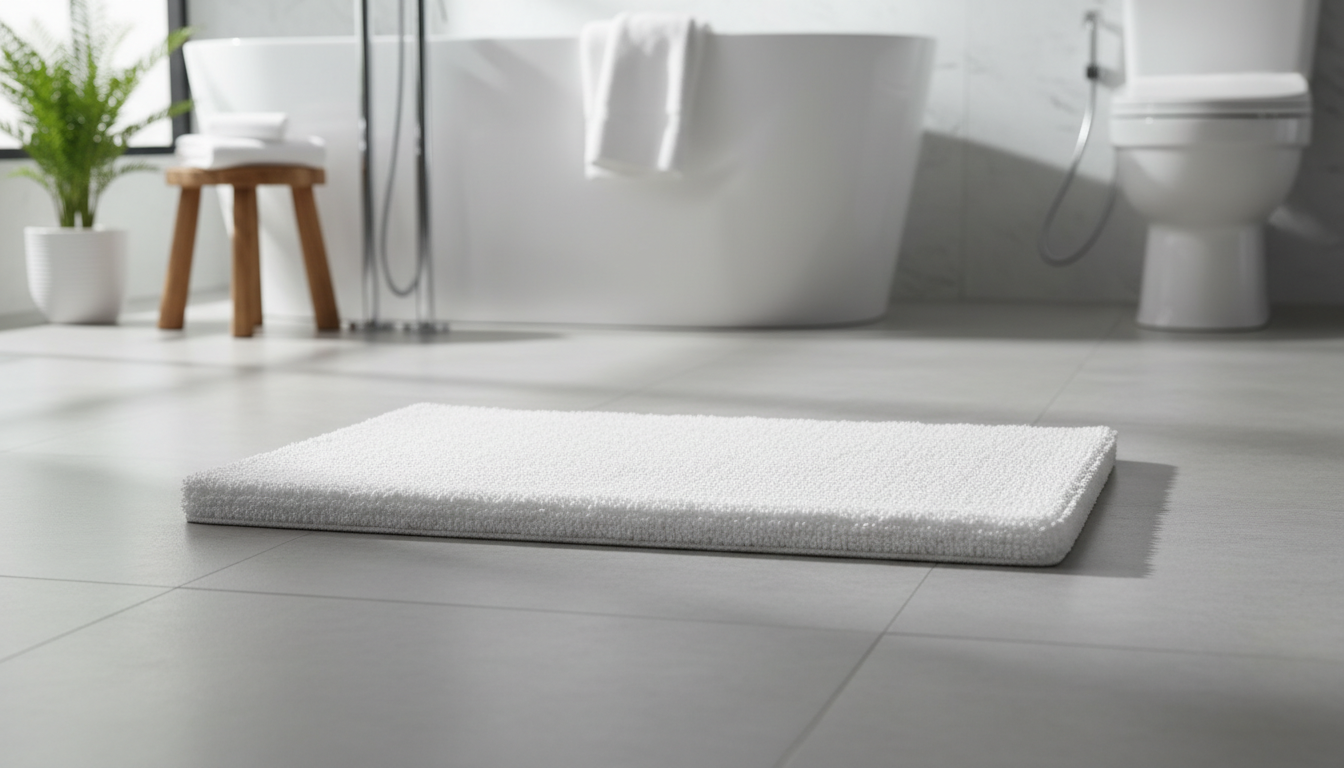
Use this checklist to match a mat to your routine, moisture level, and layout. Keep the focus on the wet zone: first step out of the shower or bath.
| Scenario | Recommended mat choice |
|---|---|
| Family bathroom, high traffic | hotel-grade weight cotton with TPR grip; rotates well; easy weekly wash |
| Spa vibe, low humidity | diatomite stone panel; ultra-rapid evaporation; firm stance |
| Compact shower entry | Quilted or twill surface; slim profile for door clearance; machine washable |
For expansive layouts, an oversized white option minimizes seams and keeps splash-prone areas covered.
If you want the softest underfoot feel when stepping from a soaking tub, a soft chenille pick adds generous cushioning while staying absorbent.
White reflects light, brightens small rooms, and signals cleanliness at a glance. It also coordinates with most towels and fixtures, from chrome to matte black. Practically, a white mat shows when it needs laundering, helping you keep the wet zone hygienic with minimal guesswork.
A mat is purpose-built for wet areas: denser weight, structured edges, and a stable backing that resists sliding. A rug skews decorative and can drift or bunch when splashed. If you want pattern contrast within a white scheme, consider a checkered black-and-white design that still behaves like a stable mat.
colorfast white makes lint and residues easy to spot and remove, maintaining a crisp look. The monochrome surface also highlights texture, so twill channels or quilting provide visual interest without adding color—useful in minimal or spa-inspired bathrooms.
Yes—white adds balance and softens contrast. For a stronger graphic note by the vanity or tub, a graphic monochrome statement keeps the mat function while reinforcing a black-and-white palette.
Wash weekly with the right detergent dose; add oxygen-based whitener as needed. Avoid chlorine on rubber or foam-backed mats. Tumble-dry cotton on medium, line-dry microfiber, and air a diatomite panel upright. Shake out grit that could compromise backing grip and floor safety.
A White Bath Mat is a precision tool for wet zones: it absorbs on contact, stabilizes each step, and clarifies your bathroom’s palette. From plush cotton to firm mineral panels, pick the build that matches your routine and floor plan, then rotate and launder to keep performance consistent.
Exploring monochrome accents? A white–gray–black mix can define the vanity area while your main mat anchors the shower exit—cohesive, clean, and designed for daily comfort.


