


Yellow Bath Mat


Water pools where feet land: at the tub edge, shower exit, and the sink. That is exactly where a yellow bath mat changes the game. Unlike decorative rugs, a mat is engineered for the splash zone: non-slip backing, quick-dry pile, and absorbency tuned for daily bath time. Choose yellow to add warmth while the mat manages drips before they spread across the bathroom floor.
This page focuses on the mat itself—how thickness, backing, and fiber blend translate into measurable comfort and safer footing in a color that brightens your space. In a few minutes, you will know which yellow bath mat to pick, what size to place in front of each fixture, and how to keep it machine-washable and fresh. Browse, compare, then add the piece that fits your routine.
A mat is a performance item first. Its job is to absorb splash, dry fast, and stay put on tile or vinyl. That’s why a yellow bath mat typically uses denser construction than a decorative bathroom rug. Look for three signals: pile structure, moisture handling, and base traction. Together, they define how secure and comfortable your footfall feels after a shower.
Compared with a bathroom rug, the mat’s smaller footprint concentrates absorbency where water lands, and the backing is tuned for wet floors. That’s why you place a mat directly in front of a shower or tub, while larger rugs can extend into drier zones for style or warmth. The mat’s denser build also means it rebounds faster after you wring it out or run a spin cycle.
| Pile type | Underfoot feel and wet handling |
|---|---|
| Cotton terry (including zero‑twist) | Soft, thirsty loops; excellent absorbency; quick release in airflow; classic towel-like touch. |
| Tufted cotton | Plush step with defined pattern; good soak-up; tactile structured weave that can lightly massage soles. |
| Microfiber/chenille | Very fast drying; deep pile traps droplets; lightweight for frequent machine-washable care. |
| Memory foam core | Cushioned step; best near sinks; slower to dry than loops, so ensure ventilation. |
Some rubberized bases can discolor certain vinyl floors over time. If your bathroom uses vinyl with plasticizers, choose a TPE or fabric-latex blend, keep the underside dry, and lift the mat weekly to air the surface.
Zero‑twist cotton uses untwisted fibers to create bulk without weight, making a mat feel lush yet breathable. Combined with a textured border, it can provide a gentle foot massage when you step out of the bath.
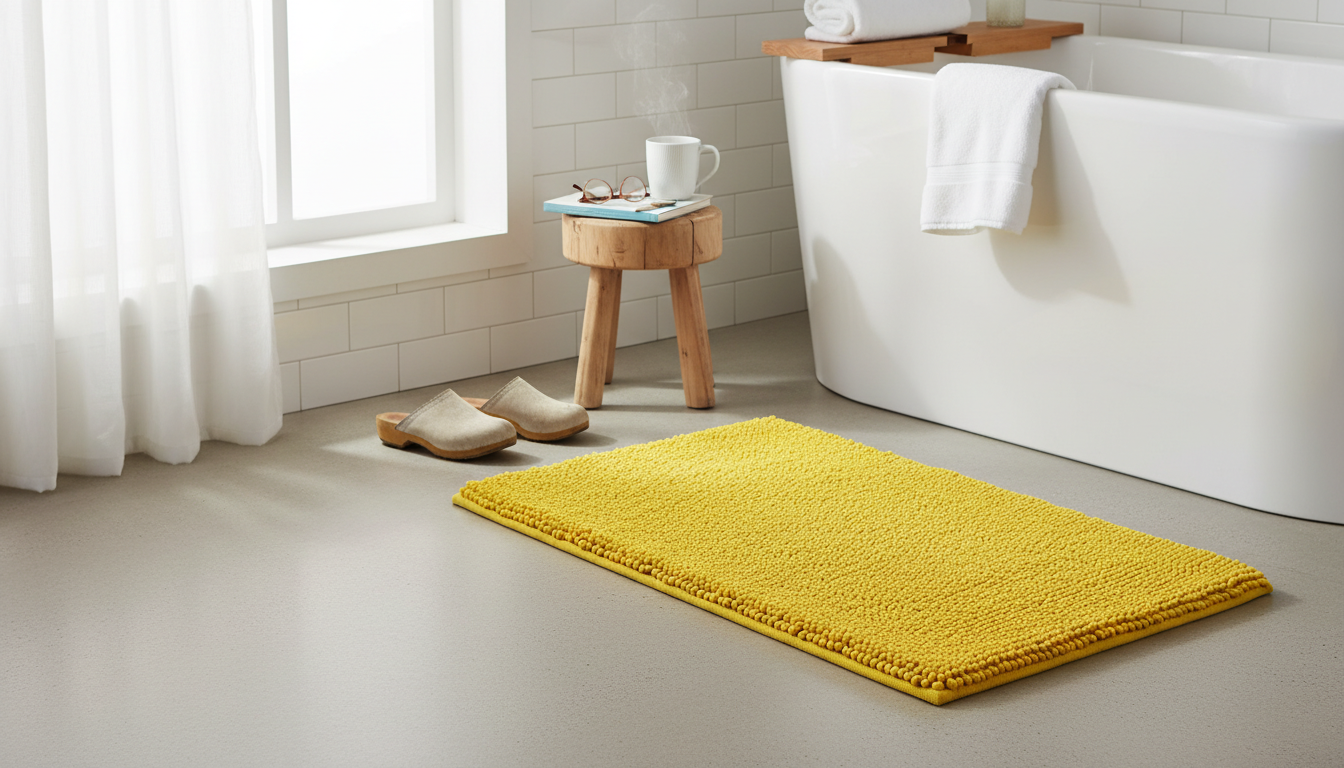
Yellow transforms a functional mat into a mood setter. Because a mat sits at eye‑level for your feet, its color influences how clean and bright the bathroom feels. The right shade directs attention and can unify towels, shower curtains, and countertop accessories without repainting anything.
Because a mat is compact, you can use bolder tones than you would on a larger rug. Place a sunshine tone at the tub for a cheerful “landing zone,” then echo it with a hand towel stripe. For tight powder rooms, butter yellow reduces visual noise while still guiding foot placement at the sink.
| Yellow tone | Best match in real bathrooms |
|---|---|
| Mustard | Gray porcelain tile, terrazzo floors, matte fixtures; balances cool substrates. |
| Sunshine | White tile with light grout, chrome or stainless accents; maximizes perceived brightness. |
| Golden ochre | Warm marble veining, oak vanities, brushed brass hardware; adds cohesive warmth. |
| Butter | High‑contrast checker floors, bold grout lines; softens edges. |
If you want a punch of pattern confined to the splash zone, consider distinctive bath designs that keep graphics on the mat instead of across a big rug. See related inspirations in original bath designs.
For small en‑suites, choose a pastel mat with a thin border stripe. It gives orientation in low morning light without visually shrinking the floor area.
The strength of a mat lies under the color. Cotton terry in pure or organic grades offers skin‑friendly loops and steady absorbency. Microfiber and chenille dry at high speed and feel plush. Memory foam cushions longer standing at the vanity. Backings prevent lateral slip and keep the corners down after multiple washes.
| Backing type | Floor compatibility and care |
|---|---|
| TPE non‑slip | Great with glazed tile; resists water; wipe underside weekly for hygiene. |
| Fabric-latex blend | Comfortable drape; check compatibility with vinyl; keep bottom fully dry. |
| Woven cotton base | Adds breathability under thick pile; pair with a separate grip pad in low‑hop zones. |
When comparing across the wider bathroom range, the mat is the piece designed to be soaked and spun frequently. If you plan mixed floor textiles, review complementary options in the broader bathroom range to balance coverage and care routines.
Wash mats separately from lint‑heavy towels to maintain color clarity in yellow. A short spin helps reduce dry time and keeps backing integrity.
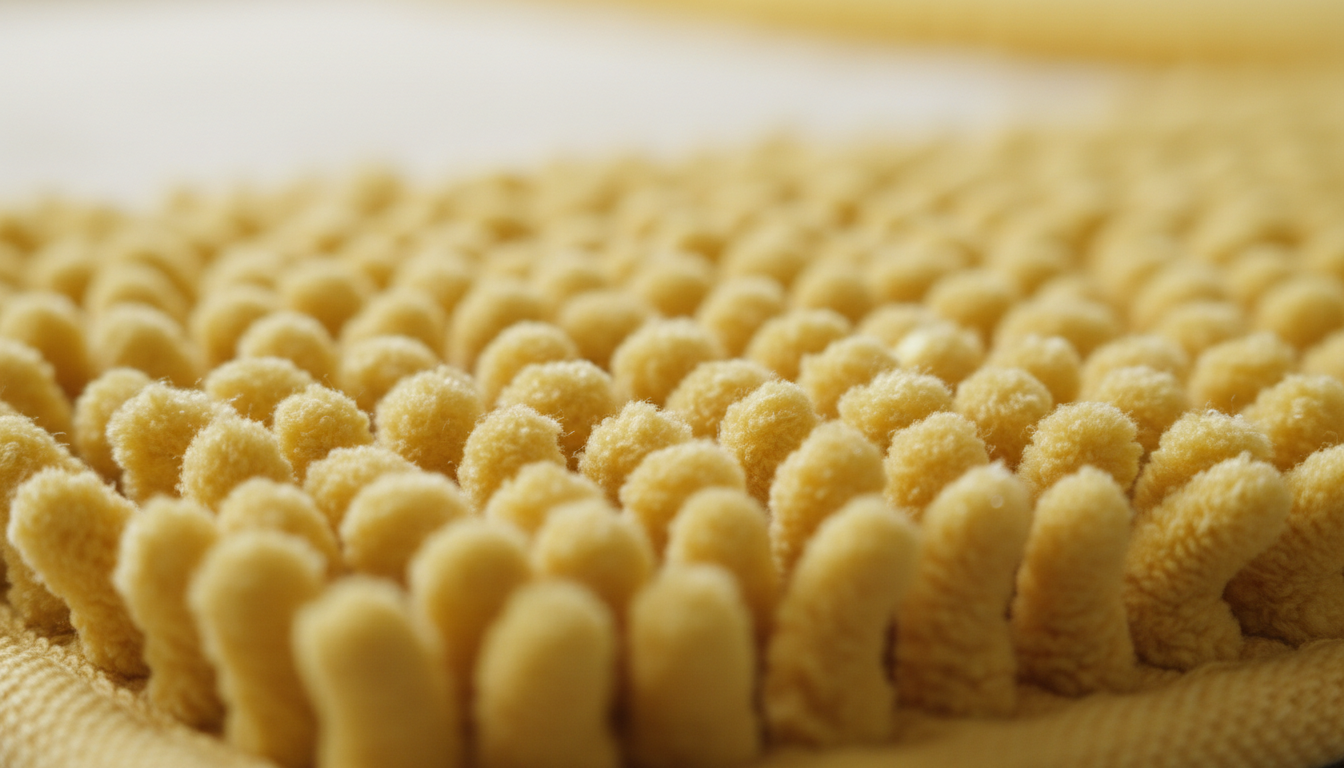
Because a mat targets the wet zone, size and edge profile matter more than for rugs. The edge should sit just beyond where toes land as you step out, and the width should allow both feet to plant fully without touching the tile. Borders and tassels are optional; the priority is coverage where splash happens.
| Fixture | Recommended mat coverage |
|---|---|
| Walk‑in shower | Long edge aligned with threshold; extends 2–4 in past the drip line. |
| Bathtub | Full length under the faucet area; corners clear of door swing paths. |
| Pedestal sink | Centered pad; keep 1–2 in gap from base to preserve air flow. |
If your household alternates back‑to‑back showers, prioritize high-absorbency options and venting. Explore complementary pieces optimized for soak‑up in high‑absorbency options to pair with your chosen size.
Bordered mats help define foot placement for kids. A subtle stripe in bright yellow acts like a visual “step here” cue without needing larger rugs.

Use these targeted criteria for the bath landing in your home. They are specific to mats—compact, grippy, and ready for splash control—rather than broad rug considerations.
Want a playful color cue right in the splash zone? Consider a citrus-themed option that keeps the brightness focused where it matters, at the shower exit: a lemon-inspired piece.
If your vanity area calls for clean geometry and a slimmer profile, a streamlined choice with balanced cushioning pairs well with double sinks: explore a minimal modern piece.
A mat is built for splash zones: dense absorbency, purpose-made non-slip bases, and compact sizes that cover exactly where water lands. Yellow adds visual warmth and clearer foot placement near wet thresholds. Rugs extend style, but the mat’s engineering is what keeps feet secure after bathing.
Mats are smaller, heavier at the base, and optimized for tub and shower exits. Rugs cover broader floor areas for decor and insulation. If you want a bit of whimsy without sacrificing traction at the splash point, try a playful accent at the landing like a corgi motif kept to mat dimensions.
Terry offers towel-like loops that drink up water fast, then release it with airflow. Chenille’s thick fingers cushion toes and trap droplets so the tile stays dry. Both are machine-washable; choose terry for quick turnover and chenille for a plush, spa-like step at the sink or tub side.
Yes, if the base is grippy and you place it on a dry, smooth surface. Shaped borders help kids aim their step. For a sculptural look that still prioritizes traction, consider a flower-shaped piece placed at the tub curve or vanity center.
Yes, if you match fiber to your routine: microfiber and terry are fastest. Hang the mat over the tub edge after use, run the fan, and spin-wash when needed. Dense memory foam needs more ventilation; use it near the sink where splash is lighter and dry-time less critical.
Wash in cool to warm water with mild detergent, avoid bleach, and dry low or air‑dry. Clean the underside weekly. Keep essential oils off the surface to prevent localized staining, and lift the mat every few days so both the tile and backing stay dry.
A yellow bath piece should do more than color the floor—it should secure your landing, absorb splash, and dry on schedule. Choose pile and backing for your fixtures, then tune shade to your tile and hardware. If you prefer a softer palette for long-term coordination, see a calm, earthy alternative here: a neutral-toned design.
Compare sizes, materials, and traction, then bring home the item that serves your routine every single day with quick-dry comfort and dependable foothold.


